
Unveiling Ancient Israelite and Judean Religion: A Journey Through Polytheism and Henotheism
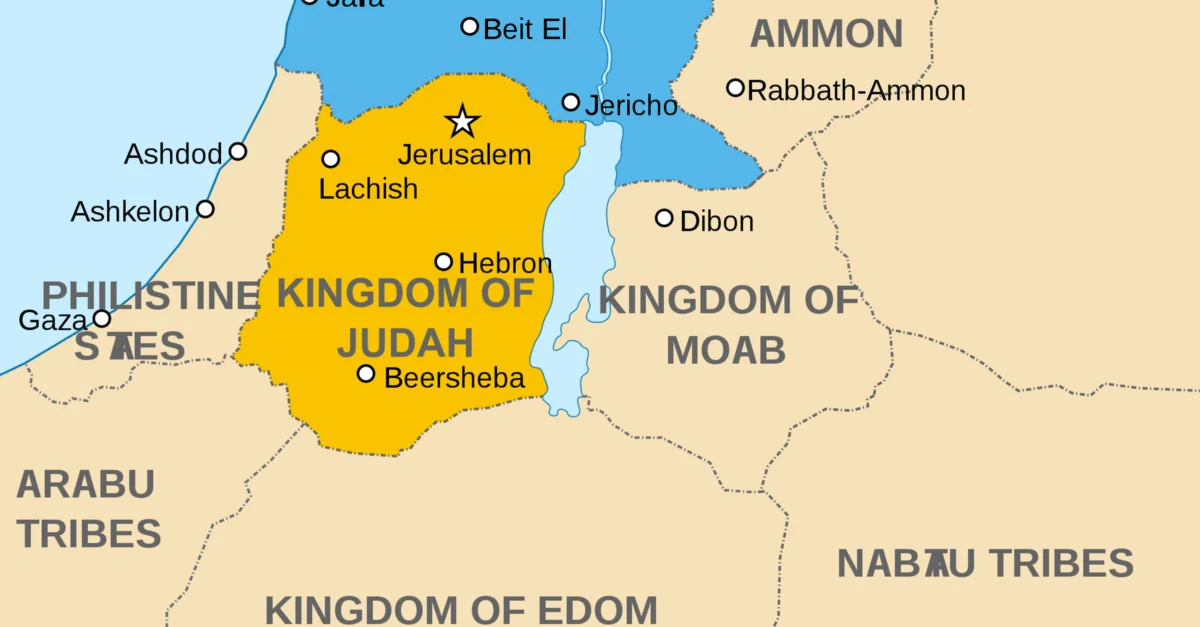
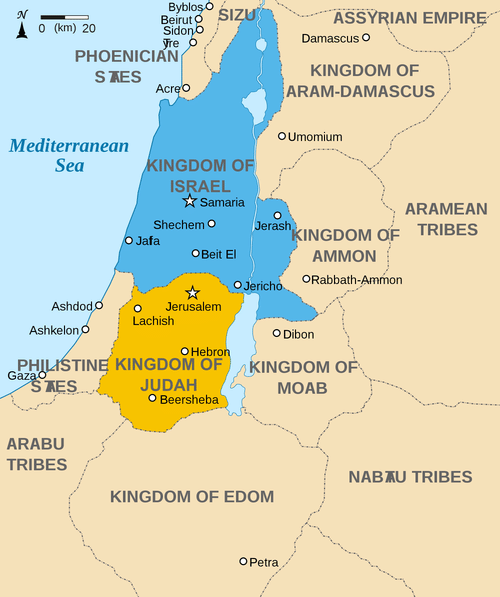
JERUSALEM – For centuries, popular understanding, shaped largely by later religious traditions, has painted ancient Israelite and Judean religion as a bastion of pure monotheism from its earliest days. However, a growing body of archaeological evidence and critical textual analysis is revealing a far more complex and dynamic picture. Emerging as early as the 10th century BCE within the broader West Semitic, or Canaanite, cultural sphere, the religious practices of ancient Israel and Judah were, for a significant period, deeply rooted in polytheism, tempered by a unique form of devotion known as henotheism. This recognition and worship of multiple deities, while primarily focusing on a single, national god, Yahweh, fundamentally reshapes our understanding of the origins of monotheistic traditions.
Main Facts: Foundations of Faith in the Levant
From the 10th to the 7th century BCE, the nascent states of Judah and Israel saw the development of religious systems that, while acknowledging a pantheon of gods, increasingly centered their devotion on Yahweh. This practice, henotheism, saw Yahweh elevated to the status of a national deity, a concept with roots stretching back to the Bronze Age. The worship was intensely practical and communal, revolving around temple rituals, elaborate sacrificial rites, and a strong emphasis on ethical conduct.
Religious life was deeply interwoven with the daily existence of the people. Temple worship and sacrificial rituals were central, marked by significant annual festivals such as Yom Kippur (the Day of Atonement), New Moon celebrations, and Pesach (Passover). These occasions provided opportunities for communal gathering, reaffirming social bonds, and seeking divine favor. Beyond structured rituals, practices like divination and prophecy were also common avenues for expressing religious devotion and seeking guidance. Furthermore, the ethical behavior of individuals and the community was understood to have a direct impact on the divine presence and protection, blurring the lines between what modern societies might categorize as ‘religion’ and ‘morality’.
The deity, most often Yahweh, was not an abstract concept but was understood to be physically present within the temple – his "house" – possessing a discernible body, emotions, and willpower, much like other West Semitic deities. This tangible connection necessitated a rigorous maintenance of the temple’s sanctity through a continuous cycle of sacrifices, offerings, and liturgy, all designed to ensure the deity’s continued residence and benevolence.
Chronology: The Evolving Landscape of Belief
The religious landscape of ancient Israel and Judah was not static but underwent significant transformations over centuries, moving from diffuse family cults to a state-sanctioned henotheism, and eventually, the emergence of monotheistic ideals.

Early Beginnings: Bronze Age Roots and Family Cults (Pre-10th Century BCE)
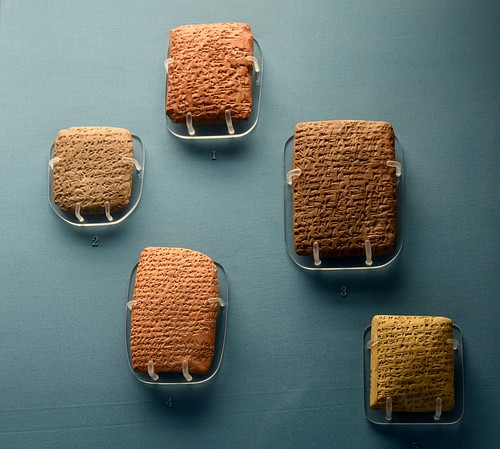
Before the consolidation of centralized authority under figures like Saul and David around the 10th century BCE, the inhabitants of the Canaanite region practiced what scholars term "family religion." Evidence for this comes from literature dating back to the 12th century BCE, including the renowned Amarna Letters, and various regional inscriptions, though the data remains fragmentary, akin to a partially assembled puzzle.
Despite the gaps, connecting these pieces with broader historical sources reveals that family religion was the prevailing norm as Israel and Judah began to forge their distinct national identities. In this context, families likely honored their ancestors through verbal rites and offerings, directing their primary religious devotion to a "god of the father" or "god of the house." This practice deeply anchored collective identity in lineage and place of origin, creating a strong sense of continuity and belonging. Scholars often refer to the people of this era as "proto-Israelite" to acknowledge their pre-state existence.
Insights from the Hebrew Bible, when interpreted through this lens, suggest that proto-Israelites engaged in rituals honoring the deceased. An example from 1 Samuel 20 describes a communal meal, a "clan sacrifice," held in Bethlehem, David’s hometown, where the entire clan gathered. This gathering, presumably on inherited ancestral land, may have served as an occasion for genealogical recitations, invoking the names of dead ancestors. Such clan or family rituals formed the foundational atmosphere from which ancient Israelite and Judean religion would later emerge. As these societies progressed towards greater centralization, the concept of a family deity gradually transformed into the deity of the emerging state, with the "house of Israel" or "house of Judah" retaining echoes of this familial religious origin.
The Age of Henotheism (10th – 7th Century BCE)
The period between the 10th and 7th centuries BCE represents the zenith of henotheistic practice within ancient Israel and Judah. As these entities solidified into distinct states, Yahweh ascended to the status of a national deity, akin to other national gods in the ancient Near East. However, this did not preclude the worship or acknowledgment of other deities. Archaeological discoveries offer compelling evidence of this nuanced religious landscape.
The transition from a decentralized, family-based religion to a state religion saw Yahweh become the focal point for collective identity and political unity. Temples, particularly the central sanctuary, became crucial sites for articulating and reinforcing state ideology, with Yahweh at its core. Yet, even as Yahweh’s prominence grew, the pantheon of other West Semitic deities remained present in the popular imagination and, often, in cultic practice.
Post-7th Century BCE: Shifting Narratives and the Path to Monotheism
A significant shift began to occur from the 7th century BCE onwards, largely influenced by political upheavals and theological developments that would eventually lead to the more stringent monotheism characteristic of later Judaism. During this period, the Hebrew Bible itself began to be compiled and edited. While preserving older traditions, the authors and redactors of this era increasingly infused the narratives with a monotheistic theological perspective, often portraying earlier periods through the lens of their contemporary beliefs. This process retroactively cast Yahweh as the only legitimate deity throughout Israelite history, downplaying or condemning the widespread henotheistic practices that archaeological and non-biblical textual evidence clearly demonstrates.
Concepts like the comprehensive "Law" given through Moses and the divine mandate of the "Davidic dynasty," while having historical roots, gained heightened religious importance and theological articulation during this later period. These elements, which became cornerstones of later Judaism, were not necessarily central to the diverse religious practices of ancient Israel and Judah in the earlier centuries.
Supporting Data: Archaeological Revelations and Textual Insights
The re-evaluation of ancient Israelite and Judean religion is largely driven by a convergence of archaeological findings and a critical re-reading of biblical texts in their broader West Semitic context.
Archaeological Discoveries Confirming Henotheism
One of the most compelling archaeological insights into ancient Israelite and Judean religion comes from Kuntillet ‘Ajrud, a remote site in the Sinai desert, possibly dating as early as the 10th century BCE. Inscriptions found there directly challenge the notion of early monotheism. For instance, one inscription explicitly reads, "to YHWH of Samaria and to Asherata," while another states, "To YHWH of Teman and to Asherata." These inscriptions are unequivocal proof that, for at least some ancient Israelites and Judeans, Yahweh was worshipped alongside Asherah, a prominent deity in the Ugaritic pantheon and frequently mentioned in the Hebrew Bible. While Yahweh held primary tribal significance, Asherah was clearly honored in cultic contexts, demonstrating a henotheistic rather than monotheistic framework.
Further corroboration comes from Khirbet el-Qom, another archaeological site, dating to the 8th century BCE. An inscription found there declares, "Blessed is Uriahu by YHWH for through Asherata He saved him from his enemy." This provides strong evidence that Asherah was understood to intercede on behalf of individuals before Yahweh, highlighting a mediatory role akin to how other deities functioned in the broader West Semitic religious systems.
Biblical Texts: A Complex Mirror of Ancient Beliefs
Even the Hebrew Bible, traditionally viewed as the primary source for Israelite monotheism, contains numerous passages that, when examined without later theological biases, reflect a henotheistic worldview.
- Psalm 82: This psalm dramatically portrays Yahweh standing in the "council of El," the high deity of West Semitic mythology. Here, Yahweh judges other deities for their failure to administer justice to the poor and needy. Consequently, El strips these deities of their divine status and commands Yahweh to rule over the nations. This poetic text clearly depicts a pantheon where other deities exist, but Yahweh is elevated to a central, authoritative role.
- Kings Narratives: The historical books of Kings frequently attest to the worship of deities other than Yahweh. For example, 1 Kings 16:33 records King Ahab constructing a shrine for Asherah. Similarly, 2 Kings 17:16 refers to people worshipping Asherah and Baal. The consistent references to Baal worship throughout the narrative strongly suggest his significant presence in the religious beliefs of the Israelite population during the Iron Age.
- Septuagint Deuteronomy 32:8: One of the earliest Greek translations of the Hebrew Bible, the Septuagint (LXX), dating to the 3rd century BCE, offers a crucial variant in Deuteronomy 32:8. While later Hebrew texts speak of Yahweh assigning nations "according to the number of the sons of Israel," the Septuagint reads: "When the Most High [El] was apportioning nations, as he scattered Adam’s sons, he fixed boundaries of nations according to the number of divine sons." In this version, El, the supreme deity, assigns various nations to different "divine sons" (deities), with Yahweh specifically assigned to Israel. This verse explicitly presents Yahweh as one among a council of divine beings, each presiding over a particular people, providing strong biblical evidence for a henotheistic framework.
West Semitic Parallels: Ugaritic Connections
The religious practices of ancient Israel and Judah did not exist in a vacuum. They were deeply embedded within the broader West Semitic cultural and religious framework. The Ugaritic texts, discovered in modern-day Syria and dating to the Late Bronze Age, provide invaluable parallels. For instance, the Ugaritic goddess Athirat served as a mediator for El, the chief god of the Ugaritic pantheon. This mirrors the mediatory role of Asherah for Yahweh seen in the Khirbet el-Qom inscription, highlighting a shared understanding of divine hierarchy and intercession across the region. Similarly, the Day of Atonement ritual in Leviticus, designed to purify the sanctuary, shares conceptual similarities with Ugaritic rituals (KTU 1.40) from the 13th century BCE, though the Israelite ritual uniquely emphasizes a single central sanctuary. These parallels underscore how ancient Israel and Judah shared a common cultural and religious heritage while simultaneously developing unique aspects centered around their primary deity, Yahweh.
Official Responses and Scholarly Discourse: Reconciling Narrative and Evidence
The discrepancies between traditional biblical narratives and archaeological/textual evidence have spurred a robust scholarly discourse, challenging long-held assumptions about ancient Israelite and Judean religion.
The Hebrew Bible as an Ideological Construct
Contemporary scholarship increasingly views the Hebrew Bible, particularly its historical narratives from Genesis to 2 Kings, as an "ideological construct" by intellectuals active between the 7th and 3rd centuries BCE. While these authors and editors undoubtedly transmitted genuine memories and traditions dating back to earlier centuries, their compilation and redaction process was informed by their own theological and cultural positions, which increasingly leaned towards monotheism. Consequently, the biblical text often presents an idealized or anachronistic view of the past, selectively emphasizing elements that supported their monotheistic agenda while downplaying or condemning widespread henotheistic practices. This does not invalidate the Bible as a historical source entirely, but necessitates a critical approach, distinguishing between the historical reality of ancient Israel and Judah and the later theological interpretations embedded within the sacred text.
Challenging Traditional Interpretations
The scholarly consensus now largely posits that the religion of ancient Israel and Judah was fundamentally henotheistic for much of its early history, with monotheism emerging as a distinct theological development, particularly during and after the Babylonian Exile. This challenges traditional views that often conflate early Israelite religion with later Judaism. Judaism, as a distinct religious system characterized by its emphasis on the Law, a singular transcendent God, and rabbinic traditions, developed significantly after the 4th century BCE and is considered separate from the more fluid, polytheistic/henotheistic practices of the earlier periods.
Implications: Understanding a Dynamic Religious Heritage
The evolving understanding of ancient Israelite and Judean religion has profound implications for how we perceive the development of monotheism, the nature of religious belief in the ancient world, and the challenges of historical interpretation.
The Centrality of Ritual and Ethics
Beyond the identity of the worshipped deities, the study reveals the pervasive importance of ritual and ethics in ancient Israelite and Judean life. Sacrificial practices, as detailed in Leviticus, were meticulously structured, even offering three levels of material objects (e.g., bull, sheep/goat, turtledove/pigeon) to ensure that even the poor could participate, reflecting a deep-seated communal commitment to worship. The annual Day of Atonement (Yom Kippur) was not merely a personal act of penitence but a national ritual crucial for purifying the sanctuary and ensuring Yahweh’s continued presence. This presence, in turn, was believed to guarantee divine advocacy and protection for the Judean population, underscoring the political and social unity fostered by such religious practices.
Divination, though often deemed taboo in later biblical traditions, was demonstrably a part of ancient Israelite and Judean practice. The narrative of King Saul consulting a necromancer in 1 Samuel 28, without explicit condemnation of the act itself, suggests that such practices were not universally frowned upon. The very existence of prohibitions against divination in texts like Deuteronomy 18:10-11 further indicates its prevalence, implying a societal struggle between accepted practices and emerging theological norms.
Crucially, ethical behavior was not a separate moral code but an integral part of religious devotion. The ancient world did not compartmentalize ethics from religion; instead, the moral conduct of the people directly impacted the deity’s willingness to reside in the temple and provide blessings. Texts like Amos 4:1 link the oppression of the poor and needy to divine withdrawal of sustenance. The departure of Yahweh’s "glory" from the temple due to the ethical corruption of Eli’s sons in 1 Samuel 4 serves as a stark warning. Leviticus 18-22 outlines various moral standards, with the consequence of being "cut off from the people" not merely a punishment, but a necessary measure to maintain the sanctity required for Yahweh’s enduring presence. Thus, ethics were intrinsically tied to the practical maintenance of divine favor and communal well-being.
Challenges and Future Directions in Scholarship
The study of ancient Israelite history, particularly its religious dimension, remains one of the most challenging fields due to the scarcity of primary sources. Scholars must meticulously sift through the complex layers of the Hebrew Bible, distinguishing between genuine historical memories and later theological overlays, while also integrating fragmented archaeological and extra-biblical textual evidence. This inherent difficulty leads to ongoing scholarly debates and diverse interpretations, which are natural consequences of limited data. The current state of scholarship exemplifies the urgent need for continued archaeological excavation and critical textual analysis to further illuminate the vibrant and multifaceted religious practices of this ancient people, allowing for a more nuanced appreciation of their role in the world and the origins of enduring religious traditions.


Leave a Comment