
Resurrecting the Forgotten: Michael Shannon and the Cinematic Rebirth of James Garfield
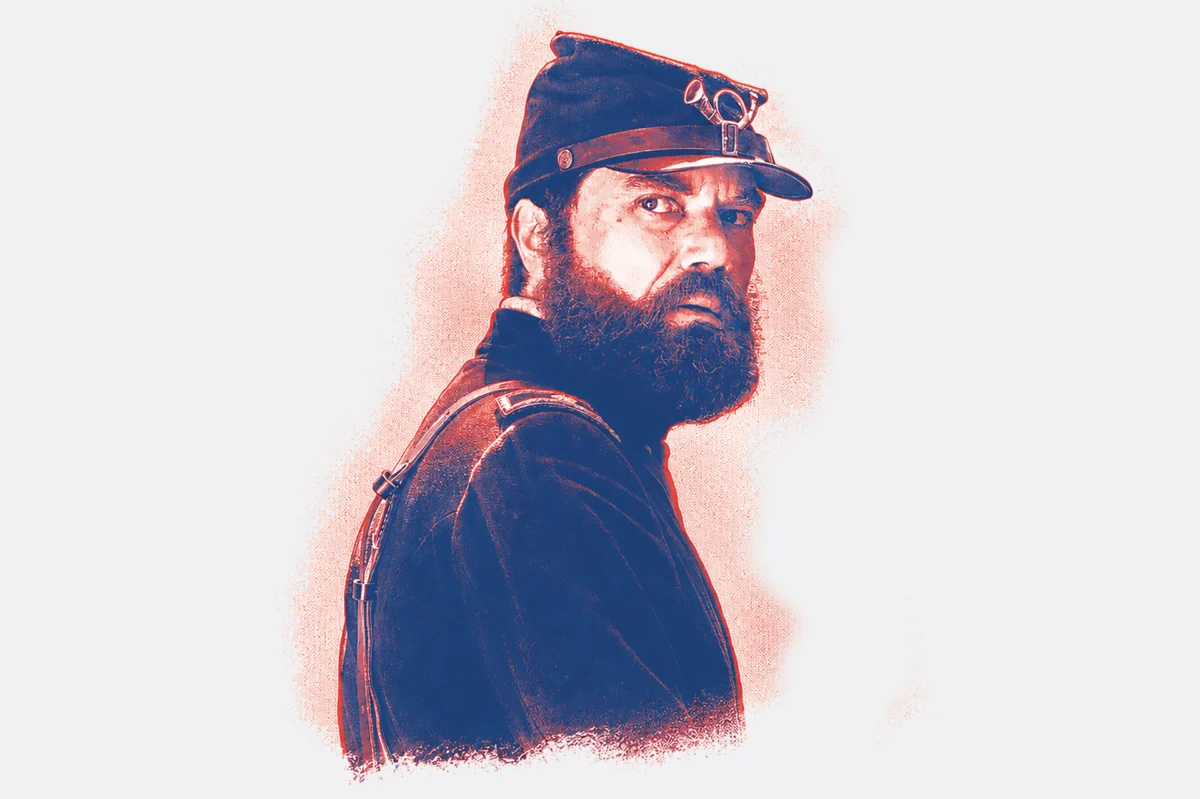
The history of the American presidency is often distilled into a few iconic images: Washington crossing the Delaware, Lincoln at Gettysburg, or Kennedy in Camelot. Yet, nestled between the titanic figures of the Civil War and the global expansion of the 20th century lies a period often relegated to a mere footnote in textbooks. At the center of this era is James A. Garfield, the 20th President of the United States, whose tenure lasted a mere 200 days before he succumbed to wounds inflicted by an assassin’s bullet.
In the new Netflix limited series Death by Lightning, Michael Shannon—an actor renowned for his intensity and gravitas—takes on the task of pulling Garfield out of the shadows of history. The irony of featuring Garfield in Variety’s "Don’t Forget About" series is not lost on the production team or Shannon himself. For over a century, Garfield has been defined more by the manner of his death than the substance of his life. Shannon’s performance seeks to rectify this, presenting a man of quiet dignity, intellectual rigor, and an almost anachronistic sense of decency.
Main Facts: A President Reimagined for the Modern Screen
Death by Lightning is not a standard biopic; it is a psychological drama that explores the collision of two very different American trajectories. On one side is James Garfield (Shannon), a reluctant leader who rose from the poverty of a log cabin to the highest office in the land. On the other is Charles Guiteau, played by Matthew Macfadyen, a delusional office-seeker whose "American Nightmare" of self-aggrandizement eventually leads to the assassination of the president in 1881.
The series, based on Candice Millard’s acclaimed book Destiny of the Republic, focuses heavily on the internal and external pressures facing a post-Civil War America. Shannon is joined by a powerhouse ensemble, including Nick Offerman as the formidable Senator Roscoe Conkling, Betty Gilpin as Lucretia "Crete" Garfield, and Shea Whigham.
For Shannon, the role is a departure from the volatile antagonists he has famously portrayed in films like The Shape of Water or Nocturnal Animals. Here, he channels a "wish fulfillment" version of leadership—a man who genuinely believes in the service of his country. Shannon notes that in an era of hyper-partisan vitriol, the character of Garfield serves as a reminder of what political decency once looked like.
Chronology: From the Log Cabin to the Baltimore and Potomac Station
To understand the weight of Shannon’s portrayal, one must look at the meteoric and tragic timeline of Garfield’s actual life, which the series meticulously recreates.
The Rise of a Polymath (1831–1880)
Born in 1831 in Orange Township, Ohio, Garfield was the last of the "log cabin" presidents. His early life was defined by grueling manual labor and a thirst for education. Before entering politics, he worked as a janitor at the Western Reserve Eclectic Institute (now Hiram College) to pay for his tuition—a detail Shannon finds particularly grounding. It was there he met his future wife, Lucretia, while he was sweeping the floors of the very classrooms where they would both study.
Garfield’s rise was swift: he became a college president at 26, a state senator at 28, and a brigadier general in the Union Army during the Civil War. By 1880, he was a long-serving Congressman who arrived at the Republican National Convention not as a candidate, but as a speaker for another man. In one of the most famous "dark horse" victories in political history, the convention deadlocked, and Garfield was drafted as the nominee on the 36th ballot.
The Brief Presidency and the Shooting (March 1881–July 1881)
Garfield was inaugurated in March 1881, inheriting a fractured Republican Party. He spent much of his six months in office battling the "Spoils System"—a corrupt arrangement where political supporters were rewarded with government jobs. His primary antagonist was Roscoe Conkling, the "Stalwart" leader who treated the New York Customs House as his personal fiefdom.
On July 2, 1881, as Garfield prepared to leave Washington for a summer vacation, Charles Guiteau approached him at the Baltimore and Potomac Railroad Station and fired two shots. Guiteau, believing he was responsible for Garfield’s election, felt he was owed a consulship in Paris and viewed the President’s refusal as a personal and national betrayal.
The Long Decline (July 1881–September 1881)
The tragedy of Garfield’s story is that the bullet did not kill him instantly. He survived for 80 days. Modern historians and medical experts agree that Garfield likely would have survived the shooting if not for the unsanitary practices of his doctors, who repeatedly probed his wounds with unwashed fingers and non-sterile instruments, leading to massive infection and sepsis. He died on September 19, 1881.
Supporting Data: The Gilded Age and the Spoils System
The historical context of Death by Lightning is crucial to understanding why Garfield’s story remains relevant. The late 19th century, often called the "Gilded Age," was a period of immense economic growth but also staggering corruption.
The central conflict of the series—Garfield versus the "Stalwarts"—represents the birth of modern civil service. Before Garfield, government positions were essentially currency for political favors. Garfield’s resistance to Roscoe Conkling was a pivotal moment in American history that eventually led to the Pendleton Civil Service Reform Act, signed by his successor, Chester A. Arthur.
Furthermore, the series highlights Garfield’s commitment to education and civil rights. He was a staunch advocate for the Department of Education, believing that universal access to schooling was the only way to ensure a truly free society. "He believed that to have a free and equal society, everyone had to have an education," Shannon observes. "It’s a beautiful thing. Now, unfortunately, we’re seeing it be dismantled."
The production also emphasizes the technological and medical shifts of the era. The 1880s were a tipping point where the old world of superstition met the new world of science. The failure of Garfield’s doctors to embrace Joseph Lister’s theories of antisepsis serves as a grim metaphor for a country struggling to modernize its institutions.
Actor Perspectives: Michael Shannon on "Wish Fulfillment"
Michael Shannon’s approach to the character is rooted in a desire to provide the audience with a sense of stability. In his interviews regarding the series, Shannon speaks candidly about the current state of American politics and why a figure like Garfield feels so necessary today.
"That’s what everybody wants, isn’t it? A decent man?" Shannon asks. He describes the portrayal of Garfield as a form of "television wish fulfillment," a chance for viewers to see a leader who is motivated by duty rather than ego. Shannon’s Garfield is a man who didn’t necessarily want the power he was given, which makes him all the more qualified to hold it.
Shannon also reflects on the "American Dream" versus the "American Nightmare." He views Garfield’s life—the janitor who became a scholar and then a president—as the purest form of the American Dream. Conversely, he sees Charles Guiteau as the precursor to the modern "fame-seeker," a man who believed that his own delusions of grandeur justified any act of violence.
"That’s a fork in the road that a lot of people find themselves at," Shannon says. "People wind up heading toward the nightmare because they think too much about themselves and their own gratification. That can’t help but lead to a nightmare."
Implications: Why Garfield Matters in the 21st Century
The release of Death by Lightning comes at a time when historical dramas are increasingly used as mirrors for contemporary societal anxieties. By focusing on a "forgotten" president, Netflix and the show’s creators are tapping into a specific cultural yearning for institutional integrity.
1. The Restoration of Civility
Garfield’s story suggests that the "partisan infighting" and "influence peddling" we see today are not new phenomena, but recurring themes in the American experiment. By highlighting a leader who attempted to rise above these fraying threads, the series offers a blueprint for civil service that prioritizes the nation over the party.
2. The Dangers of Political Delusion
The parallelism between Garfield and Guiteau serves as a cautionary tale about the intersection of mental instability and political obsession. In an age of digital echo chambers, Guiteau’s brand of self-aggrandizing delusion feels uncomfortably modern. The series explores how a single individual, fueled by a sense of entitlement, can derail the progress of an entire nation.
3. Historical Literacy as a Shield
Shannon’s advocacy for the Department of Education through the lens of Garfield is a pointed critique of contemporary educational rollbacks. The implication is clear: without a robust, educated citizenry, the "American Dream" that Garfield represented is at risk of being replaced entirely by the "American Nightmare" of Guiteau.
In conclusion, Death by Lightning is more than a period piece; it is a resurrection. Through Michael Shannon’s measured and powerful performance, James A. Garfield is no longer just a name on a list of assassinated presidents. He is presented as a man of profound intellect and character whose life, though tragically cut short, remains a vital chapter in the ongoing story of American democracy. As Shannon notes, it is easy to forget that people once thought Garfield was "crazy" for his ideals—but in hindsight, his "craziness" was simply a commitment to a decency that the world still desperately seeks.



Leave a Comment