
The Grizzly: Unpacking the Ghost Bear’s Enigmatic "Trooper" Heavy BattleMech
FOR IMMEDIATE RELEASE
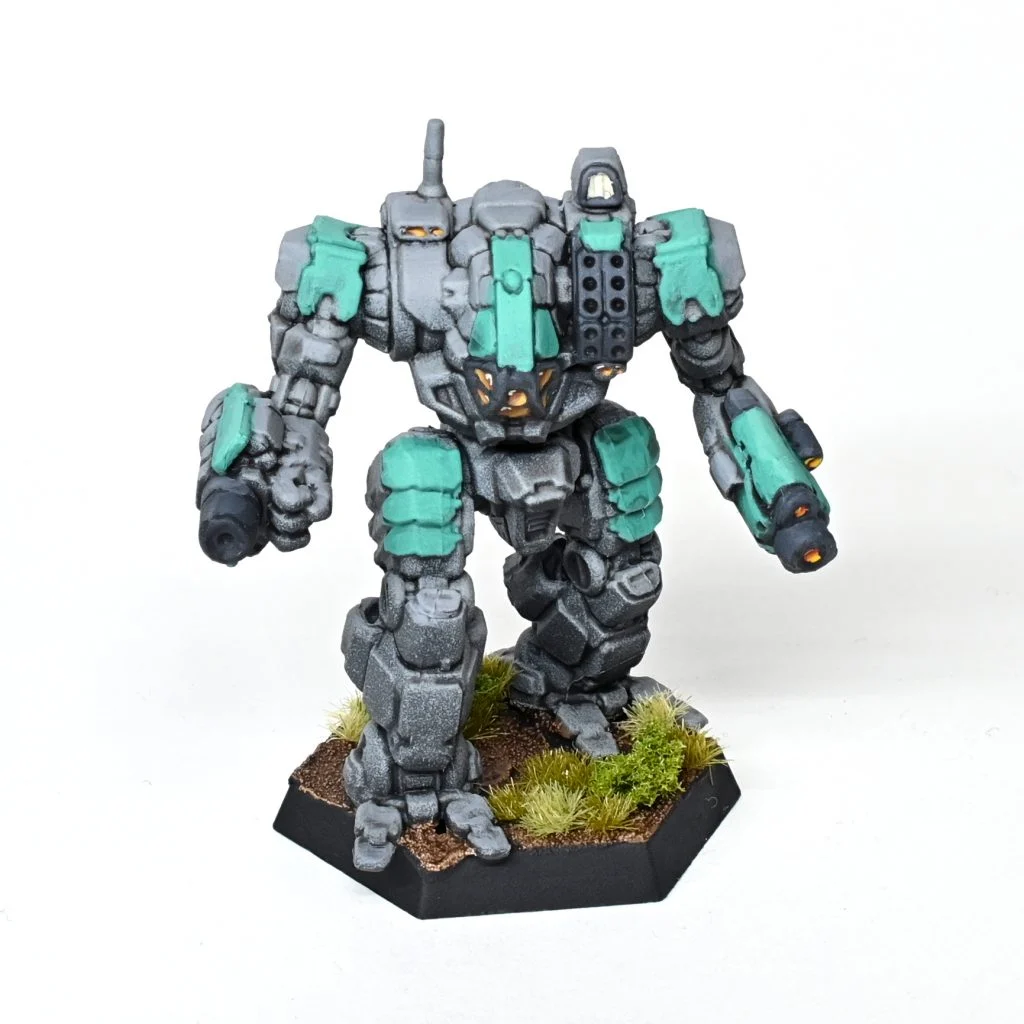
A Legacy of Utility: Examining the Clan Ghost Bear’s 70-ton Grizzly BattleMech
[Date of Publication] – The rugged landscapes of the Clan Homeworlds and the battlefields of the Inner Sphere have long been shaped by the distinctive designs of the Great Clans. Among them, Clan Ghost Bear stands out for its methodical approach to warfare and its preference for robust, bear-themed BattleMechs. Today, we delve into one such chassis, the 70-ton Grizzly, a heavy ‘Mech that has consistently stirred debate among tacticians and enthusiasts alike regarding its true combat efficacy and its classification as a quintessential "trooper ‘Mech."
Main Facts: The Grizzly’s Contested Role
Introduced by Clan Ghost Bear, the Grizzly is a 70-ton heavy BattleMech, notable for its distinctive bear-like aesthetics and its operational history within the Ghost Bear Touman. It embodies a design philosophy often dubbed the "trooper ‘Mech" archetype – a unit characterized by a balanced, generalist weapon loadout, moderate speed, and solid armor, capable of performing a variety of battlefield roles without excelling in any single one. This classification, frequently applied to Inner Sphere mainstays like the Centurion, translates to a Clan context as a ‘Mech designed for sustained, flexible combat rather than specialized roles such as dedicated brawling, sniping, or reconnaissance.
The Grizzly‘s 4/6/4 movement profile (4 walking, 6 running, 4 jumping hexes per turn) positions it firmly in the heavy class, allowing it to keep pace with most assault ‘Mechs while possessing enough mobility to navigate complex terrain. Its generous 96% armor coverage underscores a design intent for durability, allowing it to absorb significant punishment. However, despite these foundational strengths, the Grizzly has often been perceived as merely "adequate," a design that delivers utility but lacks the decisive punch or innovative technology typically associated with premier Clan heavy ‘Mechs like the Warhawk or Summoner. This analysis aims to unpack whether this perception holds true across its various iterations.
Chronology: Evolution of a Ghost Bear Workhorse
The Grizzly chassis has seen three distinct variants emerge over its operational lifespan, each reflecting the evolving technological landscape and tactical demands faced by Clan Ghost Bear. From its initial deployment to its later field refits and Dark Age resurgence, the Grizzly has adapted, albeit sometimes imperfectly, to changing battlefield realities.
The Standard Grizzly: A Foundation of Compromise (Early Clan Era)
The original Grizzly variant, designed and deployed in the pre-Clan Invasion era, established the core characteristics that would define the chassis. Its designers aimed for a dependable heavy ‘Mech that could serve as a solid anchor in Ghost Bear formations, capable of engaging targets at various ranges.
Supporting Data: Standard Model Breakdown
- Movement: A respectable 4/6/4 profile, powered by a standard fusion engine, provides tactical flexibility without incurring the weight penalties of an XL engine. This ensures a measure of internal durability often prized by Clan warriors.
- Armor: With 96% of its maximum armor capacity, the Standard Grizzly is built to endure. Specific allocations include 27 pips on each leg, 22 on each arm, 23/31/23 across the front torso, and 7/10/7 across the back, providing comprehensive protection for its critical systems.
- Internal Structure: Utilizing an endo-steel frame, the Grizzly saves crucial weight for its armament, a common practice in Clan designs.
- Weaponry: The Standard Grizzly features a potent, if somewhat disparate, weapon array. A Gauss Rifle in the right arm provides long-range punch and significant damage, while the left arm houses a trio of pulse lasers (one large, one medium, one small) for improved accuracy at closer ranges. A Long-Range Missile 10 (LRM-10) with a ton of ammunition in one side torso offers indirect fire support or direct engagement at intermediate distances.
- Heat Management: The design includes sufficient heat sinks to manage its weapon output, resulting in only a +1 heat gain on a running alpha strike. This efficiency ensures sustained fire without significant penalties.
- BattleValue (BV): Rated at 2,219 BV, the Standard Grizzly sits in a competitive bracket, demanding a careful assessment of its capabilities against its cost.
Official Responses (Implied Design Rationale & Critical Assessment):
The original Grizzly was conceived as a reliable workhorse, designed to be versatile without being overly complex or reliant on cutting-edge, fragile technology. The choice of a standard fusion engine and endo-steel reflects a desire for robustness and cost-effectiveness. However, this design faced significant internal criticism due to a glaring vulnerability: its critical component (crit) layout. The right torso, despite being armored, was left entirely empty, making it a prime target for through-armor critical hits. Conversely, the left torso, housing the LRM-10 ammunition, was 50% explosive. A catastrophic explosion here would chain-react, obliterating all of the ‘Mech’s laser weapons. This critical vulnerability, particularly for a ‘Mech designed to "roll with punches," was a significant oversight that hampered its strategic viability. While its arsenal was "respectable" and heat management "not a problem," the overall package was deemed "aggressively okay" – functional but often overshadowed by alternatives in its price range. Lynn’s Rating: C-.
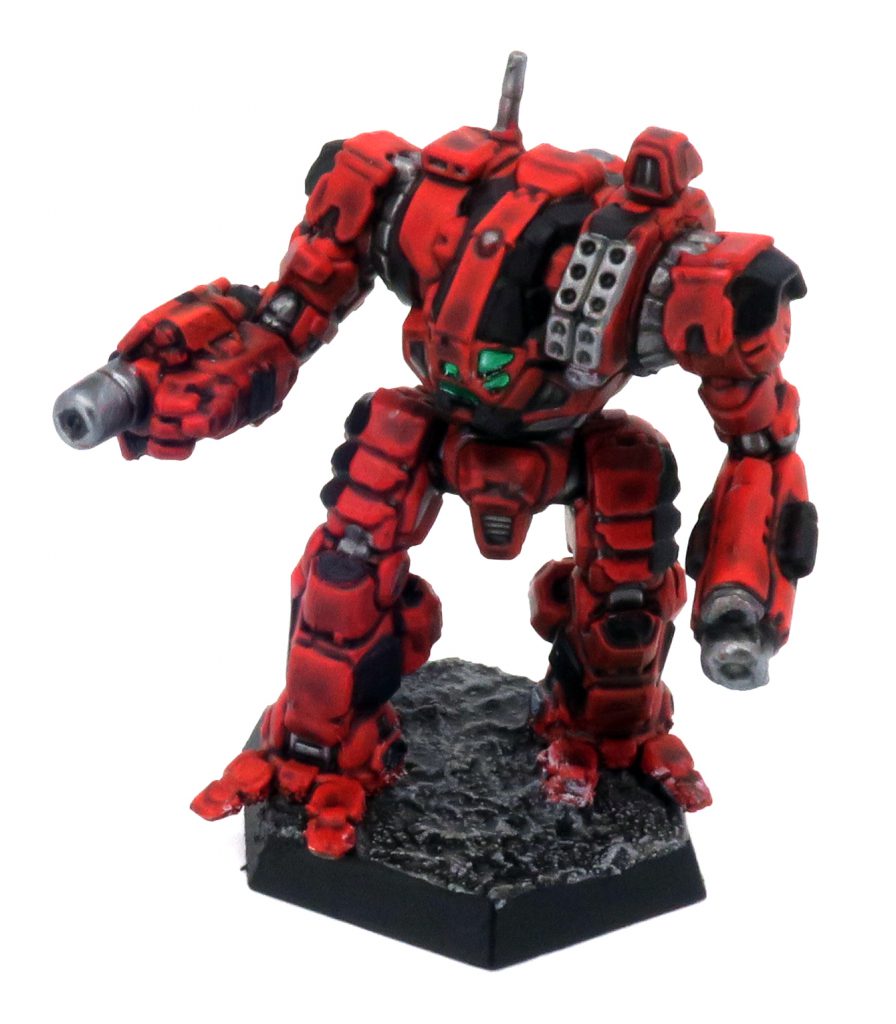
The Grizzly 2: Field Adaptations for a New Conflict (First Combine-Dominion War Era)
The perceived shortcomings of the Standard Grizzly, coupled with the brutal realities of the First Combine-Dominion War, spurred the development of the Grizzly 2. This variant emerged not as a factory-fresh design but as a widespread field refit, addressing critical issues and adapting the chassis for the evolving nature of combat.
Supporting Data: Grizzly 2 Breakdown
- Context: The First Combine-Dominion War (3062-3067) between the Draconis Combine and the Ghost Bear Dominion highlighted the need for more versatile and resilient heavy ‘Mechs. The Grizzly 2 was a direct response to these pressures.
- Structural Basis: The Grizzly 2 retains the fundamental chassis, movement profile (4/6/4), and armor load (96%) of its predecessor, indicating the underlying durability of the original frame.
- Weaponry Overhaul: The most significant changes lie in its weapon systems. The LRM-10 is replaced by an ATM-9 (Advanced Tactical Missile) launcher, accompanied by two tons of ammunition. This upgrade provides superior versatility, allowing the ‘Mech to select between HE (High-Explosive), ER (Extended Range), or IT (Inferno) munitions based on the tactical situation. The pulse laser array in the left arm is swapped for an ER Large Laser, offering improved range, backed by six ER Micro Lasers. While the ER Large Laser is a strong ranged option, the ER Micro Lasers have incredibly limited effective range, making them primarily point-defense or anti-infantry tools.
- Heat Management: The Grizzly 2 experiences a slight increase in heat generation when all weapons are fired simultaneously. However, given the disparate optimal ranges of the ATM and ER Micro Lasers, a full alpha strike is rarely optimal, mitigating sustained heat issues.
- BattleValue (BV): Priced at 2,195 BV, the Grizzly 2 is marginally cheaper than the Standard, a gap that was anticipated to grow with future BV adjustments for pulse lasers.
Official Responses (Adaptation and Improved Survivability):
The Grizzly 2 was a pragmatic evolution. Engineers and field commanders recognized the critical vulnerability of the Standard model. The ATM-9, while taking up more critical space, offered significantly enhanced firepower and tactical flexibility compared to the LRM-10. Crucially, the placement of four ER Micro Lasers in the previously empty right torso provided vital "crit-padding," dramatically reducing the risk of debilitating through-armor critical hits. While the ER Large Laser offers extended range, the overall laser package was considered a downgrade in raw damage output beyond point-blank range compared to the pulse lasers of the Standard. However, the gains in tactical flexibility, particularly with the ATM-9, and the enhanced survivability due to the improved crit layout, made the Grizzly 2 a more effective and appealing variant for the Ghost Bear Touman. It represented a successful, if somewhat conservative, field refit. Lynn’s Rating: C+.
The Grizzly 3: Dark Age Resilience and Precision (Dark Age Era)
The Dark Age, a period of significant technological upheaval and renewed conflict, saw the emergence of the Grizzly 3. This variant represents the most substantial departure from the original design philosophy, incorporating advanced technologies to enhance both its offensive capabilities and its survivability.
Supporting Data: Grizzly 3 Breakdown
- Context: The early 32nd century brought new challenges and technological advancements. The Grizzly 3 reflects a desire for ‘Mechs that could withstand prolonged engagements and deliver precise, damaging blows.
- Engine & Structure: The Grizzly 3 adopts an XL (Extra-Light) engine to offset the weight gain from a critical shift in its internal structure: the replacement of endo-steel with a Reinforced frame. Reinforced structure significantly increases the ‘Mech’s internal durability, making it much harder to destroy through internal damage, albeit at a considerable weight cost. To protect the vital XL engine, CASE II (Cellular Ammunition Storage Equipment II) is integrated into its single explosive crit slot, effectively containing any ammunition explosions.
- Weaponry: The LRM-10 receives an upgrade with Artemis V, dramatically improving its missile accuracy. The pulse laser trio is replaced by an ER Laser trio (one ER Large, one ER Medium, one ER Small). The Gauss Rifle, a staple of earlier variants, is swapped for a Plasma Rifle, a highly effective weapon for both damaging ‘Mechs and generating heat on enemy units.
- Targeting Computer: A significant addition is the inclusion of a Targeting Computer, which grants a -1 bonus to accuracy for all direct-fire weapons, greatly enhancing the Grizzly 3‘s precision.
- Heat Management: Despite adding two additional heat sinks over previous variants, the Grizzly 3 faces more pronounced heat issues. An alpha strike involving the ER Large Laser, Plasma Rifle, and LRM-10 generates a substantial +9 heat on a running attack. While the jump jets can help dissipate some heat, continuous alpha strikes are unsustainable, requiring careful weapon management. The ER Medium and ER Small Lasers primarily serve as an efficiency package, offering alternative damage options when larger weapons need to cool down.
- BattleValue (BV): At 2,331 BV, the Grizzly 3 is the most expensive variant, reflecting its advanced systems and enhanced capabilities.
Official Responses (Resilience and Precision Warfare):
The Grizzly 3 represents a significant investment in resilience and precision. The combination of an XL engine with a Reinforced Structure and CASE II demonstrates a clear design philosophy aimed at maximizing survivability in the face of increasingly destructive weaponry. While the XL engine inherently makes the side torsos more vulnerable, the Reinforced Structure mitigates this risk by making internal damage harder to achieve overall. The Plasma Rifle offers a unique tactical advantage, capable of inflicting both direct damage and disruptive heat effects on enemy ‘Mechs. The Targeting Computer, paired with the accurate ER Lasers, ensures that the Grizzly 3 can consistently land its blows, a crucial factor in the Dark Age’s more lethal combat environment. Despite its heat management challenges, the Grizzly 3 successfully transforms the chassis into a durable, accurate, and tactically flexible heavy ‘Mech, justifying its higher cost through enhanced battlefield longevity and improved offensive precision. Lynn’s Rating: B-.
Strategic Role and Battlefield Implications: The Trooper’s Enduring Legacy
The Grizzly, across all its variants, consistently attempts to fill the role of a generalist heavy ‘Mech – the "trooper" of the Clan Touman. While it never achieved the iconic status or specialized excellence of other Clan heavies like the Timber Wolf (Mad Cat) or Hellbringer (Loki), its enduring presence in the Ghost Bear forces speaks to a persistent need for a reliable, if unglamorous, frontline unit.
For the Standard Grizzly, its implications were largely negative. The critical layout flaws significantly undermined its intended role as a durable frontline unit. A ‘Mech designed to "take punches" should not have such exploitable weaknesses. Its utility was hampered by the risk of early, catastrophic internal damage, making it a liability against opponents capable of exploiting these vulnerabilities, particularly those with crit-seeking weapons or highly accurate attacks. It could anchor a line, but only with a degree of trepidation.
The Grizzly 2 represented a crucial course correction. Its emergence as a field refit during a major conflict underscores its importance to the Ghost Bear Touman. By addressing the critical layout issues and enhancing its missile capabilities with the ATM-9, the Grizzly 2 became a far more tactically relevant machine. Its ability to adapt ammunition types on the fly provided unparalleled flexibility, allowing it to engage a broader spectrum of targets, from heavily armored assault ‘Mechs to lighter, faster units. This variant solidified the Grizzly‘s place as a dependable, if still generalist, heavy ‘Mech, providing a reliable backbone for Ghost Bear Star formations.
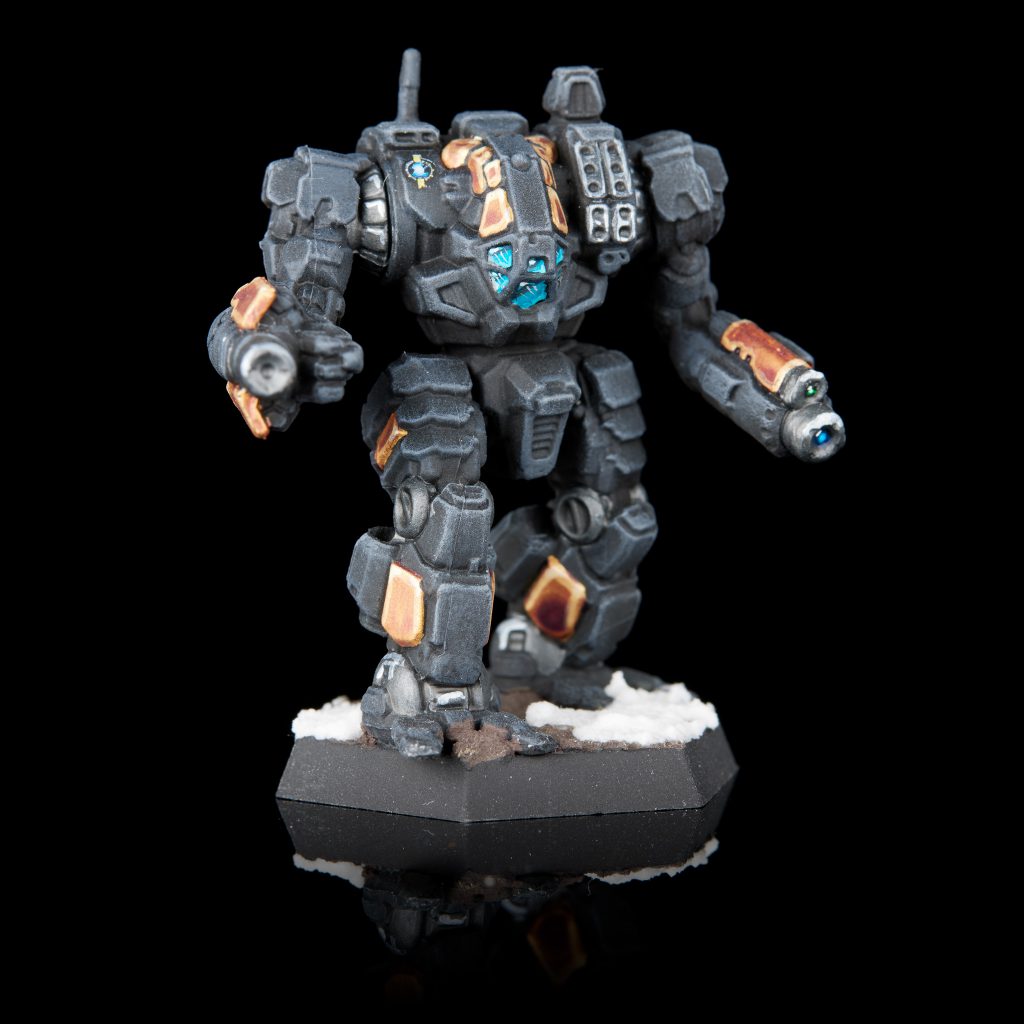
The Grizzly 3, a product of the Dark Age, demonstrates a renewed commitment to the chassis, integrating advanced defensive and offensive technologies. The Reinforced Structure and CASE II significantly enhance its survivability, allowing it to endure punishment that would cripple lesser ‘Mechs. The Plasma Rifle and Targeting Computer elevate its offensive capabilities, making it a more precise and disruptive force on the battlefield. While its heat management demands careful piloting, the Grizzly 3 is arguably the most successful iteration, offering a durable and accurate platform capable of influencing engagements through sustained damage and tactical effects. Its higher BV reflects this increased capability, positioning it as a potent, if somewhat expensive, choice for commanders seeking a resilient heavy ‘Mech.
Conclusion: The Enduring Utility of the Ghost Bear’s Grizzly
The Grizzly BattleMech, through its various iterations, stands as a testament to the Ghost Bear philosophy of combining raw power with pragmatic utility. While it may forever be seen as the quintessential "trooper ‘Mech"—a design that is "perfectly okay" but rarely spectacular—its journey from a flawed initial design to a resilient Dark Age combatant showcases a continuous effort to refine and adapt. It embodies the concept that not every ‘Mech needs to be a ground-breaking marvel; sometimes, a reliable, adaptable, and sufficiently armored generalist is precisely what a commander needs to anchor the middle of a battle line.
For those who appreciate balanced designs, the Grizzly offers a solid foundation for tactical engagements. Its legacy, though marked by early design compromises, evolved into a narrative of perseverance and adaptability, proving that even a "merely adequate" design can, with careful iteration, become a valuable asset in the unforgiving world of BattleTech.
Have any questions or feedback? Drop us a note in the comments below or email us at [email protected]. Want articles like this linked in your inbox every Monday morning? Sign up for our newsletter. And don’t forget that you can support us on Patreon for backer rewards like early video content, Administratum access, an ad-free experience on our website and more.


Leave a Comment