
Enki: The Enigmatic Architect of Creation, Wisdom, and Humanity in Ancient Mesopotamia
Mesopotamia, the cradle of civilization, gave birth to a pantheon of deities whose stories shaped the understanding of the cosmos, human existence, and the very fabric of society. Among these revered figures, few command as much complexity, influence, and enduring fascination as Enki, the Sumerian god later known as Ea to the Akkadians and Babylonians. A master of wisdom, water, magic, and creation, Enki’s narrative is a tapestry woven with threads of trickery and benevolence, consistently positioning him as a steadfast advocate for humanity against the often-capricious will of the gods.
Unveiling Enki: The Multifaceted Deity of Sumer
Core Attributes and Iconography
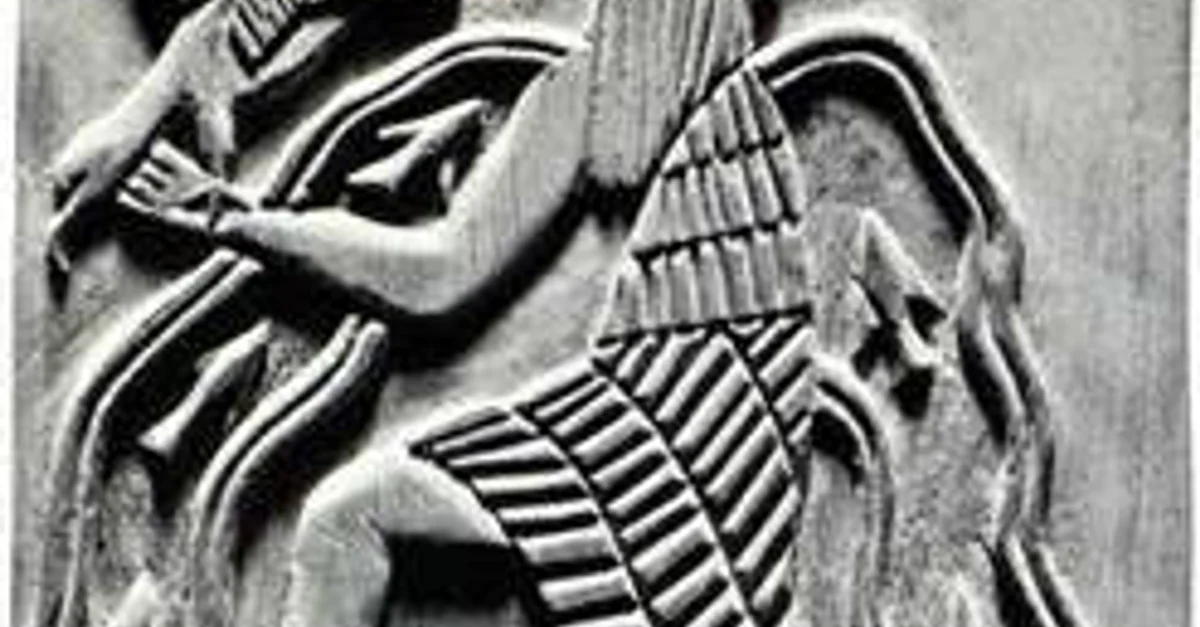
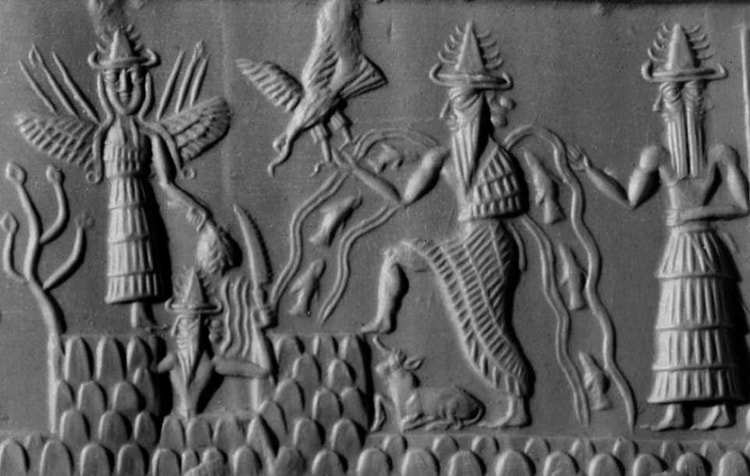
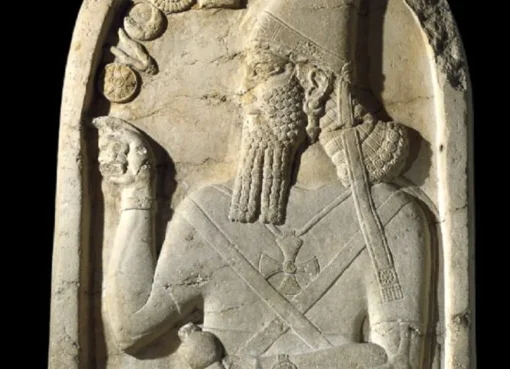
Enki, whose name translates to "Lord of the Earth," was a deity of astonishing breadth, overseeing a multitude of domains crucial to both the natural world and human civilization. He was the preeminent god of wisdom, freshwater (the abzu), intelligence, magic, exorcism, healing, crafts, creation, virility, fertility, and art. His multifaceted nature is strikingly captured in ancient iconography, which typically portrays him as a majestic, bearded man adorned with a distinctive horned cap and flowing robes. Often, he is depicted ascending the mythical Mountain of the Sunrise, with life-giving streams cascading from his shoulders – a powerful visual metaphor emphasizing his profound association with water. These flowing waters are frequently interpreted as the Tigris and Euphrates rivers, the lifeblood of Mesopotamia, with some myths even attributing their formation to Enki’s divine essence.
Complementing his aquatic imagery, Enki’s symbols, the fish and the goat, further underscore his connection to fertility and abundance. His various epithets, such as Nagbu, Nissiku, and Nudimmud, are thought to signify "prince," reflecting his noble status within the divine hierarchy. The name Nudimmud, specifically, often translates to "creator" or "fashioner," highlighting his central role in the shaping of the world and its inhabitants. Enki’s unique combination of domains—from the intellectual profundity of wisdom and magic to the primal forces of water and fertility—establishes him as an indispensable figure in Mesopotamian cosmology.
A Legacy Forged in Antiquity: Enki’s Historical Trajectory
The Dawn of Worship in Eridu
Enki’s origins stretch back to the very dawn of Mesopotamian civilization, predating many of the written records that chronicle his later exploits. Originally known as Enkig, he emerged as the patron deity of Eridu, a city held in immense reverence by the Mesopotamians as the very first city established by the gods at the beginning of the world. This primordial status lent Eridu unparalleled spiritual authority, often referred to as the "city of the first kings" and the place where divine law and order were first conferred upon humanity.

Archaeological excavations at Eridu have provided compelling evidence of Enki’s ancient veneration, revealing a continuous tradition of shrines dedicated to him dating back to the city’s founding circa 5400 BCE. This unbroken chain of worship, spanning millennia, attests to his enduring importance and the deep roots of his cult. His name first appears in written works during the Early Dynastic period III (2600-2334 BCE), solidifying his presence in the emerging literary and theological landscape. By approximately 2400 BCE, as the Akkadian Empire began to rise, Enki was firmly established as a major deity, recognized by the Akkadians under the name Ea. Both Enki and Ea, along with the Babylonian Nudimmud, were used interchangeably to refer to the same powerful entity, reflecting a continuity of belief despite linguistic and political shifts. In a more specialized role, Enki was also known as Ninsiku, particularly in his aspect as the divine patron of crafts and art, especially those objects dedicated to sacred subjects, further illustrating his connection to human skill and creativity.
The Cosmic Lineage: Enki’s Place in the Divine Pantheon
Genealogical Ties and Divine Triads
Enki occupied a pivotal position within the complex Mesopotamian pantheon, often forming a foundational triad with Anu, the sky god, and Enlil, the supreme lord of the air. This early divine triumvirate governed the high heavens, the atmosphere, and the earth, collectively overseeing the cosmic order. Enki’s parentage, however, is presented with some fluidity across different Mesopotamian traditions, reflecting the evolving theological narratives of the region. In Sumerian and Akkadian mythology, he is frequently identified as the son of Anu, while Babylonian texts often name Apsu, the primordial father personifying freshwater, as his progenitor. Yet another tradition posits his birth from the goddess Nammu, the primordial mother goddess credited with giving birth to both the earth and the heavens, further cementing his deep connection to the elemental forces of creation.
Enki’s primary consort was Ninhursag, also known by various other names such as Ninmah and, originally, Damgalnuna (or the Assyrian Damkina). Together, they sired several significant deities and figures. Their notable sons included Asarluhi, the god of magical knowledge; Enbilulu, the god of canals and dikes, vital for Mesopotamian agriculture; Adapa, a legendary human sage; and the revered king of the gods, Marduk, who would later absorb many of Asarluhi’s qualities.
The myth Enki and Ninhursag also details the birth of eight additional children, born from Ninhursag’s efforts to heal Enki after he consumed various plants. Each child was created to cure a specific ailment in Enki’s body, highlighting his intrinsic link to healing and the generative power of the divine. These children are traditionally named Ninsikilla, Ninkurra, Ninsar, Ninkasi, Nanše, Azimua, Ninti, and Enšag, each associated with specific aspects of life and healing. Beyond his immediate family, Enki is frequently depicted as the father or uncle of Inanna (Ishtar), the powerful and popular goddess of war, sexuality, passion, fertility, love, and prostitutes. He also had a twin brother, Adad (or Ishkur), the formidable god of weather and storms. His inclusion among the earliest seven Sumerian deities, alongside Anu, Enlil, Inanna, Nanna, Ninhursag, and Utu-Shamash, further underscores his foundational importance in the Mesopotamian divine hierarchy.
Narrative Threads: Enki’s Enduring Presence in Mesopotamian Literature
Foundational Myths and Epic Sagas
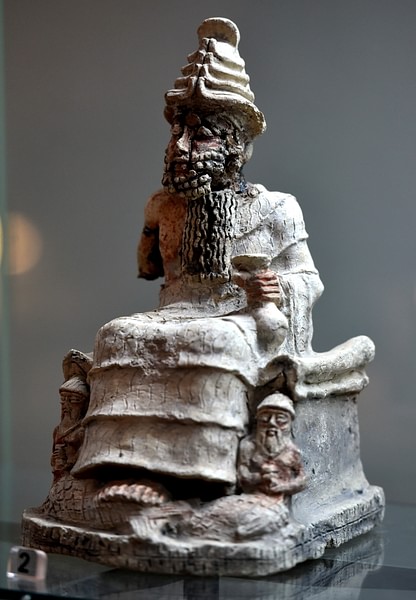
Enki’s character comes vividly to life through a rich corpus of Mesopotamian stories, legends, prayers, and royal inscriptions, where he consistently plays a major, often decisive, role. He is famously central to creation narratives, notably in Enki and Ninhursag and Enki and Ninmah, both of which elaborate on the genesis of the world and humanity. Enki’s Journey to Nippur is another significant origin myth, detailing how the god created Eridu and ordained certain musical instruments essential for ancient Mesopotamian festivals, linking him directly to the establishment of culture and sacred practices.
The Babylonian Genesis: Enki in the Enuma Elish
In the monumental Babylonian epic of creation, the Enuma Elish, Enki is presented as the insightful father of Marduk, the champion who ultimately defeats the forces of chaos. This epic begins with a primordial state of undifferentiated swirling chaos, from which emerged Apsu, the male principle of freshwater, and Tiamat, the female principle of saltwater. Their union gave birth to the younger gods, whose boisterous activities soon disturbed Apsu’s peace. After consulting his vizier, Apsu resolved to destroy his offspring. Tiamat, horrified, secretly warned her son Enki. Displaying his characteristic wisdom and foresight, Enki devised a plan: he cast a deep sleep upon Apsu and then, decisively, killed him. This act, while a patricide, was portrayed as a necessary step for the younger gods’ survival and the subsequent establishment of cosmic order.
Tiamat, enraged by Apsu’s demise and feeling betrayed, disowned her children and raised a monstrous army, led by her consort and champion, Quingu. This formidable force of older gods initially overwhelmed Enki and the younger deities, driving them to despair. It was then that Enki’s son, Marduk, stepped forward, offering to lead them to victory if they would declare him their king. Once elevated to supreme authority, Marduk confronted Quingu in single combat, defeating him, and then famously split Tiamat in two with an arrow. From Tiamat’s tears flowed the Tigris and Euphrates rivers, and her body was used by Marduk to fashion the earth and the heavens. Quingu and his rebellious allies were executed, and Quingu’s blood was mingled with clay to create human beings. Throughout this cosmic drama, Marduk consulted extensively with Enki, leading to Enki being widely credited as a co-creator of the world and life itself, his wisdom guiding the very blueprint of existence.
Humanity’s Genesis and Near-Annihilation: The Atrahasis
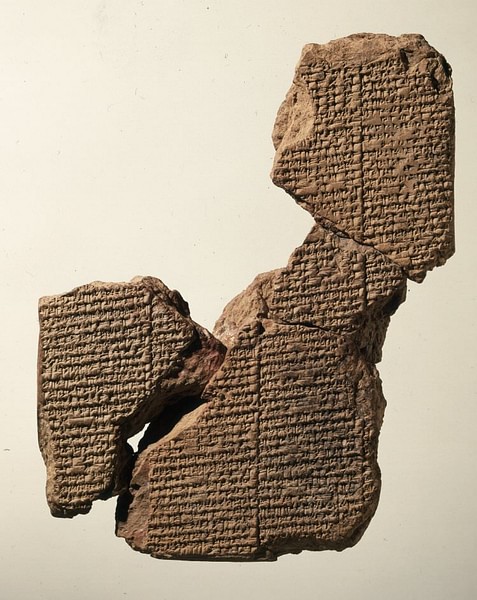
The Akkadian/Babylonian epic The Atrahasis offers an alternative, yet equally significant, account of creation, where Enki again plays a pivotal role in humanity’s destiny. In this narrative, the elder gods enjoy a life of leisure, while the younger gods toil relentlessly to maintain creation. Weary from their ceaseless labor, the younger gods contemplate rebellion. Enki, ever the pragmatist and innovator, proposes a solution: the creation of lesser beings to share the burden of work. Lacking a suitable material for these new creatures, the god We-llu (also Iawela) volunteers as a sacrifice. His flesh, blood, and intelligence are then kneaded into clay by the mother goddess Ninhursag, from which she fashions fourteen human beings—seven male and seven female.
These initial humans prove exceptionally fertile, and soon, their numbers swell into the thousands, effectively taking over the younger gods’ laborious tasks. However, this success brings a new problem: humanity’s growing population becomes increasingly noisy and disruptive, disturbing the sleep and leisure of Enlil, the king of the gods. Frustrated, Enlil resolves to reduce their numbers through a series of devastating plagues: drought, pestilence, and famine. Each time, humanity appeals to their benevolent father-god Enki, who, driven by compassion, intervenes by whispering instructions to them on how to restore balance and productivity, thus saving them from annihilation.
Enlil, increasingly exasperated by Enki’s interventions, finally persuades the other gods to unleash a Great Flood, a cataclysm designed to utterly destroy humanity. Unable to directly defy Enlil, Enki subtly subverts the plan. He descends to Earth and, finding a pious and wise man named Atrahasis, whispers to him through a reed wall, instructing him to build an ark and gather two of every kind of animal. Atrahasis completes his task just as the deluge begins. The world is consumed by water, and the gods, including the weeping Ninhursag, mourn humanity’s tragic end.
As the flood waters recede, Atrahasis opens his ark and offers sacrifices to the gods. The sweet aroma ascends to heaven, revealing to Enlil that life has survived. Enraged, he confronts Enki, but Enki calmly explains Atrahasis’s goodness and piety. The gods, pacified by the sacrifice, descend to Earth. Enki then proposes a new covenant: humans will be created with reduced fertility and shorter lifespans. Infants will be susceptible to illness, women will suffer miscarriages or infertility, and some will be consecrated as perpetual virgins. Additionally, opportunities for death will be woven into the fabric of daily life. The gods agree, Atrahasis is spirited away to the lands of the blessed, and Ninhursag creates this new, more fragile humanity. This myth profoundly shapes Mesopotamian understanding of human suffering, divine intervention, and the delicate balance of existence.
The Divine Strategist: Trickery and Benevolence
Enki’s reputation as a "trickster god" is not one of malice, but rather of profound wisdom, where his seemingly mischievous actions invariably lead to outcomes beneficial for the larger community, particularly humanity. He consistently employs cunning and indirect methods to achieve justice, balance, and progress.
In The Marriage of Ereshkigal and Nergal, Enki masterfully orchestrates events to ensure that Nergal, the volatile god of war, is bound to the underworld for six months of the year. This divine diplomacy effectively prevents widespread warfare and strife on Earth during that period, demonstrating Enki’s strategic genius in maintaining cosmic equilibrium. Similarly, in The Descent of Inanna, when his daughter (or niece) Inanna is killed by her sister Ereshkigal in the underworld, Enki deploys two clever, non-divine demons, Kurgarra and Galatur, to trick the Queen of the Dead into releasing Inanna’s corpse. His intervention, while indirect, is crucial for restoring the cycle of life and death and ensuring Inanna’s return to the world.
Perhaps the most famous instance of his trickster nature is found in Inanna and the God of Wisdom. Here, Enki is the possessor of the meh, the divine decrees and powers that govern all aspects of life and represent the very gifts of civilization—the exclusive domain of the gods. During a drunken feast, Inanna boldly challenges Enki and manages to persuade him to bestow the meh upon her. Although Enki later sends various forces to retrieve them, Inanna, with remarkable ease, escapes with her stolen treasures, ultimately delivering the invaluable gifts of civilization to humanity. This tale, while portraying Enki as susceptible to Inanna’s charms, subtly reveals his underlying intention: to empower humanity with the tools for societal advancement, even if it meant bending the rules and appearing to lose control. His "mischief" serves a higher purpose, illuminating deeper truths and ultimately benefiting the world.
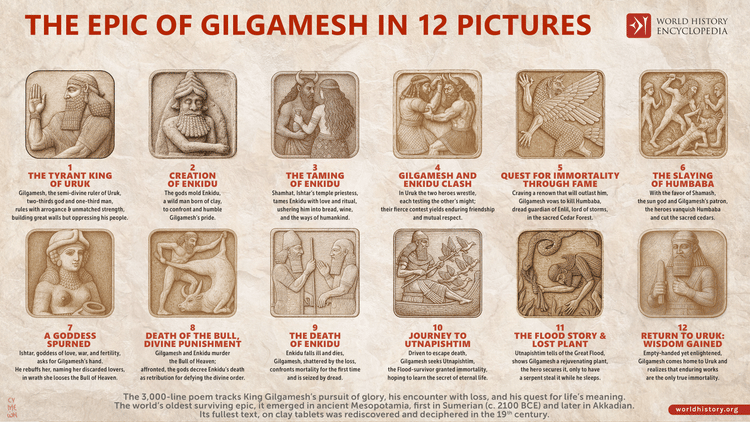
Even in The Epic of Gilgamesh, Enki’s subtle wisdom is evident. After Gilgamesh rejects the advances of Inanna (Ishtar), she unleashes the Bull of Heaven, Gugalanna, to wreak havoc. Gilgamesh and Enkidu, his wild-man companion, kill the divine beast. For this transgression against a god, Enkidu is condemned to die. Enki, recognizing the underlying injustice of Inanna’s wrath, nonetheless consents to Enkidu’s fate. His reasoning is profound: humans must understand their limits and not challenge the gods with impunity. More importantly, Enkidu’s death introduces Gilgamesh, the mighty hero, to the profound experience of loss and mortality. This sorrow propels Gilgamesh on his epic quest for immortality, an exploration that ultimately leads him not to eternal life, but to a deeper understanding of human existence, friendship, and the meaning of his own reign. Enki’s decision, though seemingly harsh, acts as a catalyst for Gilgamesh’s spiritual and intellectual growth, making him a more complete and wise individual.
Even in myths where Enki’s actions appear morally ambiguous, such as in Enki and Ninhursag, where he seduces his own grown daughters (a transgression attributed to his overwhelming love for Ninhursag and a state of enchantment), he is portrayed sympathetically. His subsequent punishment ultimately results in the birth of new deities who are favorable to humanity, demonstrating that even his missteps can contribute to the greater good. Similarly, in Enki and Ninmah, his mischievous challenge to Ninmah during a drinking contest, where he creates a being she cannot improve upon, underscores his wisdom and his constant desire to ensure the best for humanity through unconventional means.
The Official Mandate: Worship and Societal Role of Enki
The Sacred City of Eridu
As the patron deity of Eridu, Enki’s worship was deeply intertwined with the city’s identity and significance. Eridu was not merely a geographical location but a foundational concept, representing the primordial marsh from which life and civilization were believed to have arisen. This mystical connection to the abzu (also absu), the subterranean freshwater ocean, positioned Enki as the lord of these life-giving depths, a source of both physical sustenance and magical power.
Excavations at Eridu have unearthed a remarkable continuity of cultic activity, with shrines to Enki being built and rebuilt on the same sacred spot for thousands of years. This architectural layering speaks volumes about the enduring devotion to him. His primary temples, known as E-abzu ("House of the Abzu") and E-engur-ra ("House of the Subterranean Waters"), were not only architectural marvels but also centers of spiritual and community life. These temples are grandly described and praised in texts like Enki’s Journey to Nippur, which recounts Enki receiving Enlil’s blessings for his newly established city.
As with all major Mesopotamian gods and goddesses, Enki’s cult involved a complex hierarchy of priests who tended to his divine statue, maintained his temple ziggurat, and managed the extensive temple complex. These institutions served the populace in myriad ways, functioning as centers for healing, counseling, and the distribution of resources. Unlike modern religious services, formal congregational worship as we understand it was not common. Instead, people interacted with the gods primarily during grand festivals, through communion with lesser priests who acted as intermediaries, or privately within their homes through personal rituals and prayers. Enki’s attendants, including his faithful minister Isimud, a host of giants, both protective and destructive demons, mermen, and mermaids inhabiting the watery depths of the abzu, and the wise Seven Sages (abgal) who resided in his palace, further illustrate the intricate and mystical nature of his divine household.
Enduring Resonance: The Profound Implications of Enki’s Mythos
Shaping Mesopotamian Thought and Beyond
Enki’s stories and attributes carry profound implications that resonated throughout Mesopotamian society and continue to influence our understanding of ancient thought. His role as a co-creator, particularly in the Enuma Elish and Atrahasis, provided a foundational cosmological framework, explaining the origins of the world and humanity. More significantly, his consistent advocacy for humanity, often in defiance of other gods’ destructive impulses, instilled a sense of hope and purpose in the human condition. His compassion, forgiveness, and wisdom offered a counter-narrative to the often-harsh realities of life, suggesting a divine being who genuinely cared for his creations.
The ethical and moral lessons embedded in Enki’s trickster persona are particularly striking. His actions, though sometimes unorthodox, consistently demonstrate that true wisdom lies not in rigid adherence to rules, but in adaptability, strategic thinking, and a commitment to the greater good. The episode with the meh in Inanna and the God of Wisdom, for instance, highlights the divine intention to equip humanity with the means for civilization, even if through a playful subterfuge. Similarly, Enkidu’s death in The Epic of Gilgamesh, orchestrated by Enki’s consent, serves as a poignant reminder of mortality, guiding humanity toward deeper philosophical introspection rather than simply punishing hubris.
Enki’s narratives also had tangible societal functions. His association with freshwater, healing, and fertility made him a vital deity for an agricultural society reliant on irrigation and abundant harvests. His temples, as centers for healing and counsel, provided practical support and spiritual guidance, reinforcing social cohesion. The concept of Eridu as the "first city" where law was


Leave a Comment