
The 1.4 Billion User Paradox: Why the Microsoft Store is Failing Indie Developers
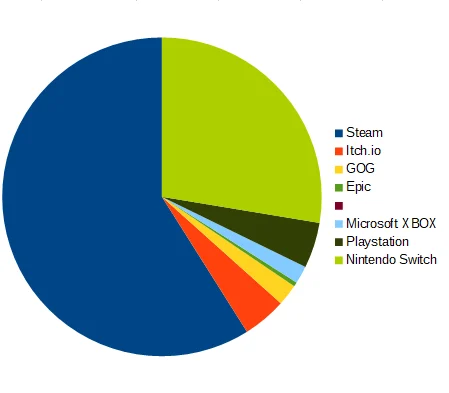
In the digital era, the success of a video game is often measured by its reach across various platforms. For independent developers, the strategy is typically one of "omnichannel distribution"—placing a title on Steam, the Epic Games Store, GOG, PlayStation, Xbox, and Nintendo Switch to capture every possible sliver of the market. However, a startling revelation from an industry veteran has highlighted a massive "black hole" in the PC gaming ecosystem: the Microsoft Store.
On August 5, 2022, Martin Nerurkar, the developer behind the critically acclaimed dust-punk deckbuilder Nowhere Prophet, shared a sales breakdown that sent shockwaves through the development community. Despite the game’s success on other platforms and a total sales volume estimated at 20,000 copies, the Microsoft Store—built natively into a Windows operating system boasting over 1.4 billion monthly active users—had recorded exactly zero sales.
This anomaly raises critical questions about Microsoft’s strategy for its PC storefront, the effectiveness of its "walled garden" ambitions, and whether the company’s focus on its Game Pass subscription service has inadvertently cannibalized its traditional retail environment.
Main Facts: The Zero-Sale Phenomenon
The data provided by Nerurkar paints a grim picture of the Microsoft Store’s relevance to independent creators. Nowhere Prophet, published by No More Robots, is far from an obscure title; it holds a "Very Positive" rating on Steam and has been featured in various high-profile indie showcases.
The core facts of the situation are as follows:
- Platform Disparity: While the game saw healthy movement on Steam and consoles, the Microsoft Store (PC version) generated no revenue over several years.
- The User Base Gap: Windows 10 and 11, the primary vehicles for the Microsoft Store, have a combined install base of approximately 1.4 billion users. Theoretically, this represents the largest pre-installed customer base in the history of computing.
- Identity Crisis: Critics and developers argue that the Microsoft Store suffers from a lack of clear purpose, failing to distinguish itself as either a high-end gaming portal or a utility-based app store.
- Revenue vs. Units: Nerurkar noted that while exact unit counts are difficult to track due to various bundles and regional pricing, the revenue trend was undeniable: the Microsoft Store contributed 0% to the bottom line.
Chronology: The Evolution of a Struggling Storefront
To understand how a platform with 1.4 billion users can fail to sell a single copy of a popular game, one must look at the history of Microsoft’s attempts to monetize the Windows desktop.
2012–2015: The Windows 8 Era and UWP
The seeds of the current failure were sown with the launch of Windows 8. Microsoft introduced the "Windows Store" and the Universal Windows Platform (UWP). This was an attempt to mimic the success of the Apple App Store by creating a sandboxed environment. However, UWP was notoriously restrictive for gamers, making it difficult to use mods, overlays, or third-party hardware controllers. This alienated the core PC gaming demographic from the outset.
2019: The Launch of Nowhere Prophet
Nowhere Prophet entered the market at a time when Microsoft was beginning to shift its strategy. The company started moving away from the "UWP-only" requirement, allowing standard Win32 apps (the traditional format for PC games) into the store. Despite this technical relaxation, the store’s reputation among gamers remained low.
2021: The Windows 11 Overhaul
Leading up to the 2022 data reveal, Microsoft launched Windows 11 with a redesigned store. The goal was to make it faster, more open, and more appealing to developers. Microsoft even reduced its revenue cut to 12% to match the Epic Games Store. Yet, as Nerurkar’s data suggests, these "under-the-hood" improvements did little to change consumer behavior.
August 2022: The Social Media Revelation
When Nerurkar posted his sales chart, it served as a "canary in the coal mine" for the industry. It confirmed what many suspected: while Windows is the dominant OS for gaming, the Microsoft Store is effectively invisible to the people who actually buy games.
Supporting Data: The Discoverability Crisis
The failure of Nowhere Prophet on the Microsoft Store is not an isolated incident, but rather a symptom of a broader discoverability crisis. When we analyze why Steam remains the dominant force, the data points toward several key metrics:
User Intent and Engagement
On Steam, 100% of the traffic consists of "gamers." On the Microsoft Store, the vast majority of those 1.4 billion users are enterprise employees, students, or casual users looking for calculators, PDF readers, or Netflix. The "footfall" Microsoft boasts about is misleading; it is not high-intent retail traffic.

The Power of Steam’s Moat
According to 2022 industry reports, Steam accounts for roughly 75% of the global PC gaming market share. Steam’s "Discovery Queue" and algorithmic recommendations are honed to present games to users based on their specific tastes. In contrast, the Microsoft Store’s algorithm often prioritizes Microsoft-owned IP (like Halo or Forza) or "Top Free" apps, leaving indie titles like Nowhere Prophet buried under layers of irrelevant software.
Technical Friction
Historically, the Microsoft Store has been plagued by installation bugs. A 2021 survey of PC gamers revealed that "installation errors" and "locked file systems" were the primary reasons users avoided the store. For an indie game, where the barrier to entry must be as low as possible, any technical friction results in a lost sale.
Official Responses and Market Positioning
Microsoft has rarely addressed individual sales failures like that of Nowhere Prophet. Instead, their official stance has shifted toward a broader "ecosystem" narrative.
The Game Pass Pivot
Microsoft’s primary response to the struggles of its retail store has been the aggressive expansion of Xbox Game Pass for PC. Sarah Bond, then-Corporate Vice President at Xbox, has frequently stated that Game Pass users play 40% more games and spend 20% more on titles outside the subscription.
However, this creates a "Subscription Trap" for indie developers. If a game is not on Game Pass, users are unlikely to buy it on the Microsoft Store because they have been conditioned to view that specific storefront as a "subscription library" rather than a "retail shop." If a user wants to own a game, they go to Steam; if they want to rent it, they go to the Microsoft Store. If a game is in neither category, it effectively doesn’t exist on the platform.
Developer Incentives
To combat the lack of sales, Microsoft has attempted to lure developers with better margins. In 2021, Matt Booty, Head of Xbox Game Studios, announced: "A 12 percent store share for PC games will help each developer bring more games to more players and have greater commercial success." While the sentiment is positive, a 12% cut of zero dollars remains zero dollars.
Implications: The Future of the "Windows Ecosystem"
The revelation that a successful indie game can sell zero copies on a platform with 1.4 billion users has profound implications for the future of digital distribution.
1. The Erosion of the Transactional Model
For indie developers, the Microsoft Store is no longer a viable retail channel. It has become a "B2B" (Business to Business) platform where the only way to make money is to sign a licensing deal for Game Pass. This limits the autonomy of developers, making them dependent on Microsoft’s curators rather than the open market.
2. The Failure of Pre-Installed Advantage
The "Nowhere Prophet" case proves that being pre-installed is not a guarantee of success. In the 1990s, Microsoft was sued for bundling Internet Explorer with Windows because it gave them an "unfair advantage." Today, the Microsoft Store is proof that in a mature digital economy, consumers choose the best service (Steam), not the most convenient one.
3. The Need for a Radical Identity Shift
If Microsoft wants to save its store, it must decide what it wants to be. Currently, it is a hybrid of a mobile app store, a professional software repository, and a AAA gaming hub. By trying to be everything to everyone, it has become nothing to the 20,000 people who bought Nowhere Prophet elsewhere.
4. A Warning to Other Walled Gardens
This serves as a warning to other tech giants. Having a massive user base is meaningless if the "user experience" (UX) and "user intent" are not aligned. The Microsoft Store is a cautionary tale of how a lack of focus and a history of technical mismanagement can turn the world’s most ubiquitous operating system into a retail ghost town.
Conclusion
The story of Martin Nerurkar and Nowhere Prophet is a stark reminder of the complexities of the modern gaming market. While 1.4 billion monthly active users sounds like a goldmine, for the independent developer, it has proven to be a mirage. Until Microsoft can reconcile its identity—moving away from a cluttered utility hub and toward a community-focused gaming destination—indie developers will likely continue to view the Microsoft Store not as a land of opportunity, but as a digital shelf that nobody visits. For now, Steam remains the king of the PC, and Microsoft’s "Store" remains an untapped, and perhaps un-tappable, resource.


Leave a Comment