
Jen St. Jude’s "Where You’ll Find Us" Unveils a Timeless Sanctuary for Queer Youth in New YA Fantasy
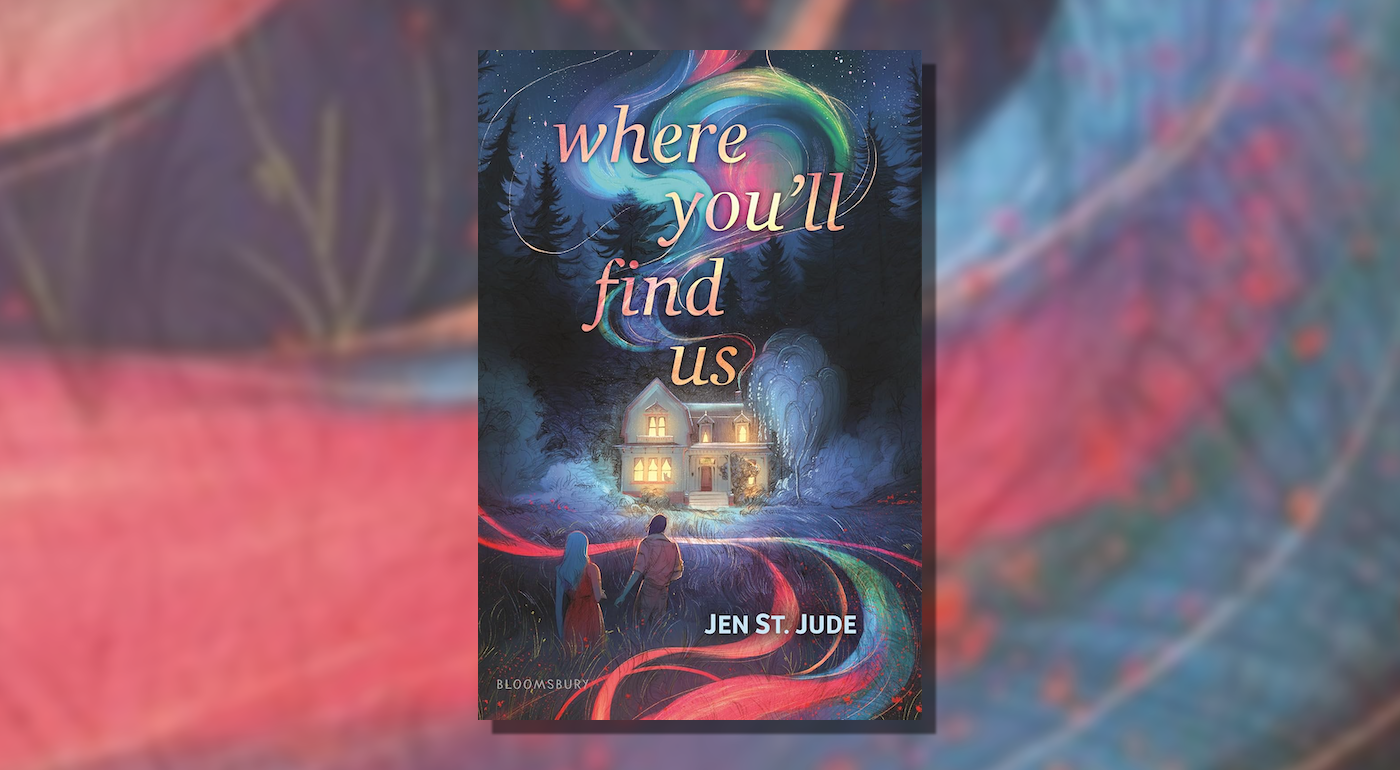
NEW YORK, NY – [Date of Article Publication, e.g., May 20, 2026] – Bloomsbury YA is poised to release a groundbreaking new young adult fantasy novel, Where You’ll Find Us, by acclaimed author Jen St. Jude, on June 2nd. A recently released excerpt offers readers a tantalizing glimpse into a world where personal identity, historical erasure, and the yearning for belonging converge in a mysterious, time-bending sanctuary. The novel promises to be a poignant and imaginative exploration of queer experience, challenging conventional narratives and offering a beacon of hope for young readers navigating complex identities.
The core premise introduces Calla Quick, a protagonist grappling with profound personal upheaval. Disowned by her parents via text message and facing the prospect of losing her dream of attending an all-women’s college with her girlfriend, Ramona, Calla’s world is already fractured. Beneath the surface of these external conflicts lies a deeper, more personal struggle: Calla is questioning her gender identity, wondering if she is a girl at all. This deeply personal and timely exploration forms the emotional heart of the narrative, setting the stage for a journey of self-discovery unlike any other.
The Journey to Amaranth: A Chronicle of Discovery
The excerpt plunges readers directly into the harrowing circumstances that lead Calla and Ramona to the enigmatic Amaranth farmhouse. Their ordeal begins amidst a ferocious storm, a natural force mirroring the turbulent emotional landscape Calla inhabits. Lost in a downpour and impenetrable darkness, the two protagonists find themselves literally at a fork in the road, a stark metaphor for Calla’s own crossroads in life. Their phones are useless, left behind in the chaos of their escape, severing their connection to the familiar world and amplifying their vulnerability.
The storm intensifies, becoming a character in itself – a "hot, white, angry blue" lightning strike fells a massive tree directly behind them, blocking their retreat and forcing them deeper into the unknown. The scent of char and the terrifying proximity of death underscore the desperate need for shelter. Driven by an primal instinct for survival, Calla and Ramona cling to each other, their bond a fragile lifeline against the raw, relentless wind and punishing rain. Calla, burdened by a sense of fault for their predicament, feels the crushing weight of responsibility, believing their survival rests solely on her.
Just as hope seems to wane, Ramona spots a light, not the expected lanterns of the country club they’d left, but an otherworldly glow leading to a clearing. What they discover defies logic: a patch of impossibly clear sky above, revealing a tapestry of stars, illuminating a surreal landscape. A field of blood-red flowers, a weather-worn white house with a bold crimson door, and every window aglow. The scene is one of paradoxical tranquility amidst the raging storm, a haven that seems to exist outside the natural order. Chickens peck unbothered by the tempest, and a serene pond reflects the unblemished sky. This striking imagery immediately signals that Calla and Ramona have stumbled into a place profoundly different from anything they’ve known.
Upon reaching the house, their initial relief quickly gives way to a creeping unease. The door, despite their repeated knocking, opens by itself, revealing a sanctuary of warmth and the comforting scent of maple sugar. The interior is a mosaic of timeless elements: a record spinning "Prove It on Me Blues," a blazing hearth, an antique piano, and a bookshelf laden with leather-bound volumes. Yet, strange details emerge, like a balloon bouquet celebrating "Trick or Treat, Happy St. Patrick’s Day, Grand Opening?" — a bizarre juxtaposition of unrelated festivities that hints at the temporal inconsistencies to come.
Their entry, though desperate, is met by an unexpected welcome committee: a massive, gentle German Shepherd, followed by two teens who appear to be around their age. Ambrosia, with her bedazzled jean jacket and 90s aesthetic, and Lionel, in a geometric sweater reminiscent of Saved by the Bell, quickly confirm Calla and Ramona’s growing suspicions. When asked the year, Ramona’s "2026" is met with wide-eyed amusement, followed by Ambrosia’s declaration that their last houseguest was from 2011. The notion of a 15-year gap between visitors, yet the inhabitants appearing young, is the first explicit sign of the house’s peculiar nature.
Their attempts to call for an Uber are met with genuine bewilderment, Ambrosia and Lionel having no concept of modern technology. Their questions about 90s pop divas and post-Obama presidents further solidify the temporal disjunction. Calla, frustrated and wary, initially interprets their questions as mockery, even accusing them of being "MAGA" due to the political insensitivity of Ambrosia’s questions about progress. This brief, sharp exchange highlights the immediate cultural and political chasm between the newcomers and the house residents.
Lionel then offers a cryptic explanation: "Time doesn’t exist here. Like, imagine this house is an island. Imagine time is a stream going by, and each year is a boat… each of us docked here at this house and time has been passing us by since. But if we ever return to the stream of time, we’ll be pulled back to the very moment we left." This fantastical concept, though initially met with disbelief by Calla and Ramona, underpins the novel’s central mystery. The storm outside prevents immediate departure, forcing them to accept the hospitality of their seemingly anachronistic hosts.
As Ambrosia leads them upstairs for dry clothes, Calla confronts another internal struggle. Being addressed as "ladies" by Ambrosia chafes, exposing her unspoken gender questioning, a vulnerability that Ramona, still unaware of Calla’s internal conflict, does not correct. The hallway is adorned with striking portraits of the house’s inhabitants, each seemingly from a different era. Calla is particularly captivated by an androgynous figure whose "heavy-set and handsome" appearance and "stare that holds me there in the hallway" evokes a powerful sense of "gender envy." This moment serves as a potent reminder of Calla’s deeply personal journey, even as she grapples with the surreal reality of Amaranth.
Supporting Data: Themes of Identity, Time, and Queer Sanctuary
Where You’ll Find Us arrives at a crucial moment for young adult literature, particularly in its rich exploration of LGBTQ+ themes. The novel’s central conceit of Amaranth as a "safe haven for queer kids throughout history—a place free of hate, free of violence, free of time itself" is a powerful and resonant concept. In an era where queer youth often face societal pressures, discrimination, and even violence, the idea of a sanctuary outside the confines of linear time offers a potent fantasy of respite and self-acceptance.

Jen St. Jude masterfully weaves together several complex themes. Calla’s journey of questioning her gender identity, encapsulated in her wondering "whether she’s a girl at all" and her internal shift to "Cal," speaks directly to the increasing visibility and understanding of gender fluidity. This internal struggle is not merely a subplot but is positioned as a driving force behind her quest for belonging and understanding. The "gender envy" Calla experiences when viewing the portrait of the androgynous housemate is a subtle yet profound detail, offering readers a glimpse into her developing sense of self and the hunger for visible representation.
The concept of time distortion is not just a plot device; it’s intrinsically linked to the novel’s thematic depth. By removing its inhabitants from the "stream of time," Amaranth effectively preserves them from the historical prejudices and societal constraints of their respective eras. However, the emerging conflict – the "literal ticking clock" threatening to return them to their harsh realities – introduces a critical tension. This impending return forces the characters, and by extension the reader, to confront "what queer people lose when their history is lost to time." This emphasizes the importance of remembering and valuing queer history, which has often been erased or marginalized.
St. Jude’s writing style, as demonstrated in the excerpt, is vivid and immersive. The descriptions of the storm are visceral, grounding the fantastical elements in a palpable sense of danger and desperation. The contrast between the chaos outside and the uncanny tranquility and warmth within Amaranth creates an immediate sense of mystery and allure. The dialogue, particularly the initial interactions with Ambrosia and Lionel, effectively conveys their temporal displacement through their language, references, and cultural gaps, adding layers of humor and intrigue. The depiction of the house itself, with its blend of timeless comfort and bizarre details, contributes to the novel’s unique atmosphere.
The character dynamics, even in this brief introduction, are compelling. The strong bond between Calla and Ramona is evident, serving as an emotional anchor as they navigate the unknown. The introduction of Ambrosia and Lionel, with their distinct personalities and playful banter, immediately establishes a sense of found family, a cornerstone of many queer narratives. Lionel’s earnest, if slightly muddled, attempt to explain the house’s rules, contrasted with Ambrosia’s teasing skepticism, provides both exposition and character development.
Anticipated Reception and Publisher’s Vision
While official critical reviews are yet to emerge, Where You’ll Find Us is poised to generate significant buzz within the young adult literary community. Bloomsbury YA, known for publishing diverse and impactful stories, likely sees this novel as a key addition to its catalog, addressing crucial contemporary themes through an imaginative lens. The book’s synopsis and excerpt suggest it aligns with a growing demand for queer-inclusive fantasy that moves beyond mere representation to deep, nuanced exploration of identity.
Industry observers anticipate that the novel will resonate strongly with readers who appreciate speculative fiction that uses genre elements to explore profound social and personal issues. The blend of high-stakes fantasy with deeply personal narratives of self-discovery and queer resilience positions Where You’ll Find Us as a potential standout. Authors like Jen St. Jude are increasingly vital in shaping a YA landscape that is more reflective of its diverse readership, offering mirrors for those who rarely see themselves in mainstream narratives and windows for others to foster empathy and understanding.
The inclusion of gender identity as a central theme, handled with sensitivity and depth, is particularly noteworthy. Publishers are actively seeking stories that authentically represent the experiences of transgender and gender non-conforming youth, and St. Jude’s narrative appears to tackle this with both emotional honesty and fantastical creativity. The book’s premise, dealing with the preservation of queer history, also touches on a significant cultural discourse around memory, legacy, and the importance of historical context for marginalized communities.
Implications: Reshaping Queer Narratives in YA Fantasy
The implications of Where You’ll Find Us extend beyond its immediate narrative, hinting at a broader impact on young adult literature and its readership. By constructing a literal "safe haven" for queer youth outside of time, St. Jude offers a powerful allegory for the enduring human need for belonging and acceptance, particularly for those marginalized by society. This isn’t just a fantasy; it’s a profound statement on the inherent right to exist freely and authentically.
The novel’s exploration of lost queer history holds particular significance. In many cultures and historical periods, queer lives and stories have been suppressed, destroyed, or simply unrecorded. By creating a scenario where queer individuals from different eras are brought together, the novel implicitly champions the idea of intergenerational connection and the recovery of a shared, often invisible, heritage. This narrative choice can empower young readers to seek out and celebrate their own history, understanding that their identities are part of a long and rich lineage.
Furthermore, Calla’s internal journey of gender questioning, culminating in her potential embrace of a new name, Cal, is a vital contribution to trans and gender non-conforming representation in YA fantasy. It normalizes the process of self-discovery and the fluidity of identity, offering a narrative that can provide solace and validation to readers undergoing similar experiences. The "gender envy" moment is a particularly nuanced detail, showcasing how external representations can profoundly impact internal self-perception and desire for authenticity.
Where You’ll Find Us has the potential to become a cornerstone text for queer youth, offering not just an escape into a magical world, but a profound affirmation of their identities and their place in history. It invites readers to ponder what truly constitutes "home" – whether it’s a physical place, a community of understanding souls, or the unwavering truth of one’s own self. Jen St. Jude’s upcoming novel promises to be a timely, imaginative, and deeply resonant addition to the ever-evolving landscape of young adult fiction, fostering empathy, challenging norms, and celebrating the timeless power of self-acceptance and queer resilience.




Leave a Comment