Major Setback for Prime Video’s ‘God of War’ Series: Ryan Hurst Recast as Kratos After On-Set Injury
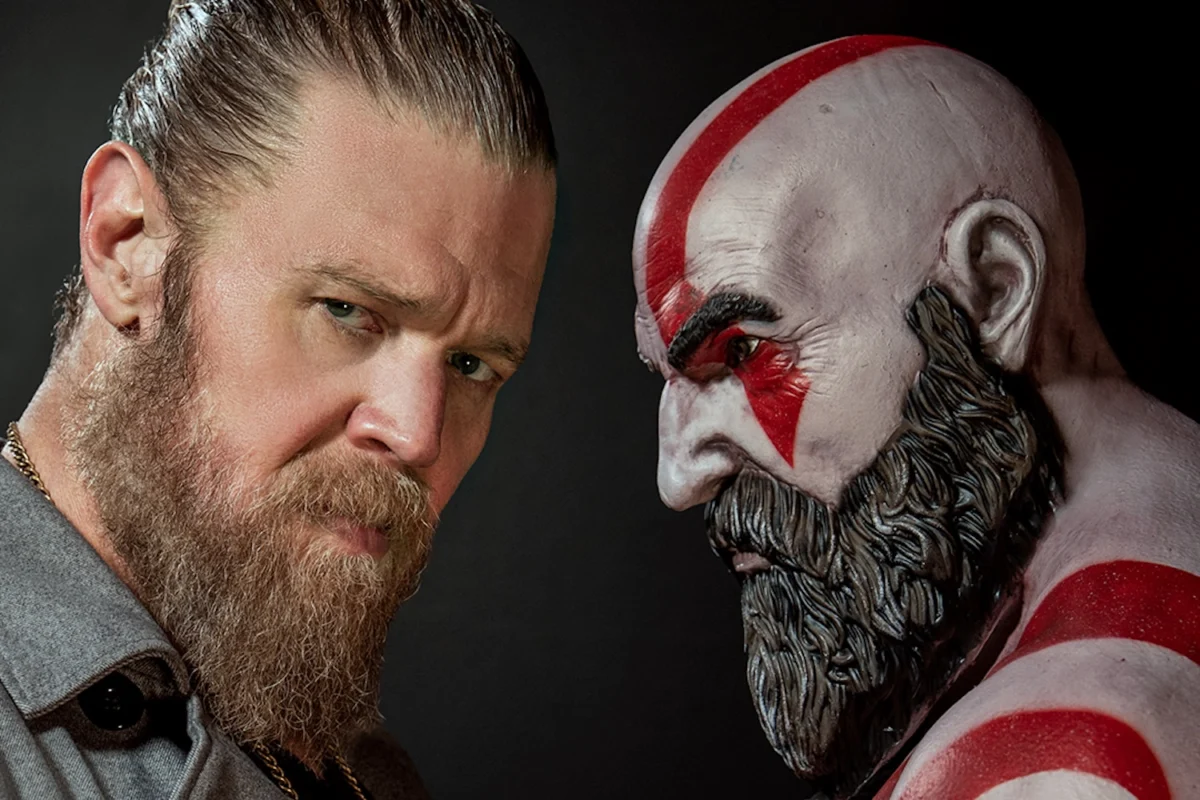
Los Angeles, CA – Prime Video’s highly anticipated adaptation of Sony’s critically acclaimed video game franchise, God of War, has encountered a significant production hurdle. Actor Ryan Hurst, initially cast in the iconic lead role of Kratos, has been recast following a severe on-set injury sustained last month. Hurst reportedly tore a bicep, an injury necessitating surgery and an extensive recovery period spanning several months. This unforeseen medical emergency has forced the production to make the difficult decision to replace the actor, as the recovery timeline proved incompatible with the series’ demanding shooting schedule.
The news, initially reported by Deadline, sends ripples through the entertainment industry and the dedicated fanbase of the God of War saga. Hurst had reportedly undergone a rigorous physical transformation for the role, gaining an impressive 40 pounds of muscle to embody the formidable Spartan warrior-turned-god. With four episodes already completed, the decision to recast Kratos means a substantial portion of the series will now require reshoots, a costly and logistically complex undertaking.
This development marks a pivotal moment for the high-stakes adaptation, which aims to bring one of PlayStation’s most beloved characters to the small screen. The search for a new actor to portray the Ghost of Sparta is now underway, with production slated to resume this fall.
The Unforeseen Setback: Ryan Hurst’s Injury
The physically demanding nature of the role of Kratos cannot be overstated, and Ryan Hurst’s commitment to embodying the character was evident in his reported 40-pound muscle gain. His casting was met with considerable excitement from fans who recognized his imposing stature and intensity from roles in Sons of Anarchy and The Walking Dead. However, the rigors of filming a high-octane action series based on a brutal mythological saga ultimately led to an unfortunate accident.
A Physically Demanding Role
Kratos is depicted as a figure of immense strength, a towering presence forged in the fires of countless battles. The character description provided by the production emphasizes his background: "Kratos is Spartan by birth, and a god by nature. Raised in a martial culture, he rose to command armies in service of his homeland until one day he made a fateful deal with Ares, the Greek God of War and lost his soul in exchange for being victorious in battle." This necessitates an actor who can not only convey raw power and aggression but also the deep-seated grief, regret, and paternal love that define Kratos in the later games.
A torn bicep is a particularly debilitating injury for an actor in such a physically intensive role. It severely limits upper body strength and mobility, making action sequences, heavy lifting, and even basic movements that convey Kratos’s might impossible without risking further damage. The recovery typically involves surgery, followed by weeks of immobilization and months of physical therapy to regain full strength and range of motion. For an actor like Hurst, whose physique was integral to his portrayal, such an injury is a devastating personal and professional blow.
The Difficult Decision
According to Deadline, the production’s reasoning for the recasting was clear: "While Hurst’s full recovery is a priority, the period required for it was longer than the production shooting schedule could accommodate, leading to the difficult decision to recast the role." This highlights the brutal realities of large-scale television production. A delay of several months, while an actor recovers, can incur tens of millions of dollars in additional costs due to idle crew, standing sets, contractual obligations for other cast members, and disruption to overall network scheduling.
The studio and showrunners undoubtedly weighed the options: pausing production, reshooting later, or recasting. The choice to recast indicates that the financial and logistical burden of an extended hiatus was deemed too great, especially for a series with such high production values and an ensemble cast of established actors. This decision, while painful, underscores the pressure to maintain momentum and deliver the series within a feasible timeframe.
Chronology of Events
The journey of Prime Video’s God of War adaptation has been closely watched since its announcement, and the recent events have added an unexpected chapter to its production narrative.
Pre-Production and Casting (Undisclosed Dates Leading up to Filming):
- Ryan Hurst, known for his imposing physique and intense acting style, is cast as Kratos. His selection is widely praised by fans, recognizing his potential to bring the character’s gravitas and physicality to life.
- Hurst embarks on an intensive training regimen, reportedly gaining 40 pounds of muscle, demonstrating his dedication to the demanding role.
- Other key cast members are announced, including Mandy Patinkin as Odin, Ed Skrein as Baldur, Max Parker as Heimdall, Sonya Walger as Freya, Ólafur Darri Ólafsson as Thor, Teresa Palmer as Sif, Alastair Duncan as Mimir, Jeff Gulka as Sindri, and Danny Woodburn as Brok, solidifying a strong ensemble. Callum Vinson is cast as Kratos’s son, Atreus.
Commencement of Principal Photography (Earlier This Year):
- Filming begins, with considerable excitement surrounding the initial glimpses and behind-the-scenes reports. The production aims to capture the epic scale and emotional depth of the source material.
On-Set Injury (Last Month):
- During active filming, Ryan Hurst suffers a severe bicep tear. The exact circumstances of the injury have not been publicly detailed, but it is understood to be significant, requiring immediate medical attention.
Medical Evaluation and Recovery Assessment:
- Following the injury, medical professionals confirm the need for surgery and outline a recovery period stretching several months, which would prevent Hurst from returning to set in the foreseeable future.
The Recasting Decision:
- After careful consideration of the recovery timeline versus the production’s pre-determined schedule and budgetary constraints, the difficult decision is made to recast the role of Kratos. This is communicated internally and subsequently reported by industry outlets.
Forthcoming Reshoots and Production Resumption (Fall):
- With four episodes already filmed, the production must now prepare for extensive reshoots involving the new Kratos actor. This process will be meticulously planned to re-stage scenes and ensure continuity.
- The series is expected to resume principal photography this fall, allowing time for the new actor to be cast, prepare for the role, and for the logistical complexities of reshooting to be organized.
The God of War Legacy: Adapting a Beloved Franchise
The God of War franchise is more than just a video game; it’s a cultural phenomenon that has redefined storytelling in the interactive medium. Originating in 2005, the series initially immersed players in the brutal world of Greek mythology, following Kratos’s vengeful rampage against the Olympian gods. Its evolution in 2018, transitioning to Norse mythology and introducing Kratos as an older, more nuanced father figure to his son Atreus (played by Callum Vinson in the series), garnered widespread critical acclaim and universal adoration from fans.
Kratos: A Complex Protagonist
The character of Kratos himself is a study in evolution. From a rage-fueled killer in the Greek era, he transformed into a stoic, burdened figure grappling with his past, attempting to teach his son restraint while battling his own inherent violence in the Norse sagas. This complexity is what makes the role so challenging and compelling. The actor portraying Kratos must convey not just his physical might and brutal efficiency in combat, but also his deep-seated trauma, his struggle for redemption, and his burgeoning, often awkward, paternal affection for Atreus. His iconic gravelly voice, scarred appearance, and the weight of his tragic past are all integral to his identity.
The Weight of Expectation
Adapting such a beloved and narratively rich franchise comes with immense pressure. Fans have invested hundreds of hours into Kratos’s journey, witnessing his growth and struggles firsthand. The success of recent video game adaptations like HBO’s The Last of Us and Prime Video’s own Fallout has raised the bar significantly, demonstrating that faithful yet innovative adaptations can capture both existing fans and new audiences. The God of War series is expected to deliver a similar level of quality and emotional resonance, making the casting of Kratos arguably the most critical decision for the entire production.
The Recasting Challenge: Finding the New Kratos
The decision to recast Kratos is a momentous one, not only for the actor who must step into such a demanding role but also for the production itself. The search for a new lead will be intense and under immense scrutiny.
Beyond Physicality: The Voice and Presence
The ideal candidate for Kratos must possess a unique blend of attributes. Physically, they need to be capable of conveying the character’s immense strength and imposing presence. This often means a tall, muscular build, but also the willingness to undergo the same rigorous training Ryan Hurst committed to. Beyond the physical, the voice is paramount. Kratos’s deep, resonant, and often growling voice is instantly recognizable to fans, embodying his weary wisdom and barely contained rage. The new actor will need to capture this vocal quality, or at least deliver a performance that evokes a similar impact.
Furthermore, the actor must possess the dramatic range to portray Kratos’s internal struggles. He is a character burdened by immense guilt and a violent past, striving for a quieter existence while constantly being pulled back into conflict. The chemistry with Callum Vinson, who plays his son Atreus, will be crucial, as the father-son dynamic is the emotional core of the Norse saga. This requires an actor who can convey tenderness and frustration alongside brute force.
The Impact on Production and Budget
Reshooting four episodes is an undertaking of significant scale. It means reassembling key cast members, crew, and potentially rebuilding or redressing sets. This incurs substantial additional costs, potentially running into the tens of millions of dollars, depending on the complexity of the scenes and the availability of talent. Every day of production on a high-budget series like God of War costs a considerable sum, and effectively re-filming a quarter of the season will undoubtedly stretch the budget and likely push back the eventual release date.
The logistical challenges extend to the schedules of the other ensemble cast members. Actors like Mandy Patinkin, Ed Skrein, and Sonya Walger are in high demand, and coordinating their availability for extensive reshoots can be a complex puzzle. The production team will have to work tirelessly to ensure a smooth transition and minimize further delays. The integrity of the storytelling and the continuity between the original footage and the reshot scenes will also be a major concern, requiring careful direction and editing.
The Stellar Supporting Cast: A Pantheon of Talent
Despite the setback with Kratos, the remaining cast of Prime Video’s God of War boasts an impressive array of talent, signaling the production’s commitment to high-caliber performances across the board. These actors are set to bring to life the rich pantheon of Norse gods and mythical figures that populate Kratos’s world.
Odin and the Norse Pantheon
- Mandy Patinkin (Odin): A veteran actor renowned for his roles in The Princess Bride and Homeland, Patinkin brings gravitas and cunning to the Allfather. Odin is the enigmatic and manipulative ruler of Asgard, a character of immense power and complex motivations, often presented as both a protector and a tyrant. Patinkin’s ability to portray nuanced, morally ambiguous characters makes him an inspired choice for this pivotal antagonist.
- Ed Skrein (Baldur): Skrein, known for his roles in Deadpool and Alita: Battle Angel, is cast as Baldur, the seemingly invincible, yet deeply tormented, son of Odin. His initial encounter with Kratos sets much of the Norse saga in motion, and Skrein’s intensity will be crucial in portraying this formidable foe.
- Max Parker (Heimdall): Heimdall, the guardian of Bifrost and possessor of extraordinary senses, will be played by Max Parker. His character acts as Asgard’s watchful sentry, often clashing with Kratos due to his arrogance and foresight.
- Sonya Walger (Freya): Walger, recognized from Lost and For All Mankind, embodies Freya, the Vanir goddess of love, beauty, fertility, war, and death. Her complex relationship with Kratos, transitioning from ally to bitter enemy, is a cornerstone of the Norse narrative. Walger’s ability to convey emotional depth will be vital for this role.
- Ólafur Darri Ólafsson (Thor): The imposing Icelandic actor Ólafur Darri Ólafsson is set to portray Thor, the thunder god and one of Kratos’s most anticipated adversaries. Known for his powerful screen presence, Ólafsson is well-suited to capture Thor’s formidable strength and aggressive demeanor.
- Teresa Palmer (Sif): Palmer, with credits in Lights Out and Hacksaw Ridge, is cast as Sif, Thor’s wife and a revered warrior goddess. Her role will likely explore the familial dynamics within Asgard.
Allies and Adversaries
- Callum Vinson (Atreus/Kratos’s Son): As Kratos’s son, Atreus (also known as Loki), Vinson plays the emotional heart of the story. His journey of self-discovery and his evolving relationship with his father are central to the narrative. The recast Kratos will need to establish immediate and convincing chemistry with Vinson.
- Alastair Duncan (Mimir): Duncan, who voiced Mimir in the video games, reprises his role, a decision that will undoubtedly delight fans. Mimir, the "Smartest Man Alive," serves as Kratos’s wise-cracking, severed head companion and guide, providing crucial exposition and comic relief. His presence ensures a direct link to the game’s beloved characterization.
- Jeff Gulka (Sindri) and Danny Woodburn (Brok): Gulka and Woodburn are cast as Sindri and Brok, the Huldra brothers and legendary dwarven blacksmiths. These characters are instrumental in providing Kratos and Atreus with powerful gear and often offer moments of levity amidst the grim journey.
The strength of this ensemble cast provides a solid foundation for the series, ensuring that even with the change in the lead role, the world of God of War will be populated by compelling and well-portrayed characters.
Official Responses and Industry Reactions
While specific statements from Prime Video or Sony regarding Ryan Hurst’s recasting are yet to be fully disseminated beyond the initial report, the industry response typically follows a predictable pattern in such high-profile situations.
Studio Statements and Fan Sentiment
It is expected that official statements will prioritize Ryan Hurst’s health and well-being, expressing regret over the need to recast while reiterating the production’s unwavering commitment to delivering an authentic and high-quality God of War series. Such statements often emphasize the "difficult decision" and the paramount importance of adhering to production timelines for a project of this magnitude. They will likely express confidence in finding a new Kratos who can honor the character’s legacy and seamlessly integrate into the already assembled cast.
Fan reaction, meanwhile, is likely to be a mixed bag of sympathy for Hurst, concern for the impact on the series, and intense speculation about who will next wield the Leviathan Axe. Social media platforms will undoubtedly buzz with discussions about potential replacements, fan-favorite actors, and the challenges of replacing an actor who had already filmed significant scenes. There will be a natural anxiety about how the recast will affect the show’s continuity and whether the new actor can capture the essence of Kratos as effectively as Hurst was anticipated to.
The Broader Industry Context
This incident also highlights the inherent risks and challenges associated with large-scale, physically demanding productions. Actor injuries are an unfortunate reality on sets, and studios typically have extensive insurance policies to cover such contingencies. However, the logistical and creative ripple effects of a lead actor’s injury, especially one that necessitates recasting, are profound. It serves as a reminder of the intricate planning and flexibility required in major television and film endeavors.
The entertainment industry will observe closely how Prime Video navigates this challenge. Successful recasts, such as Don Cheadle taking over as War Machine in the MCU or Michael J. Fox replacing Eric Stoltz in Back to the Future, demonstrate that such changes can ultimately lead to iconic performances. However, it also presents a significant hurdle that the production must overcome to maintain audience confidence and deliver on the immense expectations.
Implications for Prime Video and the Future of the Series
The recasting of Kratos is undeniably a major hurdle for Prime Video’s God of War series, but it also presents a test of the platform’s resilience and commitment to its ambitious streaming content strategy.
A High-Stakes Adaptation
Prime Video has invested heavily in large-scale fantasy and genre adaptations, from The Lord of the Rings: The Rings of Power to The Wheel of Time and the recently successful Fallout. God of War fits squarely into this strategy, aiming to capture a massive global audience through its established brand recognition and rich narrative potential. A setback of this nature, particularly one requiring extensive reshoots, will inevitably impact the production budget and potentially delay the series’ release date. However, for a platform vying for supremacy in the streaming wars, maintaining the quality and integrity of such a flagship project is paramount. The additional investment required for reshoots will likely be seen as a necessary cost to ensure the series meets the high expectations set by the games and the burgeoning market for premium video game adaptations.
The challenge now lies in swiftly and effectively finding a new actor who can not only embody the physicality and emotional depth of Kratos but also seamlessly integrate into the existing cast and narrative. The success of this recast will be a crucial factor in the series’ ultimate reception.
The Resurgence of Game-to-Screen Projects
The incident occurs at a time when video game adaptations are enjoying unprecedented success. Shows like The Last of Us (HBO) and Arcane (Netflix), alongside Prime Video’s own Fallout, have proven that video game narratives can translate powerfully to television, attracting both loyal fans and new viewers. This success has fueled a gold rush for game adaptations, with studios eager to tap into established fanbases and rich source material.
The God of War series, even with this production setback, remains a highly anticipated entry in this trend. The franchise’s blend of epic mythology, compelling character development, and visceral action makes it ideal for a cinematic television treatment. Prime Video’s ability to navigate this recasting challenge efficiently and deliver a compelling product will not only be crucial for the series itself but will also serve as a barometer for the viability and resilience of high-budget video game adaptations in the competitive streaming landscape. The industry will be watching to see how the Ghost of Sparta’s journey on screen ultimately unfolds.