
The Law in a Box: Reappraising Games Workshop’s 1982 Judge Dredd Board Game
In the annals of tabletop gaming history, certain titles stand out not just for their innovative mechanics or groundbreaking design, but for their unique place in the lineage of iconic characters and burgeoning publishers. Among these is the 1982 Judge Dredd board game, a fascinating artefact that encapsulates the early days of a beloved comic book hero’s journey into analog gaming, and simultaneously, a pivotal moment in the formative years of a company that would eventually become a titan: Games Workshop. Far from a mere curiosity, this game offers a window into the design sensibilities of the early 1980s and the ambitious, experimental spirit of a publisher on the cusp of defining its identity.
A Glimpse into Mega-City One: Unpacking the Game’s Origins
The 1982 Judge Dredd board game arrived at a compelling intersection of pop culture and nascent industry growth. To fully appreciate its significance, one must consider both the source material it adapted and the publisher that brought it to life.
The Genesis of a Galactic Lawman
Judge Dredd, the grim enforcer of Mega-City One, first burst onto the scene in the pages of 2000 AD comic in 1977. Created by writer John Wagner and artist Carlos Ezquerra, Dredd quickly became an anti-heroic icon, his brutal justice and the satirical, dystopian landscape of his world resonating deeply with readers. Mega-City One, a sprawling metropolis covering much of the eastern seaboard of North America, was a character in itself—a chaotic, overpopulated urban nightmare policed by the Judges, who served as judge, jury, and executioner.
By 1982, the character had firmly established his cult following, making him an attractive prospect for adaptation into other media. Board games, then a rapidly evolving entertainment form, offered a unique opportunity to immerse fans directly into Dredd’s unforgiving world. The challenge lay in translating the comic’s distinctive blend of futuristic sci-fi, dark humor, and relentless action into a playable tabletop experience.

Games Workshop’s Formative Years
The revelation that the 1982 Judge Dredd board game was published by Games Workshop often elicits a reaction ranging from surprise to knowing appreciation among tabletop enthusiasts. Founded in 1975 by Ian Livingstone, Steve Jackson, and John Peake, Games Workshop began as a small company manufacturing wooden boards for traditional games. Their trajectory quickly shifted with the introduction of Dungeons & Dragons to the UK market, which they began importing and distributing, effectively spearheading the role-playing game phenomenon in Britain.
By the early 1980s, Games Workshop was transitioning from primarily a distributor to a publisher in its own right, venturing into a diverse array of board games. While they would later become synonymous with miniature wargames like Warhammer, their early portfolio was eclectic, featuring titles such as the railway-building strategy game Railway Rivals (1979) and the humorously titled Oi! Dat’s My Leg! (1981). The acquisition of the Judge Dredd license represented a significant step, showcasing Games Workshop’s ambition to tap into popular intellectual properties and expand their publishing repertoire beyond traditional or generic themes. It marked a crucial phase where the company experimented with different genres and licenses, laying the groundwork for their future success and eventual specialization.
Navigating the Urban Sprawl: Components and Art Direction
One of the most immediate draws of the 1982 Judge Dredd board game is its aesthetic, which serves as a faithful homage to its comic book origins. The game’s components collectively immerse players in the gritty, futuristic world of Mega-City One, demonstrating a commendable effort to capture the source material’s unique visual identity.
The Visual Aesthetic of Mega-City One
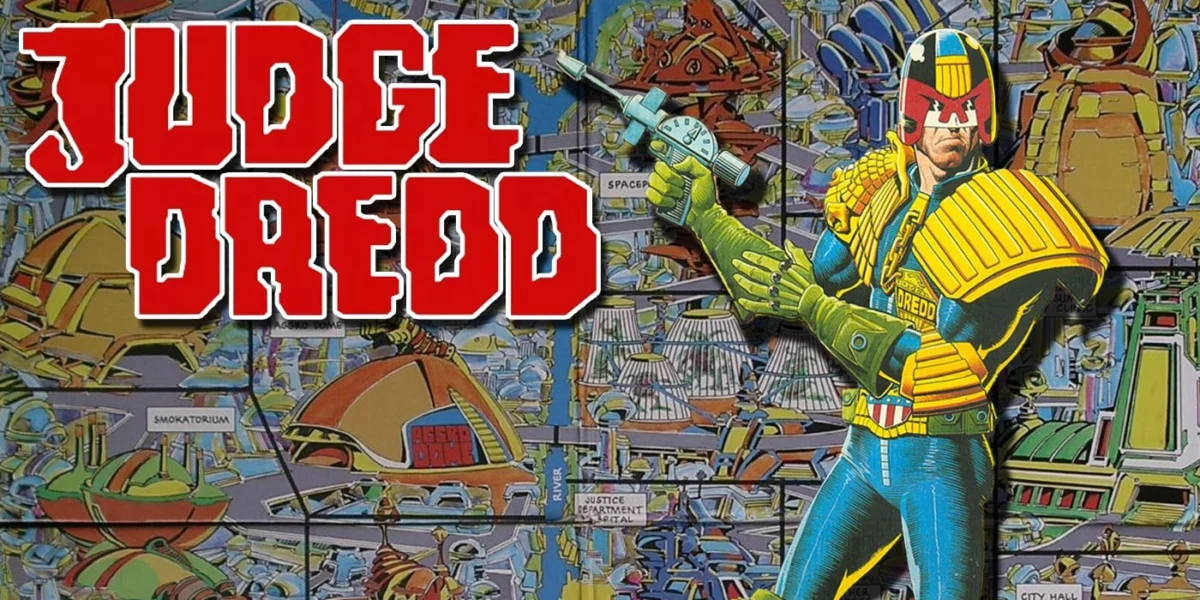
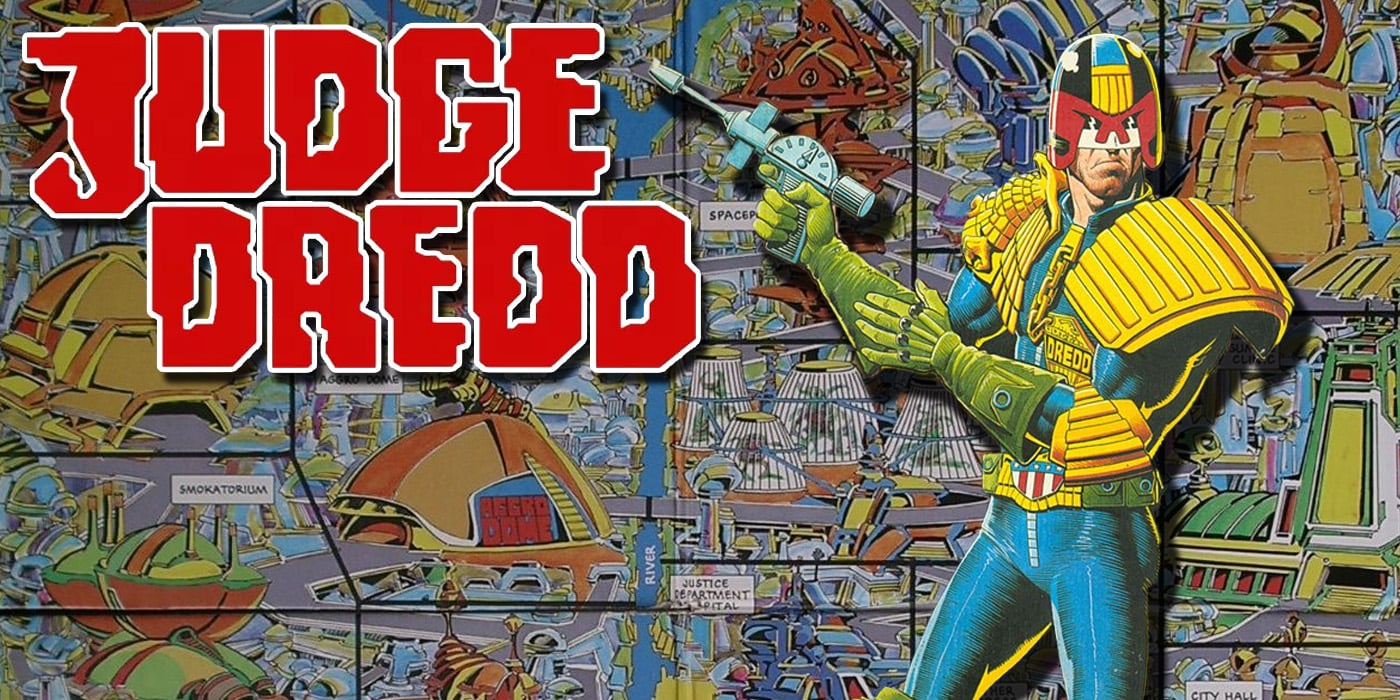
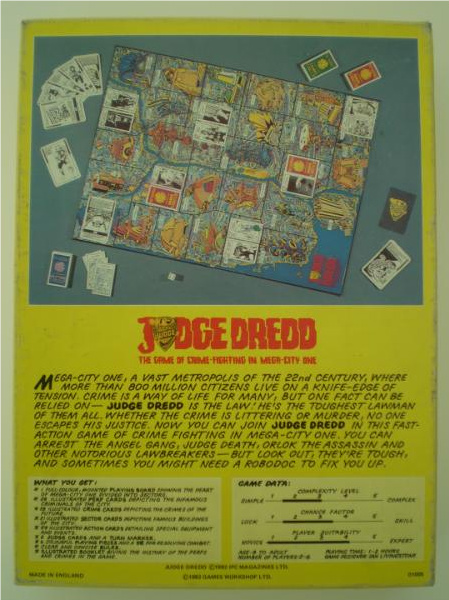
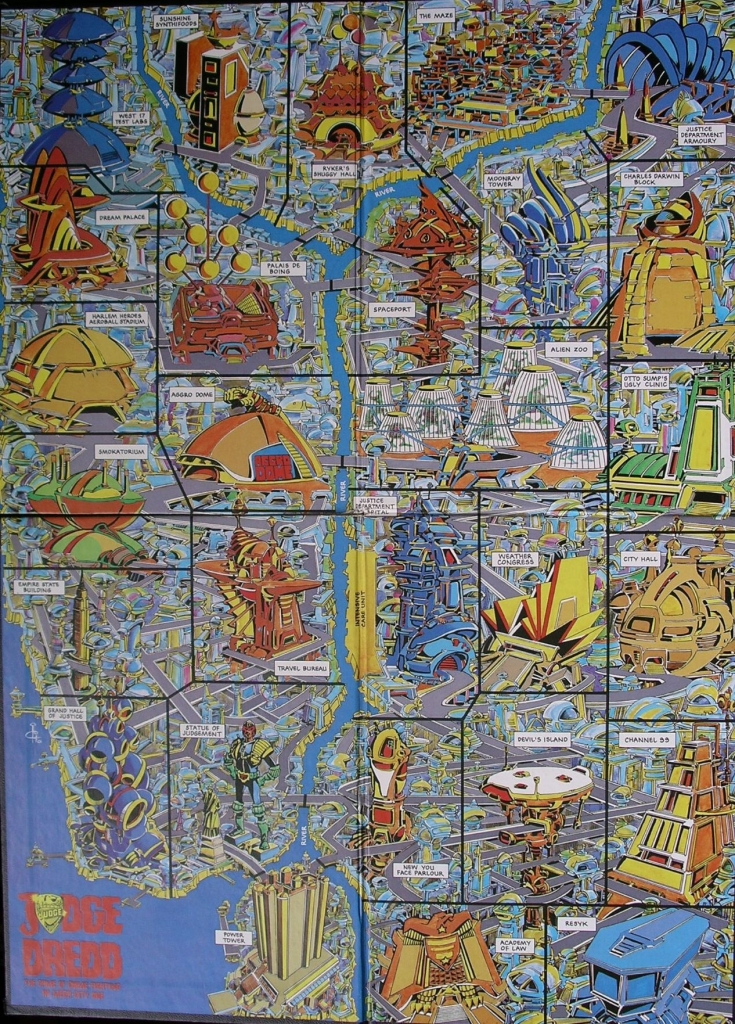
The game’s box art immediately signals its allegiance to the classic comic. Featuring Judge Dredd with that iconic, perfectly crafted scowl—a visage that speaks volumes of years spent dispensing summary justice—it encapsulates the character’s stoic intensity and the underlying oddity of his world. This visual fidelity extends seamlessly to the game board itself. Players are presented with a sprawling, overhead view of Mega-City One, depicted across either two separate pieces or jigsawed segments, depending on the printing. This colossal board is segmented into numerous districts, each named after a prominent landmark or location within the comic’s lore, offering a genuine sense of exploring the vast, chaotic metropolis.
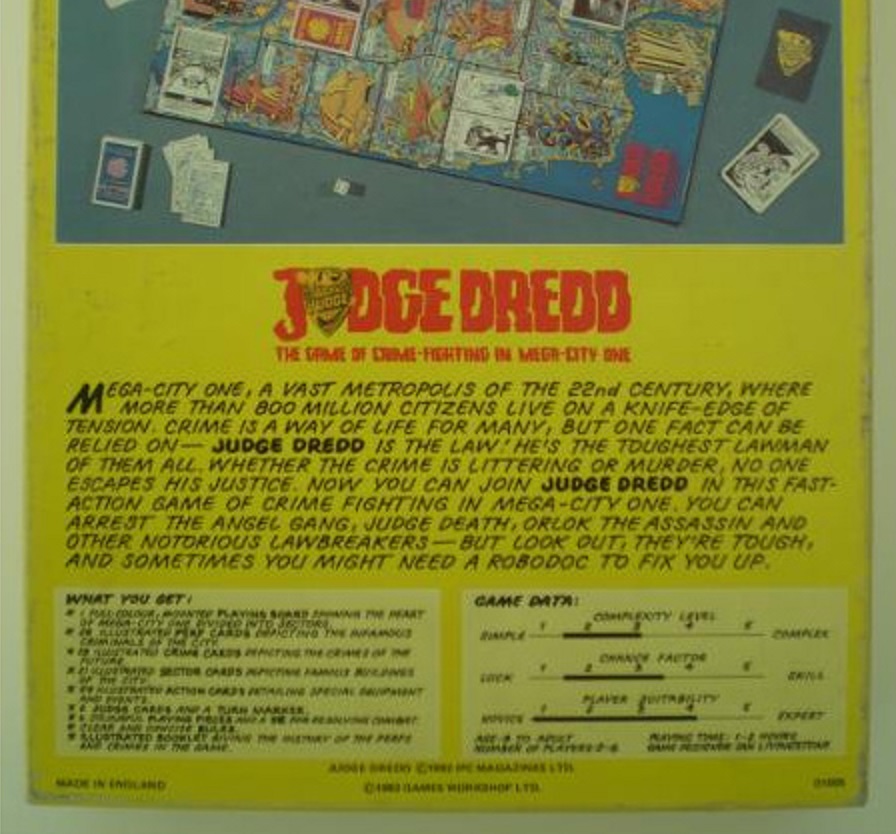
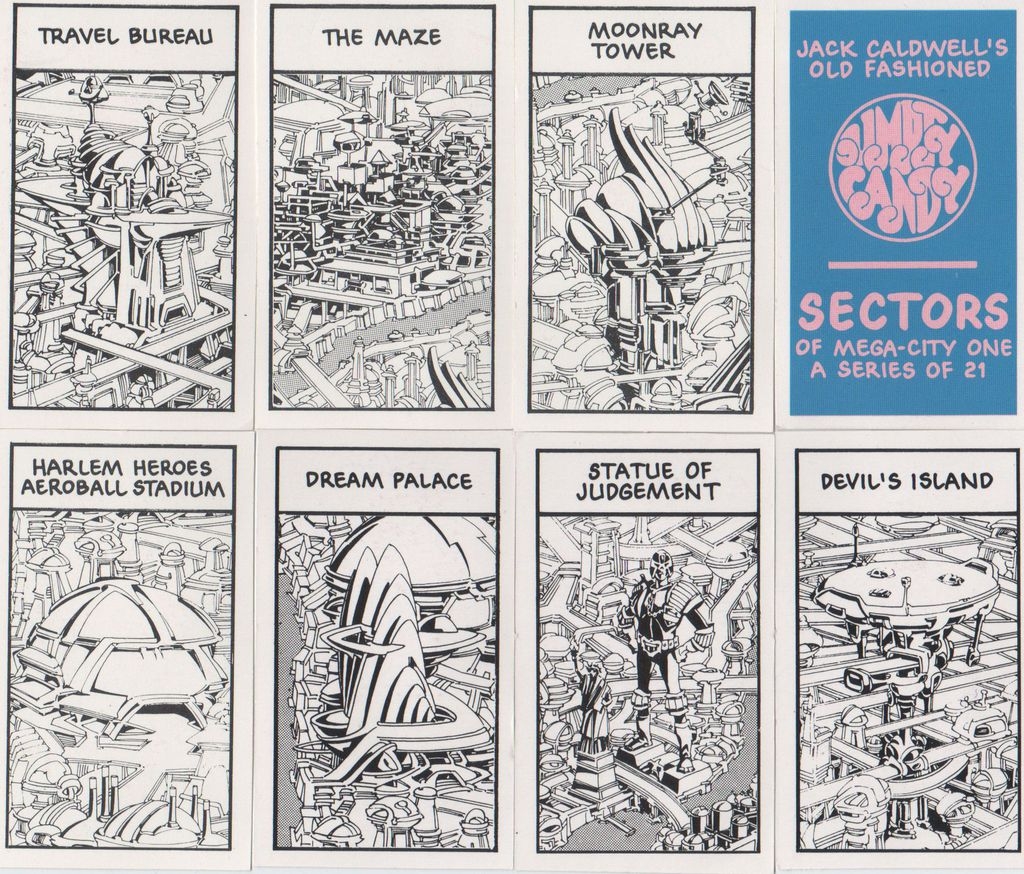
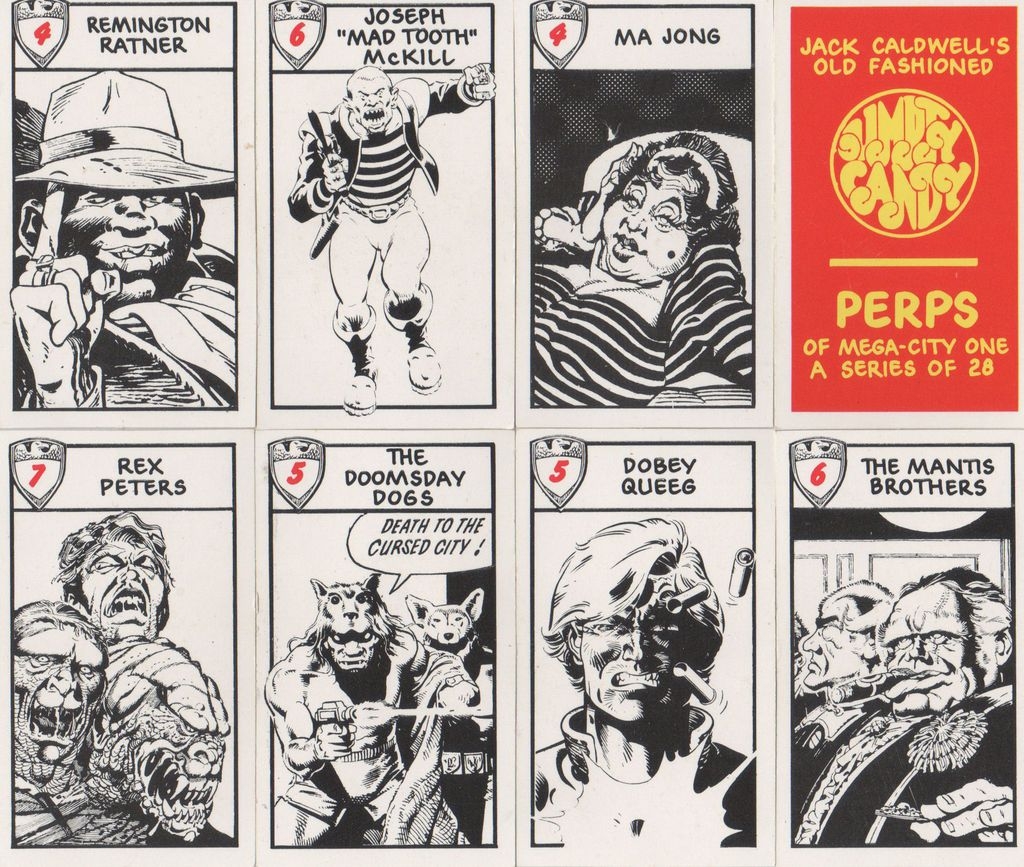
The art style throughout the board and the accompanying cards is a standout feature. It’s strikingly reminiscent of the original comic book illustrations, a testament to the designers’ commitment to authenticity, especially given that the game predates the 1995 Sylvester Stallone film by over a decade. This commitment to the source material’s visual language ensures that fans immediately feel at home in this analog rendition of Dredd’s world, with every sector and every perp card echoing the distinctive linework and color palettes of 2000 AD.
The Enforcers of Justice: Miniatures and Player Experience
In Judge Dredd, each player assumes the role of a Street Judge, tasked with patrolling the treacherous sectors of Mega-City One. The game’s miniatures, while perhaps reflecting the manufacturing capabilities and stylistic trends of the early 1980s, offer a functional representation of these iconic law enforcers. These figures, often described as slightly heavyset in their distinctive colored latex bodysuits, are armed with their trusty derringer pistols, ready to enforce the law with extreme prejudice. While modern miniatures might boast greater detail, these early renditions carry a certain nostalgic charm, embodying the direct and somewhat chunky aesthetic prevalent in tabletop games of that era. They serve their purpose effectively, providing a tangible presence for players as they navigate the crime-ridden streets.

The Tools of Justice: Cards and Ancillary Materials
The game’s card sets are central to its gameplay and further contribute to its thematic immersion. Players encounter three primary types of cards:
- Sector Cards: These dictate the location of crimes, drawing players to specific, named districts within Mega-City One.
- Perp Cards: Drawn facedown, these cards reveal the identity of the perpetrators, adding an element of surprise and uncertainty to each encounter.
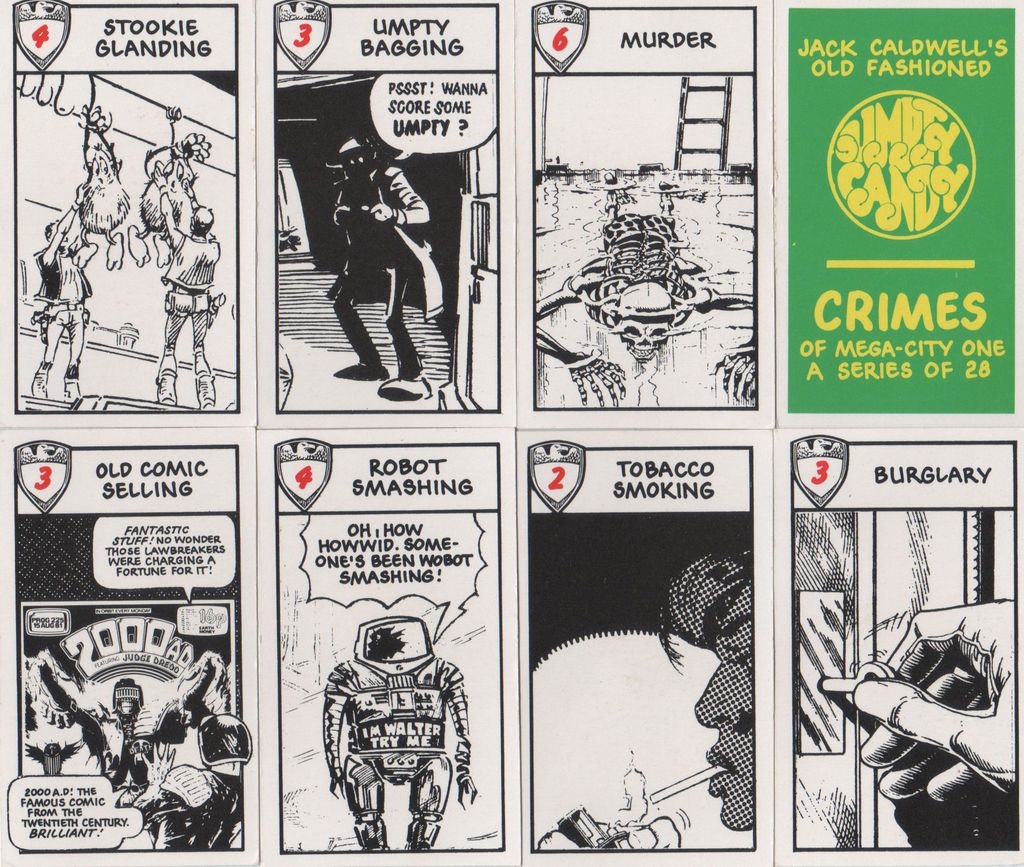
- Crime Cards: Drawn face up, these cards detail the nature of the offense, often featuring the wonderfully bizarre and darkly humorous infractions characteristic of the Judge Dredd universe. A prime example, as noted in the original review, is "Stookie Glanding," a term that perfectly encapsulates the comic’s unique lexicon and penchant for outlandish futuristic crimes (for the record, Stookies are a race in the Dredd-verse, and their glands indeed play a role in human anti-aging).
Beyond these, Action Cards introduce a layer of tactical decision-making. Each card typically offers two distinct uses, providing players with flexibility whether they need a boost in combat or a strategic advantage in other areas of the game. This dual-use mechanic was a thoughtful design choice for its time, adding depth to player choices and encouraging strategic resource management. The artwork on these cards, like the rest of the game’s visuals, maintains the high standard of comic-faithful illustration, making each draw a visual treat for Dredd fans. The inclusion of cards designed to "screw over" opponents also injects a healthy dose of player interaction and competitive fun, a common element in games of the era that fostered lively, albeit sometimes frustrating, sessions.

Upholding the Law: Gameplay Mechanics and Strategic Depth
The gameplay of the 1982 Judge Dredd board game is a straightforward yet engaging affair, designed to simulate the day-to-day (or rather, minute-to-minute) life of a Street Judge in Mega-City One. It blends elements of movement, card-driven events, and dice-based combat to create a thematic experience that, while simple by modern standards, was quite robust for its time.
Patrolling the Sectors
At its core, the game tasks players, each embodying a Judge, with patrolling Mega-City One to "solve" crimes. In the dystopian reality of Judge Dredd, "solving" often equates to "neutralizing," or as the original review humorously put it, "murdering basically everyone." The game turn begins with the generation of a new crime: a Sector card dictates where the crime occurs, drawing players across the expansive board. Subsequently, a Perp card is drawn facedown, concealing the identity of the criminal until a Judge confronts them. Finally, a Crime card is revealed face-up, detailing the specific transgression—from mundane street brawls to esoteric futuristic offenses like "Stookie Glanding." This system ensures a dynamic and unpredictable criminal landscape, forcing Judges to adapt their patrol routes and priorities.

Movement around the board is typically dice-driven, allowing Judges to navigate the urban sprawl and reach crime scenes. The strategic element lies in choosing which crimes to pursue, balancing proximity with potential rewards, and anticipating the moves of rival Judges who are also vying for arrests and points.
Confrontation in the Streets: Combat System
Combat is a central pillar of the Judge Dredd experience, reflecting the character’s direct and often violent approach to law enforcement. When a Judge encounters a crime, a combat sequence is initiated. The criminal’s strength is determined by combining the combat scores listed on the Perp and Crime cards. This combined value is then augmented by a d6 roll.
The attacking Judge’s strength is calculated by their base combat value (which can vary slightly between Judges) plus a d6 roll. The player with the higher total score wins the battle. This simple dice-rolling mechanic introduces an element of chance, ensuring that even a less powerful criminal can occasionally get a lucky break, though the Judges typically hold the statistical advantage.
However, the combat system gains a layer of tactical depth through the Action Cards. As mentioned, these cards can be played to aid in combat, offering bonuses or special abilities that can swing the tide of a confrontation. Deciding when and how to use these precious cards—whether to bolster a weak attack, defend against a strong perp, or save them for future strategic plays—adds a significant amount of decision-making. This strategic layer elevates combat beyond a mere dice roll, injecting player agency and creating tense moments of bluff and counter-play.

Victory and Vengeance: Winning the Game
The game progresses until all crimes (or a predetermined number) have been stopped, bringing a temporary, if fragile, peace to Mega-City One. The ultimate victor is not determined by the number of arrests, but by the efficiency and ruthlessness with which justice was dispensed. The Judge who has accumulated the highest total of points from their collected Perp and Crime cards—representing the severity of the crimes solved and the notoriety of the criminals apprehended—is declared the winner. This scoring mechanism encourages players to seek out more challenging crimes and ensures that every successful apprehension contributes directly to their final standing. The competitive nature among the Judges themselves, vying for points and prestige, perfectly mirrors the often cutthroat internal politics depicted in the Dredd comics.
Legacy and Reception: Judge Dredd in the Gaming Pantheon
The 1982 Judge Dredd board game occupies a unique niche in tabletop history, offering insights into early licensed games, Games Workshop’s evolution, and the enduring appeal of its source material. Its reception, both at the time and in retrospect, paints a picture of a game that was a product of its era, yet holds lasting significance for specific audiences.
A Product of its Time
Assessing Judge Dredd today, it’s fair to say it’s a "pretty decent game" for the early 1980s. This period was a vibrant, experimental time for board games, where innovation was often found in thematic integration and novel mechanics, even if production values and strategic depth might not match contemporary standards. To put it in context, 1982 also saw the release of games like Stuff Yur Face, a rather uninspired and somewhat creepy Hungry, Hungry Hippos clone, highlighting the wide spectrum of quality and ambition in the market. Judge Dredd, with its strong thematic tie-in, engaging art, and straightforward mechanics, stood out as a commendable effort in comic book adaptation. It successfully translated the grim humor and brutal efficiency of its source material into a playable format, a feat not always achieved by licensed games of the era. The game’s design reflects the prevalent trends of the time: heavy reliance on dice rolls, card-driven events, and a focus on direct player interaction, often through competitive point-scoring.
Games Workshop’s Early Footprint
For Games Workshop, Judge Dredd was more than just another title; it was a stepping stone. It demonstrated their capability to secure and effectively utilize significant intellectual properties, signaling their intent to become a serious player in the publishing arena. While games like Railway Rivals and Oi! Dat’s My Leg! showcased their nascent design capabilities, Judge Dredd elevated their profile by aligning them with a popular, edgy comic franchise. This experience with licensed properties, combined with their distribution network, undoubtedly contributed to their eventual success with their own original IPs, most notably Warhammer. The lessons learned in balancing thematic fidelity with engaging gameplay, managing production, and marketing to a dedicated fanbase from Judge Dredd likely informed their future, more ambitious projects, solidifying their trajectory towards becoming a global leader in tabletop gaming.
Enduring Appeal and Collector’s Value
Today, the 1982 Judge Dredd board game primarily appeals to two distinct groups: fervent fans of the Judge Dredd comic and collectors interested in the history of Games Workshop. For Dredd enthusiasts, the game offers a nostalgic trip back to the character’s early days, providing a tangible piece of his expanded universe. The game’s faithful art direction and thematic elements ensure that it resonates deeply with those who appreciate the original comic’s unique charm.
For collectors, it represents a significant piece of Games Workshop’s formative history. Original copies, particularly those in good condition, are sought after as artifacts of a bygone era when the company was still finding its voice. While its gameplay might not hold up against the sophisticated designs of modern board games, its historical and thematic value ensures its enduring place as a cult classic. For those willing to overlook its relative simplicity and embrace its nostalgic qualities, Judge Dredd offers a unique and enjoyable glimpse into the past, proving that even early endeavors can leave a lasting impression.
Conclusion: Dispensing Justice Through the Decades
The 1982 Judge Dredd board game stands as a compelling testament to the early days of tabletop gaming and the nascent ambitions of Games Workshop. It successfully captured the essence of its iconic comic book source material, translating the grim, satirical world of Mega-City One into an engaging analog experience. While its mechanics might appear straightforward by today’s standards, its thematic fidelity, evocative artwork, and strategic layers—particularly with the dual-use Action Cards—made it a commendable title for its time.
More than just a game, it represents a significant chapter in the Games Workshop story, showcasing their early forays into publishing and licensed IPs, a crucial step before they would forge their own legendary universes. For fans of Judge Dredd, it remains a charming and authentic piece of memorabilia, allowing them to step into the boots of a Street Judge and dispense justice, 40 years on. Ultimately, the 1982 Judge Dredd board game is not merely a historical curio, but a foundational stone in the rich and expansive landscape of tabletop gaming, a true cult classic that continues to echo the resounding call of "I AM THE LAW!" across the decades.




Leave a Comment