
The Kinetic Strategy of Beast Breaker: A Deep Dive into the Pinball-RPG Revolution
In the saturated landscape of independent role-playing games, innovation often comes not from the invention of entirely new genres, but from the unexpected collision of existing ones. Beast Breaker, a title that has recently garnered significant attention at events like Dreamhack Birmingham, stands as a premier example of this creative synthesis. By merging the calculated strategy of a turn-based RPG with the kinetic, physics-driven chaos of a pinball machine, developer Vodeo Games has crafted an experience that challenges traditional notions of combat encounters.
At its core, Beast Breaker is a game of scale and trajectory. It tells the story of a diminutive hero facing off against monolithic threats, utilizing a movement system that prioritizes geometry over button-mashing. As the indie gaming scene continues to move toward "cozy" yet mechanically deep experiences, Beast Breaker emerges as a frontrunner in defining a new sub-genre: the tactical physics-battler.
Main Facts: The Small Hero and the Mosaic Monsters
Beast Breaker introduces players to Skipper, a tiny, courageous mouse whose journey begins in the unassuming safety of his grandmother’s house. This domestic starting point serves as a narrative anchor, establishing a "hero’s journey" that feels personal and grounded. However, the stakes escalate rapidly as Skipper is called to defend his village from "Beasts"—massive, ethereal constructs that loom over the landscape like living natural disasters.
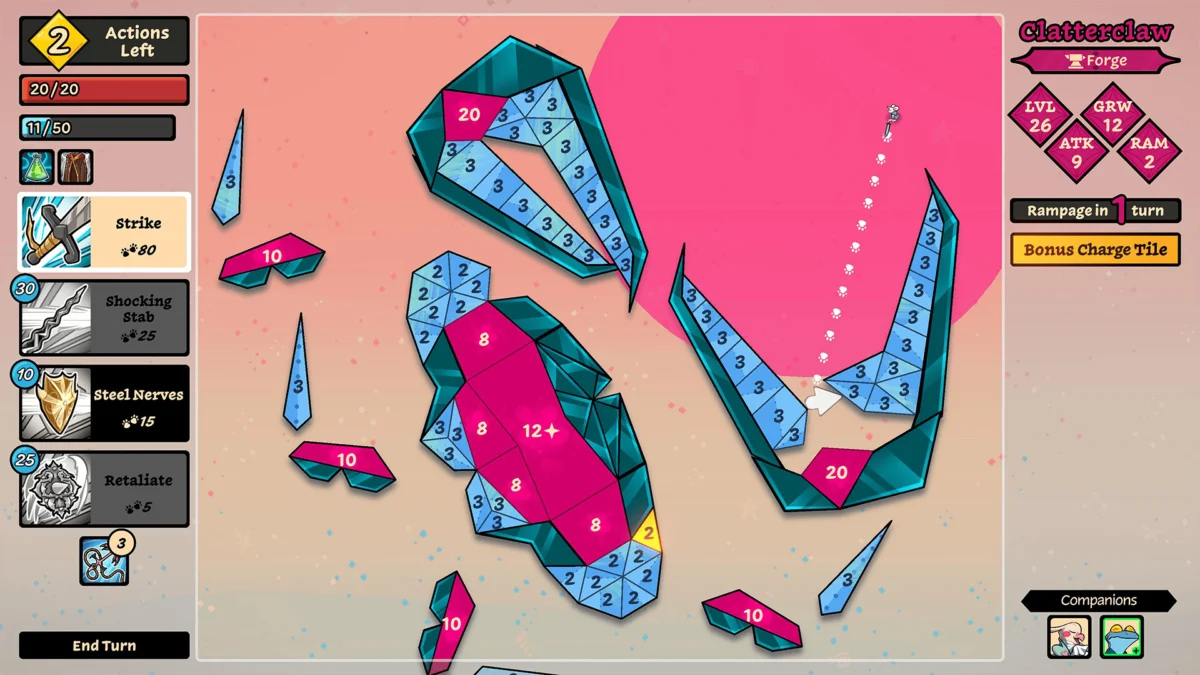
The game’s primary innovation lies in its "Mosaic" enemy system. Unlike traditional RPG enemies that possess a single health bar, the Beasts in Beast Breaker are composed of hundreds of individual interlocking pieces. These pieces are categorized into three distinct types, each requiring a different tactical approach:
- Shields: These are defensive plates that protect the Beast’s core. Striking them does no direct damage to the monster’s overall health but is often necessary to clear a path to more vulnerable areas.
- Weak Points (Hearts): Highlighted in red and marked with numerical values, these are the primary targets. Players must strike these specific segments a predetermined number of times to destroy them and deplete the Beast’s vitality.
- Indestructible Parts: Marked in black, these segments cannot be destroyed and act as permanent obstacles or bumpers, influencing Skipper’s trajectory throughout the encounter.
This modular design transforms every boss fight into a shifting puzzle. Players are not merely "attacking"; they are deconstructing a giant, one bounce at a time.
Chronology: From Concept to the Showfloor
The development and release of Beast Breaker represent a specific philosophy within the indie industry—one focused on "intimate" game design.
- Initial Development: Conceived by Asher Vollmer (the creator of the hit puzzle game Threes!), the project sought to bring the tactile satisfaction of physics-based movement to a narrative-driven RPG.
- Launch and Distribution: The game saw its primary release on Steam and the Nintendo Switch, targeting audiences who appreciate high-replayability and "bite-sized" tactical sessions.
- The Dreamhack Impact: Most recently, the game saw a resurgence in public interest at Dreamhack Birmingham. Observers and journalists noted that the game’s unique visual language—a mix of minimalist geometry and vibrant color palettes—drew in crowds who were weary of the high-octane shooters and fighting games dominating the floor.
- The Rise of the "Cozy Combatant": Over the last year, the game has found a dedicated niche among players who identify as "non-action" gamers. By removing the need for twitch reflexes and replacing them with a "stop-and-think" physics system, Beast Breaker has successfully bridged the gap between casual puzzle fans and hardcore RPG enthusiasts.
Supporting Data: The Mechanics of Momentum
To understand why Beast Breaker feels distinct, one must look at the data governing its combat loop. The game operates on a strict "Turn and Phase" economy. Players are typically granted three "attacks" or "flings" per turn. Once these moves are exhausted, the Beast undergoes a transformation or performs an attack phase.
The Weaponry System
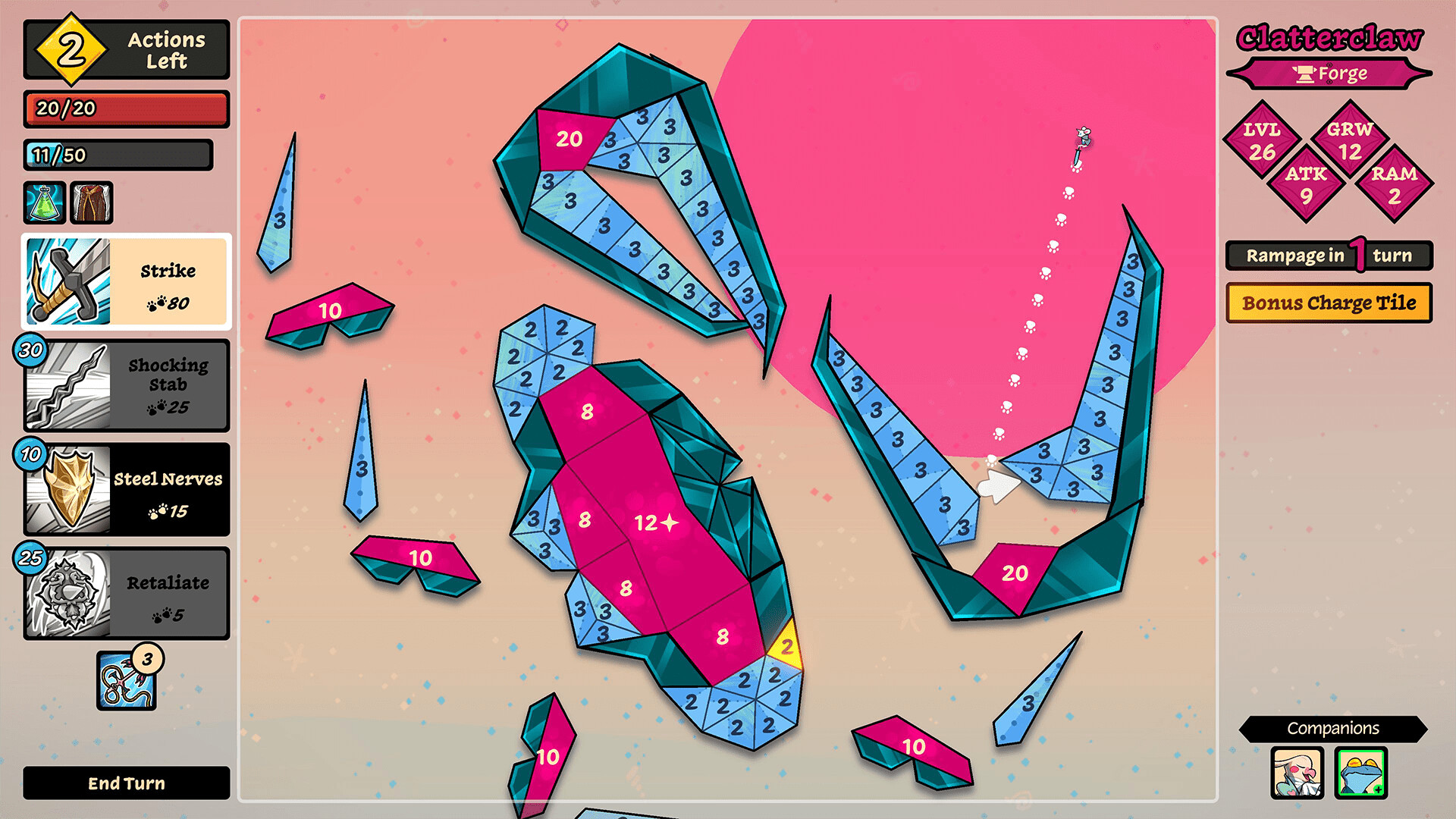
The depth of the game is further expanded by its equipment system. Rather than simple stat boosts, new weapons fundamentally alter the physics of Skipper’s movement:
- The Sword: Offers a balanced trajectory with standard bouncing mechanics.
- The Hammer: Focuses on heavy, localized impact, capable of shattering multiple shield pieces in a single hit but offering less "travel" across the screen.
- The Bow/Dagger: Introduces "dash" mechanics, allowing Skipper to pierce through enemy segments or change direction mid-air, defying standard gravitational logic.
Spatial Awareness and Risk Management
Data from player sessions indicates that the most common cause of failure is not a lack of damage, but poor "end-of-turn" positioning. The game utilizes "Red Zones"—telegraphed areas where the Beast will strike at the end of the player’s turn.
Successful gameplay requires a mathematical mindset:
- Trajectory Calculation: Predicting where Skipper will land after 4-5 bounces.
- Resource Management: Deciding whether to use the third move to deal more damage or to "retreat" to a safe zone on the map.
- Part Synergy: Understanding that destroying a specific shield piece might cause the Beast to shift its center of gravity, opening up new angles of attack for the next turn.
Official Responses and Developer Vision
Vodeo Games, the studio behind the title, has been vocal about their "Small-Batch Games" initiative. In various developer logs and interviews, the team has emphasized that Beast Breaker was designed to be "sustainable" both for the developers and the players.
"We wanted to create a game that felt like a hobby you could return to," the developers have noted in past press releases. The focus was never on 100-hour questlines, but on the "feel" of the collision. By focusing on the "tactile crunch" of a mouse hitting a giant crystal monster, they aimed to satisfy the sensory itch that modern high-fidelity games often overlook in favor of cinematic spectacle.
Critics and journalists, including Jupiter Hadley, have praised this approach. Hadley noted that the game’s ability to captivate players even in a loud, chaotic environment like Dreamhack speaks to its "intrinsic fun factor." The official stance from the community is clear: Beast Breaker succeeds because it respects the player’s time and intelligence, offering a complex mechanical ceiling without the barrier of high-entry execution requirements.
Implications: A New Path for the RPG Genre
The success and unique positioning of Beast Breaker have several long-term implications for the indie development landscape:
1. Accessibility as a Feature, Not a Compromise
By utilizing a pinball mechanic, the game becomes accessible to those with motor-skill limitations or those who simply do not enjoy the stress of real-time combat. This "accessible strategy" model proves that games can be difficult and rewarding without requiring "frame-perfect" inputs.
2. The Deconstruction of the "Boss Fight"
Beast Breaker suggests that the future of RPG boss design may lie in modularity. Instead of a single health pool, giving enemies "anatomy" that players can systematically dismantle provides a much higher sense of agency and tactical variety. It turns a battle of attrition into a battle of surgical precision.
3. Genre Hybridization
We are likely to see an uptick in "Physics-RPGs." The success of titles like Peglin (a Pachinko-roguelike) and Beast Breaker indicates a growing market for games that use familiar, gravity-based mechanics to drive complex progression systems.
Conclusion
Beast Breaker is more than just a "pinball RPG"; it is a masterclass in focused game design. By taking the humble mouse and pitting him against geometric titans, Vodeo Games has created a world where every bounce matters and every angle is a choice.
As it stands on Steam today, the game serves as a reminder that the most exciting innovations in the industry often come from looking at old mechanics through a new lens. For players tired of the standard "Attack/Magic/Item" menu-driven combat, Skipper’s journey offers a refreshing, kinetic alternative that proves even the smallest hero can topple giants—provided they have the right trajectory.
Availability: Beast Breaker is currently available for purchase on Steam and the Nintendo Switch eShop. It remains a standout recommendation for fans of strategy, puzzles, and indie innovation.



Leave a Comment