
Unmasking the Nocturnal Horde: A Critical Review of Claude Lecouteux’s "Phantom Armies of the Night"
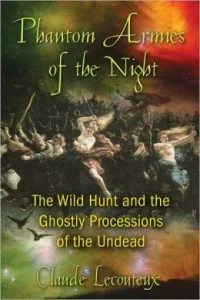
Copenhagen, Denmark – The chilling spectacle of the Wild Hunt, a phantom cavalcade of spectral riders sweeping across the midnight skies, has haunted the European imagination for millennia. This enduring motif, deeply embedded in the continent’s folklore, finds its most comprehensive contemporary examination in Claude Lecouteux’s seminal work, Phantom Armies of the Night: The Wild Hunt and the Ghostly Processions of the Undead. Published by Inner Traditions, this study offers an unparalleled compendium of historical accounts and folkloric narratives, positioning itself as an indispensable resource for scholars and enthusiasts alike. However, while lauded for its exhaustive data collection, Lecouteux’s analytical framework has spurred significant debate within the academic community, challenging some of its interpretive conclusions. This article delves into the intricate layers of Lecouteux’s research, scrutinizing its strengths and weaknesses, and assessing its lasting impact on our understanding of European animism and the enduring power of myth.
Main Facts: Unveiling the Enigma of the Wild Hunt
Claude Lecouteux’s Phantom Armies of the Night stands as one of the most significant scholarly contributions to the study of the Wild Hunt in recent decades. The book meticulously compiles a vast array of historical and folkloric accounts, providing an encyclopedic overview of this pervasive European phenomenon.
The Phenomenon Defined: A Spectral Cavalcade
At its core, the Wild Hunt is a staple of European folklore, particularly prominent in the northern regions. It describes a terrifying nocturnal procession witnessed by countless individuals throughout ancient, medieval, and early modern periods. Lore depicts a cavalcade of spectral hunters or warriors, often riding sinister horses and accompanied by baying hounds, thundering through the howling winds of midwinter nights. This ghostly horde was frequently associated with ill omens, misfortune, and direct acts of mischief or woe upon any unfortunate soul caught in its path. Its leadership was varied, but the Germanic god Odin (Woden) was, by common consensus, the most frequently identified figure at its head, embodying a powerful, often fearsome, divine presence. The dread inspired by these sightings was palpable, shaping local superstitions and communal anxieties for centuries, reflecting a deep-seated fear of the unknown and the liminal spaces between life and death.
Lecouteux’s Monumental Contribution: A Treasure Trove of Information
Lecouteux’s primary strength lies in his extraordinary diligence in gathering a "treasure trove of information" on the Wild Hunt and related phenomena from across the entire European continent. His research transcends geographical boundaries, revealing the pervasive nature of these beliefs and their remarkable variations. What emerges from his meticulous compilation is a complex tapestry of folklore, demonstrating that the Wild Hunt was not a monolithic concept but rather a fluid set of beliefs adapted to local customs and historical contexts. Crucially, Lecouteux illuminates the difficulty, perhaps even the impossibility, of completely disentangling the archetypal Wild Hunt from the numerous other nocturnal processions recorded during the same historical epochs. Many of these related phenomena, he reveals, possessed a strikingly different character—some even benign—yet shared several important commonalities with the more malevolent Wild Hunt, underscoring the nuanced and interconnected nature of these ancient beliefs.
Key Interpretive Frameworks: Psychopomps and Ancestor Worship
Amidst the vast collection of data, Lecouteux provides several compelling interpretive insights. He points out that the leader of the Wild Hunt appears to have been originally conceived as a psychopomp deity – a mediator figure guiding souls between the realms of the living and the dead. This ancient, pre-Christian understanding of a divine guide was, predictably, later demonized by the burgeoning Christian Church, which sought to assimilate or eradicate pagan belief systems. This transformation from divine guide to infernal entity is a recurring theme in the Christianization of Europe, highlighting the Church’s strategy of recontextualizing existing spiritual figures. Furthermore, Lecouteux insightfully notes that "the Wild Hunt fell into the vast complex of ancestor worship, the cult of the dead, who are the go-betweens between men and the gods." This connection anchors the Wild Hunt deeply within the pre-Christian cosmological framework, portraying it not merely as a random supernatural event, but as a ritualistic, albeit fearsome, manifestation of ancestral spirits and the enduring power of the deceased over the living. This linkage to ancestor veneration provides a crucial anthropological lens through which to understand the societal function and psychological impact of such beliefs.
Chronology: Tracing the Evolution of a Myth
The Wild Hunt is not a static myth but a dynamic narrative that has evolved over millennia, reflecting profound shifts in European culture, religion, and social structures. Lecouteux’s work, while focused on the phenomenon itself, implicitly traces this chronology through its diverse source material.
Ancient Roots and Germanic Lore: The Primal Terrors
The origins of the Wild Hunt can be traced back to the pre-Christian Germanic and Norse mythologies, where figures akin to its leader, particularly Odin (Woden), held significant sway. Odin, known as a god of war, death, poetry, and magic, was also associated with ecstatic frenzies and the leading of the dead. Early accounts and linguistic evidence strongly suggest a primordial connection between Odin and these spectral processions. In these ancient pagan societies, the boundaries between the living and the dead were often perceived as porous, and the appearance of such a host might have been interpreted as a divine manifestation, a gathering of ancestral spirits, or a forewarning of war or plague. The howling winds of midwinter, often the setting for these sightings, were themselves liminal times, marking the darkest point of the year when the veil between worlds was believed to be thinnest. This period, known as Yule in Germanic traditions, was a time of intense supernatural activity, making it a fitting stage for Odin’s spectral ride.
Medieval Transformation and Christianization: Demonization and Adaptation
With the gradual Christianization of Europe from the early medieval period onwards, the Wild Hunt underwent a significant transformation. The powerful pagan deities and spirits associated with the phenomenon were systematically demonized by the Church. Odin, once a revered (and feared) god, was re-cast as a devilish figure, or the leader of an infernal host. This demonization served to delegitimize older beliefs and consolidate Christian dogma. However, the myth did not simply disappear; it adapted. The Wild Hunt continued to be reported, but its leader might now be identified as Herod, Cain, the Devil himself, or various local cursed figures. The procession became a punitive one, often comprising the souls of the unbaptized, suicides, or the wicked, forever condemned to ride. This adaptation allowed the myth to persist within a Christian framework, serving as a moralistic tale warning against sin and emphasizing the punitive aspects of divine judgment.
Early Modern Records and Folkloric Persistence: The Enduring Echoes
Even as Europe entered the early modern period, characterized by the rise of scientific thought and the decline of overt paganism, accounts of the Wild Hunt continued to surface. From court records to local chronicles and oral traditions, evidence of its enduring belief persisted across the continent. While the explicit association with Odin might have waned in some regions, the core elements—the nocturnal riders, the baying hounds, the foreboding presence—remained remarkably consistent. This persistence speaks to the deep cultural resonance of the myth, suggesting it fulfilled a fundamental psychological need, perhaps as a means of explaining natural phenomena (like strong winds), expressing communal anxieties, or simply as a powerful narrative passed down through generations. Lecouteux’s work meticulously gathers many of these later accounts, demonstrating how the myth, even in diluted forms, remained a vibrant part of everyday life and belief well into the 18th and 19th centuries, often intertwining with local ghost stories and tales of the uncanny.
Modern Scholarly Engagement: Lecouteux in Context
Lecouteux’s Phantom Armies of the Night enters a long tradition of scholarly inquiry into the Wild Hunt, building upon the foundations laid by earlier folklorists and comparative mythologists such as Jacob Grimm, who explored its Germanic roots. His work distinguishes itself by its unparalleled breadth of primary source material, drawing from obscure regional archives and lesser-known texts, offering a truly pan-European perspective that often eluded earlier scholars. By meticulously categorizing and cross-referencing these accounts, Lecouteux provides a more granular understanding of the phenomenon’s variations and commonalities. He places his research within the broader discourse of Indo-European studies, engaging with the theories of scholars like Georges Dumézil, even if his application of these theories becomes a point of contention. In doing so, Lecouteux not only enriches the existing scholarship but also pushes the boundaries of how we categorize and interpret such widespread folkloric motifs, sparking new avenues for discussion and critical re-evaluation.
Supporting Data: The Breadth and Depth of Lecouteux’s Research
The true strength of Phantom Armies of the Night lies in its expansive collection of source material, offering an unprecedented comparative study of nocturnal processions across Europe.
A Pan-European Tapestry: Variations on a Theme
Lecouteux’s research reveals the Wild Hunt to be a truly pan-European phenomenon, extending far beyond its Germanic heartland. He draws examples from regions as diverse as Scandinavia, the British Isles, France, Germany, the Low Countries, and even parts of Eastern Europe. While the core elements—a spectral host, often led by a prominent figure, causing disturbance—remain consistent, the specifics vary greatly. In some regions, the leader might be a local lord or lady, a mythical king, or even a biblical figure. The composition of the host might range from fallen warriors to unbaptized infants or those who died violent deaths. These regional variations highlight the myth’s adaptability and its capacity to integrate local legends and historical figures, demonstrating a rich tapestry of localized folklore woven around a central, archetypal narrative. Lecouteux’s meticulous cataloging of these diverse manifestations allows for a nuanced understanding of how cultural context shapes the expression of a universal human experience with the supernatural.
Distinguishing Nocturnal Processions: Nuance in the Ethereal
One of Lecouteux’s most valuable contributions is his insistence on differentiating the malevolent Wild Hunt from other, often benign, nocturnal processions. His data includes numerous accounts of spectral gatherings that, while sharing superficial similarities (nighttime appearances, ethereal nature), lacked the destructive or ominous characteristics of the Wild Hunt. These might include processions of the dead moving peacefully to the afterlife, gatherings of fairies or nature spirits, or even ghostly manifestations that merely pass by without causing harm. Lecouteux demonstrates that a blanket categorization of all nocturnal spectral phenomena under the "Wild Hunt" umbrella would be a significant oversimplification. By highlighting these distinctions, he underscores the complex phenomenology of supernatural belief, suggesting that ancient Europeans held a more nuanced understanding of the spirit world than modern interpretations often allow. This critical differentiation is crucial for accurate folkloric analysis, preventing the conflation of distinct cultural narratives and revealing the subtle yet significant differences in their perceived purpose and impact.
Linguistic and Etymological Insights (and their challenges): Tracing the Word
Lecouteux often engages with linguistic and etymological data to trace the origins and evolution of the Wild Hunt and its leaders. The study of names associated with the phenomenon, such as "Odin," "Woden," "Herlechin," or "Frau Holda," provides crucial clues about the myth’s deep historical roots and its transformation over time. For instance, the consistent association of "Woden" (the Anglo-Saxon equivalent of Odin) with the Wild Hunt in many early Germanic regions offers strong etymological support for his ancient leadership. However, this is also where some of the challenges in Lecouteux’s analysis arise. His argument that Odin was a later addition to the leadership of the Wild Hunt, rather than an original figure, is difficult to reconcile with the strong etymological and mythological evidence linking Odin to the ecstatic hosts of the dead. While new leaders undoubtedly emerged over time, dismissing Odin’s foundational role requires a robust linguistic and mythological counter-argument that, according to critics, Lecouteux struggles to provide convincingly. This highlights the inherent difficulties in reconstructing ancient belief systems where linguistic evidence can be interpreted in multiple ways.
The Enduring Echoes of Animism: Pre-Christian Beliefs Persist
Perhaps one of the most compelling aspects of Lecouteux’s collection is its profound demonstration of how long elements of pre-Christian animism remained an intrinsic part of everyday life and belief in Europe, even centuries after official Christianization. The very existence of the Wild Hunt, with its emphasis on roaming spirits, psychopomps, and the active presence of the dead, speaks to an underlying animistic worldview where the natural world was imbued with spiritual agency. The book illustrates that Christianity, rather than completely eradicating these beliefs, often assimilated, demonized, or coexisted with them. Local populations continued to interpret natural phenomena through an animistic lens, attributing events to the actions of spirits, ancestors, or mythical beings. This resilience of animistic thought, as richly documented by Lecouteux, challenges simplistic narratives of a swift and complete Christian conversion, revealing instead a long and complex process of syncretism and adaptation where older spiritual frameworks continued to exert significant influence on popular piety and folklore.
Official Responses: Scholarly Debate and Critical Assessment
While Phantom Armies of the Night is universally praised for its encyclopedic scope, Lecouteux’s analytical conclusions have not been without their critics, particularly concerning his interpretation of the Wild Hunt’s leadership and methodology.
The Contention of Odin’s Leadership: A Core Disagreement
One of the most significant points of contention in Lecouteux’s analysis revolves around his assertion that Odin was not the original leader of the Wild Hunt but rather a later addition. This position is met with considerable skepticism by many scholars of Germanic and Norse mythology. Critics argue that both mythological narratives and etymological evidence overwhelmingly point to Odin’s primordial association with ecstatic hosts of the dead and nocturnal processions. His role as the "Lord of the Slain" (Valföðr) and his connection to the Óskorei (the Norwegian term for the Wild Hunt, often translated as "the noisy riders") are deeply embedded in the earliest layers of Germanic belief. To suggest that such a central figure was merely appended to an existing phenomenon later in history, without robust, alternative primary evidence, strikes many as a difficult position to defend. This argument fundamentally challenges established interpretations of Odin’s complex divine portfolio and his historical centrality to the phenomenon.
The Dumézilían Influence and Its Application: A Rigid Framework?
A substantial portion of Lecouteux’s argument, particularly regarding Odin’s perceived later inclusion, stems from what critics describe as an "overly rigid application" of the studies of the eminent Indo-European scholar Georges Dumézil. Dumézil’s trifunctional hypothesis posited that Indo-European societies were structured around three functions: sovereignty (priests and kings), force (warriors), and fertility/prosperity (common people). Lecouteux, in an oversimplified application of this theory, argues that since the Wild Hunt possesses many traits connecting it with the concerns of the common people (e.g., agricultural fertility, warnings of disease), and since Odin was a god especially closely associated with the ruling classes and warriors (the first and second functions), he therefore "couldn’t have possibly been the original leader of the Wild Hunt."
However, this application overlooks the multifaceted nature of deities like Odin, who often transcended rigid functional boundaries. Odin, while a god of kings and warriors, also had strong connections to magic, ecstasy, poetry, and death, realms that touch upon the concerns of all societal strata, including the common folk. Moreover, Dumézil’s theories, while influential, are tools for analysis, not inflexible dogmas. Critics suggest that Lecouteux’s interpretation here creates an artificial dichotomy that fails to account for the fluidity and syncretism inherent in ancient religious systems, thereby forcing the data to fit a theoretical model rather than allowing the data to inform the theory.
The "Scholarly Cop-Out" Conundrum: Data Without Definitive Synthesis
Another significant critique leveled against Lecouteux’s analytical section is its perceived sparsity relative to the sheer amount of information he provides. Reviewers express disappointment at his frequent invocation of what is termed a "scholarly cop-out," phrases such as "we cannot reach a conclusion," "many points remain to be explored more deeply," and the complexity of the subject "makes us conscious of the limits of our knowledge." While these acknowledgments of complexity and the limits of human understanding are certainly valid as qualifications to a conclusion, they are seen as hollow platitudes when offered instead of a more robust and synthetic analytical framework. Given Lecouteux’s "masterly knowledge" of the vast scope of data, the expectation was for a more definitive and comprehensive interpretive synthesis. Critics argue that while collecting data is one crucial aspect of scholarship, the primary goal of such an extensive study should ultimately be to offer new, cohesive insights and conclusions, even if those conclusions are presented with appropriate academic caution. The reluctance to commit to a more assertive interpretation, despite the overwhelming evidence, is viewed by some as a missed opportunity to advance the theoretical understanding of the Wild Hunt.
Balancing Praise and Critique: A Dual Legacy
Despite these analytical shortcomings, it is crucial to reiterate that the criticisms do not diminish the immense value of Phantom Armies of the Night as a foundational work. The critiques are aimed at specific interpretations and the analytical depth, not at the unparalleled collection of primary source material. The book remains an indispensable compendium for anyone researching the Wild Hunt, ancestor worship, or European animism. The scholarly community acknowledges its role in bringing together such a diverse range of evidence, thereby facilitating future research and enabling scholars to form their own conclusions based on Lecouteux’s exhaustive groundwork. It is, therefore, a work with a dual legacy: a monumental achievement in data collection and a catalyst for ongoing scholarly debate regarding interpretation.
Implications: The Lasting Impact of "Phantom Armies of the Night"
Claude Lecouteux’s Phantom Armies of the Night has had a significant and multifaceted impact on the fields of folklore, mythology, and religious studies, shaping future research and deepening our understanding of European cultural heritage.
Reshaping Wild Hunt Scholarship: A New Foundation
Lecouteux’s book has undeniably reshaped the landscape of Wild Hunt scholarship. By compiling such an extensive and diverse array of primary sources from across Europe, he has provided a new, comprehensive foundation for all future studies on the topic. No longer can scholars rely on limited regional surveys; Lecouteux forces a pan-European perspective, encouraging comparative analysis and a nuanced appreciation of the phenomenon’s variations. Even where his interpretations are debated, the sheer volume and accessibility of the data he presents are invaluable. It allows researchers to challenge existing theories, develop new hypotheses, and explore previously overlooked regional manifestations, effectively setting a new standard for thoroughness in folkloric research on this subject. The book serves as an essential starting point, a comprehensive bibliography, and a launching pad for further in-depth investigations into specific aspects or regions of the Wild Hunt myth.
Understanding European Cultural Heritage: Syncretism and Continuity
The book’s rich documentation profoundly enhances our understanding of Europe’s complex cultural heritage. It vividly illustrates the intricate process of syncretism between pagan and Christian belief systems, demonstrating that the official Christianization of Europe did not eradicate older spiritual frameworks but rather initiated a long period of adaptation, reinterpretation, and coexistence. The Wild Hunt, in its various forms, serves as a powerful testament to this continuity, revealing how ancient fears, spiritual concepts, and ancestral veneration persisted, often beneath a Christian veneer. This insight is crucial for understanding the deep historical layers of European folklore, revealing how seemingly disparate elements of belief are often intricately interwoven, reflecting centuries of cultural negotiation and transformation. It helps scholars and general readers alike appreciate the enduring power of myth and its capacity to evolve while retaining core elements over vast stretches of time.
The Persistence of Animistic Worldviews: Challenging Simplistic Narratives
One of the most compelling implications of Lecouteux’s research is its robust demonstration of how deeply pre-Christian animism remained embedded in the European psyche. The book makes it clear that animistic worldviews—where spirits inhabit the natural world, the dead remain active, and communication between realms is possible—were not simply discarded with the advent of Christianity. Instead, they continued to influence popular belief, everyday rituals, and the interpretation of supernatural events for centuries. This challenges simplistic narratives that portray Christian conversion as a clean break from paganism. Phantom Armies of the Night offers compelling evidence that ancient spiritual sensibilities, particularly those related to ancestor worship and the active presence of the deceased, continued to shape perceptions of reality and the unseen world, providing a vital window into the enduring human impulse to connect with and understand the spiritual dimensions of existence.
Call for Further Research: Unanswered Questions and New Avenues
Ironically, Lecouteux’s own acknowledgments of scholarly limitations—his statements that "many points remain to be explored more deeply" and that the subject "makes us conscious of the limits of our knowledge"—serve as an implicit, yet powerful, call for further research. By exhaustively mapping the known landscape of the Wild Hunt, he inadvertently highlights the areas that still require deeper analytical penetration. His work, despite its perceived analytical shortcomings, thus becomes a fertile ground for future scholars to build upon. It encourages new theoretical approaches, comparative studies with non-European folklore, and more focused regional investigations. The sheer volume of data he presents provides endless opportunities for other researchers to develop alternative interpretations, refine existing theories, and ultimately contribute to an even more comprehensive understanding of this fascinating and enduring phenomenon.
Conclusion
Claude Lecouteux’s Phantom Armies of the Night: The Wild Hunt and the Ghostly Processions of the Undead is an undeniable landmark achievement in folklore studies. Its monumental collection of historical and folkloric accounts provides an unparalleled resource for anyone seeking to understand the pan-European phenomenon of the Wild Hunt. While the book’s analytical sections, particularly its conclusions regarding Odin’s leadership and its reliance on a rigid application of Dumézil’s theories, have generated scholarly debate, these critiques do not detract from the sheer value of its meticulously compiled data.
Lecouteux’s work vividly illustrates the deep roots of the Wild Hunt in psychopomp beliefs and ancestor worship, and powerfully demonstrates the enduring persistence of pre-Christian animistic worldviews long after Europe’s official Christianization. Despite its perceived analytical reticence, the book serves as an essential reference, a catalyst for further inquiry, and a testament to the complex, evolving nature of European cultural heritage. For scholars, students, and enthusiasts interested in the spectral processions of the night, the intersection of pagan and Christian beliefs, or the profound echoes of animism in modern folklore, Phantom Armies of the Night is not merely recommended, but truly essential reading.



Leave a Comment