
Apple TV+’s "Star City" Launches a Gritty, Espionage-Fueled Deep Dive into the Soviet Space Race
Los Angeles, CA – In the dynamic and often unpredictable realm of television entertainment, the spinoff stands as a formidable challenge. While every network and streamer covets the opportunity to leverage the built-in audience and established affection for a beloved property, successfully executing a companion series is a delicate art. For every critical darling like Better Call Saul that manages to capture lightning in a bottle, the landscape is littered with misfires, from the whimsical Once Upon a Time in Wonderland to the nostalgic but ultimately underwhelming How I Met Your Father. These ambitious endeavors are tasked with serving multiple masters: they must forge their own distinct narrative identity, deeply satisfy existing franchise loyalists, and yet remain effortlessly accessible to newcomers who may never have encountered the original. It’s a precarious balancing act, one that even the most meticulously planned sequels, prequels, and in-universe expansions frequently struggle to maintain.
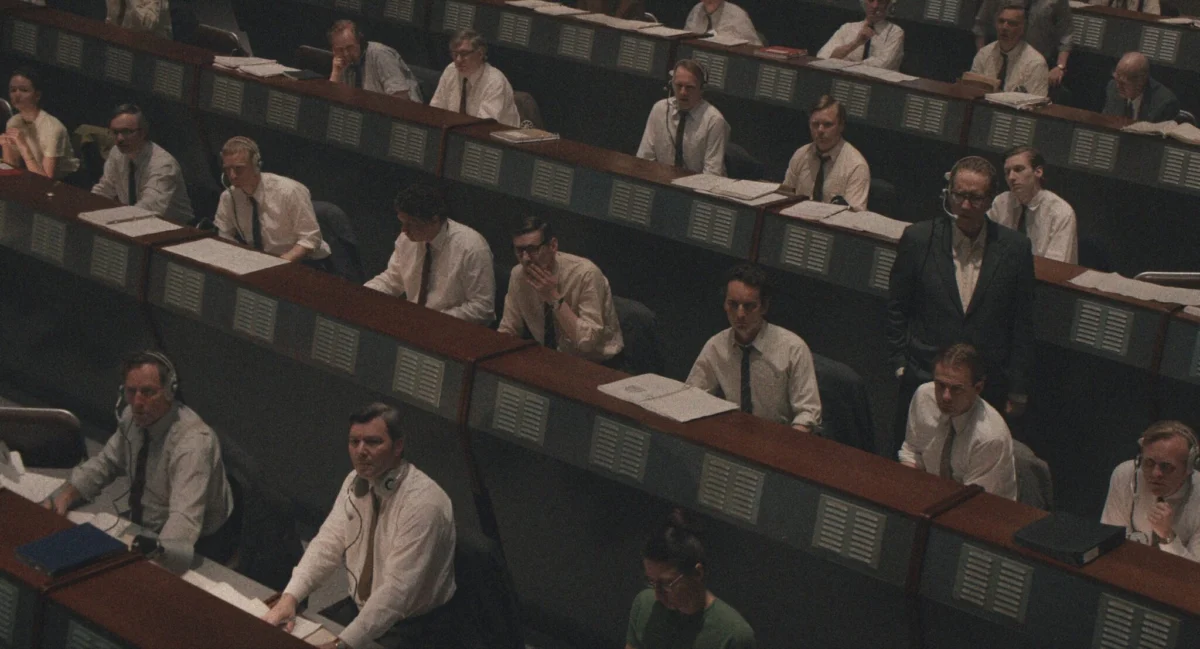
Apple TV+ is now venturing back into this high-stakes territory with Star City, an ambitious spinoff that plunges audiences deep into the critically acclaimed alternate history of its flagship science fiction drama, For All Mankind. The original series famously began with a deceptively simple yet profoundly impactful question: what if the Soviet Union had triumphed in the race to the moon in 1969? From this singular point of divergence, For All Mankind masterfully explores the cascading "butterfly effect" that propels humanity further into the cosmos than previously imagined, transforming geopolitical landscapes and technological advancements. By its fifth season, set in an alternate 2012, the narrative has evolved to encompass everything from bustling Martian space colonies to an intrepid search for extraterrestrial life among Saturn’s enigmatic moons. Star City now rewinds the clock, returning to the foundational moment of the franchise’s altered timeline, but with a starkly different lens. It promises a grittier, darker companion piece, meticulously interrogating the series’ original point of divergence through the eyes of those living and working behind the Iron Curtain.
The Unpredictable Nature of Spinoffs
The decision to greenlight a spinoff is always fraught with peril. The inherent risk lies in diluting the magic of the original, or worse, failing to resonate with either existing fans or potential new viewers. The successful spinoffs—those like Frasier from Cheers, Angel from Buffy the Vampire Slayer, or the aforementioned Better Call Saul from Breaking Bad—often manage to transcend their origins by maintaining the thematic core and quality of their predecessor while simultaneously carving out a unique identity and purpose. They expand the universe, rather than merely replicate it.
Conversely, many falter because they either cling too tightly to the original, offering little new to say, or stray too far, alienating the very fanbase they sought to attract. The challenge is amplified when dealing with complex, character-driven narratives or intricate world-building, where consistency and innovation must coexist. Star City faces this challenge head-on, not only expanding an established alternate history but doing so by flipping the perspective entirely, demanding a profound tonal and narrative shift.
Chronology: Rewriting History from the East
Star City’s narrative strategy is a bold stroke, anchoring its story at the precise moment of historical deviation that defines its parent series. This isn’t merely a prequel; it’s a parallel exploration, running concurrently with the early beats of For All Mankind but from a diametrically opposed viewpoint.
Roots in For All Mankind
To fully appreciate Star City, one must first understand the expansive canvas of For All Mankind. The series began with cosmonaut Alexei Leonov’s historic moonwalk in 1969, beating the Americans and fundamentally altering the Cold War. This single event ignited an even more intense space race, pushing both superpowers to unprecedented technological and societal leaps. Over its acclaimed run, For All Mankind has charted humanity’s rapid expansion into space, depicting a world where women and minorities achieved prominence in NASA much earlier, where commercial spaceflight flourished, and where humanity’s gaze turned to Mars and beyond. The series is celebrated for its meticulous attention to detail, its dramatic character arcs, and its compelling "what if" scenarios that continually push the boundaries of historical speculation. Its narrative has been characterized by a blend of thrilling space sequences, intricate political maneuvering, and deeply personal stories of ambition, sacrifice, and discovery, often underscored by a sense of hope and progress.
Star City‘s Point of Divergence
Star City takes us back to that pivotal moment: July 20, 1969, as cosmonaut Alexei Leonov (portrayed by Sam Wilkinson) plants the Soviet flag on the lunar surface. But while For All Mankind then pivots to the American reaction and subsequent efforts to catch up, Star City immerses itself in the world Leonov left behind. It journeys behind the impenetrable Iron Curtain, offering an unprecedented, in-depth exploration of the Soviet Union’s space program and the profound, often chilling, realities of life in a country that had achieved such an monumental triumph before its capitalist rival.
The brilliance of Star City lies in its commitment to offering a truly distinct narrative, despite sharing the same historical bedrock. It’s not simply a re-telling; it’s a re-interpretation. The show manages to distinguish itself tonally and stylistically from its optimistic, often heroic predecessor. Where For All Mankind often celebrates human ingenuity and the spirit of exploration, Star City delves into the darker underbelly of state-controlled ambition, the personal cost of collective triumph, and the pervasive paranoia that defined the Soviet system. It expands the world of its larger franchise not by merely adding new chapters, but by revealing the hidden, complex, and often morally ambiguous foundations of the alternate reality we thought we knew.

Supporting Data: A Deep Dive into Soviet Space Ambitions
The narrative fabric of Star City is woven with rich detail, exploring the intricate layers of Soviet life and ambition in this altered timeline.
Behind the Iron Curtain
The series is aptly named after its fictional home base, which draws heavily from the real-life Yuri Gagarin Cosmonaut Training Center near Moscow. This choice immediately grounds the narrative in a tangible, albeit fictionalized, Soviet reality. Star City transcends the traditional sci-fi drama, blending elements of a taut espionage thriller with its alternate history premise. This genre hybridization is a key factor in its ability to stand alone; technically, prior viewing of For All Mankind isn’t a prerequisite, though franchise fans will undoubtedly appreciate the deeper contextual layers.
The series particularly appeals to those who have already bought into For All Mankind‘s intricate world-building and who are comfortable with its unique "this isn’t our reality, but, wow, it occasionally sure does rhyme with it in uncomfortable ways" premise. Star City takes this discomfort and amplifies it, exploring the inherent tension between scientific aspiration and totalitarian control. It portrays a society where even the greatest triumphs are shadowed by suspicion, where individual freedom is sacrificed for state glory, and where the pursuit of knowledge is inextricably linked to political power plays.
Key Players and Their Plight
The ensemble cast of Star City brings to life the complex human drama unfolding within this secretive Soviet world.
-
The Chief Designer (Rhys Ifans): At the heart of the series is the enigmatic Chief Designer, a character who operates anonymously, his identity shielded from the public even in the wake of his greatest triumph. Ifans portrays him with a masterful blend of quiet brilliance, deep-seated ambition, and simmering frustration. While thrilled by the lunar landing, his grand dreams of expanding Soviet spaceflight beyond the moon are consistently thwarted by his superiors. They are less interested in genuine scientific advancement and more preoccupied with maintaining power, control, and publicly humiliating the United States on the global stage. The Chief Designer, hinted to be based on the real-life Soviet engineer Sergei Korolev, is a hero to his nation but essentially a prisoner within it. He receives a hero’s award he cannot keep and is denied attendance at his own victory parade, a stark illustration of his lack of personal freedom. His superiors dictate his focus, forcing him to prioritize lunar activities over his visionary plans for deeper space exploration. Despite this oppression, he maintains a paternalistic affection for his cosmonauts, whom he affectionately calls his "eagles."
-
The Cosmonauts: These "eagles" — Yana Akhmatova (Niamh Alger), Sasha Polivanov (Solly McLeod), Valya Mironov (Adam Nagaitis), and Anastasia Belikova (Alice Englert) — are eager to make history, embodying the youthful idealism often associated with space exploration. Yet, their commitment comes at a profound personal cost. Most are not even permitted to inform their families of their space assignments until after the missions are successfully completed, highlighting the extreme secrecy and control exerted by the state. Their individual stories provide a human face to the sacrifices demanded by the Soviet system.
-
Lyudmilla Raskova (Anna Maxwell Martin): Providing a chilling counterpoint to the Chief Designer’s scientific idealism is Lyudmilla Raskova, the ruthless head of KGB surveillance, played with compelling intensity by Anna Maxwell Martin. Raskova is a master manipulator, orchestrating a vast web of intelligence gathered by her squad of female agents who meticulously listen in on virtually every resident of Star City. As rumors of an American spy stealing Soviet secrets begin to circulate, Raskova’s methods grow increasingly brutal, involving the torture of potential informants and deep dives into personal lives. Her frequent clashes with the Chief Designer are a highlight of the series, representing the ideological battle between pure scientific pursuit and the pervasive paranoia of the state.
Familiar Faces and Future Connections
For dedicated For All Mankind fans, Star City offers tantalizing glimpses into the origins of characters and plotlines that will become central to the main series.

-
Sergei Nikulov (Josef Davies): Audiences will recognize a young engineer, Sergei Nikulov, who plays a key role in the spinoff and is destined for significant influence in the broader For All Mankind timeline. His early experiences within the confines of Star City undoubtedly shape the man he becomes.
-
Irina Morozova (Agnes O’Casey): Perhaps one of the most intriguing connections is the introduction of junior surveillance agent Irina Morozova. Agnes O’Casey wisely avoids imitating Svetlana Efremova’s iconic performance of the older Irina in For All Mankind. Instead, O’Casey portrays a softer, more emotionally malleable figure, one still capable of being horrified by the draconian demands of her government. This nuanced portrayal sets up a wealth of questions for For All Mankind fans, eager to understand the experiences and moral compromises that will transform this young woman into the formidable figure seen in the flagship series.
-
Sasha Polivanov: The unique surname of cosmonaut Sasha Polivanov almost certainly implies a familial connection to the man who, by Season 5 of For All Mankind, has risen to become the Governor of Mars. These subtle nods enrich the overarching narrative, providing a deeper sense of continuity and demonstrating the long-lasting impact of the initial alternate history.
Official Responses: Critical Reception and Fan Engagement
The initial critical reception to Star City, based on the five episodes made available for screening (out of a total of eight), paints a picture of a series with immense potential, albeit one that deliberately diverges in tone from its parent.
Early Reviews and Tone
Critics have noted that while Star City features a handful of breathtakingly intense space scenes, much of the action remains firmly Earth-bound, focusing on the intricate political machinations and human drama within the Soviet space program. Like the earliest seasons of For All Mankind, Star City shines brightest when it delves into the interior lives of its characters, expertly depicting the complicated strain that constant surveillance and brutal obligation to the state inevitably inflict. However, the series’ unrelenting bleak tone and suffocating sense of paranoia mark a significant departure from For All Mankind‘s often optimistic and humorous spirit. This deliberate choice creates a stark contrast, but it also presents a challenge: most of the characters’ default emotional states tend to register somewhere between "withdrawn" and "deeply emotionally repressed." This emotional containment, while historically accurate for the setting, can make it difficult for viewers to connect deeply with the characters beyond a surface level, potentially limiting the emotional resonance that For All Mankind so masterfully achieves.
Performance and Plot Acclaim
Despite the challenging emotional landscape, the series has garnered praise for its performances and ambitious plot. Rhys Ifans and Anna Maxwell Martin, in particular, deliver stellar performances, generating a "deliciously fractious chemistry" that makes their scenes together as entertaining as they are tense. Their ideological and personal clashes form a compelling core for the narrative. Agnes O’Casey’s portrayal of Irina Morozova has also been highlighted as a smart, independent take on a character with significant future implications within the broader franchise. Her depiction of a young woman grappling with the moral complexities of her role offers a powerful counterpoint to the more hardened figures around her.
Furthermore, the season’s larger plot, which gradually unfolds to reveal multiple betrayals and a clandestine, off-the-books space mission, is far more ambitious than initial descriptions of the series might have indicated. This intricate web of intrigue promises a compelling narrative arc that continually raises the stakes. While the ultimate direction of this story remains an open question, the journey presented thus far has been deemed "worth signing up for," signaling a strong start for the ambitious spinoff.
Implications: The Broader Universe and Alternate History Storytelling
Star City is more than just a companion piece; it’s a strategic expansion that profoundly enriches the For All Mankind universe and offers valuable commentary on the nature of alternate history storytelling.

Expanding the For All Mankind Universe
By dedicating an entire series to the Soviet perspective, Star City adds unprecedented depth to the established alternate timeline. No longer are the Soviets merely a formidable rival or a distant antagonist; they are now fully realized, complex characters operating within their own nuanced, albeit oppressive, system. This strategic decision allows the franchise to explore themes of space exploration, geopolitical rivalry, and human ambition from a comprehensive, dual perspective. It deepens the understanding of the initial historical divergence, showcasing how that single event reverberated through both superpowers, shaping their societies and individual lives in distinct ways. The series clarifies that while the American narrative in For All Mankind is often one of hopeful progress despite challenges, the Soviet experience, as depicted in Star City, is one of triumph shadowed by profound personal and systemic costs.
The Power of Alternate History
Star City serves as a powerful testament to the enduring appeal and analytical capacity of the alternate history genre. By exploring the "what if" from the other side, it provides a compelling commentary on the realities of authoritarian regimes and the psychological toll they exact. The series meticulously details how scientific ambition, even in the face of unprecedented success, can be stifled and distorted by political imperatives, pervasive surveillance, and the suppression of individual freedom. It offers a fictionalized yet chillingly plausible look at the human cost of ideological competition, where innovation is a tool for propaganda, and personal achievements are subsumed by state glory. This deeper dive into the Soviet experience enriches the genre itself, moving beyond simple plot mechanics to profound societal and ethical interrogations.
Future Prospects for the Franchise
The success and critical reception of Star City carry significant implications for the future of the For All Mankind franchise. It demonstrates that the universe is ripe for further expansion, potentially paving the way for more spinoffs that explore other nations’ contributions or other pivotal moments in this altered timeline. Could we see series delving into the burgeoning space programs of other global powers, or perhaps even character-focused prequels that shed light on other iconic figures?
Furthermore, Star City has the potential to recontextualize events and characters in the main For All Mankind series, adding layers of meaning and irony to narratives that fans thought they fully understood. The origin stories of characters like Irina Morozova, in particular, will undoubtedly inform how audiences perceive their actions and motivations in the flagship show, enriching the overall viewing experience. The enduring appeal of the "space race" narrative, reimagined through the lens of complex character drama and geopolitical intrigue, suggests that Apple TV+ has successfully cultivated a universe with vast storytelling potential that extends far beyond its initial premise.
Conclusion
Star City is a bold and necessary expansion of the For All Mankind universe, offering a starkly contrasting yet equally compelling vision of an alternate history. While its unrelenting bleakness and emotionally repressed characters may demand a different kind of engagement than its more optimistic predecessor, the series compensates with a gripping espionage thriller narrative, standout performances, and an ambitious plot that promises to keep viewers captivated. By meticulously exploring the human cost and political machinations behind the Soviet Union’s fictional lunar triumph, Star City not only enriches the lore of its parent series but also stands as a powerful piece of alternate history storytelling in its own right. For fans and newcomers alike, it represents a journey well worth embarking upon, promising to reshape perceptions of a beloved universe and delve into the darker, more complex corners of humanity’s reach for the stars.



Leave a Comment