
Unraveling the Abyss: Episode Four of "The Terror: Devil in Silver" Exposes Systemic Malice at New Hyde
New Hyde Psychiatric Facility, [Fictional City] – The fourth episode of AMC’s "The Terror: Devil in Silver" intensifies its grim exploration of institutional neglect and systemic abuse, tightening the narrative screws on the beleaguered patients of New Hyde. This pivotal installment sees characters confront their traumatic pasts, open doors to chilling revelations, and culminates in a tragic loss that underscores the brutal realities faced by those trapped within the system. The episode meticulously dissects the insidious nature of compliance, the blurred lines between care and control, and the devastating consequences when vulnerable individuals seek help from a fundamentally flawed institution.
A Descent into Despair: Episode Chronology
Episode four commences with a chilling "cold open" that immediately sets a tone of historical trauma and institutional betrayal.
Echoes of the Past: Dorry’s Unveiling
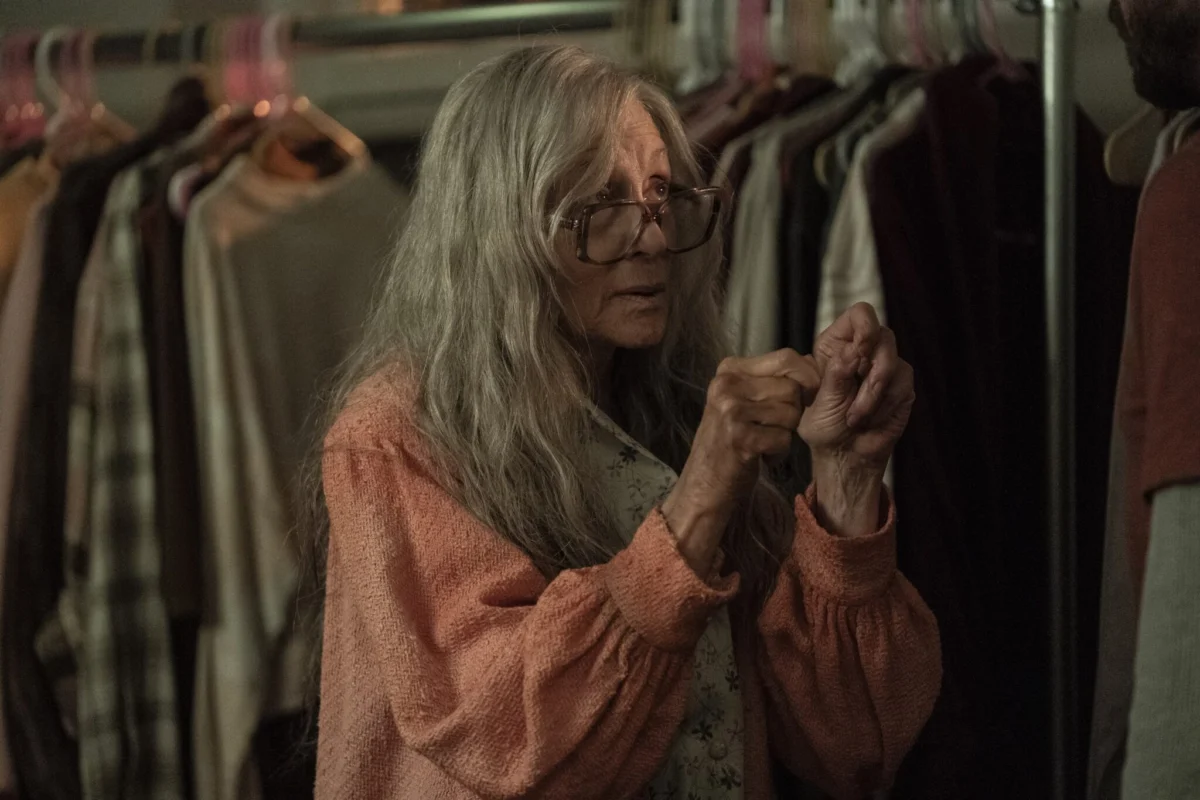
The episode opens with Dorry, a long-term patient, in a disquieting flashback with the sinister Dr. Walter. This scene serves as a stark, suspected recreation of Dorry’s abandonment at New Hyde decades prior by her husband. Her recounted history—being institutionalized for "crying too much for her husband’s liking"—resonates with the historical reality of women being unjustly confined to mental hospitals for perceived emotional transgressions or simply for inconveniencing their male partners. This personal tragedy is a microcosm of the broader institutional dehumanization, where individual emotional expression is pathologized and punished.
The Weight of Compliance and the Illusion of Care
The narrative swiftly transitions to the contemporary pressures within New Hyde. Dr. Anand, representing the administrative perspective, articulates a view of "noncompliance" rooted in the desire for fewer "hassles" and more funding, betraying a focus on institutional efficiency over patient well-being. This perspective frames patient autonomy as an impediment, reinforcing a system that demands "years of regimen," as Dr. Walter chillingly phrases it. Such extreme rigidity and denial of "moments of pleasure" can only be enforced, never willingly sustained, highlighting the coercive nature of the institution. A stark example of this control surfaces when Miss Chris snaps at patients enjoying a homemade meal, an act of seemingly benign pleasure that is perceived as a breach of order. The narrative draws a disturbing parallel between Miss Chris’s punitive reaction and Dr. Walter’s lobotomization of Dorry, suggesting they lie on the same spectrum of control, even if their methods and Miss Chris’s self-perception differ.
Dorry’s plight is further illuminated in a poignant conversation with Loochie. She observes that "he" (referring to the oppressive forces of New Hyde or Dr. Walter) doesn’t "fuck with" Loochie for the same reason he leaves Dorry alone: "because he doesn’t have to." Both are "lifers," devoid of external connections, their entire existence tethered to New Hyde. This realization paints a deeply dispiriting picture of their inescapable confinement, where "no meds, no rules" translates not to freedom, but to a permanent state of institutional limbo.
Contradictions of Compassion: Miss Chris’s Moral Ambiguity
Miss Chris, a central figure among the staff, presents a complex and contradictory portrait. Her stated beliefs—"How can I leave a man like that? They need me."—clash sharply with her actions. The narrative exposes her history of leaving a "delusional" old man in solitary confinement for decades, engaging in unsettling acts like breaking the bones of deceased patients, and routinely drugging her charges. She voices a desire to avoid retirement to escape "babysitting and cleaning all day," yet her paid profession involves treating adults like children and managing their refuse, highlighting a profound disconnect in her self-perception. While her concern that conditions on Northwest 2 might worsen upon her retirement holds some validity, her current "help" is shown to be a far cry from genuine therapeutic care.

Seeking Solace Amidst Scrutiny: Coffee’s Plea
Miss Chris’s relationship with Coffee is particularly illustrative of the institution’s flawed approach. Mostly, she treats him with the scolding authority of a parent towards a difficult child, mirroring her interactions with her own adult daughter. A rare moment of genuine caring emerges when Coffee experiences a breakdown at the payphone, coinciding conspicuously with the announcement of Dr. Cleave’s impending arrival from the review board. This timing raises questions about the authenticity of her compassion. The narrative also highlights a shared background between Miss Chris and Coffee, both belonging to the Black immigrant diaspora, suggesting a potential for deeper understanding. However, this connection is not mutual. Coffee’s poignant accusation—"You demand honesty, but you are not honest. None of you are."—underscores the staff’s pervasive disingenuousness. Miss Chris’s tendency to scoff at Coffee’s concerns about the "man behind the silver door," dismissing them as nonsense rather than attempting to understand the psychological pain he describes, epitomizes the staff’s failure to truly listen to their patients.
The Path to Surrender: Pepper’s Confrontation with Walter
As hope dwindles for Loochie, Coffee, and Pepper, Dorry offers a desperate escape. She guides Pepper through a hidden hole in the wall, delivering him directly to Dr. Walter. Walter, in turn, plunges Pepper into a memory, presenting him with a chance to act as a responsible father to Anthony. Yet, consistent with his character, Pepper opts for immediate personal relief over genuine altruism. While not malicious, his intent fails to negate the impact of his choices. Walter’s offer of a "frictionless existence" at the expense of one’s humanity carries a profound resonance in the contemporary age of generative AI, where effortless solutions can often mask a deeper erosion of value and meaning. Walter represents a solution in search of a problem, promising a shiny, happy existence where "nothing matters." Dorry, having fought her own battles upon entering New Hyde, ultimately had no choice but to surrender. Pepper, who fancies himself a hero fighting evil, finds surrender appealing when the battle requires confronting the damage he has wrought.
A Tragic Intervention: Coffee’s Untimely End
Concurrently, Loochie and Coffee embark on a desperate mission to rescue Pepper. Dorry leads them into an abandoned hallway, a space where she previously encountered Walter, and Coffee makes the horrifying discovery that they have crossed into the forbidden territory "on the other side of the silver door." As they retrieve Pepper, a monstrous entity stalks them. However, the true horror unfolds outside the facility. Dr. Anand, attempting to leverage the police’s fear of the patients to address the "man behind the silver door," inadvertently triggers a tragic outcome. In a harrowing scene that mirrors real-world tragedies, the police fatally shoot Coffee as he desperately seeks help. His death is portrayed as an entirely avoidable yet tragically predictable consequence of societal and institutional failures in responding to mental health crises.
Systemic Malfunction: Supporting Data and Thematic Deep Dive
The episode provides rich "data" for analyzing the show’s core themes, weaving a narrative that critiques institutional power and the vulnerability of the marginalized.
The Architecture of Obedience
The New Hyde facility operates on an architecture of enforced obedience. Dr. Anand’s administrative concerns about "noncompliance" are not about patient well-being, but about maintaining institutional order and securing funding. Dr. Walter’s insistence on "years of regimen" for "moments of pleasure" illustrates a system designed to strip patients of agency and personal joy. This system thrives on the submission of those deemed "lesser," turning mental health treatment into a mechanism of control rather than healing. The patients are not seen as individuals needing care, but as problems requiring management.
The Spectrum of Staff Engagement
The staff at New Hyde fall into distinct categories regarding their engagement with this corrupt system. Dr. Anand embodies the first category: those who directly benefit and actively resist change. Scotch Tape represents the second: individuals who attempt small changes but eventually become disillusioned and quit. Josephine, new to the ward, is positioned as potentially falling into this second category, her freshness and genuine compassion a stark contrast to the hardened cynicism around her. Miss Chris, however, occupies a third, more insidious category: she makes small changes and performs acts of "niceness" to convince herself she is making a difference, even as her actions perpetuate the system’s harm.

The distinction between "kindness" and "niceness" is crucial. Miss Chris is often "nice," ensuring basic needs are met and compliance is maintained, but her kindness is conditional and often absent. Josephine, conversely, exhibits genuine "kindness," bringing homemade food with real utensils and performing personal acts of care like laundry. Scotch Tape, though tough and compliant, displays a blend of both, treating Loochie like a younger sibling and offering Pepper a back adjustment. His attentiveness to the elderly hints at a deeper, unfulfilled potential for elder care, suggesting that even within a broken system, sparks of genuine human connection can exist.
The Unheard Voices
A pervasive theme is the staff’s failure to truly listen to the patients. Coffee’s accusation to Miss Chris—"You demand honesty, but you are not honest. None of you are."—highlights this fundamental breach of trust. When Coffee describes the "man behind the silver door" or the physical and psychological pain inflicted upon patients, Miss Chris dismisses his concerns as irrational. The staff "hear" the words, but they do not "listen" to the underlying trauma, fear, or lived experience. This dismissiveness reinforces the power imbalance and further isolates the patients within their own suffering.
The Allure of Apathy
Walter’s offer to Pepper—a frictionless existence devoid of personal responsibility or painful memories—serves as a potent metaphor for contemporary temptations. In an age where generative AI promises ease and convenience, Walter’s proposition reflects a societal yearning for escapism from confrontation and difficulty. The choice to surrender one’s humanity for superficial contentment is presented as a dangerous, albeit alluring, path. Dorry’s prior surrender and Pepper’s momentary capitulation underscore the pervasive human desire to avoid pain, even at the cost of true selfhood.
The Devil in the Details
The ambiguity surrounding the "devil in silver" and Dr. Walter continues to be a central mystery. While Loochie, Coffee, and Pepper attribute their terror to an "it" behind the silver door, Dorry refers to Walter as her "friend." The conversation about Walter wanting Pepper to "break him out of New Hyde" suggests a literal, possibly demonic, entity manipulating events. Coffee’s insightful question—"did the devil come here because of what Dr. Walter did? Or did Dr. Walter do it because the devil told him to?"—captures the perplexing nature of the evil at play. The show masterfully blurs the lines between mental illness, institutional abuse, and a potentially supernatural malevolence, leaving the audience, and even the characters, grappling with the true nature of the horror.
Institutional Responses and Societal Echoes
The episode critiques institutional responses to mental health with stark clarity, echoing real-world systemic failures.
The Administrators’ Blind Spot
Dr. Anand’s primary concern with "noncompliance" and administrative efficiency, rather than the root causes of patient distress, highlights a critical flaw in institutional priorities. Her focus on securing funding and reducing "hassles" over genuine patient care reflects a system that values order and appearance over human dignity. This administrative blind spot ultimately contributes to the escalation of crises within the facility.

Miss Chris’s Paradoxical Protection
Miss Chris embodies a paradoxical form of protection. She genuinely believes she is safeguarding the patients, but her methods—enforced compliance, strict routines—mirror the very oppressive structures she claims to mitigate. She sees herself as a maternal figure, yet her love is depicted as smothering, her actions often undermining patient autonomy and exacerbating their isolation. Her conviction that she is "the only thing keeping the New Hyde ship from sinking" is a tragic delusion; in reality, she is merely "arranging deck chairs on the Titanic," perpetuating a doomed system while believing she is saving it.
The Peril of External Intervention
The most devastating "official response" comes from the police, whose intervention leads to Coffee’s death. Dr. Anand’s attempt to manipulate their fear of the patients to address the "man behind the silver door" backfires catastrophically. The police’s immediate, lethal response to Coffee, who was merely seeking help, is a chilling commentary on the real-world dangers faced by individuals experiencing mental health crises when confronted by law enforcement. The episode explicitly states, "The system is working perfectly. That’s why they never fix it," a searing indictment of institutions designed to control rather than heal.
Implications and Unresolved Questions
With only two episodes remaining, "The Terror: Devil in Silver" has laid bare a complex tapestry of horror, both human and potentially supernatural.
The Cost of Hope and Humanity
Coffee’s tragic death serves as a stark warning about the consequences of seeking help within a system designed to contain rather than cure. His cry for assistance, met with lethal force, symbolizes the ultimate failure of institutional and societal safety nets for the mentally vulnerable. It underscores the profound cost of hope in an environment where genuine empathy is rare and fear is weaponized.
The Looming Narrative Climax
The show faces the significant challenge of bringing its disparate threads to a cohesive conclusion. The ambiguity surrounding the "devil in silver" and Dr. Walter, the internal struggles of the staff, and the desperate plight of the patients all demand resolution. Whether the series will adhere to the source material’s ending or forge a new path remains uncertain, adding a layer of suspense to the impending climax. The narrative must reconcile the institutional horror with the supernatural elements, or demonstrate how one informs the other.
The Enduring Message
Ultimately, "The Terror: Devil in Silver" appears to be hammering home a profound critique of institutional power, the marginalization of vulnerable individuals, and the systemic failures that perpetuate suffering. Whether this message culminates in a singular, definitive point or continues to resonate as an ongoing indictment of societal indifference, the show’s unflinching portrayal of New Hyde serves as a potent reminder of the fragility of humanity within structures designed to control it. As one chilling line from the episode states, "It hurts the most the first time, but you get used to it," a testament to the brutal acclimatization demanded by such oppressive environments. The narrative’s unresolved questions and escalating tension promise a harrowing, and hopefully impactful, conclusion to this unsettling journey into the heart of New Hyde’s darkness.




Leave a Comment