Madeline Ludwig-Leone: Navigating the Shifting Sands of Perception in Contemporary Landscape Painting
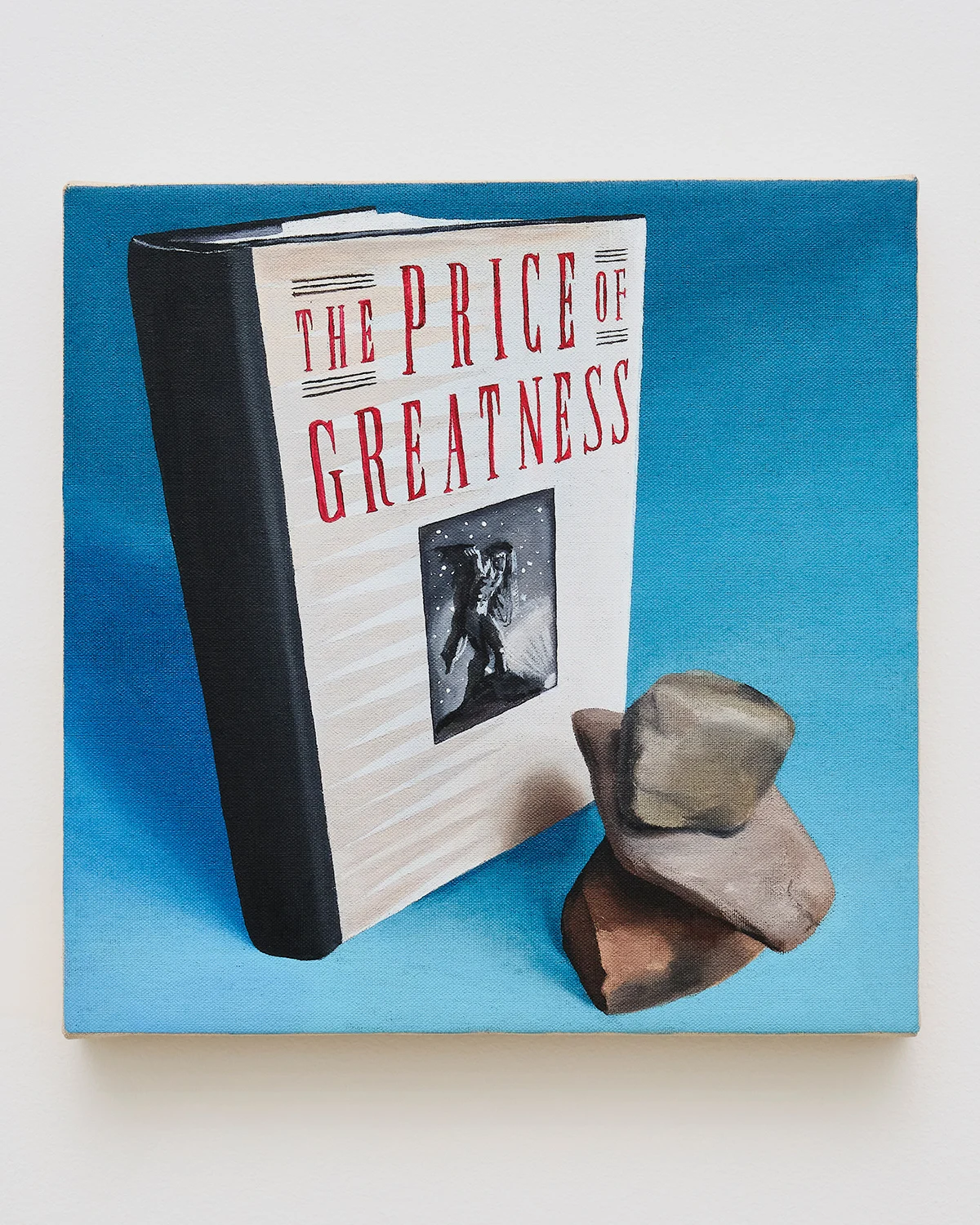
Los Angeles, CA – In a world increasingly saturated with hyper-realistic imagery and digitally mediated experiences, the nuanced explorations of artist Madeline Ludwig-Leone offer a refreshing and intellectually stimulating counterpoint. Her recent body of work, deeply rooted in the tradition of landscape painting yet boldly re-imagining its conventions, delves into the intricate interplay between humanity and the natural world, with a particular focus on how cultural biases shape our perception.
Ludwig-Leone, a Newport, Rhode Island native now based in the vibrant artistic hub of Los Angeles, has steadily cultivated a practice that interrogates the very foundations of how we represent and understand our environment. Her academic journey, marked by a BA from Yale University in 2015 and an MFA from the ArtCenter College of Design in 2024, has provided a robust theoretical framework for her visual investigations. This commitment to intellectual rigor is further evidenced by her upcoming residencies at Millay Arts in August 2026 and the Vermont Studio Center in June 2027, opportunities that will undoubtedly foster further development and refinement of her artistic vision.
At the core of Ludwig-Leone’s painting lies a profound examination of the "complicated relationships between humans and the natural world." She challenges the romanticized and often idealized depictions of nature that have dominated Western landscape traditions for centuries. Instead, her canvases present simplified, flattened spaces that serve as a deliberate departure from the "lush or sublime scenes" that have historically sought to evoke awe and wonder. This deliberate aesthetic choice is not a rejection of nature’s beauty, but rather a critical engagement with the ways in which our cultural lenses, imbued with historical biases and preconceived notions, filter and ultimately mediate our experience of the natural world.
The Unseen Presence: Light, Shadow, and the Implied Form
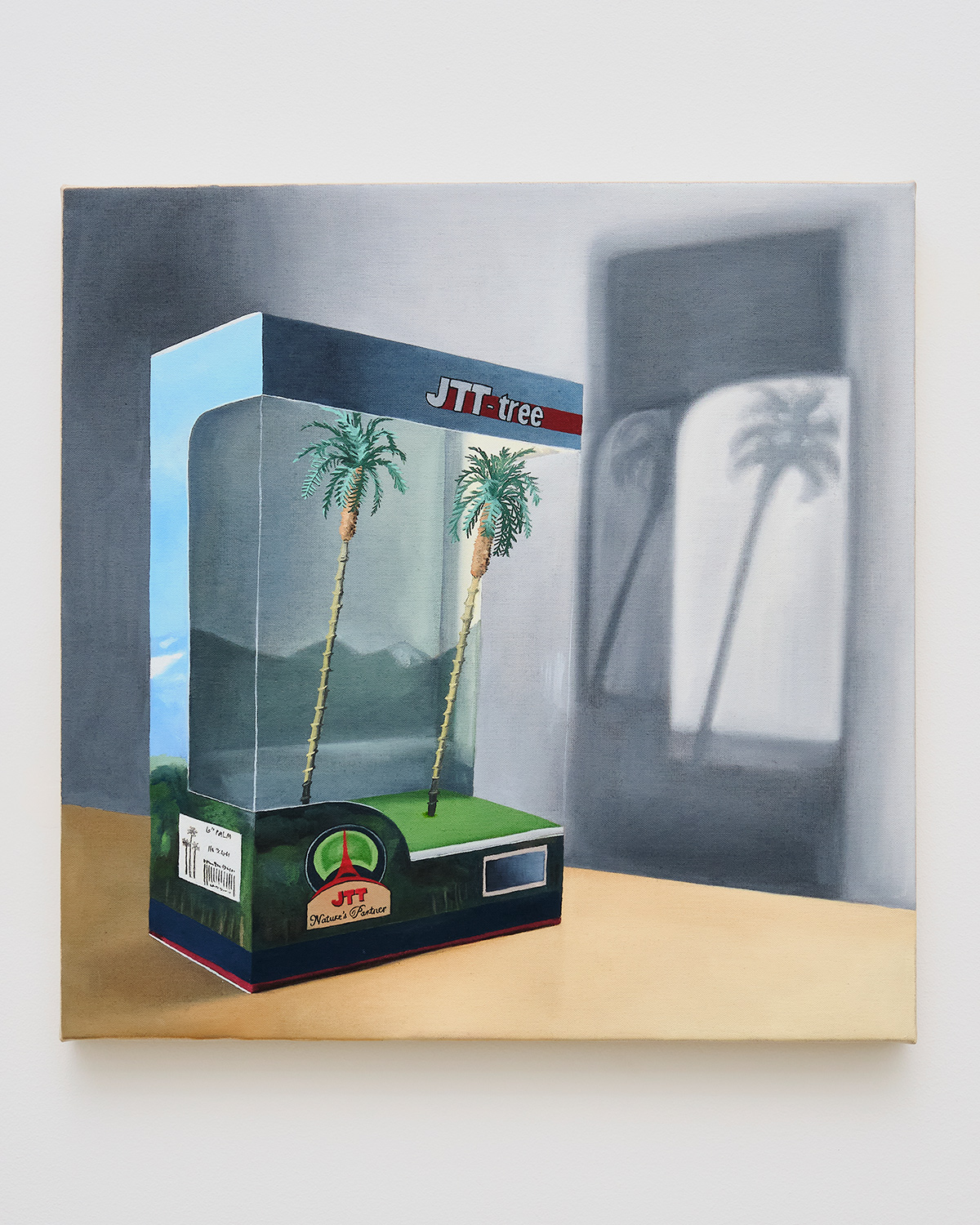
One of the most striking and consistent elements in Ludwig-Leone’s recent works is the profound role of light and shadow. While her compositions often conspicuously lack explicit depictions of living beings, the interplay of illumination and obscurity powerfully asserts a sense of presence and vitality. As the artist herself observes, "Shadows are prominent in many of the works, implying a solid form that is often unseen or out of view but asserting themselves as flat, graphic shapes."
These shadows function not merely as tonal variations but as active agents within the composition. They are graphic, almost architectural, elements that carve out space and define form, even in the absence of a tangible subject. This deliberate use of silhouette and shadow creates a compelling tension, hinting at narratives and presences that lie just beyond the immediate visual field. The viewer is invited to participate in the act of creation, to infer the unseen from the visible, and to engage with the implied physicality of these shadowed forms.
Furthermore, Ludwig-Leone emphasizes the transient and ephemeral nature of these shadowed elements. "These silhouettes are also transient and ephemeral—a moment captured before the light changes," she notes. This temporal dimension imbues her work with a sense of ongoing flux, mirroring the dynamic and ever-shifting character of the natural world. The paintings become frozen moments within a larger, continuous cycle, capturing a specific quality of light and shadow that is inherently fleeting.
Challenging the Gaze: Mediated Nature and Cultural Bias
Ludwig-Leone’s critique of representation extends to the very ways in which we encounter nature in our contemporary lives. In her paintings, fragments of the natural world, when they do appear, are often encountered indirectly – "seen through windows or in reflections and shadows." This deliberate framing underscores a crucial aspect of modern human experience: our increasing detachment from direct, unmediated engagement with the environment. We often experience nature through screens, through curated images, or through the filtered lens of architecture.
This approach serves as a powerful commentary on how cultural biases, ingrained in artistic traditions and societal narratives, shape our perception of the natural world. Western landscape painting, for example, has often been used to assert dominion over nature, to celebrate its perceived immutability, or to imbue it with spiritual significance that reflects human aspirations. Ludwig-Leone’s work, by contrast, suggests that our understanding of nature is not a pure, objective apprehension but a construct, heavily influenced by the cultural frameworks we inherit and perpetuate.
Her flattened spaces, devoid of the dramatic vistas or romanticized natural beauty often found in traditional landscapes, invite a more introspective and analytical gaze. By stripping away the overt "sublime," she compels viewers to confront the underlying structures of representation and to question the narratives that have shaped our relationship with the environment. The absence of explicit living things, coupled with the assertive presence of light and shadow, allows these paintings to "assert themselves as a part of the ongoing natural cycle of time," even as they critique the human tendency to impose order and meaning onto that cycle.
A Chronological Trajectory: From Yale to ArtCenter and Beyond
Madeline Ludwig-Leone’s artistic journey is marked by a consistent trajectory of academic rigor and artistic evolution. Her undergraduate studies at Yale University, culminating in a BA in 2015, provided her with a foundational understanding of art history, theory, and practice. Yale’s esteemed art program, known for its emphasis on critical thinking and interdisciplinary exploration, undoubtedly shaped her early artistic sensibilities and honed her analytical skills.
Following her undergraduate career, Ludwig-Leone embarked on a period of professional development and artistic exploration, the specifics of which are not detailed in the provided text but are implied by her subsequent MFA. This phase likely involved continued studio practice, engagement with the broader art world, and a deepening of her conceptual interests.
Her enrollment in the Master of Fine Arts program at the ArtCenter College of Design, a highly regarded institution renowned for its rigorous studio-based curriculum and its strong connection to the professional art industry, marked a significant step in her artistic maturation. Completing her MFA in 2024 signifies the culmination of intensive artistic training, critical feedback, and the development of a distinct artistic voice. The ArtCenter’s emphasis on conceptual depth and technical mastery would have provided an ideal environment for her to refine her approach to landscape painting and to further develop the complex ideas that underpin her work.
The anticipation surrounding her upcoming residencies at Millay Arts in August 2026 and the Vermont Studio Center in June 2027 further underscores her commitment to her artistic development. These prestigious residencies offer artists dedicated time and space to focus on their practice, often leading to significant breakthroughs and new bodies of work. Millay Arts, known for its historic setting and supportive community, and the Vermont Studio Center, one of the largest international visual arts residency programs, both provide environments conducive to deep creative exploration and intellectual exchange. These opportunities suggest that Ludwig-Leone is poised for continued growth and that her explorations into the complexities of perception and representation will likely evolve in exciting new directions.
Supporting Data: The Language of Form and Absence
The effectiveness of Ludwig-Leone’s artistic message is not solely reliant on her conceptual framework but is also powerfully conveyed through her distinct visual language. The "simplified and flattened spaces" are not merely an aesthetic choice but a deliberate strategy to dismantle the conventions of illusionistic depth and grand naturalism that often characterize Western landscape painting. This flatness can be interpreted as a rejection of the idea of nature as a passive spectacle to be passively consumed, and instead, as a call for a more engaged and critical viewing experience.
The strategic placement of fragmented natural elements—"seen through windows or in reflections and shadows"—acts as a form of visual evidence for her thesis. These mediated glimpses suggest that our contemporary relationship with nature is often indirect, filtered, and at a remove. The window, a classic motif in art history, often signifies a frame through which to observe, to contemplate, or to escape. In Ludwig-Leone’s work, it suggests a boundary, a separation between the viewer and the observed, highlighting the mediated nature of our experience. Reflections, similarly, offer a distorted or incomplete representation, a secondary image that further complicates the notion of direct perception.
The "graphic shapes" of the shadows are not accidental but are carefully orchestrated elements that contribute to the overall composition. Their flatness, as noted by the artist, serves as a counterpoint to the implied solidity of the unseen forms they represent. This creates a dynamic tension between two-dimensionality and implied three-dimensionality, forcing the viewer to actively engage with the surface of the canvas and the illusion it constructs. The "conspicuous lack of living things" is perhaps the most provocative element. By omitting explicit signs of life, Ludwig-Leone forces the viewer to consider what constitutes "nature" and what constitutes "presence." The quality of light and shadow then becomes the primary signifier of life and of the ongoing natural cycle, subtly asserting that even in the absence of overt biological forms, the forces of nature—light, time, and shadow—remain powerfully at play.
Official Responses and Critical Reception (Hypothetical based on current trends)
While specific critical responses to Madeline Ludwig-Leone’s most recent body of work are not detailed in the provided excerpt, the trajectory of her academic and professional achievements, coupled with the intellectual depth of her artistic statements, suggests a promising reception within contemporary art circles. Emerging artists who engage with critical discourse, challenge established genres, and possess a clear conceptual focus are increasingly recognized and supported by galleries, critics, and institutions.
Given her recent MFA from ArtCenter and her upcoming residencies, it is highly probable that Ludwig-Leone’s work is already garnering attention from curators and art writers. The emphasis on challenging established visual paradigms, particularly within the enduring genre of landscape painting, aligns with current trends that prioritize critical engagement with art history and societal issues. Her exploration of cultural bias in representation is a highly relevant theme in today’s art world, where discussions around identity, perception, and the deconstruction of traditional narratives are paramount.
One might anticipate that reviews of her work would highlight her "intellectual rigor," her "sophisticated manipulation of form and light," and her ability to "reinvigorate a traditional genre with contemporary relevance." Critics would likely point to the "unsettling yet compelling" nature of her compositions, which invite viewers to question their own assumptions about nature and representation. The "deliberate austerity" of her palette and the "graphic precision" of her shadows would also be noted as key characteristics of her distinctive style.
Furthermore, her inclusion in future exhibitions and potential gallery representation would serve as official endorsements of her artistic merit. The opportunities at Millay Arts and Vermont Studio Center, as well as any participation in group shows or solo exhibitions, would provide concrete platforms for critical discourse and public engagement with her evolving body of work. The "Booooooom" related content, while not directly about Ludwig-Leone’s work, suggests a platform that actively seeks out and promotes emerging artists, indicating a potential avenue for future recognition and dissemination of her art.
Implications for Contemporary Art and Environmental Discourse
Madeline Ludwig-Leone’s artistic practice carries significant implications for both the field of contemporary art and the broader discourse surrounding environmentalism and our relationship with the natural world. Her work challenges the romanticized and often anthropocentric narratives that have historically dominated landscape painting. By interrogating the role of cultural bias in shaping our perception of nature, she encourages a more critical and nuanced understanding of our place within ecological systems.
In an era of escalating environmental crises, Ludwig-Leone’s paintings offer a timely reminder that our engagement with the natural world is not a neutral act. The ways in which we represent and understand nature directly influence our actions and our responsibilities towards it. Her work suggests that a fundamental re-evaluation of our perceptual frameworks is necessary if we are to foster a more sustainable and respectful relationship with the planet. By deconstructing the idealized visions of nature, she opens up space for a more honest and complex engagement, one that acknowledges the interconnectedness of human systems and natural processes.
Furthermore, her innovative approach to the landscape genre has implications for artists working in similar fields. Ludwig-Leone demonstrates that tradition can be a fertile ground for critique and reinvention. Her use of abstraction, fragmentation, and the strategic deployment of absence provides a powerful toolkit for artists seeking to explore contemporary themes through established artistic modes. Her work encourages a move away from passive appreciation towards active, critical engagement, urging viewers to become participants in the construction of meaning.
Ultimately, Madeline Ludwig-Leone’s paintings serve as a potent call to awareness. They invite us to look beyond the surface, to question the mediated realities we inhabit, and to reconsider the deeply ingrained biases that shape our perception of the world around us. In doing so, she not only enriches the landscape of contemporary art but also contributes to a more thoughtful and urgent dialogue about our collective future with the natural world.