A Daring Splash: Cartoon Saloon’s ‘Julián’ Set to Redefine Animated Storytelling
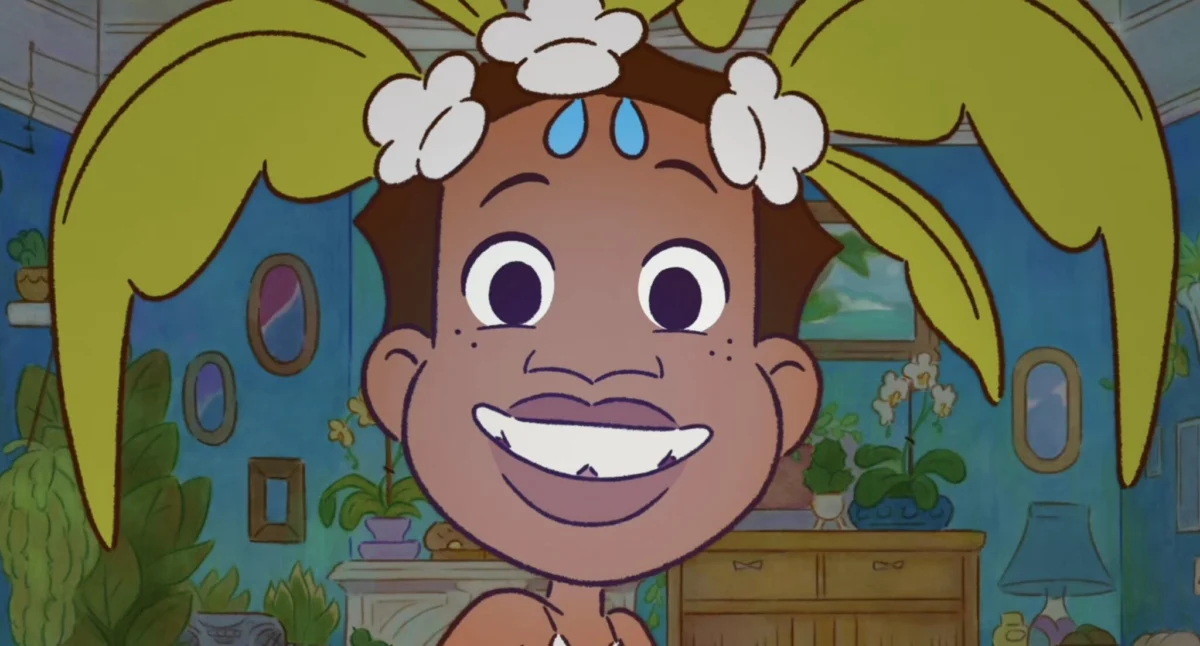
DUBLIN, IRELAND – Renowned Irish animation studio Cartoon Saloon, celebrated for its visually breathtaking and emotionally resonant films such as Wolfwalkers, Song of the Sea, and the acclaimed The Breadwinner, is poised to captivate audiences once again with its latest feature, Julián. Slated for its world premiere at the prestigious 2026 Annecy International Animation Film Festival, Julián promises to be a truly exceptional cinematic experience, even by the studio’s already lofty standards. This heartwarming tale, based on Jessica Love’s beloved children’s book Julián is a Mermaid, delves into themes of identity, imagination, and acceptance with a delicate touch and a sprinkle of magic, standing out as a vital piece of storytelling in today’s cultural landscape.
The film introduces audiences to Julián, an imaginative young boy voiced by Knyght Darius Jack, who is utterly enchanted by mermaids. His unforgettable summer unfolds alongside his Abuela, brought to life by Milcania Diaz-Rojas, as they navigate the vibrant tapestry of Brooklyn. Director Louise Bagnall guides viewers through Julián’s journey of self-discovery, presenting a narrative that is both profoundly personal and universally relatable. In a climate where diverse representation in children’s media is increasingly scrutinized, Julián emerges as a beacon of hope, a film that, as one critic notes, "could change and possibly even save gender-nonconforming kids’ lives," a testament to its courage and conviction.
Main Facts: The Visionary Core of ‘Julián’
Julián is more than just another animated film; it’s a testament to the power of independent animation to tackle significant societal themes with grace and authenticity. Cartoon Saloon, known for its distinctive hand-drawn aesthetic and rich narrative tapestries rooted in folklore and human experience, brings its signature artistry to Love’s poignant story. Louise Bagnall, a director with a keen eye for subtle emotion and visual poetry, takes the helm, promising a film that balances whimsical fantasy with grounded reality.
The narrative centers on Julián’s vivid imagination, particularly his fascination with mermaids, which becomes a conduit for exploring his own burgeoning identity. His Abuela, a figure of warmth and wisdom, plays a pivotal role in fostering this self-expression. The film’s setting in Brooklyn is not merely a backdrop but an active character, brought to life with meticulous detail and cultural nuance, reflecting the rich Dominican heritage woven into the story. The decision to debut at Annecy 2026 underscores the film’s artistic merit and its anticipated impact within the global animation community. This strategic premiere positions Julián as a significant work, signaling its importance long before its wider release.
Chronology: From Banned Book to Feature Film
The journey of Julián from a concise picture book to a full-length animated feature is a story in itself, marked by creative expansion, meticulous research, and resilience in the face of unforeseen challenges.
Jessica Love’s Julián is a Mermaid, a seemingly simple yet profoundly impactful book, immediately resonated with Cartoon Saloon’s ethos of meaningful storytelling. Director Louise Bagnall recognized the inherent "depth underneath the surface" of the book, seeing potential for a broader narrative despite its brevity. The initial adaptation strategy involved stretching the book’s single afternoon setting across an entire summer. This expanded timeframe allowed for a more organic development of Julián and Abuela’s relationship, introducing the audience to their evolving bond as they get to know each other. Crucially, the film begins with Julián arriving at Abuela’s doorstep, setting the stage for their mutual journey of discovery.
Early in the production timeline, a vital research trip to Brooklyn was undertaken in 2019 to capture the authentic essence of the neighborhood. This in-person immersion was tragically cut short by the onset of the COVID-19 pandemic, forcing the production to pivot to extensive online research and collaboration with cultural consultants. These consultants, many with personal experiences of growing up in New York as part of the Dominican diaspora, proved invaluable in ensuring the film’s cultural authenticity. Screenwriter Juliany Taveras, who grew up in Brooklyn with Dominican heritage, also played a crucial role in shaping the film’s authentic portrayal of the community.
The production of Julián unfolded during a period of escalating cultural tension, particularly concerning LGBTQ+ themes in children’s literature and media. Jessica Love’s original book has become one of the most frequently banned picture books in America, a stark indicator of the contentious climate. While this darkening societal backdrop didn’t alter the film’s core artistic vision, it undeniably underscored the urgency and importance of bringing Julián to the screen. Bagnall stated that it "underlined that more than ever we wanted to get this film made," reinforcing the team’s commitment to delivering a joyful and hopeful narrative for children and adults alike. The unwavering support from Cartoon Saloon and its international co-production partners, particularly those in Canada and Europe, contrasted sharply with instances of creative compromise seen in some Hollywood productions, such as the reported changes to characters in Pixar’s Elio due to concerns about perceived LGBTQ+ themes. This solidarity further cemented the film’s courageous stance.
Supporting Data: Crafting Authenticity and Depth
The transformation of Julián is a Mermaid into a feature-length film was a meticulous process of expansion and enrichment, ensuring that the spirit of the original remained intact while introducing new layers of detail and narrative complexity.
Adapting a Slim Volume into a Rich Narrative
Louise Bagnall and her team approached the adaptation with a deep respect for Jessica Love’s original work. The book’s expressive characters and underlying emotional depth provided a strong foundation. The key to expanding it into a feature was to extend the narrative scope. Instead of a single afternoon, the film unfolds over an entire summer, allowing for a more gradual and immersive exploration of Julián’s character and his evolving relationship with Abuela. This longer timeframe facilitates an organic introduction to both characters, letting the audience discover them as they discover each other. Furthermore, the decision to have Julián arrive at Abuela’s doorstep at the beginning of the film immediately establishes the dynamic and allows for the development of their bond to be central to the story.
The film also broadens its geographical lens, diving deeper into the Brooklyn neighborhood where Abuela resides. This expansion allows for the introduction of a diverse community, from local shopkeepers to neighbors on the block, transforming Brooklyn itself into a vibrant character within the film. This deliberate world-building ensures that the story feels lived-in and authentic, enriching Julián’s journey with a tangible sense of place and community.
Immersive World-Building: The Brooklyn Canvas
The portrayal of Brooklyn in Julián is a testament to the extensive research and cultural sensitivity invested in the project. Screenwriter Juliany Taveras, with her personal experience of growing up in Brooklyn with Dominican heritage, was instrumental in imbuing the script with genuine local color and cultural nuances. Her insights informed everything from the dialogue to the visual details of the neighborhood.
Beyond Taveras’s invaluable contribution, the production team undertook a research trip to Brooklyn in 2019. Although abbreviated by the global pandemic, this initial immersion laid the groundwork. Subsequent online research and consultations with cultural experts, including members of the Dominican diaspora in New York, compensated for the inability to conduct further in-person scouting. Bagnall emphasized the team’s commitment to capturing not just the architectural aesthetics but also the "mundane details" of daily life – the look of plastic bags from a local deli, the atmosphere of the block. This dedication to authenticity ensures that Brooklyn feels like a breathing entity, a vibrant character in its own right. The film’s success in this regard has drawn comparisons, notably by interviewer Reuben Baron, to other acclaimed European animated films that have deftly captured the essence of New York, such as Robot Dreams, suggesting a burgeoning trend in transcontinental animation.
Weaving Magic: Miyazaki’s Enduring Influence
A defining characteristic of Cartoon Saloon’s work is its ability to seamlessly blend reality with enchantment, and Julián continues this tradition, drawing inspiration from the master of animated fantasy, Hayao Miyazaki. Director Louise Bagnall specifically cited Miyazaki’s Ponyo and My Neighbor Totoro as key influences.
Ponyo provided a significant stylistic blueprint for the film’s fantastical underwater sequences. Bagnall noted Ponyo‘s distinctive "pastel-y crayon-y look" and "flat cel-shaded characters," inspiring Julián‘s visual approach to combining textural backgrounds with more graphic, cel-shaded elements. This blend creates a unique aesthetic that feels both handcrafted and dynamically animated, enriching Julián’s imaginative mermaid world. The magical creatures and palpable sense of wonder in Ponyo directly informed Bagnall’s desire for Julián’s journey to be filled with "magic and adventure."
My Neighbor Totoro, while less obvious in its visual motifs, proved influential in its storytelling structure. Bagnall admired Totoro‘s ability to tell a compelling story "without a villain" and with "complex characters." This philosophical approach guided Julián‘s narrative, focusing on internal journeys and relational dynamics rather than external conflict. Furthermore, both films share an ambiguity surrounding their magical elements; initially, it’s unclear whether the fantastical occurrences are real or merely products of the children’s imaginations. By the climax, however, the magic’s undeniable presence ensures that for the children, and consequently for the audience, "it’s all real." This intentional blurring of lines between reality and imagination allows Julián to explore profound themes through a lens of childlike wonder, making the film’s magical sequences deeply resonant with Julián’s inner world and perspective.
The Silent Strength of Abuela’s Story
While Julián’s journey is central, the film dedicates significant attention to Abuela’s character, crafting a narrative that is both mysterious and deeply empathetic. Bagnall explained that while earlier versions explored more explicit details of Abuela’s past, the team ultimately found greater impact in "giving the impression or evoking the feelings that she felt about her past." This approach allows the audience to connect emotionally with Abuela, inferring her history and understanding her present reactions without needing every detail explicitly laid out.
Abuela’s story is intentionally intertwined with Julián’s, creating a reciprocal relationship where both characters learn and grow from each other. Their bond is not a one-way street of guidance but a mutual exchange that informs and enriches their individual journeys. This nuanced portrayal of an elder character, particularly one with a rich cultural background, adds significant depth to the film, showcasing the intergenerational connections that are often at the heart of identity formation.
Official Responses: Director Louise Bagnall on ‘Julián’s’ Purpose
Director Louise Bagnall offered profound insights into the motivations behind Julián, particularly regarding its relevance in a challenging cultural climate and its approach to identity.
Navigating a Challenging Cultural Climate
The fact that Jessica Love’s book Julián is a Mermaid is one of the most banned picture books in America highlights the cultural battles surrounding gender identity and representation in children’s media. Bagnall acknowledged this "darkening cultural climate" but stressed that it didn’t change the film’s core mission. Instead, it "underlined that more than ever we wanted to get this film made." The team remained steadfast in their vision for Julián as an "exciting, interesting, fun, and meaningful film" that would be "more joyful and hopeful."
Bagnall contrasted Cartoon Saloon’s experience with that of some Hollywood studios, referencing reports of Pixar’s Elio undergoing changes to its main character to avoid appearing "too gay." She emphasized that Julián‘s premise, directly adapted from the book, left "no ambiguity about what we were trying to achieve." The collaborative nature of working with European and Canadian co-production partners also proved crucial, as there was a shared "interest in telling these kinds of stories" and a recognized "need" for positive, less "heavy" narratives. This unwavering support allowed Julián to maintain its integrity and deliver its intended message without compromise.
Embracing Relatability Over Labels
When questioned about whether Julián was envisioned as autistic or neurodivergent, a connection drawn by the interviewer due to Julián’s intense interest in ocean life, Bagnall carefully articulated her stance. She "resist[ed] the label," explaining that doing so would "be doing a disservice to the film to label Julián in any particular direction." However, she openly acknowledged that "a lot of people on the crew… felt this connection to Julián on the same basis," recognizing the relatability of hyperfocus and special interests common in many children, including neurodivergent ones.
Bagnall’s intention was for the film to be "accessible for a lot of people" and for audiences to "see themselves in Julián’s journey in a lot of different directions." She framed Julián as "a kid who’s trying to express himself the best way he can and trying to figure out who he wants to be in the world and how he wants other people to see him." This universal quest for self-expression and acceptance ensures that Julián resonates with a wide array of viewers, regardless of specific labels, fostering a broad sense of empathy and understanding.
Zoe Saldaña’s Endorsement: A Seal of Authenticity
The involvement of acclaimed actress Zoe Saldaña has provided a significant boost to Julián, particularly in affirming its cultural authenticity and reach. Saldaña, who grew up in America with Dominican heritage and spent her teenage years in the Dominican Republic, brings a unique and personal connection to the film’s themes and setting.
Bagnall described Saldaña’s participation as "really fantastic," seeing it as validation that the film had successfully connected with its target audience. Saldaña and her sisters recognized the "sensitive story" and "culturally authentic" portrayal in the script, finding characters they could personally relate to and "recognize people that they knew within the characters." Her decision to come onboard was not merely a celebrity endorsement but a profound affirmation of the project’s integrity and cultural resonance. Saldaña’s role has been instrumental in "uplifting the project," providing crucial "extra support" and visibility that aligns with the film’s mission to celebrate diverse identities and experiences.
Implications: A Beacon for Identity and Imagination
Julián stands as a powerful statement from Cartoon Saloon, reinforcing its position as a leading voice in independent animation dedicated to meaningful, artful storytelling. Its premiere at Annecy 2026 will undoubtedly mark it as a significant cultural event, drawing international attention to its timely and universally relevant themes.
The film’s most profound implication lies in its potential impact on children, particularly those who are gender-nonconforming or struggling with their identity. In a world often hostile to difference, Julián offers a radiant portrayal of acceptance, imagination, and the unconditional love of a family. By showing a child celebrated for his authentic self, the film provides crucial validation and representation that can indeed be life-changing, offering a sense of belonging and hope. This is especially vital given the original book’s status as a frequently banned title, making the animated feature an even more courageous act of storytelling.
Furthermore, Julián underscores the critical importance of diverse storytelling in animation, particularly from studios operating outside the often risk-averse mainstream of Hollywood. Cartoon Saloon’s unwavering commitment to its artistic vision and thematic depth, even in the face of cultural backlash, sets a powerful example for the industry. The film’s celebration of Brooklyn’s Dominican community also contributes significantly to cultural representation, offering a rich and authentic portrayal that broadens the scope of animated narratives.
Ultimately, Julián is more than an animated film; it is a cultural touchstone. It champions the universal themes of self-expression, the transformative power of imagination, and the enduring strength of familial love. As it prepares for its world premiere, anticipation builds for a film that promises to not only entertain but also to inspire, validate, and perhaps, truly change lives.