
Uncanny Magazine Soars: A Beacon of Hope Amidst Publishing Precarity, Garnering a Cascade of Prestigious Award Nominations
FOR IMMEDIATE RELEASE
CHICAGO, IL – [Current Date] – In a challenging era for independent publishing, Uncanny Magazine stands as a vibrant testament to resilience and the enduring power of community, celebrating an unprecedented wave of nominations for the most prestigious awards in Science Fiction and Fantasy. The magazine, affectionately known as "Space Unicorns" by its dedicated readership, has secured multiple finalist spots for the Hugo, Nebula, Aurora, and British Science Fiction Association (BSFA) Awards for works published in 2025, alongside its own nomination for Best Semiprozine and Editor-in-Chief Michael Damian Thomas’s nod for Best Editor Short Form. This remarkable achievement underscores a profound narrative of passion, collaborative spirit, and a steadfast belief in the future of speculative fiction.
The announcements come at a critical juncture for the publishing industry, where independent ventures often grapple with financial instability and the relentless pressures of a dynamic media landscape. Yet, Uncanny Magazine not only perseveres but thrives, demonstrating that a deep connection with its community can foster an environment of artistic excellence and sustainable growth.
The Unyielding Spirit: Navigating the Tides of Publishing
Michael Damian Thomas, the Publisher and Editor-in-Chief of Uncanny Magazine, recently reflected on the precarious nature of publishing, a sentiment echoed by many across the creative industries. In an editorial, Thomas candidly admitted to an initial surge of frustration following disappointing news concerning the magazine, a feeling he acknowledged as common in an increasingly pessimistic global climate. "Every setback feels gigantic," Thomas wrote, capturing the pervasive anxiety that can overshadow even the most dedicated endeavors.
However, Thomas quickly pivoted from this initial despair, drawing inspiration from a profoundly personal source: the unwavering positivity instilled in him by his late daughter, Caitlin. This personal philosophy of channeling optimism has become a guiding principle for Uncanny Magazine, transforming potential discouragement into a renewed commitment to fostering joy and hope through storytelling. This ethos permeates the magazine’s operations, from its curated content to its engagement with its global readership.
This approach is particularly pertinent in the realm of speculative fiction, a genre often celebrated for its ability to imagine better futures and explore complex human experiences. Uncanny Magazine‘s success is not merely a reflection of individual talent but a powerful affirmation of the collective strength derived from a deeply engaged community.
A Community’s Legacy: The Unique Power of SF/F Awards
A cornerstone of Thomas’s renewed optimism stems from the distinctive structure and spirit of the Science Fiction and Fantasy awards landscape. Unlike many other industries where awards are often dictated by panels of elites or corporate interests, the SF/F awards are fundamentally democratic and community-driven. These accolades, including the Hugos, Nebulas, Aurora, BSFA, Locus, and Ignyte Awards, are overwhelmingly administrated by dedicated volunteers and decided upon by readers and creators themselves.
"One of the amazing things about the SF/F awards is how they’re fundamentally created and curated by our community," Thomas highlighted. "In most cases, volunteers administrate them, and readers and creators choose the finalists and winners." This grassroots involvement is a defining characteristic of the genre, fostering a sense of ownership and shared responsibility among its members. For instance, the prestigious Hugo Awards are determined by the members of Worldcon, while the Nebula Awards are chosen by the Science Fiction and Fantasy Writers Association (SFWA) members. Similarly, the Science Fiction and Fantasy Poetry Association (SFPA) decides the Rhyslings, and awards like the Locus and Ignyte Awards rely on free online voting accessible to a broad public.
This participatory model is a rare and powerful phenomenon, distinguishing the speculative fiction community from many other cultural and professional spheres. It underscores a fundamental belief that the value of creative works is best determined by those who consume, create, and cherish them. This democratic process not only lends legitimacy to the awards but also actively encourages readers to engage with and discuss the nominated works, further enriching the community’s cultural dialogue. Thomas enthusiastically noted, "If you want to participate, there is an award out there that you can help decide. That is fucking phenomenal. How many industries do that?" This level of direct involvement fosters a vibrant ecosystem where artistic merit is recognized and celebrated from the ground up.
Uncanny Magazine’s Banner Year: A Cascade of Nominations
The editorial also served as a celebratory announcement of Uncanny Magazine‘s impressive haul of award nominations for works published in 2025, showcasing the breadth and depth of talent it cultivates and publishes.
The Prestigious Hugo Awards 2026
The Hugo Awards, often regarded as the premier accolade in Science Fiction and Fantasy, have recognized Uncanny Magazine with a remarkable seven finalist nominations. This includes individual works across multiple categories, the magazine itself, and its Editor-in-Chief.
- Best Novelette:
- “Kaiju Agonistes” by Scott Lynch
- “When He Calls Your Name” by Catherynne M. Valente
- “The Millay Illusion” by Sarah Pinsker
- Best Short Story:
- “Six People to Revise You” by J. R. Dawson
- “10 Visions of the Future; or, Self-Care for the End of Days” by Samantha Mills
- Best Poem:
- “Care for Lightning” by Mari Ness
- “The Mourning Robot” by Angela Liu
- Best Semiprozine: Uncanny Magazine (Publisher/Editor-in-Chief Michael Damian Thomas, Managing Editor Monte Lin, Poetry Editor Betsy Aoki, and Podcast Producers Erika Ensign and Steven Schapansky)
- Best Editor Short Form: Michael Damian Thomas
These nominations highlight the magazine’s consistent delivery of high-quality, thought-provoking fiction, poetry, and overall editorial excellence. The winners of the Hugo Awards will be announced at a live ceremony held at the World Science Fiction Convention, LAcon V, on August 30, 2026. All members of the World Science Fiction Convention, including those with virtual memberships, are eligible to vote on the final ballot, with voting commencing in early May. Further registration information is available at lacon.org/register.
The Illustrious Nebula Awards 2026
Prior to the Hugo announcements, Uncanny Magazine had already secured significant recognition from the Science Fiction and Fantasy Writers Association (SFWA) with four finalist nominations for the Nebula Awards. This honor is particularly significant as it represents peer recognition within the professional community of SF/F writers.
- Best Novelette: “The Life and Times of Alavira the Great as Written by Titos Pavlou and Reviewed by Two Lifelong Friends” by Eugenia Triantafyllou
- Best Short Story: “Six People to Revise You” by J. R. Dawson
- Best Poem:
- “Care for Lightning” by Mari Ness
- “The Mourning Robot” by Angela Liu
The fact that "Six People to Revise You," "Care for Lightning," and "The Mourning Robot" garnered both Hugo and Nebula nominations underscores their exceptional impact and widespread critical acclaim. The Nebula Awards ceremony will take place at the 2026 Nebula Conference and Awards, scheduled from June 3-7, 2026, at the Crowne Plaza Chicago O’Hare Hotel & Conference Center in Chicago, IL, with virtual attendance options also available. Details can be found on the SFWA website at nebulas.sfwa.org.
The Canadian-Focused Aurora Awards 2026
Further extending its international reach, Uncanny Magazine also saw two of its pieces become finalists for the 2026 Aurora Awards, which celebrate Canadian Science Fiction, Fantasy, and Horror works.
- Best Novelette/Novella: “The Lure of Stone” by Silvia Moreno-Garcia
- Best Cover Art/Interior Illustration: Ejiwa “Edge” Ebenebe’s Listen To Me And I’ll Tell You A Story (from Uncanny Magazine Issue Sixty-Six)
These nominations spotlight the magazine’s commitment to showcasing diverse voices and artistic talents from across the globe, including Canada’s vibrant speculative fiction scene. The Aurora Awards are nominated by members of the Canadian Science Fiction and Fantasy Association. Winners will be announced during an online awards ceremony on Sunday, August 9th, 2026, at 5 PM EDT, hosted by Mark Leslie Lefebvre and Elizabeth May Anderson. Information regarding the current ballot is available at csffa.ca/awards-information/current-ballot.
The British Science Fiction Association Award 2026
Rounding out this impressive list of recognitions, Uncanny Magazine received a finalist nomination for the British Science Fiction Association (BSFA) Award for Best Short Fiction.
- Best Short Fiction: “The Life and Times of Alavira the Great as Written by Titos Pavlou and Reviewed by Two Lifelong Friends” by Eugenia Triantafyllou
This nomination further solidifies the international appeal and critical success of the works published by Uncanny Magazine. The BSFA Awards, presented annually since 1970, are voted on by members of the British Science Fiction Association and attendees of Eastercon, the national Science Fiction convention. The shortlists and further information are available on the BSFA website at bsfa.co.uk/bsfa-awards-shortlist.
The Enduring Strength of SF/F Magazines
These numerous nominations are more than just accolades; they are a powerful affirmation of the health and vitality of independent genre publishing. Michael Damian Thomas directly addressed the long-standing anxieties surrounding the demise of SF/F magazines, a fear that has persisted since at least the 1950s. "Folks have been worried about the death of SF/F magazines since at least the 1950s, but we’re still here," he asserted.
The secret to this enduring presence, according to Thomas, lies squarely with the community. The "Space Unicorns" — the readers, writers, and artists who form the backbone of Uncanny Magazine — are not just passive consumers but active participants in its survival and flourishing. This involvement extends beyond reading and discussing works; it encompasses crucial financial support through platforms like Patreon, Weightless Books Subscriptions, and the magazine’s yearly Kickstarter campaigns.
This model of community-supported publishing is vital, allowing independent magazines like Uncanny to maintain editorial independence and focus on artistic merit rather than purely commercial pressures. It creates a direct link between creators and their audience, fostering a symbiotic relationship where readers invest directly in the stories, poems, essays, interviews, art, and podcasts they love. "As long as there is a community of readers who love and need these stories… Uncanny Magazine will be here and so will SF/F magazines as a whole," Thomas declared with conviction, painting a hopeful picture for the future of the genre’s publishing ecosystem.
Issue 70: A Glimpse into the Future of Fantastic Literature
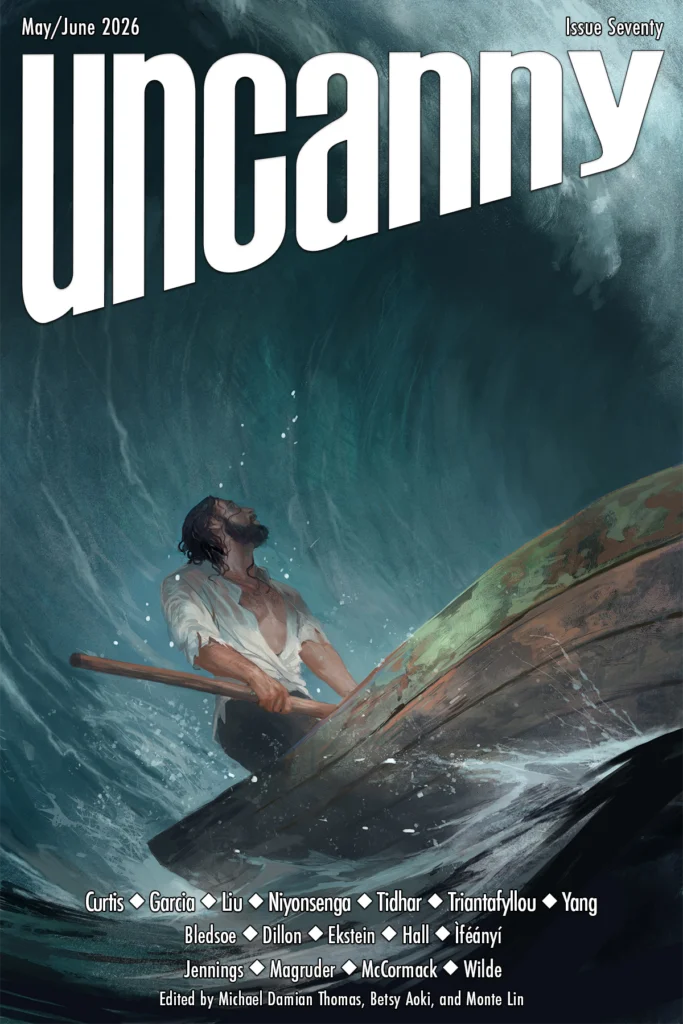
Alongside the celebratory award news, Uncanny Magazine also unveiled the contents of its latest offering, Issue 70, which continues its tradition of delivering diverse and compelling speculative fiction. The issue features the phenomenal cover art Ocean Swell by Julie Dillon.
The new fiction lineup includes:
- “The Snatchers” by Eugenia Triantafyllou
- “The Glass City” by AnaMaria Curtis
- “Extracted from an unravelled braid” by Aline-Mwezi Niyonsenga
- “Immigrant Girl from the End of the World” by Hannah Yang
- “Magical Girl Eater” by Angela Liu
- “#HumansOfMars” by Lavie Tidhar
- “Lincoln and the Harvester C-100” by R. S. A. Garcia
The issue also presents provocative and compelling essays:
- “The End of This Day’s Business—Or, My Life as Repetitive Epic” by Una McCormack
- “The Mopey Ghost Nightmare Girl: The Character of Hari in Three Filmed Versions of Stanislaw Lem’s Solaris” by Alex Bledsoe
- “An Absolute Crisis: DC’s Big 7 Have Been Stripped Down and Relaunched for the Present Age” by Alex Jennings
- “Nature, Monsters, and the Responsibility of Larger Things” by Nilah Magruder
Gorgeous and evocative poetry contributions include:
- “A Mermaid Looks at 40” by Fran Wilde
- “Empty Music” by Prosper Áfèányí
- “Quorum” by Ceridwen Hall
- “electric in the silver stormchain that burst behind my wings” by S. R. Ekstein
Further enriching the issue, Caroline M. Yoachim provides insightful interviews with authors AnaMaria Curtis and Angela Liu about their respective stories. The Uncanny Magazine Podcast also accompanies the issue, with Episode 70A featuring “The Snatchers” read by Matt Peters and “A Mermaid Looks at 40” read by Erika Ensign, along with an interview with Eugenia Triantafyllou. Episode 70B includes “Immigrant Girl from the End of the World” read by Erika Ensign, “Quorum” read by Matt Peters, and an interview with Hannah Yang.
The Road Ahead: Sustaining Excellence and Community
Despite facing personal life changes—some profoundly joyful, others undoubtedly challenging—Michael Damian Thomas remains steadfast in his commitment to Uncanny Magazine. His resolve to continue editing and publishing a magazine that deeply values its "spectacular community" serves as a powerful testament to the passion that drives independent publishers in the genre.
The multitude of award nominations for Uncanny Magazine and its contributors is not just a triumph for one publication; it is a clear indicator of the robust health and vibrant future of speculative fiction as a whole. It underscores the critical role of community, democratic processes, and direct reader support in sustaining high-quality, diverse, and imaginative storytelling. As Uncanny Magazine continues to shine brightly, it carries with it the collective hopes and dreams of its "Space Unicorns," affirming that even in uncertain times, the power of story, community, and unwavering positivity can light the way forward.
Contact:
[Insert placeholder contact information if available, e.g., [email protected]]
© 2026 Michael Damian Thomas

Leave a Comment