All Aboard the Logic Express: A Deep Dive into the Strategic World of ‘Train Jumble’
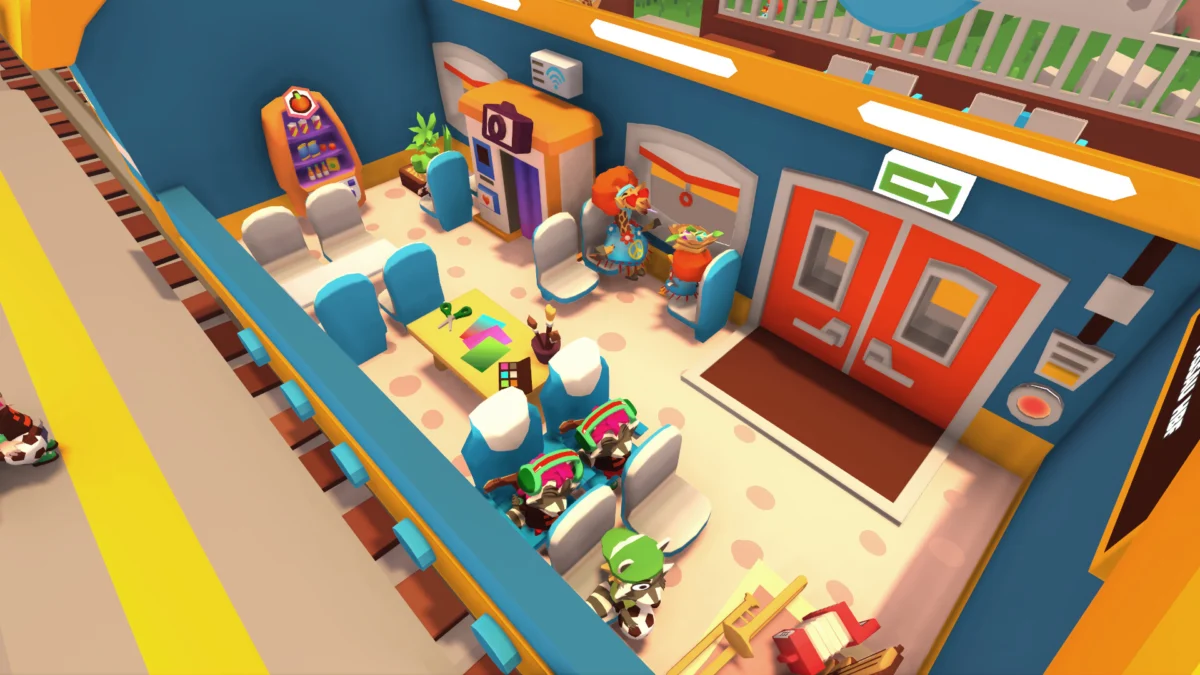
The indie gaming landscape has long been a sanctuary for innovative takes on the management and puzzle genres. From the minimalist logistics of Mini Metro to the cozy organizational satisfaction of Unpacking, players have shown a profound appetite for games that transform mundane tasks into intricate, rewarding challenges. The latest title to enter this arena is Train Jumble, a vibrant, anthropomorphic puzzle-management hybrid that tasks players with the unenviable yet charming job of organizing a high-stakes locomotive journey across Europe.
Developed with an eye for both aesthetic whimsy and mechanical depth, Train Jumble is currently making waves following its appearance at the Indie Fan Fest 2026. By combining spatial reasoning with social engineering and economic survival, the game offers a unique perspective on the "cozy" genre—one where the serenity of the rolling countryside is balanced against the frantic needs of a train full of eccentric passengers.
Main Facts: The Core Mechanics of Locomotive Management
At its heart, Train Jumble is a game about optimization under pressure. The player’s primary objective is to curate a "fantastic travel experience" for a variety of humanoid animal passengers, each of whom arrives at the platform with a specific set of emotional and physical requirements. Unlike traditional management sims that focus on long-term infrastructure, Train Jumble operates on a per-level basis, forcing players to adapt to the shifting demographics of every new leg of the journey.
The Predictive Puzzle
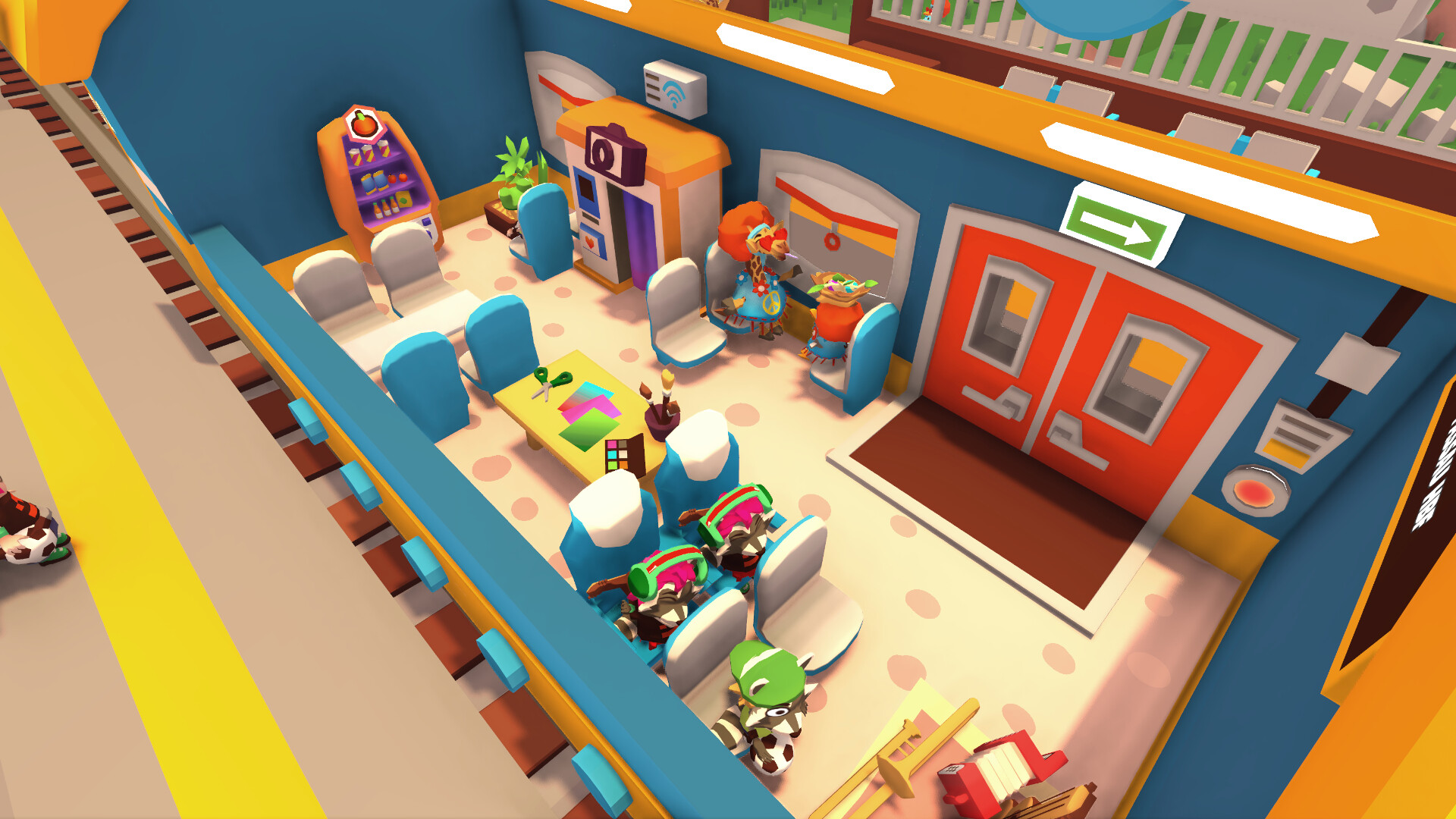
The gameplay is anchored by a predictive system. Before passengers even step foot on the locomotive, their needs are telegraphed via icons hovering above their heads. This "pre-boarding" phase is critical. Players must observe the incoming crowd and deduce the best possible configuration for the train car. Some passengers might demand a window seat to enjoy the European vistas, while others require proximity to specific amenities—such as the game’s somewhat unorthodox "crafting tables"—to remain satisfied.
Visual Feedback and Social Dynamics
Once the train is in motion, the game shifts into an active management phase. Players can physically pick up and move passengers, a mechanic that triggers a dynamic visual feedback system. As a character is hovered over a potential seat, the seat’s color shifts to indicate the passenger’s projected happiness. This "heat map" of satisfaction allows players to solve the spatial puzzle of the carriage in real-time, juggling the conflicting personalities of the commuters.
The Economic Loop
The stakes of Train Jumble are financial. Each journey incurs operational fees, and the only way to offset these costs—and turn a profit—is through the tips provided by happy passengers. This creates a tight feedback loop:
- Invest: Spend initial capital on equipment and layout.
- Execute: Arrange passengers to maximize satisfaction.
- Earn: Collect tips to pay off fees and reinvest in better gear for the next stop.
Chronology: The Anatomy of a Train Journey
To understand the depth of Train Jumble, one must look at the chronological flow of a single level. The game breaks down the travel experience into four distinct phases, each requiring a different skill set from the player.
Phase 1: The Pre-Departure Strategy
Before the wheels turn, the player visits the shop. This is the strategic foundation of the game. Because shop purchases only last for the duration of a single level, the player must decide whether to invest in high-capacity seating, luxury amenities, or specialized tools like crafting stations. This phase requires the player to look at the route ahead—some routes are inherently more challenging than others—and predict which items will yield the highest return on investment.
Phase 2: The Boarding Scramble
As the train pulls into the station, the "Jumble" begins. The player sees the queue of passengers and must make snap decisions about where to place them as they enter. Because space is at a premium, the player often finds themselves in a "Tetris-like" situation, trying to fit large requirements into a small, fixed grid.
Phase 3: In-Transit Optimization
This is the "active" puzzle phase. As the train travels through the colorful European countryside, the player can rearrange the cabin. This is not just about moving people; it is about managing the "vibe" of the car. If a passenger who hates noise is placed next to a rowdy group, their satisfaction will plummet. The player must constantly shift characters to maintain a delicate social equilibrium.
Phase 4: Arrival and Reinvestment
Upon reaching the destination, the "score" is tallied in the form of tips. After subtracting the mandatory transit fees, the player is left with their net profit. This profit is then carried over to the next leg of the journey, allowing for the purchase of more advanced equipment, thus increasing the complexity and potential rewards of future levels.
Supporting Data: Spatial Constraints and Passenger Psychographics
The difficulty of Train Jumble stems from its refusal to let the player become complacent. The game utilizes several data-driven systems to ensure that no two journeys feel identical.
Space Management
The train carriage is a finite grid. While it may be tempting to buy every upgrade in the shop, bulky items like crafting tables or large luggage racks take up valuable real-the estate. Data from early playtests suggests that the most successful players are those who balance "passenger density" (more people = more base fares) with "amenity quality" (better items = higher tips).
Requirement Diversity
The "humanoid animal" characters are not merely cosmetic; they represent different "psychographic" profiles. For example:
- The Solitary Traveler: Requires empty seats nearby or a window view.
- The Social Butterfly: Gains satisfaction multipliers when placed next to other specific character types.
- The Hobbyist: Requires proximity to a crafting table for the duration of the trip.
The "strange" inclusion of crafting tables—a departure from real-world train norms—serves a vital mechanical purpose. It acts as a "stationary buff" station, a fixed point on the map that players must rotate their "mobile units" (passengers) around to maximize efficiency.
Official Responses and Development Context
Train Jumble is currently being developed with a focus on "organized chaos." While the developers have kept much of the late-game content under wraps, their presentation at Indie Fan Fest 2026 highlighted the game’s commitment to a "low-stress but high-engagement" philosophy.

In official communications via their Steam page, the development team has emphasized that the colorful, whimsical aesthetic is intended to offset the potentially stressful nature of the management mechanics. "We wanted to create a world where making a mistake feels like a funny mishap rather than a catastrophic failure," the developers noted in a recent community update. "The goal is to make the player feel like a frantic but well-meaning conductor."
The choice of a European setting was also deliberate. The developers aimed to capture the "romanticism of rail travel," using the backdrop of rolling hills, quaint villages, and bustling city terminals to provide a sense of progression and place that transcends the simple puzzle grid of the train car itself.
Implications: The Evolution of the "Cozy" Management Genre
The emergence of Train Jumble points toward a broader trend in the indie gaming industry: the "gamification of organization." As players increasingly seek out games that provide a sense of order and accomplishment, developers are finding new ways to spice up these experiences.
Cognitive Benefits
Games like Train Jumble act as excellent exercises in spatial reasoning and multitasking. By forcing players to weigh the immediate benefits of a tip against the long-term cost of an equipment purchase, the game mirrors basic microeconomic principles in an accessible format.
The Power of the Demo
By releasing a demo on Steam ahead of the full launch, the developers of Train Jumble are tapping into the modern "wishlist economy." In an era where thousands of games are released annually, the ability to provide a "tactile" preview of the game’s unique "jumble" mechanic is crucial for building a community. The positive reception of the demo suggests that there is a significant market for games that blend high-speed decision-making with a relaxed, "lo-fi" atmosphere.
Conclusion
Train Jumble stands as a testament to the creativity inherent in the indie scene. It takes the familiar concept of a train journey and deconstructs it into a series of rewarding, colorful puzzles. Whether you are drawn in by the charming animal characters, the challenge of maximizing your tips, or the simple joy of arranging a perfect row of seats, the game promises a journey worth taking.
As it continues its journey through development, Train Jumble remains a title to watch for fans of strategy, management, and the occasional crafting table on a high-speed rail. The demo is currently available on Steam, offering a first-class ticket into this meticulously organized world of locomotive logic.