Mastering The Old World: Centuries of Military Wisdom on the Tabletop
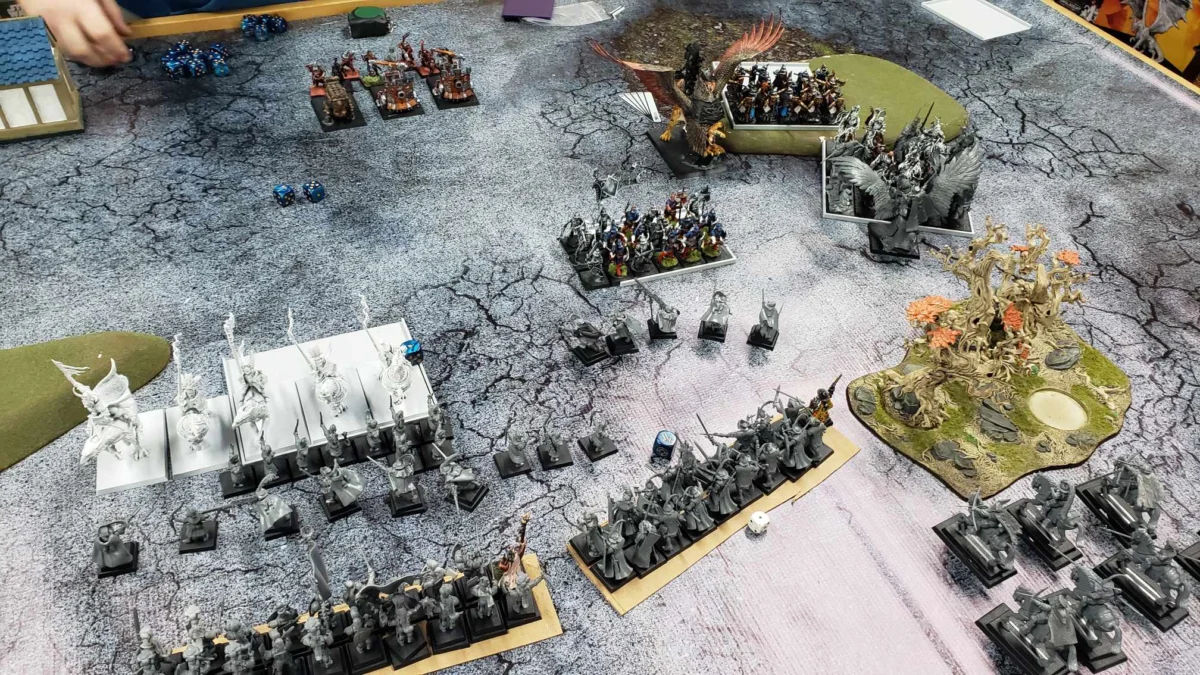
The re-emergence of Warhammer: The Old World has captivated veteran and new players alike, offering a rich tapestry of tactical depth that sets it apart in the realm of tabletop wargaming. While its fantastical elements are undeniable, the core mechanics of massed infantry, cavalry charges, and strategic positioning draw heavily from the annals of real-world military history. This article delves into how applying classical battlefield strategies can not only elevate your gameplay but transform your understanding of the game, turning mere dice rolls into decisive maneuvers.
The Enduring Appeal of Historical Warfare in Warhammer: The Old World
Warhammer: The Old World (TOW) stands as a testament to the enduring appeal of grand-scale fantasy warfare, yet its design principles are remarkably aligned with historical wargames. Unlike many contemporary skirmish-based or objective-focused games, TOW emphasizes coherent battle lines, the impact of unit formations, and the decisive weight of a well-executed charge. This foundational similarity means that the tactical lessons learned from countless historical conflicts—from the phalanxes of ancient Greece to the elaborate maneuvers of Napoleonic armies—are surprisingly potent tools in your tabletop arsenal.
Winning in The Old World is a multifaceted challenge. While army list construction is undeniably crucial, providing the raw materials for victory, it is the strategic application of these forces on the battlefield that truly dictates success or failure. Luck, of course, plays its part, but a solid tactical foundation minimizes its capricious influence. The game’s emphasis on movement, unit facing, and the devastating impact of combined arms lends itself beautifully to the study of real-world military doctrine. By integrating proven historical tactics, players can gain a significant edge, turning seemingly complex scenarios into opportunities for decisive action.
A Chronology of Strategic Evolution: From Ancient Fields to the Tabletop
The tactics we discuss today are not sudden revelations but the distilled wisdom of millennia of warfare. Understanding their historical genesis provides a deeper appreciation for their effectiveness, both on historical battlefields and within the confines of The Old World.
From the earliest organized armies, commanders sought ways to gain advantage beyond sheer numbers. The flank attack, for instance, is as old as warfare itself. Ancient Greek hoplites, Roman legions, and medieval knights all understood the psychological and physical devastation wrought by hitting an enemy from an unprotected side. Its continuous relevance across different eras underscores its fundamental efficacy.
The development of more sophisticated formations and combined arms tactics led to defensive innovations. The concept of refusing a flank emerged as a counter-measure to aggressive envelopment. Commanders like Frederick the Great perfected the "oblique order" in the 18th century, a highly refined form of refusing one’s flank to concentrate force against a specific enemy point while keeping a weaker flank safe.
As gunpowder weapons became prevalent, the role of skirmishers evolved. No longer just light missile troops, they became essential screens, protecting main battle lines from early enemy fire, harassing advancing formations, and scouting ahead. Napoleonic armies, with their volleys and grand maneuvers, heavily relied on these flexible units to disrupt enemy formations before the main engagement.
Finally, the philosophical underpinnings of military strategy, particularly in the 19th century, crystallized concepts like the Schwerpunkt. Coined by Prussian military theorists like Clausewitz, it emphasized identifying the "center of gravity" or decisive point in a conflict and concentrating all available power to achieve a breakthrough there. This holistic approach to strategy transcends individual unit actions, focusing on the overarching goal.

These historical developments are not just academic curiosities; they are blueprints for success in The Old World. The game’s rules, often echoing the practical realities of historical combat, naturally reward players who understand and implement these time-tested principles.
Applying Classical Maneuvers to The Old World
Let us now explore how these foundational real-world tactics can be adapted and utilized to devastating effect on the battlefields of Warhammer: The Old World.
Flanking: The Art of Envelopment and Decisive Strikes
Historical Context: Flanking is perhaps the most universally recognized and consistently effective maneuver in military history. From Epaminondas’s victory at Leuctra in 371 BC, where he concentrated his Theban forces on one wing to crush the Spartan flank, to Hannibal’s double envelopment at Cannae, the principle remains constant: attacking an enemy’s unprotected side is devastating. It disrupts formations, breaks morale, and exploits inherent vulnerabilities that a frontal assault cannot.
TOW Application – Unit Level:
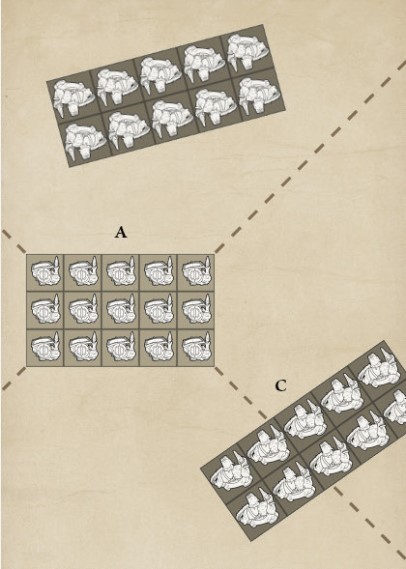
In Warhammer: The Old World, the benefits of a successful unit-level flank or rear charge are codified directly into the rules, making it a cornerstone of aggressive play. When a unit charges an enemy’s flank or rear, it gains a significant advantage in combat resolution. This often manifests as a crucial +1 to the combat result, which can be the difference between breaking an enemy unit and being ground down yourself. Furthermore, a unit charged in the flank or rear often loses its rank bonus, which can be a substantial detriment to its combat effectiveness and its ability to withstand morale checks. The psychological impact on the opponent, seeing their well-ordered unit suddenly exposed, is also not to be underestimated.
Units ideally suited for flanking maneuvers include fast cavalry (e.g., Empire Knights, Bretonnian Knights), flying units (e.g., Pegasus Knights, Fell Bats), and even nimble skirmishers or vanguard units that can quickly get into position. Timing is paramount; a flank charge is most effective when the target unit is already engaged frontally or has its attention diverted. Terrain can also play a crucial role, providing cover for a flanking unit’s approach or funneling an enemy into a position where their flanks become exposed. Remember to always consider line of sight and potential charge reactions that could spoil your perfect angle.
TOW Application – Army Level (Strategic Flanking):
Beyond individual units, the concept of flanking can be scaled up to encompass an entire army’s movement. Strategic flanking involves maneuvering a significant portion, or even the entirety, of your force around one of the enemy’s flanks before committing to a major engagement. While this doesn’t grant direct combat resolution bonuses like a unit-level flank charge, its strategic benefits are immense and often more decisive in the long run.
The primary benefit is forcing the enemy to react. As your army or a strong wing swings wide, the opponent must choose: either pivot their forces to face your threat, wasting precious movement and potentially disrupting their own battle line, or risk a full-scale envelopment. This disruption can leave their army strung out, poorly positioned, and vulnerable to piecemeal destruction. It also creates opportunities for multiple unit-level flank charges as their formations become fragmented. For instance, an aggressive maneuver by a strong cavalry wing could force the enemy to turn their infantry blocks, exposing them to a follow-up charge from your main line.
The challenges of strategic flanking include the time it takes to execute (allowing the enemy to react), the need for coordinated movement, and the potential exposure of your own flank during the maneuver. However, in games where movement and positioning are key, a successful strategic flank can utterly dismantle an opponent’s battle plan before the first dice for combat are even rolled. The game’s movement phase, with its pivots and reforms, allows for these grand maneuvers, rewarding players who can anticipate and exploit their opponent’s deployment.
Refusing the Flank: A Defensive Masterstroke
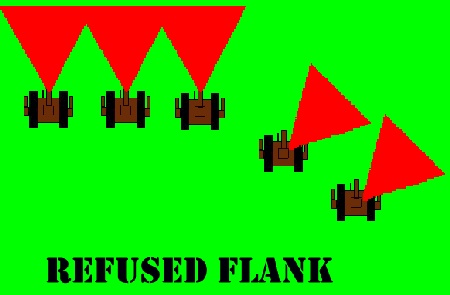
Historical Context: As a direct counter to the omnipresent threat of flanking, armies developed the tactic of "refusing the flank." This maneuver involves deliberately pulling back one wing of an army, forming an L-shape or even a half-box, to present a strong, protected front to the enemy while denying them a vulnerable side to attack. Frederick the Great’s use of the oblique order, famously at the Battle of Leuthen in 1757, exemplifies this. By drawing back his right flank, he concentrated his forces on his left, delivering a hammer blow while protecting his exposed wing.
TOW Application – Defensive Posture:
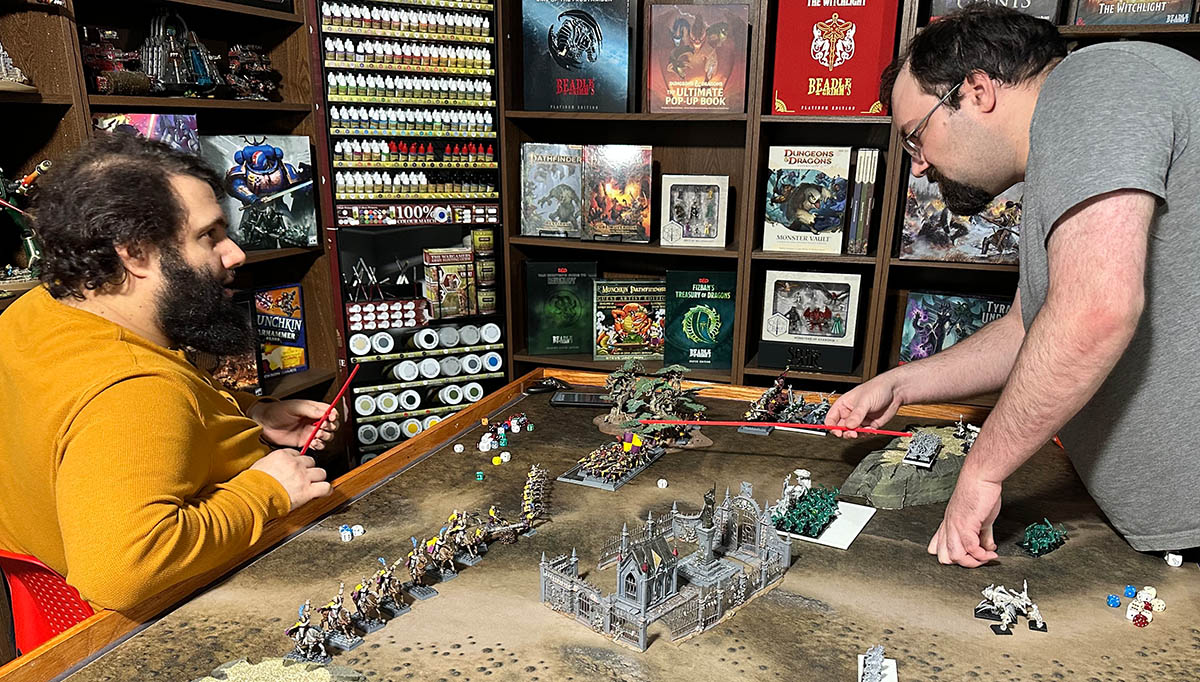
In The Old World, refusing a flank is a potent defensive strategy, particularly effective for smaller armies or those with limited mobility that cannot afford to spread thin across the battlefield. Instead of attempting to cover the entire table, which often leaves flanks exposed, a player can choose a strong corner or a piece of advantageous terrain (like an impassable forest or a building) as an anchor.
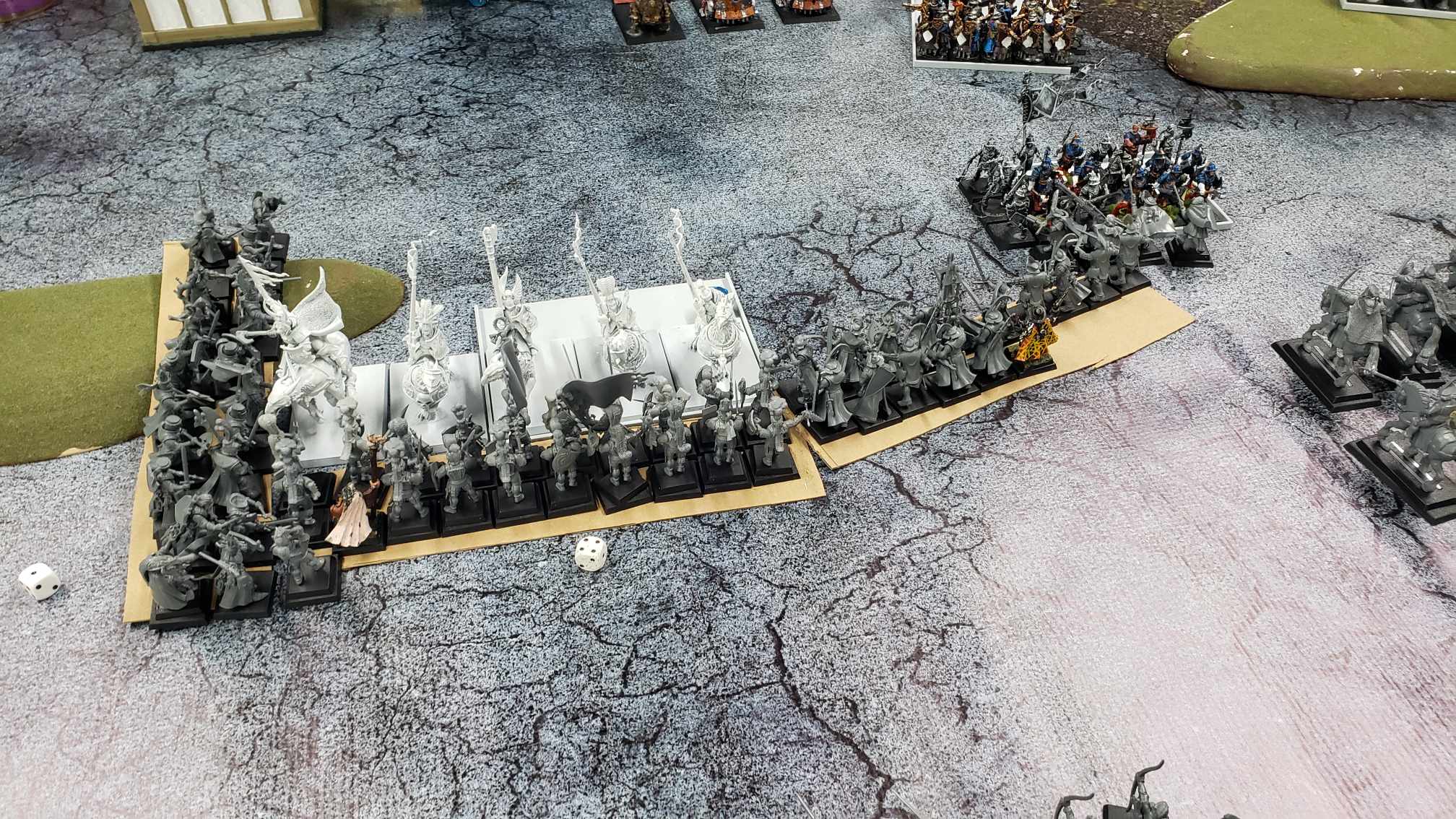
By deploying in a compact mass, with one end angled back, you create a resilient defensive position. This L-shaped formation effectively shields one flank from enemy charges, forcing the opponent to engage your strong front. This can be invaluable for protecting vulnerable but crucial units such as war machines, wizard conclaves, or slow, high-value infantry blocks. For example, a contingent of Dwarf Ironbreakers, while formidable frontally, are slow and vulnerable to flank charges; refusing their flank by positioning them against a table edge or alongside a strong, defensive unit can ensure they only face direct assaults.
The beauty of this tactic is its ability to funnel enemy attacks. Any opponent attempting to bypass your main line will find themselves directed towards your strongest point, often into a prepared counter-charge or a concentrated volley of missile fire. It minimizes the number of vectors from which an enemy can attack, simplifying your defensive calculus and allowing you to focus your resources where they are most needed. The game’s rules for movement and charge arcs inherently support this, as a unit cannot simply "walk through" a refused flank without declaring a charge and facing the consequences.
The Skirmish Screen: Obscurity and Harassment
Historical Context: Skirmishers, or light troops, have been integral to warfare throughout history. From the javelin-throwers of ancient armies to the rifle-armed skirmishers of the Napoleonic era, their roles were diverse: scouting, harassing, and most importantly, screening. They would operate in loose formations ahead of the main battle lines, obscuring their movements, absorbing initial enemy fire, and disrupting enemy advances before the main engagement.
TOW Application – Defensive Screening:
In Warhammer: The Old World, skirmishers are often valued for their harassing potential or their role as fast assault units. However, their historical function as a defensive screen is often overlooked despite being powerfully supported by the rules. Skirmishing infantry units inherently gain a -1 to be hit by shooting attacks, reflecting their loose formation and difficulty to target.
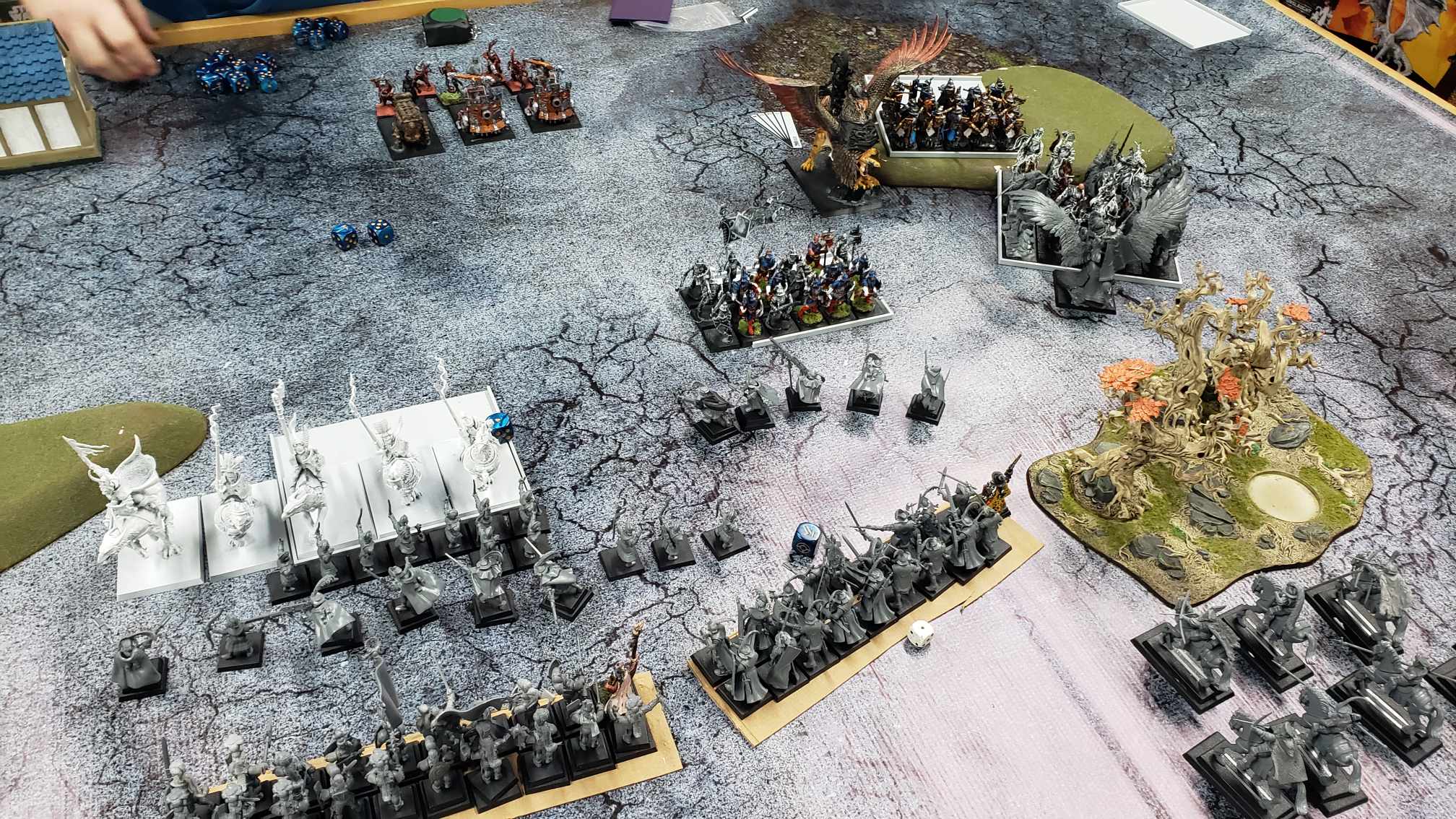
By deploying multiple units of skirmishers in a layered formation in front of your valuable ranked-up troops, you can create a formidable defensive shield. Each skirmisher unit acts as a potential cover for the units behind it. A proper skirmish screen can thus place the enemy in a position where they are at a cumulative -1 or even -2 to shoot any of your units, even before factoring in range penalties or hard cover. For example, a unit of Empire Handgunners targeting your main infantry block might face a -1 penalty from a skirmisher unit in the way, plus another -1 if those skirmishers are themselves in light cover. This significantly reduces the effectiveness of enemy missile fire, preserving your crucial units for the decisive melee. This makes your high-cost, elite infantry or monstrous units much more survivable against ranged threats.
TOW Application – Offensive Screening/Charge Disruption:
Beyond passive defense, skirmish screens can be actively used to manipulate enemy charges and create favorable engagement opportunities. This is often referred to as "chaffing" or "sacrificial screening." A cheap unit of skirmishers can be deliberately positioned to draw the charge of a powerful, high-value enemy unit (like Demigryph Knights or monstrous cavalry).
By absorbing this charge, even if the skirmishers are quickly destroyed, they achieve several critical objectives:
- Delay: They halt the enemy unit’s advance for a turn, preventing it from reaching your main battle line.
- Redirection: They can force the enemy to commit to an unfavorable position, especially if they are left vulnerable to a counter-charge.
- Counter-Charge Setup: As the enemy unit overruns or pursues the destroyed skirmishers, they often move into a position where your main units (even slow ones) can declare a devastating charge against their flank or front.
The example provided in the original article, where a double screen eats up the charge of Demigryph Knights, allowing foot knights to counter-charge, perfectly illustrates this. Skirmishers, especially those with good leadership or special rules like "Unbreakable" (if available), can extend their disruptive role, tying up powerful enemy assets for multiple turns and dictating the tempo of the battle. The game’s rules for charging, fleeing, and pursuing are critical here, as a savvy player can exploit these mechanics with well-placed skirmishers to control the flow of combat.
The Schwerpunkt: Concentrating Power for Decisive Impact
Historical Context: The German term Schwerpunkt, meaning "center of gravity," "focal point," or "point of main effort," is a profound tactical concept. While often associated with the German Blitzkrieg of WWII, its philosophical roots lie in 19th-century Prussian military theory, particularly the writings of Carl von Clausewitz. Clausewitz defined the "center of gravity" as "the hub of all power and movement, on which everything depends." In essence, it’s about identifying the most crucial element in an enemy’s force or position and concentrating overwhelming force there to achieve a decisive breakthrough. This principle has been adapted and interpreted by armies across the world and throughout history, from Napoleon’s focused attacks to modern maneuver warfare.
TOW Application – Identifying the Critical Juncture:
In Warhammer: The Old World, applying the Schwerpunkt doctrine requires players to analyze the battlefield and the opposing army, often during deployment, to determine the "critical area" or "decisive element." This isn’t always a physical location; it can be:
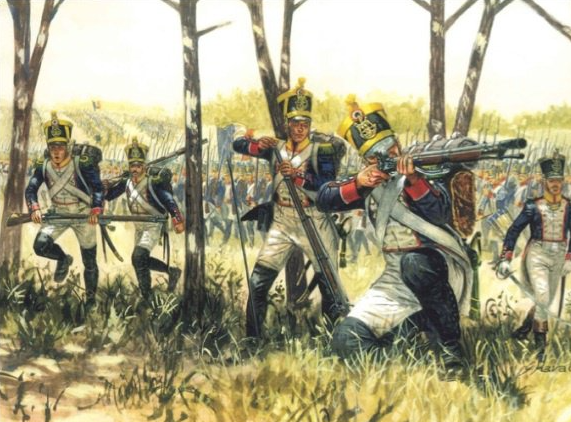
- A specific enemy unit: For instance, a heavily armored block that forms the backbone of their army, a monstrous unit that poses an existential threat, or the enemy General’s unit whose destruction would trigger mass panic.
- A strategic location: A specific objective marker, a piece of terrain that offers a significant advantage, or a choke point that controls movement across the table.
- A vulnerable enemy flank: If the opponent has left a wing exposed or weak, that becomes your Schwerpunkt for an envelopment.
Concentrating Force:
Once the Schwerpunkt is identified, the goal is to concentrate your "power" there. This isn’t merely about throwing all your units at one point; it’s about achieving local superiority and applying a combined-arms approach. This means:
- Massing Combat Power: Directing multiple strong combat units to engage the Schwerpunkt.
- Support Fire: Using missile units and war machines to soften up the target before melee engagement.
- Magical Assault: Unleashing potent spells from your wizards to weaken, disrupt, or destroy the target.
- Diversionary Tactics: Employing other units to draw enemy attention and resources away from your chosen Schwerpunkt, preventing them from reinforcing it.
Every unit in your army should contribute, directly or indirectly, to winning at the Schwerpunkt. Some units will directly attack it, while others will screen your advance, hold other parts of the line, or divert enemy forces. The objective is to apply more "power" (measured in attacks, strength, wounds, special rules, and psychological impact) to that point than the enemy can muster in defense. Breaking the enemy’s Schwerpunkt often leads to a cascading collapse of their battle line, as their core strength is shattered. The game’s victory conditions, often tied to breaking enemy units or controlling objectives, inherently reward this focused approach. A well-executed Schwerpunkt strategy can turn a seemingly even match into a rout.
The Broader Implications for Strategic Mastery
Integrating these historical tactics into your Warhammer: The Old World gameplay offers benefits far beyond simply winning more games. It fosters a deeper, more sophisticated understanding of military strategy that transcends the specific rules of any single game system.
Beyond the Rules: By thinking in terms of flanking, refusing flanks, screening, and concentrating force, players move beyond merely reacting to their opponent’s moves or executing pre-planned maneuvers. They begin to understand the why behind effective strategy, recognizing universal principles that govern success in conflict. This transforms gameplay from a series of discrete actions into a fluid, interconnected strategic dance.
Adaptability and Counter-Tactics: A player who understands these fundamental tactics can not only employ them effectively but also anticipate and counter them. If you know the devastating power of a flank charge, you’ll be more vigilant in protecting your own flanks. If you recognize an opponent attempting to refuse a flank, you can seek to outmaneuver their strong point or find another Schwerpunkt. This strategic literacy makes you a more versatile and dangerous opponent.
Learning from History: Embracing these concepts can spark an interest in military history itself. There is a vast wealth of knowledge in historical battles and strategic treatises that can provide endless inspiration for new tactics and counter-tactics on the tabletop. From Sun Tzu’s "Art of War" to Clausewitz’s "On War," the principles of strategy remain remarkably consistent.
Developing a Personal Playstyle: Ultimately, integrating these real-world tactics helps players forge their own unique and effective playstyles. It encourages creative problem-solving and a more holistic view of the battlefield, allowing individuals to adapt historical wisdom to their chosen army and preferred methods of engagement. Warhammer: The Old World, with its intricate dance of formations and decisive maneuvers, truly rewards those who approach it with a strategic mind informed by centuries of military thought.
Conclusion
Warhammer: The Old World is more than just a fantasy battle game; it is a complex strategic challenge that beautifully mirrors the intricacies of historical warfare. By consciously applying time-tested military tactics such as flanking, refusing the flank, employing skirmish screens, and focusing on a clear Schwerpunkt, players can dramatically enhance their strategic prowess. These aren’t mere tricks, but fundamental principles that have dictated the outcome of countless real-world conflicts, now brought to life on your tabletop. Embrace these lessons, and watch as your understanding of the game, and your path to victory, becomes clearer and more decisive.
What real-world tactics do you like to use on the tabletop, down in the comments!