Rediscovering Ritual: Why Embracing Everyday Folklore Enriches Modern Life
LONDON, UK – In an age defined by rapid change and digital immersion, the concept of folklore often conjures images of archaic curiosities: antler-wearing villagers in forgotten rituals, whimsical wart-charming spells, or quaint tales spun to lull children to sleep. For many, it remains a peripheral concern, dismissed as mere "flim-flam" or a niche pursuit for academics and enthusiasts. Yet, a growing movement suggests that folklore is far from an anachronism; it is a vibrant, pervasive force that subtly shapes our daily lives, offering profound benefits for those willing to consciously engage with it.
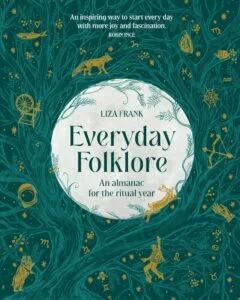
Liza Frank, author of the recently released Everyday Folklore: An Almanac for the Ritual Year, champions this perspective. Her work challenges the notion that folklore belongs solely to the past or to distant cultures, arguing instead that it is embedded in the very fabric of our contemporary existence – from the way we brew our morning tea to the unspoken rules that govern our social interactions. Frank’s personal journey, an intensive year-long immersion into the ritual year, forms the bedrock of her compelling argument: that consciously integrating folklore can transform our relationship with time, joy, and the world around us.
"Folklore is all around us; the rituals, traditions and customs that remind us how to live our lives even down to making a brew," Frank asserts. Her book, a practical guide born from her "Everyday Lore Project" which ran daily from St Distaff’s Day 2020 to Twelfth Night 2021, aims to demystify folklore and make it accessible. It is a clarion call to move beyond passive observation and actively participate in the rich tapestry of human tradition. For those who have even a passing interest in cultural heritage but remain on the sidelines, Frank outlines five compelling reasons to "feel the folklore fear and do it anyway."
The Genesis of "Everyday Folklore": A Year of Immersion
Frank’s ambitious "Everyday Lore Project" served as both a personal experiment and the crucible for her new almanac. For an entire ritual year, from the often-overlooked St Distaff’s Day on January 7th, 2020, to the festive close of Twelfth Night on January 6th, 2021, Frank meticulously practiced and documented daily folkloric rituals. This deep dive was not merely an academic exercise but a lived experience, charting the subtle rhythms and profound insights gained from aligning her life with the ancient calendar of traditions.
This chronological immersion provided Frank with firsthand evidence of how these practices, tied to specific dates, months, and seasons, served as powerful anchors in an otherwise fluid and often disorienting modern existence. It was a year of discovery, uncovering obscure customs, experimenting with traditional recipes, and engaging with local lore. The project revealed that far from being esoteric, many folkloric practices offer tangible benefits, acting as mindful prompts to observe natural cycles, celebrate small victories, and connect with a sense of continuity that transcends individual experience. The accumulated wisdom and practical applications gleaned from this intensive year now form the core of Everyday Folklore, transforming what might seem like historical trivia into actionable guidance for contemporary living.
The Transformative Power of Tradition: Five Calls to Action
Frank’s work presents a persuasive case for why individuals should actively seek out and integrate folkloric elements into their daily routines. These are not merely whimsical suggestions but practical pathways to a more grounded, joyful, and enriched existence.
1. Cultivating Presence: Slowing the Relentless March of Time
In a world obsessed with acceleration, folklore offers a potent antidote: the gift of presence. While no charm can literally halt the relentless ticking of the clock, engaging with the ritual year fundamentally alters one’s perception of time. It counters the modern malaise of days blurring into weeks, and weeks into months, where seasons pass largely unnoticed until the daffodils are dead and the nights encroach too soon.
By consciously participating in practices intrinsically linked to the calendar – be it the waxing and waning of the moon, the turning of the seasons, or specific annual events – individuals establish regular touchpoints with the unfolding year. Wassailing in January, for instance, isn’t just an old custom; it’s an act of hopeful participation in the agricultural cycle, fostering a tangible stake in the apple harvest to come. Counting fogs in August transforms a mundane weather pattern into a playful predictor of winter snowfalls, inviting active observation of the natural world.
Beyond specific rituals, this engagement encourages a heightened awareness of one’s surroundings: watching hedgerows transition from barren branches to budding promise, then to full, fecund growth, and finally back to their sparse winter form. This deliberate slowing down, this commitment to observing and participating, fosters a deeper connection to the environment and, crucially, to oneself. It opens the mind to possibility and wonder, allowing for moments of reflection and appreciation that are often lost in the ceaseless rush of contemporary life.
2. An Abundance of Joy: Embracing More Reasons to Celebrate
Life’s calendar is already peppered with birthdays, anniversaries, religious festivals, and secular holidays. However, the ritual year vastly expands this repertoire, presenting an endless array of excuses for joy and communal gathering. Folklore transforms the ordinary into the extraordinary, offering opportunities to mark the passage of time with deliberate festivity.
Imagine days dedicated to celebrating trees, honoring the vital role they play in our ecosystem, or even quirky festivals dedicated to "innies and outies" – belly buttons – throughout June and July. The ritual year provides specific dates to raise a glass to beloved spirits like wine (August 19th), gin (the second Saturday of June), or rum (July 31st). Beyond these, there are days for pop culture aficionados, from Back to the Future Day to Star Trek Day and the iconic Star Wars Day ("May the Fourth be with you").
Perhaps even more profoundly, folklore allows for celebration in unexpected forms. It’s the quiet satisfaction of a completed task, such as successfully counting seven stars on seven consecutive nights to have a wish granted. It’s the shared laughter over a local custom or the collective sigh of relief when it doesn’t rain on St Swithin’s Day, promising a dry summer. These myriad opportunities to mark moments, both significant and seemingly trivial, inject a vital sense of light-heartedness and communal spirit into daily existence, transforming the mundane into a continuous, vibrant celebration.
3. Defying Ennui: Active Engagement with Living Traditions
One of folklore’s most powerful benefits is its capacity to combat boredom and ennui, offering endless avenues for active engagement. Far from being passive observances, many folkloric practices demand participation, creativity, and even a touch of daring.
Consider the aftermath of Christmas: rather than lamenting leftover fruitcake, one could emulate the spirited residents of Manitou Springs, Colorado, and stage a "Great Fruitcake Toss" in January. The culinary traditions of folklore present a delicious challenge, from recreating historical recipes like "Heg Peg Dumps" or "knotting-sowins" to baking a simple, comforting batch of scones for National Cream Tea Day. Frank’s own adventures, though, carry a cautionary note: not all traditional recipes, such as "plum duffs" made with vegetarian suet and a favorite tea towel, yield equally delightful results.
Beyond the kitchen, folklore offers rich opportunities for performance and spectacle. Those with a flair for costume might aspire to be the King for a weekend at the Porthcawl Elvis Festival in September, or even don a badger costume to celebrate St Piran’s Day in March. For the truly adventurous, there are adrenaline-pumping events like the annual Cooper’s Hill Cheese-Rolling in May, where participants chase a wheel of Gloucester cheese down a perilously steep incline, or the Dorking Wife Carrying Race in March, an obstacle course requiring considerable strength and humor. As Frank discovered during her "year of living folklorishly," there is always something to do, however unconventional – even if it means conducting a midnight exorcism by spitting black beans and walking backwards, as prescribed by the Roman Lemuralia festival. This active engagement fosters creativity, physical activity, and a playful spirit, effectively banishing the doldrums of routine.
4. The Unexpected Wisdom: Folklore as a Wellspring of Knowledge
Beyond mere entertainment, folklore is a treasure trove of peculiar facts and surprising insights that can enrich one’s general knowledge and even provide an edge in a pub quiz. It connects us to ancient understandings of the natural world, historical practices, and the quirky corners of human belief.
For instance, did you know that certain orb-weaving spiders reportedly prefer classical music to techno? This intriguing tidbit, backed by research, might prompt a reevaluation of one’s home playlist, especially if an uptick of spiders in March is believed to augur rain, according to traditional lore. Or consider the peculiar pre-launch ritual of Baikonur cosmonauts: since the early 1970s, they have traditionally watched The White Sun of the Desert, a 1970 Russian Civil War comedy, for good luck before every space mission. This surprising custom highlights the universal human need for ritual and reassurance, even in the most technologically advanced endeavors.
Folklore also illuminates our relationship with the natural world. Bats, often maligned as messengers of the Devil in popular culture, are in fact vital pollinators of agave plants. Without these "winged wonders," the beloved Margarita would be a distant dream, forcing a switch to Manhattans. These examples demonstrate that delving into folklore is not just about quaint stories; it’s about uncovering fascinating connections between human culture, history, and the natural sciences, offering a unique lens through which to understand the world’s eccentricities and interdependencies.
5. Weaving Your Own Narratives: Tales for a Lifetime
Perhaps one of the most enduring gifts of engaging with folklore is the acquisition of unique and often delightfully "bonkers" stories. These personal encounters with tradition become memorable anecdotes, shaping one’s individual narrative and providing rich material for conversation and connection.
Frank acknowledges that some folkloric beliefs can appear outlandish – yet, she embraces this eccentricity. "If on 1 June you’re stalking a churchyard in Leicestershire to see if St Wistan’s hair sprouts amongst the headstones, you’re my kind of people," she quips. The more one immerses oneself, the more extraordinary the experiences become: catching a phantom whiff of demonic sulphur while a-nutting in September, or swearing that a cabbage leaf miraculously reduced a troublesome boil on the neck. There are also the more romantic, if unfulfilled, aspirations, such as Frank’s own vision of Mark Hamill after placing a sprig of rosemary and a crooked sixpence under her pillow on St Luke’s Eve.
These personal brushes with the folkloric are not just funny tales; they are moments of genuine engagement with the unseen, the believed, and the traditional. They foster a sense of wonder and connection to the vast human history of belief. However, Frank offers a word of caution: while one might find it impressive to have, for example, successfully detected no vampire activity in one’s gardening implements, some of these more esoteric anecdotes might be best reserved for a second date, or a more receptive audience! Ultimately, these stories are the indelible marks of a life lived with curiosity and openness to the ancient currents of human tradition.
Beyond Personal Enrichment: The Societal Resonance of Folklore
The implications of consciously embracing folklore extend beyond individual enrichment. At a societal level, a renewed engagement with these rituals and traditions can foster stronger community bonds, enhance cultural resilience, and provide a much-needed sense of continuity in an increasingly fragmented world.
Folklore acts as a living bridge to our ancestors, offering insights into their ways of life, their values, and their relationship with the natural world. In doing so, it reinforces cultural identity and promotes a sense of belonging, connecting individuals to a shared heritage. Participating in local customs, whether it’s a seasonal festival or a unique community event, encourages social cohesion and interaction, strengthening the fabric of neighborhoods and towns.
Furthermore, in an era grappling with consumerism and digital detachment, folklore offers an alternative, often simpler, path to meaning and joy. Many folkloric practices are inherently sustainable, rooted in local resources and communal effort rather than mass consumption. They encourage a mindful appreciation for the cycles of nature, promoting ecological awareness and a deeper reverence for the environment. By re-engaging with these ancient rhythms, societies can rediscover pathways to well-being that are both deeply personal and universally resonant, cultivating a more grounded, connected, and celebratory way of life.
A Resolution for a Richer Life: Embracing the Folkloric Journey
In conclusion, Liza Frank’s Everyday Folklore: An Almanac for the Ritual Year serves as a powerful testament to the enduring relevance and profound benefits of engaging with folklore. It’s an invitation to view traditions not as dusty relics but as dynamic, living practices that can enrich our contemporary lives.
As the year turns, consider making it a conscious resolution to integrate a little more folklore into your routine. Be more curious about the customs around you, try new things, challenge preconceived notions, and perhaps even initiate new traditions that resonate with your personal journey. While January 19th is often cited as the day when New Year’s resolutions are most likely to falter, Frank offers a reassuring perspective: the ritual year, with its multitude of "New Year’s Days" and cyclical opportunities for renewal, provides endless chances for a fresh start. There’s always another chance to embrace the magic, the wisdom, and the sheer joy that everyday folklore can bring.
Frank’s Everyday Folklore: An Almanac for the Ritual Year is available now, offering a comprehensive and accessible guide for anyone ready to embark on their own folkloric adventure.
References:
[1] Warshaver, G. E. (1991) On Postmodern Folklore. Western Folklore, 50(3), 219–229. https://doi.org/10.2307/1499876
[2] Frank, L. (2021) The Everyday Lore Project. https://liza-frank.com/the-everyday-lore-project/
[3] Frings, H. and Frings, M. (1966) Reactions of Orb-Weaving Spiders (Argiopidae) to Airborne Sounds. Ecology, 47, 578-588. https://doi.org/10.2307/1933935
[4] Hollingham, R. (2014) The strangest space launch rituals. https://www.bbc.com/future/article/20140610-the-strange-rituals-of-cosmonauts
[5] Menchaca, A., Arteaga, M.C., Medellin, R.A., Jones, G. (2020) Conservation units and historical matrilineal structure in the tequila bat (Leptonycteris yerbabuenae). Global Ecology and Conservation, Volume 23. https://doi.org/10.1016/j.gecco.2020.e01164
[6] Vukanovic, T. P. (1958) The Vampire. Journal of the Gypsy Lore Society, 37(1), 21-31. https://www.proquest.com/scholarly-journals/vampire/docview/1299021299/se-2