Autodesk’s AI Vision: Empowering Creators, Not Replacing Them

In the rapidly evolving landscape of artificial intelligence, the media and entertainment industry finds itself at a pivotal moment. As AI tools become more sophisticated, the question of their role in creative workflows looms large. Autodesk, a titan in 3D software, is charting a deliberate course, emphasizing AI as a collaborator that augments human creativity rather than supplanting it. This strategic approach, championed by Diana Colella, EVP and Head of Media & Entertainment at Autodesk, seeks to redefine productivity by freeing artists from mundane tasks and unlocking new avenues for innovation.
The Core Philosophy: AI as a Creative Catalyst
Autodesk’s stance on artificial intelligence, particularly as showcased at their AU26 event, consistently circles back to a central tenet: AI should handle the laborious, repetitive aspects of creation, thereby empowering artists to focus on the truly imaginative. This isn’t about AI generating entire pieces of art or animation autonomously; it’s about intelligent tools that streamline processes, reduce friction, and ultimately, amplify human ingenuity.
Diana Colella, a key architect of Autodesk’s AI strategy, articulates this vision with a pragmatic yet forward-thinking perspective. "How do you make people go faster?" she asks, framing the fundamental challenge that AI can address. The immediate targets for this acceleration are clear: time-consuming tasks like rendering and production processes that, while necessary, often detract from the core creative act.
However, Colella pushes back against the simplistic notion that this saved time will merely result in more content, a deluge of "stuff." Instead, she posits a transformative shift in the creative process itself. "The way you work might change, but for the better, so you can be more creative, because AI is not doing the creative," she asserts. This distinction is crucial; it underscores a commitment to preserving the artist’s central role while leveraging AI for enhanced efficiency and exploration.
When directly questioned about whether this is about demanding more output from existing artists or providing them with the bandwidth to pursue novel ideas, Colella’s response is unequivocal. "Yeah," she affirms, highlighting pre-production as a prime example. The ability to generate more assets and explore a wider range of iterations early in the development cycle can significantly de-risk projects, catching potential issues before substantial resources are committed. This proactive approach, facilitated by AI, promises a more robust and iterative creative pipeline.
This perspective offers a refreshing departure from the more common narrative of AI as a mere time-saving device. Colella’s focus is not on the granular minutes shaved off a task, but on the qualitative impact of that freed-up time. The question isn’t just how much work can be squeezed out, but rather, what truly innovative or experimental avenues can be explored when the constraints of time and repetitive labor are loosened.

The Unspoken Adoption: A Culture of Hesitation
A fascinating undercurrent in Autodesk’s AI adoption is the reluctance of some clients to openly acknowledge their use of these advanced tools. Colella reveals that many customers utilizing Autodesk’s AI-powered features prefer to keep their engagement discreet. "If they are using the AI tools, they won’t. They don’t want to tell us," she observes.
This reticence, Colella believes, stems from the prevailing discourse surrounding AI. The constant narrative of AI posing a threat to creative jobs and artistic integrity has fostered an environment of apprehension. "Every show, every podcast you’re listening to" perpetuates this fear, Colella notes, expressing her frustration with what she terms "fearmongering." She hopes for a future where the industry shifts its focus from alarmism to the practical applications and benefits of AI.
The current reality, therefore, is a nuanced one: AI tools may offer genuine advantages, but admitting their use can carry a perceived stigma, raising questions about an individual’s skill set or job security. This leads to a quiet, almost clandestine adoption, where the benefits are reaped without public acknowledgment.
Autodesk’s strategy to mitigate this hesitation lies in its integration-first approach. By embedding AI capabilities within familiar workflows, the company aims to minimize the learning curve and reduce the perceived disruption. Tools like MotionMaker, which functions within Maya, exemplify this philosophy. The AI is not a standalone replacement but a seamless extension of a tool artists already know and trust.
"We’re going to combine these two worlds," Colella states, emphasizing that the dichotomy of "traditional tools vs. AI tools" is a false one. Instead, it’s about empowering the artist to make informed decisions about when to leverage each tool in their arsenal.
Furthermore, Colella underscores the ethical imperative of transparency. "We have to, at this point, be very transparent about what is an AI feature and what is not an AI feature," she insists. This clarity is paramount for building trust, as artists need to understand the underlying mechanisms of the tools they employ to feel confident in their use.

The suspicion, however, is not unidirectional. Colella points out that audiences are becoming increasingly adept at identifying AI-generated content. Platforms like TikTok are now actively flagging material that contains AI-generated elements, and even without such prompts, there’s an intuitive sense when something feels "off," a phenomenon that even Colella admits to experiencing. This growing discernment from consumers adds another layer of complexity to the integration of AI in creative production.
Navigating the Limitations: The 3D Advantage
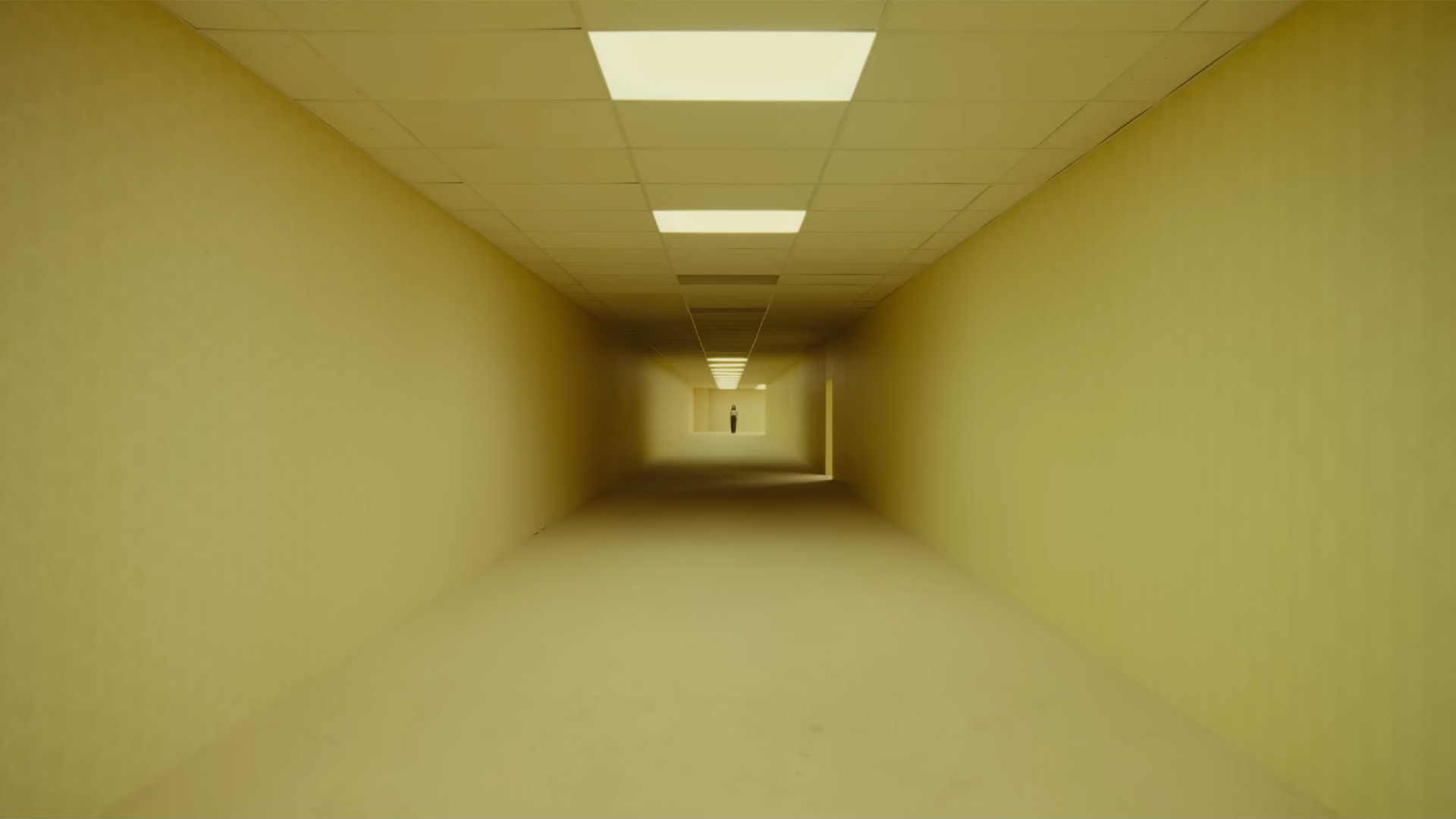
Colella is careful to manage expectations regarding the current capabilities of AI, drawing on concrete examples to illustrate its limitations. She cites films like Obsession and Backrooms, both independent horror films that achieved significant traction without traditional studio backing. Notably, neither of these projects utilized Autodesk’s tools or AI. Backrooms, for instance, was developed using Blender.
The critical takeaway from these examples, for Colella, is that while these films were created using accessible software, their completion still necessitated professional-grade tools for editing, compositing, and color grading. This reinforces her point: "AI can only get you so far today. It’s not going to get you the whole way."
This is where Autodesk differentiates itself. Unlike many AI startups that focus solely on generative capabilities, Autodesk possesses the infrastructure and established tools to carry a project through its entire lifecycle. This comprehensive approach allows them to offer a more complete solution, bridging the gap between AI-generated elements and the final polished product.
This distinction also sheds light on Autodesk’s strategic focus on 3D rather than 2D, an area that has seen the lion’s share of generative AI hype. Colella’s reasoning is direct: 2D has proven more susceptible to disruption by AI, whereas 3D has historically presented a more formidable challenge. "3D was never easy, and now with AI, it’s not easy to just replace it," she explains.
Flow Studio, despite its AI capabilities, deliberately avoided the crowded 2D space. "We’re a 3D company, so for us it felt very logical," Colella states. This strategic alignment positions the tools as essential assistance for a discipline that, as of yet, cannot be fully automated. The focus remains on augmenting the complex and nuanced world of 3D creation.
Beyond the Hype: A Sustainable AI Future
When addressing the perennial question of an impending AI bubble, Colella offers a more grounded perspective than many in the industry. Her assessment of the broader AI landscape is stark: "There’s a lot of fundraising. There’s not a lot of selling." She observes a proliferation of companies securing investment based on AI promises, with a dearth of products that are demonstrably selling and being utilized in production.
In contrast, Colella proudly highlights Flow Studio as a product that is "shipping and selling," not merely a concept or a future promise. This emphasis on tangible, revenue-generating products underscores Autodesk’s commitment to a sustainable and practical application of AI.
Colella’s analysis suggests that the AI market is not mirroring the speculative frenzy of the dot-com era. Investors, she believes, are exhibiting greater caution, which may prolong the inevitable reckoning for companies built on hype rather than demonstrable value.
As AI continues its inexorable integration into creative workflows, the fundamental promise of increased leisure time remains a compelling, yet often debated, outcome. What truly transpires when artists are afforded an extra hour or two due to AI handling drudgery?
Colella posits that the most profound impact may not be confined to efficiency gains within existing studio structures. She points to the current contraction in the film and television industry, characterized by tighter budgets, fewer greenlights, and a recalibration after the streaming boom.
Her prediction is that the reduced cost of production, facilitated by AI, will democratize filmmaking and open doors for projects that would have been historically overlooked by major studios. "I think there’s going to actually be more creators than there is today," she anticipates, envisioning a surge of individuals and small teams producing content that traditional studios would never greenlight. This influx of new creators could, in turn, revitalize an industry currently exhibiting a cautious approach to investment. The industry, she suggests, is in a holding pattern, awaiting economic clarity before committing significant resources.
This outlook diverges sharply from the prevailing narrative of AI leading to job displacement and studio downsizing. Instead, Colella envisions a scenario where AI fosters a more inclusive and vibrant creative ecosystem.
Ultimately, the true test of AI in creative tools will not be measured by the speed at which it allows individuals to work, but by the judicious allocation of the time it liberates. A strategy that squeezes more output from artists risks sacrificing creativity and innovation. However, if AI provides artists with the space to experiment, explore, and push creative boundaries, then its role in the industry transforms from a tool of efficiency to a catalyst for artistic evolution. This is the future Autodesk is actively building – one where AI serves as a powerful partner in the human endeavor of creation.