Avatar: Seven Havens Trailer Ignites Fan Frenzy, Raising Profound Questions About Korra’s Legacy
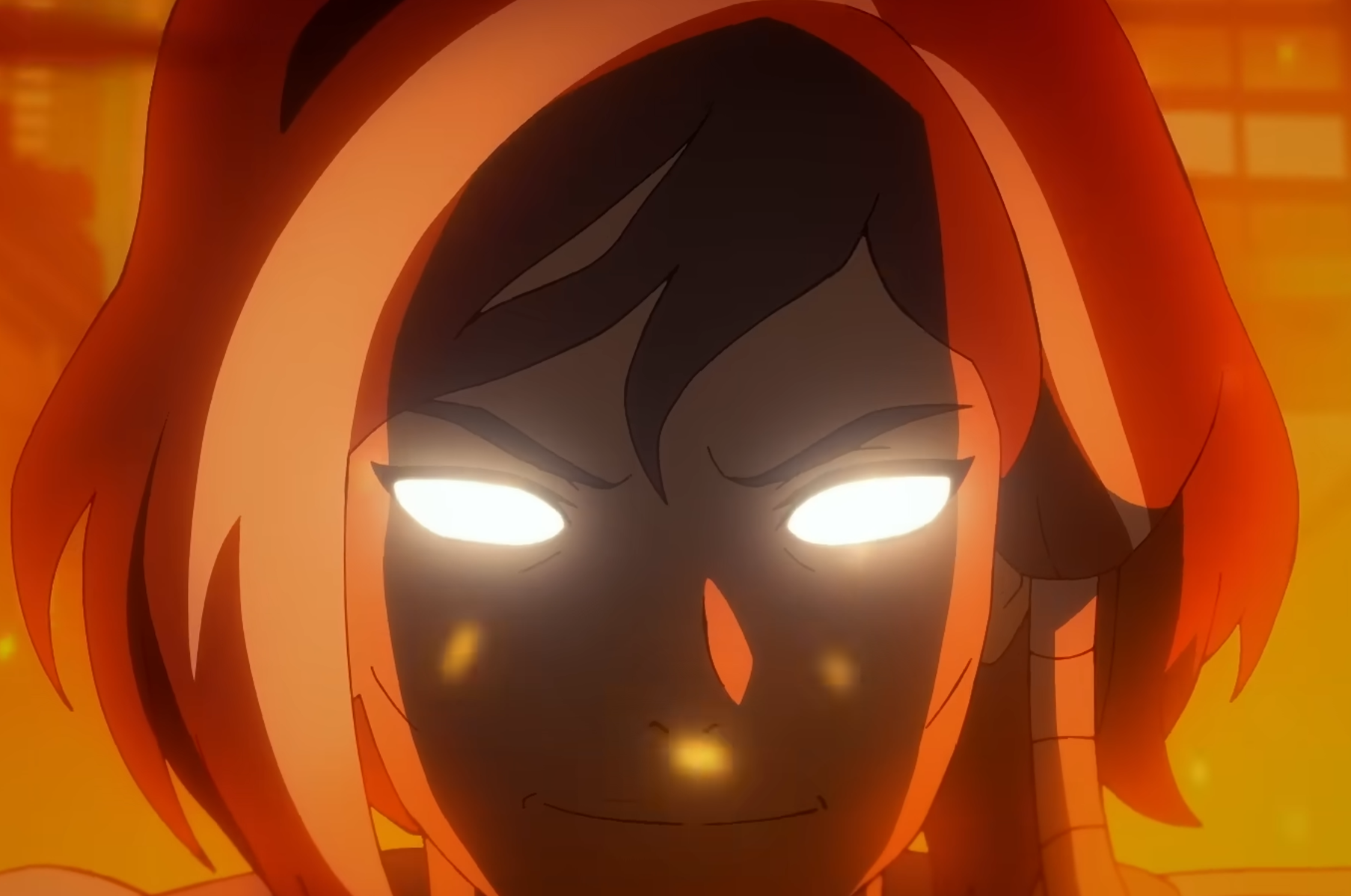
SAN DIEGO, CA – July 21, 2026 – The hallowed halls of San Diego Comic-Con once again bore witness to a seismic revelation for Avatar fans, as Paramount+ unveiled the highly anticipated first trailer for Avatar: Seven Havens. While visually stunning and brimming with the franchise’s signature blend of elemental action and spiritual mystique, the teaser for the forthcoming series, set to debut on October 9th, has ignited a firestorm of speculation, most prominently centered around the enigmatic fate and tarnished legacy of Avatar Korra. The mere suggestion that the previous Avatar "let everyone down" in a desolate, ruined world has sent ripples of concern and intrigue throughout the global fandom, hinting at a narrative far darker and more complex than previously imagined.
Main Facts: A World in Ruin, a New Avatar’s Burden
The SDCC 2026 panel, a cornerstone event for pop culture enthusiasts, delivered a trailer that was both a triumph of world-building and a provocative mystery. Avatar: Seven Havens plunges viewers into a future far removed from the burgeoning prosperity that concluded The Legend of Korra. The trailer paints a stark picture: a world ravaged by an unspecified, cataclysmic event, its once vibrant landscapes now scarred and desolate. Republic City, the shining beacon of modernity, is conspicuously absent, replaced by sprawling ruins and an atmosphere of pervasive despair.
At the heart of this fractured world emerges Pavi, an Earthbender who unexpectedly discovers she is the next incarnation of the Avatar. Her journey, however, is not one of immediate reverence and hope. The trailer explicitly states that her world is not only in a state of ruin but also populated by people who harbor deep-seated distrust for the Avatar. This societal disillusionment is directly linked to the "previous Avatar" – unmistakably Korra – who is implicated in the devastating event, having "let everyone down."
The visual cues in the trailer underscore this grim reality: crumbling infrastructure, desperate survivors, and a palpable sense of loss pervade every frame. Pavi herself appears burdened, not just by the weight of her newfound power, but by the inherited skepticism of a world that has seemingly been betrayed by its spiritual protector. This narrative choice immediately establishes a high-stakes premise, forcing Pavi to reclaim a title that has been stripped of its inherent respect and authority. The core mystery, therefore, is twofold: what cataclysm befell the world, and what truly happened to Avatar Korra to provoke such profound societal blame?
Chronology: The Avatar’s Enduring, Yet Evolving, Legacy
To fully grasp the magnitude of Seven Havens‘s premise, one must contextualize it within the established timeline of the Avatar universe, a saga built upon the cyclical nature of its spiritual guardian.
Aang’s Era: The Dawn of a New Age
Following the Hundred Year War, Avatar Aang ushered in an era of unprecedented peace and spiritual awakening. His efforts to bridge the gap between the Four Nations, establish Republic City as a multicultural hub, and foster a new generation of Airbenders laid the groundwork for a world striving for harmony. The direct aftermath of Avatar: The Last Airbender depicted a world actively rebuilding, embracing innovation, and tentatively navigating newfound diplomatic relations. Aang’s legacy was one of profound optimism, a testament to his unwavering commitment to balance and compassion. His passing, while mourned, was a natural part of the Avatar Cycle, paving the way for his successor in a world largely at peace.
Korra’s Era: Trials, Triumphs, and Lingering Doubts
The Legend of Korra, set 70 years after Aang’s victory, introduced an Avatar for a rapidly modernizing world. Korra’s tenure was marked by a series of monumental challenges, each pushing the boundaries of the Avatar’s role and her own personal resilience. From combating anti-bender movements led by Amon, to confronting spiritual fundamentalism with Unalaq, to facing the anarchist philosophy of Zaheer and the militaristic expansionism of Kuvira, Korra repeatedly saved the world, albeit often through immense personal sacrifice.
Her journey was one of significant spiritual and emotional growth. She reconnected humanity with the Spirit World, restored the Air Nation, and navigated complex geopolitical landscapes. Crucially, the series finale saw Korra, alongside her partner Asami, stepping into the Spirit World, ready to face new challenges together. The canonical graphic novels that followed, such as Turf Wars and Ruins of the Empire, further detailed Korra’s continued efforts to maintain peace, integrate spirits into Republic City, and support the burgeoning democracy. These narratives consistently portrayed Korra as a capable, if sometimes beleaguered, Avatar who consistently strived for the greater good, even in the face of immense pressure and public scrutiny. Her leadership, though imperfect, always pointed towards a hopeful future.
The Uncharted Gap: From Hope to Desolation
The chasm between the hopeful conclusion of The Legend of Korra and the desolate reality presented in Seven Havens is vast and terrifying. The trailer implies a radical and catastrophic shift, transforming a world on the cusp of a new era into a broken shadow of its former self. This temporal gap is now the most fertile ground for speculation, a period where the established narrative of Avatar progression was seemingly violently interrupted. The core tenet of the Avatar Cycle – that a new Avatar is born only upon the death of the previous one – adds another layer of grim certainty. If Pavi is the next Avatar, Korra must have died. But the trailer’s implication of her "letting everyone down" suggests a demise that was not peaceful, not heroic, and certainly not without profound consequences for the world she swore to protect. This represents a significant departure from the traditional narrative framing of an Avatar’s life and death.
Supporting Data: Unpacking the Trailer’s Ominous Clues
The brief glimpse offered by the Seven Havens trailer, while scarce on explicit details, is rich with evocative imagery and loaded dialogue that demand close analysis.
Visual Storytelling of Collapse: The trailer’s most striking element is its visual language of decay. Sweeping shots reveal barren landscapes, skeletal structures of what might have once been grand cities, and a sky that often appears muted or perpetually overcast. The color palette itself seems drained, emphasizing browns, grays, and muted blues, a stark contrast to the vibrant greens and golds of the Spirit World or the bustling metropolis of Republic City in Korra’s time. We see characters adorned in practical, often patched-up attire, suggesting a society focused on survival rather than prosperity. These visuals collectively paint a picture of a civilization that has not merely regressed but has been violently dismantled, suggesting an event of immense destructive power, far beyond localized conflicts. The absence of advanced technology seen in Korra’s era further hints at a societal collapse that reset technological progress, or at least severely limited its application.
The Weight of a Single Phrase: The most damning piece of information comes from the voiceover: "The previous Avatar let everyone down." This concise statement carries immense narrative weight. It’s not a suggestion of simple failure, but a profound accusation of betrayal or incompetence on a global scale. This phrase immediately challenges the audience’s understanding of Korra’s character, whose entire arc was about learning to be a responsible and effective Avatar.
- Propaganda vs. Reality: Is this statement a literal truth, or a pervasive, deeply ingrained narrative that has warped history in the intervening years? In a world that has suffered such a cataclysm, it is entirely plausible that a scapegoat would be sought, and the most powerful individual, the Avatar, would be the easiest target. The trailer hints at a world where truth has become fluid, and public perception is shaped by tragedy.
- The Nature of "Letting Down": What constitutes "letting everyone down"? Did Korra make a critical error in judgment during the cataclysm? Was she simply overwhelmed by an unstoppable force, and this phrase represents the world’s disappointment in her inability to save them? Or, more controversially, did her actions directly contribute to the disaster, perhaps through a miscalculation in her spiritual duties, or an unintended consequence of a desperate measure? This ambiguity is precisely what fuels the current fan debate.
The Unbreakable Cycle and Korra’s Demise: The fundamental rule of the Avatar Cycle dictates that a new Avatar is only born when the previous one dies. Pavi’s existence as the new Earthbender Avatar irrevocably confirms Korra’s death. This alone is a significant plot point, as Korra was a relatively young Avatar when her series concluded. Her death, coupled with the world’s ruin, implies a dramatic and potentially tragic end for the powerful Waterbender. The fact that the trailer explicitly ties the cataclysm to her actions suggests a death that was far from peaceful or natural, possibly occurring during the very event that reshaped the world.
Pavi’s Inherited Distrust: The trailer’s emphasis on Pavi inheriting a world that "doesn’t trust the Avatar" is a direct consequence of Korra’s perceived failure. This sets up a compelling narrative for the new protagonist. Pavi’s journey will not just be about mastering the elements but about rehabilitating the very concept of the Avatar, earning back the trust of a cynical populace. Her struggle will be a mirror to Korra’s own battles for acceptance, but with far higher stakes and a heavier burden of historical prejudice. The supporting data from the trailer suggests that Seven Havens is not merely a sequel but a profound re-examination of the Avatar’s role in a post-cataclysmic world, forcing both its characters and its audience to question the very nature of heroism and responsibility.
Official Responses and Industry Context
The reveal of Avatar: Seven Havens at SDCC 2026 was strategically executed to maximize impact, yet official responses regarding the central mystery of Korra’s fate and the world’s devastation have been, predictably, scarce.
Intentional Secrecy at SDCC: During the panel discussion, creators (whether series veterans Michael Dante DiMartino and Bryan Konietzko, or new showrunners leading this expansion) undoubtedly navigated questions about Korra with extreme caution. It’s standard practice for major franchises to hold back pivotal plot details to maintain suspense and encourage viewership. Any direct clarification on Korra’s "failure" or her death would undoubtedly spoil a major narrative thrust of the new series. The deliberate ambiguity in the trailer, particularly the loaded phrase about Korra, is a calculated move to generate buzz and speculation. While the panel might have offered glimpses into Pavi’s character, the new world’s design, or the general tone of the series, specific answers about the preceding Avatar were almost certainly withheld, fueling the very fan theories now dominating online discussions.
Paramount+’s Expanding Avatar Universe: Seven Havens is not an isolated project but a crucial piece in Paramount+’s ambitious expansion of the Avatar universe. With multiple animated movies and series in various stages of development, including the upcoming Avatar movie (which itself saw its original October 9th release date taken by Seven Havens), the streaming service is clearly investing heavily in the franchise’s future. Seven Havens appears to be a bold step, pushing the timeline forward significantly and exploring a darker thematic landscape. This strategy suggests a desire to both appeal to long-time fans and attract a new generation with fresh stories that aren’t beholden to the exact tone or political optimism of past series. The decision to tell a story of societal collapse and a fallen hero implies a willingness to take risks and explore more mature, complex themes within the beloved universe.
Creative Intent and Thematic Exploration: The creative team behind Seven Havens likely chose this premise to explore profound questions about legacy, responsibility, and the cyclical nature of hope and despair. By portraying a world that has seemingly lost faith in its spiritual guide, the series can delve into themes of societal disillusionment, the burden of leadership, and the enduring struggle to restore balance in a world that has been irrevocably broken. It’s a deliberate subversion of the often-triumphant endings of previous Avatar narratives, offering a grounded, post-apocalyptic vision that resonates with contemporary anxieties about climate change, political instability, and the weight of past failures. The silence from official channels is not an oversight but a carefully managed narrative strategy, ensuring that the full impact of Korra’s story, and Pavi’s subsequent journey, unfolds within the series itself.
Implications and Fan Theories: A Divided Fandom, a Compelling Mystery
The implications of the Avatar: Seven Havens trailer are far-reaching, impacting not only the narrative future of the franchise but also the perceptions of its most dedicated fanbase. The "Korra question" has become a central point of contention and fervent theorizing.
The "Korra as Villain" Debate: The most immediate and controversial implication is the suggestion that Korra, a beloved character for many, could be perceived as a "villain" or, at the very least, responsible for a global catastrophe. Korra’s character, throughout The Legend of Korra, faced an unfortunate amount of criticism and "slander" from certain sections of the Avatar fanbase, who often compared her unfavorably to Aang. The idea that Seven Havens might lean into this negative perception, even if through a misconstrued historical narrative within the show, is a sensitive point. For fans who championed Korra’s journey and her unique struggles, this setup feels like a potential betrayal of her established character arc and ultimate triumphs. It raises questions about whether the new series will validate or challenge the long-standing criticisms against her. It is incredibly unlikely that the creators would genuinely portray Korra as a malicious force, but the power of a widespread, negative narrative within the show’s universe could be just as devastating to her legacy.
Leading Fan Theories for the Cataclysm and Korra’s Fate: The ambiguity has given rise to numerous theories attempting to reconcile Korra’s established character with the trailer’s grim hints:
- The Unstoppable External Threat: This theory posits that the cataclysm was an event of such immense power – perhaps a cosmic phenomenon, a new spiritual entity, or an ancient, dormant evil – that even Avatar Korra, at the height of her powers, could not prevent it. In this scenario, "letting everyone down" refers to her inability to save them from an insurmountable force, rather than any direct fault of her own. Her death would have occurred heroically, in a futile attempt to mitigate the disaster. The world, traumatized and disillusioned, would then unfairly blame the Avatar for not achieving the impossible.
- The Sacrifice and Misinterpretation: Another popular theory suggests Korra made a profound sacrifice to prevent an even worse outcome. Perhaps she contained a catastrophic spiritual imbalance within herself, or sealed away a destructive force at the cost of her life and a portion of the world. The surviving populace, unable to comprehend the full scope of the danger she averted, would only remember the destruction and her apparent failure to prevent it entirely. This narrative would allow for a tragic yet heroic end, while explaining the societal distrust.
- A Spiritual Calamity Gone Awry: Given Korra’s unprecedented role in reopening the Spirit Portals, some speculate that the cataclysm could be a spiritual one. Perhaps a powerful spirit or an imbalance within the Spirit World itself spilled over into the physical world, and Korra, in her attempt to control it, inadvertently exacerbated the situation or became overwhelmed. This would align with her unique spiritual capabilities and the potential for unforeseen consequences.
- Long-Term Systemic Decay, Not a Single Event: This theory suggests the "cataclysm" wasn’t a single, explosive event, but a slow, agonizing decline. Perhaps Korra, despite her best efforts, was unable to halt the growing social, environmental, or technological imbalances that eventually led to societal collapse. Her "failure" would be one of inability to steer humanity away from self-destruction, rather than a direct trigger. This reflects contemporary concerns about global crises and the limitations of individual heroism.
- The "Multiple Avatars" Gap: The initial speculation that Seven Havens must take place "many years (and numerous Avatars) after The Legend of Korra" still holds some weight for those seeking a less direct link to Korra’s demise. If Pavi is not the immediate successor to Korra, but rather several Avatars down the line, then Korra’s death might have been more conventional, and the "letting everyone down" could refer to a later Avatar, or a cumulative failure of the Avatar institution over time. However, the trailer’s phrasing ("the previous Avatar") seems to point directly to Korra.
Thematic Resonance and Fandom Impact: Regardless of the exact truth, this narrative direction promises a thematically rich series. It will explore the weight of legacy, the fragility of peace, and the enduring human need for hope in the face of despair. For the fandom, it creates an unprecedented level of anticipation and debate. Will Seven Havens succeed in telling a compelling story while honoring the established characters, or will it alienate a segment of its audience by seemingly tarnishing a beloved hero?
With the debut of Avatar: Seven Havens on Paramount+ set for October 9th, fans won’t have to wait as long as originally anticipated for answers. The lack of detail regarding the episodic release schedule means the journey into this ruined world, and the unveiling of Korra’s true fate, will likely unfold in a carefully managed drip-feed, keeping the global Avatar community on the edge of their seats. The stage is set for a series that promises to be a pivotal, and potentially controversial, chapter in the storied history of the Avatar.