Beyond the Monolith: Why Power Users are Abandoning Google Chrome for Feature-Rich Alternatives
In the current digital landscape, Google Chrome is more than just a tool; for many, it is the internet. Boasting a global market share that consistently hovers around 65%, Chrome’s dominance is built on its seamless integration with the Google ecosystem, a vast library of extensions, and a reputation for speed. However, as the web evolves into a complex workspace for professional and personal productivity, Chrome’s minimalist philosophy—once its greatest strength—is increasingly viewed by power users as a limitation.
While Google has introduced incremental updates, such as the 2024 rollout of "Split View" and improved memory management, the browser remains tethered to a "lowest common denominator" design. For those who require built-in privacy tools, advanced tab management, and deep UI customization without the performance drag of dozens of third-party extensions, a new generation of "power browsers" has emerged. Brave, Vivaldi, Mozilla Firefox, and Opera are not merely alternatives; they are specialized environments designed to outperform Chrome in privacy, productivity, and personalization.
The Main Facts: Defining the "Power Browser"
The transition from Chrome to an alternative browser is often driven by the realization that "minimalist" often translates to "feature-poor." While Chrome relies on the Chrome Web Store to provide functionality, power browsers integrate these features directly into the core code, leading to better optimization and stability.
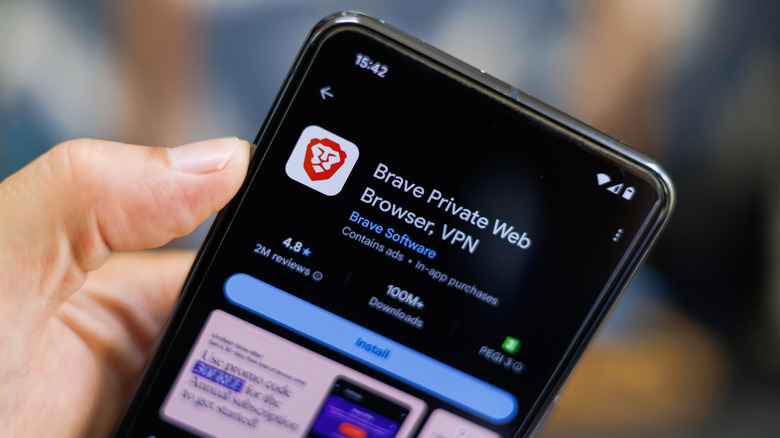
1. Brave: The Privacy Fortress
Brave is built on the same Chromium engine as Chrome, ensuring that all Chrome extensions and websites work perfectly. However, Brave strips out Google’s tracking code and replaces it with "Brave Shields."
- Key Power Features: Built-in ad and tracker blocking, a native Tor-powered private browsing mode, an integrated crypto wallet, and a "Brave Talk" video conferencing tool.
- The Edge: By blocking ads at the engine level, Brave often loads pages 3x to 6x faster than Chrome while consuming significantly less battery on mobile devices.
2. Vivaldi: The Architect’s Choice
Founded by the co-founder of Opera, Vivaldi is designed for users who want total control. It is arguably the most customizable browser in existence.
- Key Power Features: Tab Stacking (grouping tabs), Workspaces, a built-in mail client, calendar, and notes. It also features a unique sidebar for "Web Panels," allowing users to keep social media feeds or reference sites open in a split-screen view.
- The Edge: Vivaldi allows users to move every element of the UI, from the tab bar (top, bottom, or sides) to the address bar, creating a bespoke workflow.
3. Mozilla Firefox: The Independent Titan
As the only major browser on this list not based on Google’s Chromium engine, Firefox uses its own "Gecko" engine. This makes it a vital piece of web infrastructure that prevents a total Google monopoly on web standards.
- Key Power Features: Enhanced Tracking Protection (ETP), "Multi-Account Containers" (which allow you to stay logged into different accounts for the same site in different tabs), and a superior "Reading Mode."
- The Edge: Firefox is the gold standard for privacy-conscious users, offering "Total Cookie Protection" that prevents sites from tracking your movements across the web.
4. Opera: The AI-Integrated Suite
Opera has reinvented itself several times, but its current iteration, Opera One, focuses on modular design and artificial intelligence.
- Key Power Features: "Aria" (a built-in browser AI), "Tab Islands" for automatic tab organization, a free integrated VPN, and a sidebar that houses messaging apps like WhatsApp and Discord.
- The Edge: Opera’s modular architecture allows it to remain fluid and responsive even with dozens of active features, catering to users who live in their browser for both work and social communication.
Chronology: The Evolution of the Browser Wars
To understand why these alternatives are gaining traction, one must look at the historical trajectory of web navigation.
- The Early Era (1990s–2004): The era of Netscape and the eventual total dominance of Microsoft’s Internet Explorer. Browsers were basic gateways to static pages.
- The Firefox Revolution (2004–2008): Mozilla Firefox introduced "tabbed browsing" and extensions, breaking the IE monopoly and proving that users wanted more than just a window to the web.
- The Chrome Ascendancy (2008–2018): Google released Chrome, prioritizing speed and a "clean" UI. Its rise coincided with the explosion of the mobile web and the "app-ification" of the internet.
- The Privacy and Productivity Pivot (2018–Present): As data privacy concerns (GDPR, Cambridge Analytica) and the "work-from-home" movement surged, users began seeking browsers that acted as productivity suites rather than simple viewers. This period saw the rise of Brave’s privacy-first model and Vivaldi’s productivity-centric design.
Supporting Data: Performance and Privacy Metrics
The "power" of these browsers is not just anecdotal; it is backed by technical performance data.
Resource Consumption
A common criticism of Google Chrome is its high RAM usage. In stress tests involving 20 open tabs, Brave and Opera consistently show 15–20% lower memory footprints than Chrome. This is largely due to the native blocking of resource-heavy advertising scripts.
Privacy Benchmarks
According to the "Cover Your Tracks" tool by the Electronic Frontier Foundation (EFF), Chrome provides "partial protection" against web tracking. In contrast, Brave and Firefox provide "strong protection" by default.
- Brave’s Shields: Blocks 100% of "third-party" cookies.
- Firefox’s Fingerprinting Protection: Blocks the scripts that companies use to identify your specific hardware configuration, a technique Chrome is slower to mitigate due to its reliance on ad revenue.
Speed and Standards
In the Speedometer 3.0 benchmark (which measures web app responsiveness), Chromium-based browsers like Vivaldi and Brave often edge out Chrome because they lack the background "telemetry" processes that report usage data back to Google.
Official Responses and Industry Perspectives
The shift toward these browsers has prompted varied responses from the tech industry.
The Google Stance: "Manifest V3"
Google is currently transitioning to "Manifest V3," a new framework for browser extensions. Google claims this improves security and performance. However, developers of ad-blockers (like uBlock Origin) and privacy-focused browsers have criticized the move, arguing it cripples the effectiveness of ad-blocking.
- Response from Brave/Vivaldi: Both browsers have officially stated they will continue to support advanced ad-blocking at the engine level, regardless of Google’s changes to the extension store.
The Mozilla Perspective
Mozilla has positioned Firefox as the "last line of defense" for a free and open internet. Their leadership frequently emphasizes that because Mozilla is a non-profit, their "customer" is the user, not the advertiser. This allows them to implement aggressive privacy features, like "Total Cookie Protection," that Google—as an advertising giant—cannot easily adopt.
The Vivaldi Philosophy
Jon von Tetzchner, CEO of Vivaldi, has been vocal about the "de-evolution" of the modern web. He argues that browsers should adapt to the user, not the other way around. "We don’t track our users, and we don’t tell them how to work," von Tetzchner stated in a recent developer update. "If you want 500 tabs in a tree-style sidebar, your browser should handle that."
Implications: The Future of the Web Experience
The rise of power browsers signifies a broader shift in how we interact with the digital world. The implications of this trend are three-fold:
1. The Browser as an Operating System
As more software moves to the cloud (SaaS), the browser is effectively becoming the operating system. Browsers like Opera and Vivaldi are leaning into this by integrating mail, chat, and office tools directly into the frame. The implication is that the underlying OS (Windows, macOS, Linux) matters less than the browser environment.
2. The Fragmentation of Web Standards
While the dominance of Chromium (used by Chrome, Brave, Vivaldi, and Edge) ensures most sites work everywhere, the existence of Firefox is crucial. If Chrome becomes the only engine, Google becomes the sole arbiter of what "the web" is. The continued success of Firefox ensures that web standards remain collaborative rather than dictated by a single corporation.
3. Privacy as a Premium Feature
We are moving toward a "two-tier" internet. One tier (Chrome) offers a free, high-speed experience at the cost of data harvesting. The second tier (Brave, Firefox) offers a "cleaner" experience that prioritizes user agency. As users become more tech-literate, the demand for "Power Browsers" is expected to grow, potentially forcing Google to choose between its advertising revenue and the feature-set of its flagship browser.
Conclusion
Google Chrome remains a reliable, fast, and familiar tool for the average user. However, for those who spend eight hours a day or more within a browser window, the limitations of Chrome’s "one-size-fits-all" approach are becoming apparent. Whether it is the iron-clad privacy of Brave, the infinite customizability of Vivaldi, the ethical independence of Firefox, or the AI-driven productivity of Opera, the alternatives are no longer just "other choices"—they are the new standard for the modern power user.