Blender 5.2: A Revolutionary Leap Forward for Integrated Video Editing
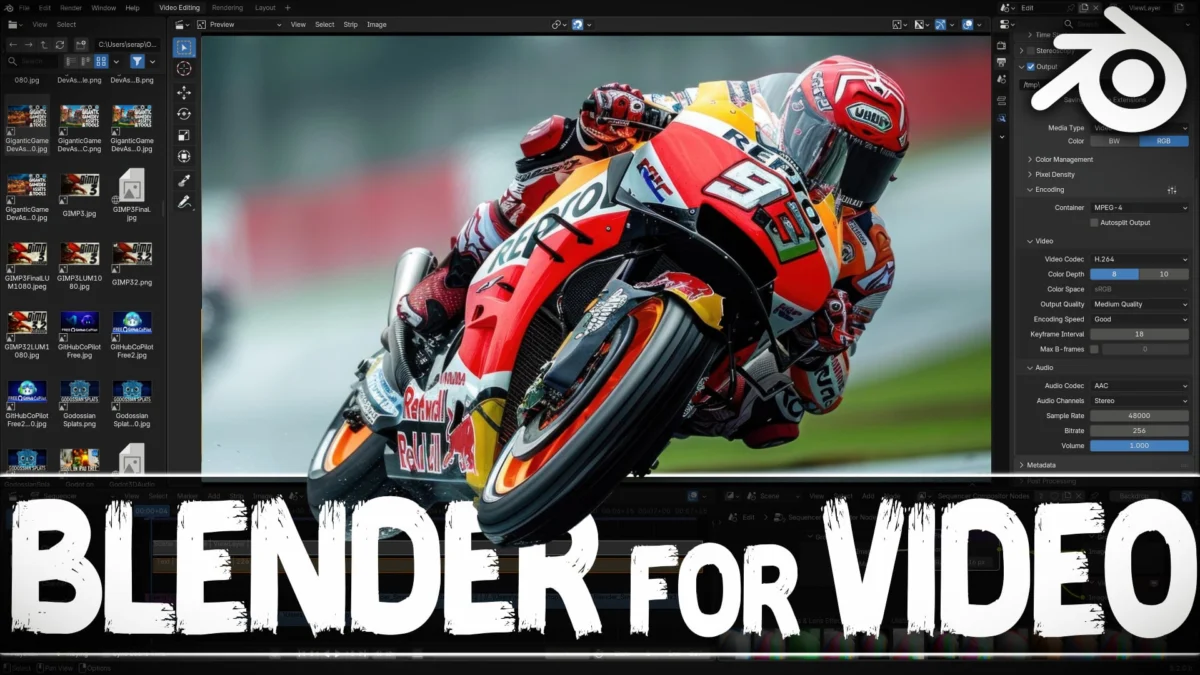
The open-source 3D creation suite, Blender, long lauded for its unparalleled capabilities in animation, modeling, and visual effects, is poised to redefine expectations for its integrated video editing functionality. With the imminent release of Blender 5.2, a significant overhaul of its Non-Linear Editor (NLE) promises to transform it from a niche tool into a robust and intuitive platform for video professionals and enthusiasts alike. This evolution marks a dramatic departure from its earlier iterations, where video editing, though present, was often considered a less refined aspect of the software.
For nearly fifteen years, the video editing capabilities within Blender have remained a relatively underutilized facet of its expansive feature set. While the core 3D engine has consistently pushed boundaries and garnered widespread acclaim, the Video Sequence Editor (VSE), as it was known, struggled to compete with dedicated NLEs that offered more streamlined workflows and a broader array of specialized editing tools. However, the development team behind Blender has clearly recognized this gap, investing substantial effort into a comprehensive modernization of the VSE. Blender 5.2 represents not just an incremental update, but a fundamental reimagining of the video editing experience within the 3D powerhouse.
A Long Road to Refinement: The Evolution of Blender’s Video Editor
The journey of video editing within Blender is a story of gradual development, punctuated by periods of significant, yet sometimes overlooked, progress. As early as Blender version 2.6, the software offered basic video editing functionalities. Back then, a GameFromScratch article highlighted these capabilities, noting that while functional, the experience was often described as "painful" when compared to established NLEs like Adobe Premiere Pro, Final Cut Pro, or DaVinci Resolve. These early iterations provided essential tools for cutting, splicing, and arranging video clips, but lacked the polish, efficiency, and advanced features that professional editors had come to expect.
The intervening years saw a consistent, albeit less publicized, effort to improve the VSE. Updates introduced new features, refined existing ones, and responded to user feedback. However, the sheer scope and complexity of Blender’s 3D environment often meant that advancements in the VSE were overshadowed by the more visually dramatic developments in animation, rendering, and modeling. This created a perception, not entirely unfounded, that Blender’s video editor remained a secondary consideration.
The landscape began to shift significantly with more recent developments, building towards the landmark Blender 5.2 release. This upcoming version is not merely an iteration; it’s a strategic reimagining of the video editing workflow. The focus has been on creating a more intuitive, feature-rich, and performance-optimized experience that can genuinely compete with dedicated NLE solutions. This proactive approach signals a clear intention by the Blender development team to elevate the VSE to a first-class citizen within the software.
Key Innovations in Blender 5.2: A New Era of Editing
Blender 5.2 introduces a suite of new features and substantial improvements that promise to fundamentally alter how users interact with the video editor. These enhancements are designed to address long-standing criticisms and to bring the VSE into parity with industry-standard editing software.
Enhanced User Interface and Workflow
One of the most significant areas of improvement lies in the user interface (UI) and overall workflow. Blender 5.2 boasts a more modern and intuitive layout for the video editing workspace. This includes:
- Streamlined Timeline Navigation: Users can expect more efficient navigation through their timelines, with improved zooming, scrolling, and selection tools. This is crucial for managing complex edits and making precise adjustments.
- Improved Clip Management: The way video clips are organized, previewed, and managed within the project has been revamped. This includes better integration with Blender’s asset browser, allowing for easier organization and retrieval of media.
- Enhanced Transitions and Effects: While Blender has always offered compositing capabilities, the integration of these effects directly within the VSE workflow has been significantly improved. Users can now apply and adjust a wider range of transitions and visual effects with greater ease and control.
- Node-Based Compositing Integration: The power of Blender’s node-based compositing system is now more seamlessly accessible from within the video editor. This allows for sophisticated color grading, visual effects, and compositing directly on video sequences without the need for complex workarounds.
Performance and Stability Upgrades
Performance and stability have been paramount in the development of Blender 5.2. Early reports and beta testing indicate significant improvements in how the VSE handles demanding video footage and complex projects.
- Optimized Playback: Users should experience smoother and more reliable playback of video sequences, even with high-resolution footage and multiple tracks. This is a critical factor for any NLE and a common bottleneck in previous Blender versions.
- Faster Rendering and Export: The rendering and export process for video projects has been optimized, leading to reduced waiting times for finished products. This is particularly beneficial for professionals who need to iterate quickly.
- Increased Stability: The development team has focused on addressing bugs and improving the overall stability of the VSE, aiming to provide a more reliable editing experience.
Advanced Editing Tools
Beyond UI and performance, Blender 5.2 introduces and refines a host of advanced editing tools:
- Improved Audio Editing Capabilities: While not a dedicated audio workstation, the VSE in 5.2 offers enhanced tools for audio manipulation, including better control over audio levels, basic mixing, and synchronization with video.
- More Robust Keyframing: The keyframing system for animating properties within the video editor has been made more powerful and flexible, allowing for finer control over motion graphics and effects.
- Enhanced Color Grading Tools: Leveraging Blender’s robust color management system, the VSE now provides more accessible and powerful tools for color correction and grading, enabling users to achieve professional-looking visual styles.
- Support for More Formats: Ongoing development continues to expand Blender’s support for a wider range of video and audio codecs and formats, ensuring compatibility with diverse media sources.
Supporting Data and Community Impact
The development of Blender 5.2 is not an isolated effort; it’s a testament to the vibrant and engaged Blender community. The extensive feedback loop between users and developers has been instrumental in identifying pain points and driving the necessary improvements.
- Beta Testing Feedback: The public beta release of Blender 5.2 has been crucial in gathering real-world usage data and bug reports. Enthusiastic users have been actively testing the new features, providing invaluable insights that inform final adjustments. Platforms like Blender’s official forums and bug trackers are replete with discussions and suggestions related to the VSE.
- Community-Driven Development: Many of the enhancements in Blender 5.2 are a direct result of community contributions, both in terms of code and feature requests. This collaborative model ensures that Blender evolves in ways that are most beneficial to its user base.
- Comparison with Industry Standards: While direct performance benchmarks against proprietary NLEs are ongoing, early impressions suggest that Blender 5.2 is closing the gap significantly. Its integrated nature offers a unique advantage for users already working within the Blender ecosystem, eliminating the need to switch between multiple software packages.
The implications of a more capable Blender video editor are far-reaching. For independent filmmakers, content creators, and small studios, Blender 5.2 offers a powerful, free, and open-source alternative to expensive professional software. This democratization of high-quality video editing tools can empower a new generation of creators to produce professional-grade content without significant financial barriers.
Official Responses and Future Outlook
The Blender Foundation and the development team have consistently expressed their commitment to making Blender a comprehensive creative suite. The significant investment in the VSE for Blender 5.2 is a clear indication of this strategic vision.
- Ton Roosendaal’s Vision: Ton Roosendaal, the founder and chairman of the Blender Foundation, has frequently spoken about the goal of creating a "one-stop shop" for 3D and multimedia creation. The advancements in the VSE align perfectly with this ambition, solidifying Blender’s position as an all-encompassing creative tool.
- Development Team’s Focus: The Blender developers have actively communicated their intentions regarding the VSE, highlighting the focus on user experience, performance, and feature parity with established NLEs. Their roadmap consistently features improvements to the video editing workflow.
- Long-Term Potential: The improvements in Blender 5.2 are not seen as an endpoint but as a foundation for future development. Users can anticipate continued enhancements to the VSE in subsequent releases, further solidifying its place as a competitive video editing solution. The integration with Blender’s existing 3D capabilities also opens up exciting possibilities for hybrid workflows, where 3D elements can be seamlessly incorporated into video edits and vice-versa.
In conclusion, Blender 5.2 represents a watershed moment for its integrated video editing capabilities. The years of refinement and the recent surge in focused development have culminated in a powerful, intuitive, and feature-rich NLE that is poised to capture the attention of a broad spectrum of video creators. As the open-source community continues to drive innovation, Blender is not just evolving; it’s transforming into an indispensable tool for the modern digital artist, offering a complete and integrated solution for bringing creative visions to life, from concept to final render, and now, to polished video.