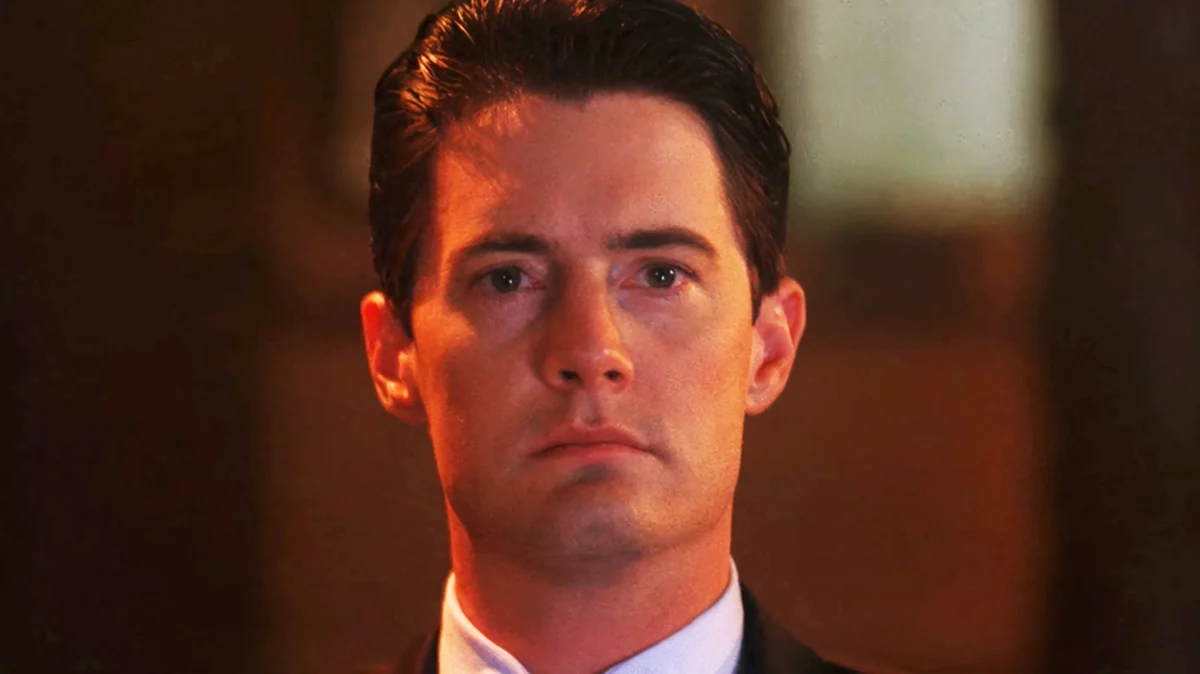
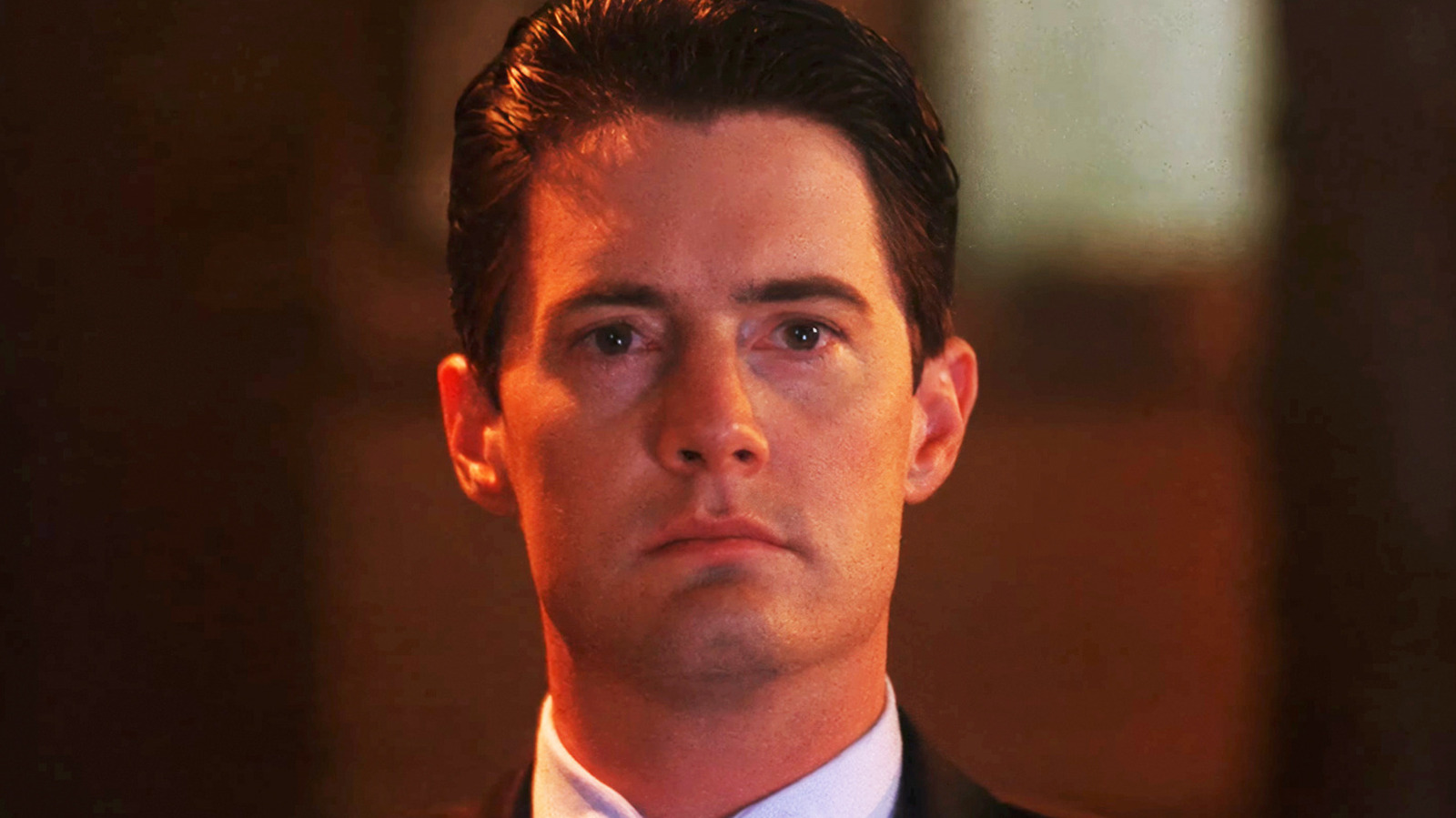
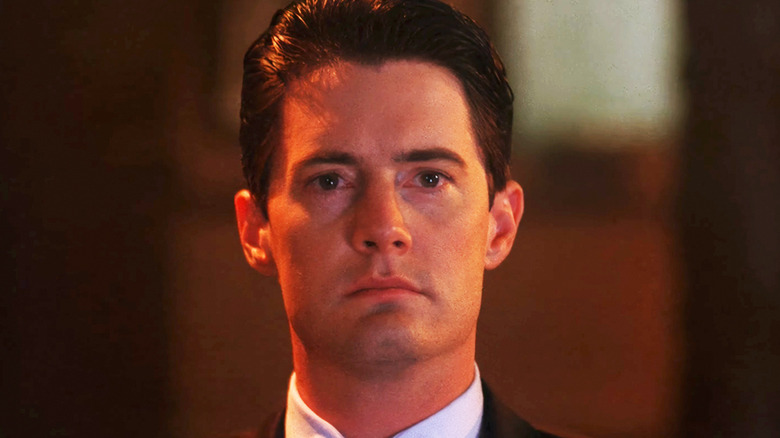
Before he became a household name as the cherry-pie-loving, coffee-obsessed FBI Special Agent Dale Cooper in David Lynch’s Twin Peaks, Kyle MacLachlan occupied a curious space in Hollywood. In 1987, nestled between the high-budget disappointment of Frank Herbert’s Dune (1984) and the surrealist television revolution of 1990, MacLachlan starred in a film that arguably served as the spiritual prototype for his most famous role. That film was The Hidden, a high-octane, genre-bending sci-fi thriller that remains one of the most underrated gems of the 1980s.
Directed by Jack Sholder and written by Jim Kouf, The Hidden is more than a simple "body snatcher" movie. It is a sophisticated blend of police procedural, visceral horror, and existential inquiry. Despite a positive critical reception and a cult following that persists today, the film remains largely "hidden" from the mainstream consciousness. This exploration dives deep into the production, the performance of its lead, and the lasting legacy of a film that redefined the "alien among us" trope.
Main Facts: A Genre-Defying Hybrid
The Hidden was released in October 1987 by New Line Cinema, a studio then primarily known for the A Nightmare on Elm Street franchise. On the surface, the premise appears to be a standard 1980s action flick: a hard-boiled Los Angeles detective, Thomas Beck (played by Michael Nouri), is tasked with solving a series of inexplicable crimes committed by seemingly ordinary citizens who have suddenly turned into hedonistic, ultra-violent psychopaths.
However, the narrative takes a sharp turn into science fiction with the arrival of Lloyd Gallagher (Kyle MacLachlan), a stiff, socially awkward FBI agent who seems to know more about the suspects than he lets on. It is eventually revealed that the "criminals" are actually human hosts for a slug-like alien parasite that thrives on adrenaline, loud rock music, and fast cars. Gallagher, it turns out, is also an extraterrestrial—a lawman from another world inhabiting a human body to hunt down the parasite that killed his family.
The film’s success lies in its tonal balance. It features the kinetic energy of a Michael Bay film (decades before the fact), the body horror of John Carpenter’s The Thing, and a dry, absurdist humor that would later become a staple of 1990s television.
Chronology: MacLachlan’s Path from Arrakis to Twin Peaks
To understand the significance of The Hidden, one must look at the trajectory of Kyle MacLachlan’s career in the mid-to-late 1980s.
1. The Post-‘Dune’ Recovery (1984–1986)
MacLachlan’s debut in David Lynch’s Dune was meant to be his coronation as a major movie star. When the film flopped both critically and commercially, MacLachlan’s career was in jeopardy. He followed Dune with Lynch’s Blue Velvet (1986), which restored his reputation as an actor capable of navigating "strange" material.
2. The Bridge: ‘The Hidden’ (1987)
The Hidden acted as the crucial bridge between his role as the innocent Jeffrey Beaumont in Blue Velvet and the eccentric Dale Cooper. In Lloyd Gallagher, MacLachlan refined the "stranger in a strange land" persona. His performance—characterized by a physical stiffness, a fascination with mundane human objects, and a detached yet intense focus—laid the groundwork for the FBI agent he would play three years later.
3. The Television Revolution (1990)
By the time Twin Peaks premiered, MacLachlan had perfected the archetype of the "oddball lawman." While Dale Cooper was more optimistic and intuitive than Lloyd Gallagher, the DNA of the performance is unmistakable. Both characters exist on a different frequency than those around them, acting as the audience’s guide into a world where the supernatural hides behind the veneer of law and order.
Supporting Data: Production and Technical Execution
The effectiveness of The Hidden is bolstered by its lean script and impressive practical effects. Produced on a modest budget of approximately $5 million, the film punched well above its weight class.
The Script and Direction
Jim Kouf, who would later find massive success with Rush Hour and National Treasure, wrote the initial draft. However, it was director Jack Sholder who reshaped the narrative. Sholder, fresh off the success of A Nightmare on Elm Street 2: Freddy’s Revenge, felt the original script was too much of a "lightweight romp."
Sholder’s revision focused on the "humanity" of the characters. He wanted to contrast the alien villain’s nihilistic consumption of human life with Gallagher’s growing realization of what it means to be a person. This thematic depth is what separates The Hidden from other 1980s B-movies; it cares as much about Gallagher’s internal journey as it does about the car chases.
Practical Effects
The film features iconic practical makeup effects by Kevin Yagher. The centerpiece is the alien parasite itself—a repulsive, multi-legged organism that enters and exits its hosts through the mouth. The transition scenes, where the alien leaves a dying body to enter a new one, remain genuinely unsettling even by modern standards. The film’s opening bank robbery and subsequent high-speed chase through the streets of Los Angeles are also noted for their high-quality stunt work, utilizing real locations to ground the fantastical elements in a gritty reality.
Official Responses: Critical Acclaim and Cult Status
Upon its release, The Hidden received surprisingly strong reviews for a genre film. It currently maintains a "Fresh" rating of 76% on Rotten Tomatoes, a testament to its enduring quality.
The Ebert Endorsement
The late Roger Ebert was one of the film’s most vocal supporters. In his 1987 review, he awarded the film three stars, calling it "a sleeper that talks like a thriller and walks like a thriller, but has more brains than the average thriller." Ebert specifically praised MacLachlan’s performance, noting:
"MacLachlan is a subtle actor… he plays the role as if he were a man who had just been handed the controls to a machine he didn’t fully understand. There’s a certain tentativeness in his movements, a certain lack of rhythm in his speech."
The Director’s Perspective
In a retrospective interview with Fangoria, Jack Sholder reflected on the film’s legacy. He noted that while New Line Cinema didn’t initially know how to market the film—unsure if it was an action movie or a sci-fi flick—the audience eventually found it. "I think it’s probably my best-made film," Sholder stated. "It has a certain elegance to it despite the violence."
Modern Re-evaluation
Today, platforms like Letterboxd have seen a resurgence of interest in the film. Users frequently cite the film’s "tight pacing" and "1980s LA atmosphere" as highlights. It is often compared favorably to James Cameron’s The Terminator, with critics noting that The Hidden manages to achieve a similar level of intensity with a fraction of the resources.
Implications: The Legacy of the "Weird FBI Agent"
The influence of The Hidden can be felt across the landscape of modern science fiction and television. It helped codify a specific subgenre: the "Bureaucratic Supernatural."
1. The Archetype of the Outsider Lawman
Lloyd Gallagher was a precursor to a long line of television and film characters. Without the success of MacLachlan’s portrayal, the path for Agent Fox Mulder in The X-Files might have looked very different. The trope of the FBI agent who understands the "truth" while his local partners remain skeptical became a cornerstone of 90s pop culture.
2. Influence on ‘Men in Black’
The DNA of The Hidden is clearly visible in the Men in Black franchise. The concept of aliens hiding in plain sight, the use of high-tech weaponry disguised as mundane objects, and the "buddy cop" dynamic between a veteran who knows the truth and a skeptical newcomer all trace their roots back to the 1987 film.
3. The Failure of the Sequel
The film’s legacy was briefly tarnished by the 1993 direct-to-video sequel, The Hidden II. Lacking both Sholder’s direction and MacLachlan’s presence, the sequel failed to capture the original’s heart or wit. Its failure only served to highlight how much the first film relied on the specific chemistry of its lead actors and the intelligence of its script.
Conclusion
The Hidden remains a vital piece of 1980s cinema. It is a film that refuses to be pigeonholed, offering as much for the fan of philosophical sci-fi as it does for the lover of gritty action. For fans of Kyle MacLachlan, it is an essential watch—a missing link that explains the evolution of one of Hollywood’s most unique actors. In an era of endless reboots and sequels, The Hidden stands as a reminder of a time when a mid-budget sci-fi film could be original, intelligent, and thrilling all at once. If you have not seen it, it is time to seek out what has been hidden for too long.
In September 2026, the tech world was rocked by the sudden resignation of a lead alignment researcher at Anthropic. His parting message to the public was as blunt as it was terrifying: the artificial
The 2026 Cannes Film Festival bore witness to what many critics and historians are calling the most significant cinematic restoration of the 21st century. Decades after it was butchered by censors and
Main Facts: A Landmark Partnership in Transmedia Storytelling In a move that signals a significant shift in the landscape of North American media production, Viz Media, the continent’s leading publish