
Bringing the Cretaceous to Your Living Room: Le Dino Labo Expands with New Mixed Reality DLC
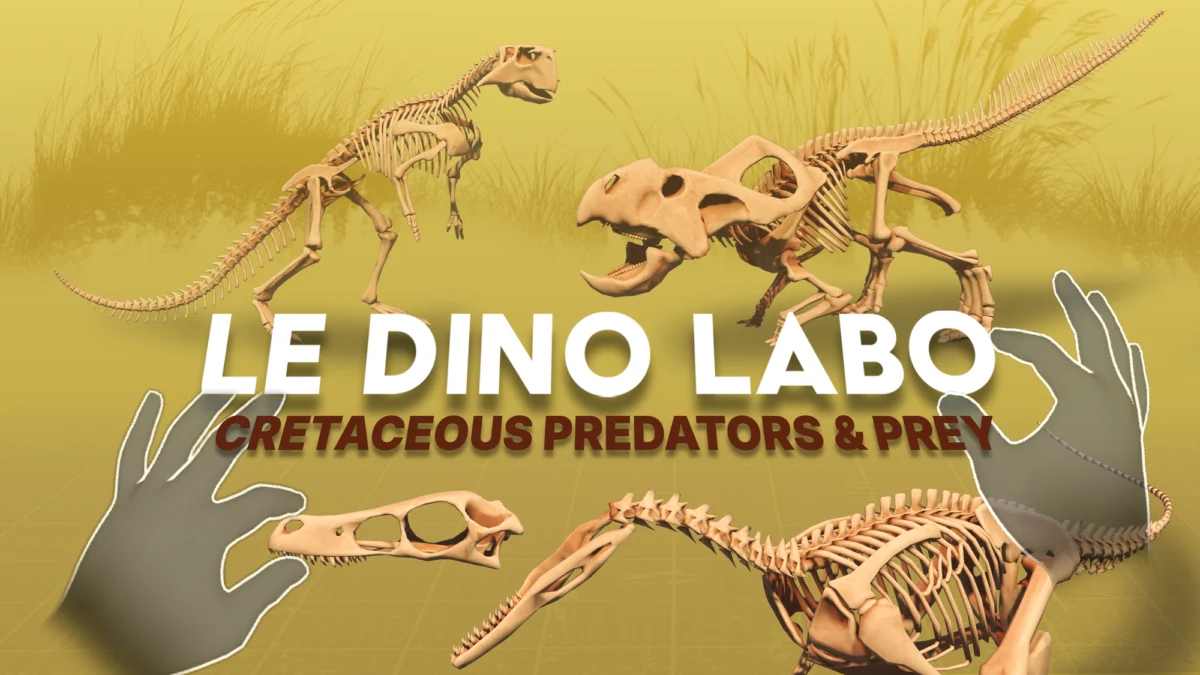
The boundary between the prehistoric past and the modern living room has blurred once again. Realcast Inc., a pioneer in location-based entertainment and immersive experiences, has officially launched the second major expansion for its acclaimed mixed-reality (MR) title, Le Dino Labo. Titled "Cretaceous Predators and Prey," this new downloadable content (DLC) marks a significant step forward for the title, enhancing its roster of assemble-able ancient creatures and refining the tactile hand-tracking mechanics that have made the game a standout on the Meta Quest platform.
As the virtual reality (VR) and augmented reality (AR) industries shift their focus toward high-fidelity mixed reality experiences—driven by the hardware capabilities of the Meta Quest 3 and Quest Pro—Le Dino Labo serves as a prime example of how educational content can be transformed into engaging, interactive entertainment.
The Core Expansion: Cretaceous Predators and Prey
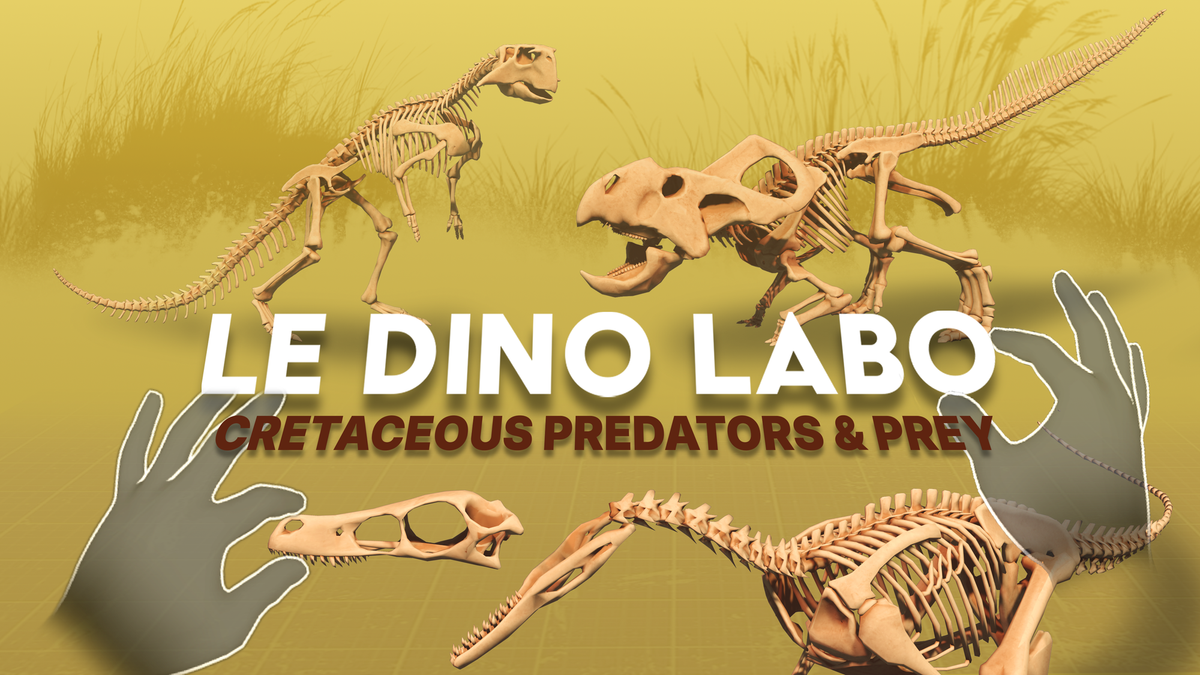
The "Cretaceous Predators and Prey" DLC, available now on the Meta Horizon Store for $3.99, introduces a curated selection of three iconic dinosaurs from the Cretaceous period. Unlike previous updates that focused on sheer size, this pack highlights the biological diversity and the ecological relationships of the era.
The Featured Species
The three new additions to the digital laboratory are:
- Velociraptor: Perhaps the most famous of the trio, the Velociraptor in Le Dino Labo aims for paleontological accuracy. Players can examine the intricate structure of its hollow bones and its signature sickle-shaped toe claws. In the MR environment, assembling this agile predator offers a lesson in avian-like skeletal evolution.
- Protoceratops: Often described as the "sheep of the Cretaceous," this sheep-sized herbivore provides a fascinating contrast to the raptor. Its sturdy, beaked skull and frill offer a different assembly challenge, focusing on denser bone structures.
- Psittacosaurus: Known as the "parrot lizard," this early ceratopsian is a favorite among paleontologists for its unique bristles and parrot-like beak. Including this species allows the game to explore the evolutionary roots of the more famous horned dinosaurs like the Triceratops.
The expansion is designed not just as a collection of models, but as a hands-on puzzle. Each dinosaur has been meticulously adapted for the game’s core loop: identifying fossil fragments, cleaning them, and articulating them into a complete skeletal frame.
The Mechanics of Mixed Reality: Tactile Paleontology
What distinguishes Le Dino Labo from traditional paleontology simulators is its reliance on full hand-tracking technology. By removing the abstraction of controllers, Realcast Inc. allows players to use their natural dexterity to manipulate 3D assets.
Hand-Tracking and Spatial Interaction
Players interact with a virtual workbench superimposed onto their real-world environment. Using the Meta Quest’s cameras, the game tracks finger movements with high precision, allowing users to pick up tiny vertebrae, rotate femurs to inspect joint sockets, and snap ribs into place. This "tactile" feedback, though lacking physical resistance, creates a powerful psychological sense of presence.
The "Life-Size" Reveal
The climax of the Le Dino Labo experience occurs once the skeleton is fully assembled. Through the magic of MR Passthrough, the skeletal remains are "clothed" in muscle and skin, and the dinosaur scales up to its scientifically accurate dimensions. Seeing a Velociraptor standing on your coffee table or a Psittacosaurus scurrying across your rug provides a sense of scale that a textbook or a standard flat-screen game cannot replicate. The "Cretaceous Predators and Prey" pack leans into this, emphasizing the manageable but impressive size of these specific species within a domestic setting.
Chronology of Development: The Evolution of Le Dino Labo
The release of "Cretaceous Predators and Prey" is the latest milestone in a steady development cycle for Realcast Inc. To understand the significance of this DLC, one must look at the game’s trajectory since its inception.
- The Launch of the Base Game: Le Dino Labo debuted as a proof-of-concept for high-quality MR educational gaming. It established the "Labo" format—a clean, futuristic interface where the player acts as a technician reconstructing history.
- The "Jurassic Giants" Expansion: The first DLC pack focused on the titans of the Jurassic period. It introduced massive sauropods and famous carnivores, testing the limits of the Quest’s Passthrough capabilities by forcing players to reckon with creatures that often exceeded the height of their ceilings.
- The Cretaceous Pivot: With the second DLC, the developers have pivoted toward more complex, smaller-scale skeletons. This move suggests a focus on detail and educational nuance, moving beyond the "wow factor" of giant dinosaurs to the intricate biology of smaller, equally important species.
Supporting Data: The Growing Market for "Edutainment" in MR
The release of this DLC comes at a time when the "edutainment" (educational entertainment) sector of the VR/MR market is seeing a resurgence. According to industry analysis, the demand for non-gaming applications—specifically in education and training—is expected to grow by 25% annually through 2028.
Le Dino Labo occupies a unique niche within this market. At a price point of $3.99 for the DLC and a similarly accessible price for the base game, it targets the "casual learner" and the "prosumer" parent. By utilizing Meta’s latest Passthrough APIs, Realcast is able to offer an experience that feels like a museum exhibit brought home, at a fraction of the cost of a museum membership.
Data from Meta’s Horizon Store indicates that "bite-sized" DLC—content that can be consumed in 30 to 60 minutes—is highly effective for retention in the MR space. Le Dino Labo’s structure fits this perfectly, as each dinosaur assembly acts as a self-contained session.
Official Responses and Developer Vision
Realcast Inc. has been vocal about its commitment to the long-term roadmap of Le Dino Labo. In previous statements, the development team emphasized that the game is intended to be a living platform rather than a static release.
"Our goal with Le Dino Labo is to transform the way people interact with natural history," a spokesperson for Realcast noted during the initial roadmap reveal. "By using mixed reality, we aren’t just showing you a dinosaur; we are giving you the tools to build one in your own home. The ‘Cretaceous Predators and Prey’ pack is the next step in deepening that connection."
The developer’s roadmap for the remainder of the year includes:
- Enhanced Environmental Integration: Updates that allow virtual dinosaurs to interact more intelligently with real-world furniture (e.g., a raptor jumping onto a sofa).
- Deeper Skeletal Manipulation: Introducing more complex bone fragments for advanced players.
- Multiplayer "Lab" Sessions: Potential features allowing multiple users in the same physical space to collaborate on a single skeleton.
Broader Implications for the VR/AR Industry
The continued expansion of Le Dino Labo highlights several key trends in the immersive technology industry:
1. The Shift from VR to MR
While virtual reality replaces the world, mixed reality enhances it. Le Dino Labo is part of a wave of "Passthrough-first" applications. These games are proving more comfortable for long-term use because they don’t isolate the user from their surroundings, reducing the "nausea factor" often associated with full VR.
2. The Democratization of Paleontology
High-fidelity 3D scans of fossils were once the exclusive domain of research universities and prestigious museums. Realcast is effectively democratizing this data, allowing children and enthusiasts to interact with anatomically correct models that reflect the latest scientific findings.
3. The Micro-Transaction Model for Quality Content
By pricing the DLC at $3.99, Realcast is testing a sustainable business model for indie MR developers. Instead of a high one-time cost, they are building a library of content that players can opt into based on their interests (e.g., "I want Jurassic giants, but I’m not interested in Cretaceous raptors").
Conclusion: A Small Step for Man, A Giant Leap for Digital Fossils
The "Cretaceous Predators and Prey" DLC for Le Dino Labo is more than just a simple content update; it is a testament to the maturing landscape of mixed reality. By combining scientific curiosity with the cutting-edge hand-tracking capabilities of the Meta Quest, Realcast Inc. has created a compelling argument for the future of interactive learning.
As players begin to piece together the vertebrae of a Velociraptor in their kitchens this week, they aren’t just playing a game—they are participating in a new form of digital archaeology. With more packs on the horizon and a roadmap that promises even deeper immersion, Le Dino Labo is well-positioned to remain a definitive title in the burgeoning MR library. For $3.99, the chance to witness the "parrot lizard" or the "legendary raptor" come to life in one’s own hallway is an offer that many tech-savvy dinosaur enthusiasts will find impossible to resist.




Leave a Comment