
Speculative Horizons: A Week of Literary Lists, Fandom Triumphs, and Cinematic Legacies
LONDON, UK – May 17, 2026 – The world of speculative fiction and its broader cultural impact continues to captivate, as evidenced by a flurry of significant news this week. From the unveiling of a hotly debated literary canon by The Guardian to the jubilant tenth anniversary of a pivotal translation initiative, and from the red carpet antics of a beloved digital icon to a deep dive into the preservation of cinematic history, the genre is proving its enduring relevance and dynamic evolution. This report compiles and analyzes the most compelling developments, offering a glimpse into the diverse forces shaping contemporary and historical speculative arts.
Main Facts: A Diverse Snapshot of Speculative Culture
This past week has delivered a rich tapestry of news across the speculative fiction landscape, highlighting both its mainstream recognition and its vibrant subcultures.
First, The Guardian ignited a fresh wave of literary discourse with its much-anticipated "100 Best Novels of All Time" list. Compiled from a poll of 172 authors, critics, and academics, the list, while aiming for definitive status, inevitably sparked conversations about genre representation and canonical inclusion. Notably, a significant number of science fiction and fantasy works found their place among the literary giants.
In the realm of global literary outreach, Speculative Fiction in Translation (SFT), spearheaded by Rachel S. Cordasco, celebrated its momentous tenth anniversary. This milestone marks a decade of dedicated effort to bridge linguistic divides and introduce Anglophone readers to the vast, diverse world of international speculative fiction. The anniversary post itself offered a detailed retrospective, underscoring the initiative’s profound impact.
Fandoms, ever passionate, took center stage as Star Trek emerged victorious in Pluto TV’s annual "Battle of the Fandoms" on Facebook, triumphing over formidable contenders like The X-Files. This social media-driven contest once again showcased the fierce loyalty and engagement of genre enthusiasts across digital platforms.
Literary popularity received official validation as Andy Weir’s Project Hail Mary was crowned Goodreads’ "best sci-fi book of the decade." This accolade, supported by overwhelming reader data, solidified the novel’s status as a contemporary favorite, further amplified by its successful film adaptation.
Meanwhile, Hollywood witnessed an unprecedented spectacle at "The Mandalorian and Grogu" movie premiere, where the diminutive, animatronic Grogu (affectionately known as Baby Yoda) effortlessly stole the spotlight from his human co-stars, including Pedro Pascal and Sigourney Weaver. His charming red carpet debut underscored the immense cultural power of popular fictional characters.
A critical voice from the cinematic world emerged as The Lord of the Rings director Peter Jackson lamented the decline of physical media, emphasizing the loss of invaluable behind-the-scenes content that once enriched the viewing experience and inspired future filmmakers. This concern for archival preservation resonates deeply within communities dedicated to the history of film.
Further enriching our understanding of genre, Camestros Felapton offered a whimsical review of The Sheep Detectives, a German-novel-turned-film blending cosy mystery with anthropomorphic charm. Concurrently, Cora Buhlert’s Galactic Journey revisited a curious 1971 West German spy thriller, "Und Jimmy ging zum Regenbogen," revealing how popular cinema can subtly address profound societal issues.
Finally, the speculative fiction community mourned and celebrated the life of a prolific talent as Lisa Tuttle’s obituary for Ian Watson appeared in The Guardian, offering a poignant tribute to his complex, wide-ranging contributions to science fiction, horror, and fantasy.
Chronology: Tracing Legacies and Milestones
The week’s news items are not isolated incidents but rather threads in a larger narrative of speculative fiction’s historical development and contemporary influence.
The Evolving Literary Canon: From Tradition to Inclusivity
The Guardian’s "100 Best Novels of All Time" list is the latest in a long tradition of literary canonization. Historically, such lists often favored "literary fiction," with speculative genres frequently marginalized. However, the inclusion of 15 science fiction and fantasy titles reflects a gradual but significant shift in critical perspective, acknowledging the artistic and cultural merit of works once relegated to niche categories. This evolution can be traced through decades of academic discourse and increasing popular appreciation for genre fiction.
A Decade of Bridging Worlds: The SFT Journey
Rachel S. Cordasco’s Speculative Fiction in Translation website reaching its tenth anniversary marks a significant milestone in a movement that began decades ago. The original news item details this rich history, starting in the 1970s with the first International Symposium on Science Fiction in Japan and the founding of the international association World SF by genre luminaries like Brian Aldiss, Harry Harrison, and Frederik Pohl. Though World SF’s direct activities waned by the early ’90s, its legacy persisted through various initiatives. Lavie Tidhar’s World SF Blog (2009-2013) and Cheryl Morgan’s Science Fiction and Fantasy Translation Awards (2009-2014) kept the flame alive, paving the way for Cordasco’s SFT website in 2016. Her efforts, including her books Out of This World (2021) and a forthcoming follow-up, represent a sustained, dedicated push to globalize speculative fiction readership.

Revisiting a Galaxy Far, Far Away: The Phantom Menace at 27
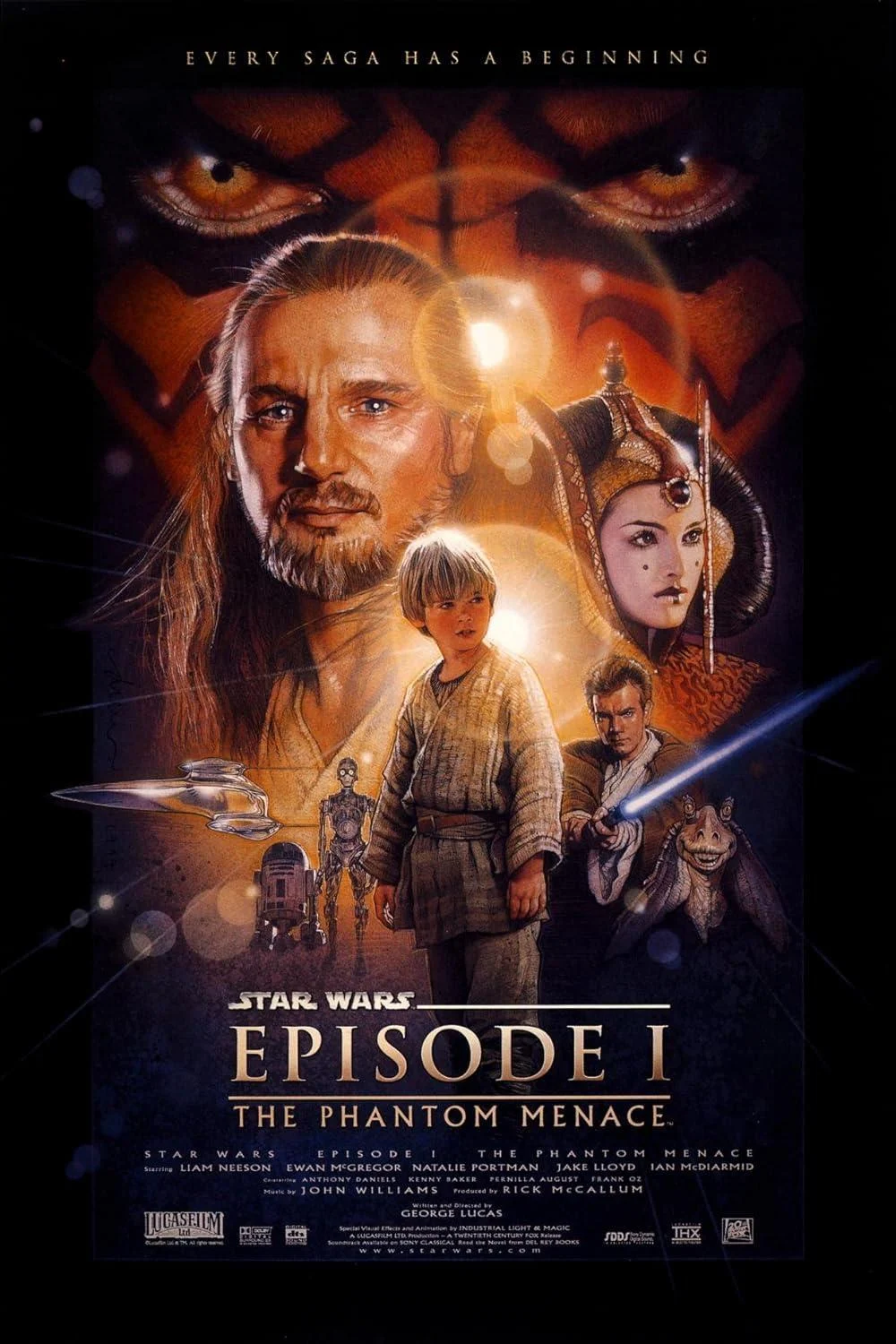
Paul Weimer’s "Memory Lane" piece on The Phantom Menace provides a vivid chronological account of its release on May 16, 1999. Coming 16 years after Return of the Jedi, it was an event freighted with immense fan expectation, representing the first new Star Wars film in over a decade and a half. Weimer’s personal recollection of the opening day buzz, the scramble for tickets, and the immediate, visceral reactions to the film’s controversial elements — from the "taxation dispute" opening crawl to the introduction of Jar-Jar Binks — paints a clear picture of a cultural moment. The film’s critical and fan reception in 1999 initiated a debate that continues to this day, shaping the perception of the entire prequel trilogy and, indeed, the broader Star Wars saga.
Cinematic Echoes from 1971: The Power of Historical Review
Cora Buhlert’s contribution to Galactic Journey, reviewing the 1971 West German film "Und Jimmy ging zum Regenbogen," offers a fascinating historical perspective. The review places the film within the context of its era, highlighting its popularity as an adaptation of a best-selling novel. It reminds us that cinema of the past, even popular thrillers, often served as a mirror to contemporary societal anxieties and historical traumas. The film’s daring inclusion of themes related to the Third Reich and the unaddressed legacies of Nazism in post-war Germany showcases how genre fiction can be a vehicle for confronting difficult historical truths, even when critics might dismiss it as "popular trash."
Supporting Data: Deep Dives and Details
The wealth of information released this week offers concrete insights into the trends and tastes defining speculative fiction.
The Guardian’s Genre Gems: A Closer Look
The Guardian’s list, while broad, featured a notable contingent of speculative works. Evelyn C. Leeper’s item highlighted the following titles, showcasing a blend of classic and modern, pure genre and genre-adjacent works:
- 98 The Road
- 93 Invisible Cities
- 89 The Left Hand of Darkness
- 86 The Turn of the Screw
- 76 Dracula
- 71 Kindred
- 66 The Master and Margarita
- 59 Never Let Me Go
- 54 Orlando
- 48 The Metamorphosis
- 36 The Handmaid’s Tale
- 30 Frankenstein
- 27 The Trial
- 20 Wuthering Heights
- 16 Nineteen Eighty-Four
The inclusion of titles like The Turn of the Screw and Wuthering Heights under the "science fiction/fantasy" umbrella, while debatable to some purists, reflects a broader, more inclusive definition of genre often adopted by literary critics. The curious alternate text of "Headshot of Salman Rushdie" for one of the article’s illustrations served as a minor, if unfortunate, digital oversight.
SFT’s Tangible Impact: A Decade in Numbers and Features
Rachel S. Cordasco’s anniversary post for Speculative Fiction in Translation presented compelling data illustrating the project’s growth and the broader expansion of SFT. The website’s analysis, supported by various graphs, pointed to a significant increase in translated works, with 90 long-form texts published in 2025 alone. Cordasco detailed the website’s extensive features: yearly lists of forthcoming books, insightful reviews, interviews with authors and translators, original SFT pieces, guest essays, and a colossal, ever-updated spreadsheet cataloging translated works. Specialized "Spotlight series" on Nordic, Polish, Romanian, Hebrew, Hungarian, Chinese, and Japanese literatures have provided focused exploration. The "To Be Translated" tab serves as a vital resource for translators, while the "SFT source language lists" offer comprehensive bibliographical data. This robust infrastructure underscores SFT’s role as a central hub for the global SFF community.
The Anatomy of The Sheep Detectives: A Genre Hybrid
Camestros Felapton’s review of The Sheep Detectives described it as an ingenious blend, "a cross between a standard cosy mystery, Untitled Goose Game, Knives Out and Babe." Based on a German novel, the film features Hugh Jackman as a shepherd who reads detective stories to his flock. When the shepherd is found dead, the sheep, armed with their literary knowledge, embark on solving the murder in a quaint English village. This premise highlights a trend in modern storytelling to subvert expectations and playfully combine disparate genres, promising both humor and genuine mystery.
Pluto TV’s Fandom Metrics: A Divided Victory
TrekMovie.com reported Star Trek‘s victory in Pluto TV’s "Battle of the Fandoms" on Facebook. The March Madness-style bracket saw Star Trek overcome Doctor Who, Farscape, and Twin Peaks before a final showdown with The X-Files. However, the results were platform-specific, revealing the nuances of digital fandom. While Star Trek secured the win on Facebook, The X-Files triumphed on Instagram. TikTok presented an entirely different outcome, with neither sci-fi giant making the finals, and Charmed ultimately claiming the top spot. This data vividly illustrates how fan engagement and preferences can vary dramatically across different social media ecosystems.
Goodreads’ Quantitative Proof: Project Hail Mary‘s Dominance
The recognition of Andy Weir’s Project Hail Mary as the best sci-fi book of the decade by Goodreads was backed by impressive metrics. Screen Rant reported 3 million "shelvings" (users adding it to their digital shelves), 1.5 million ratings, 220,786 reviews, and an exceptional 4.51-star average rating. The novel also previously won the Goodreads Choice Award for Readers’ Favorite Science Fiction in 2021, cementing its popular appeal. The subsequent success of its film adaptation further validated its widespread impact.
Simmel’s Sociopolitical Cinema (1971): A Deeper Look at "Und Jimmy ging zum Regenbogen"
Cora Buhlert’s Galactic Journey review delves into Johannes Mario Simmel’s "Und Jimmy ging zum Regenbogen," describing his novels as a mix of thriller elements, ripped-from-the-headlines plots, exotic locations, and romance, all delivered in a "breezy journalistic style." While critics often dismissed Simmel’s work as "popular trash," Buhlert argues that he skillfully embedded social criticism, particularly concerning taboo subjects like the Third Reich and the unpunished continuity of former Nazis in post-war society. This historical context reveals how seemingly light entertainment can serve as a subtle yet potent vehicle for social commentary.
Ian Watson’s Diverse Oeuvre: A Legacy of Thought and Play
Lisa Tuttle’s obituary for Ian Watson highlighted his extraordinary range as a writer. While often identified with science fiction, his bibliography spanned horror, fantasy, and even contributions to the "lurid, Gothic fun" of the Warhammer franchise. Tuttle noted his exploration of "dauntingly complex, even unanswerable, questions about communication, language, perception and consciousness." Academics like Adam Roberts pointed to the "intricate interweaving of myth and science" in works such as The Books of Mana, inspired by the Finnish epic Kalevala. Watson’s personal qualities—playfulness, a straight-faced humor, and an inspiring teaching style—rounded out the portrait of a unique and influential voice.
Deconstructing The Phantom Menace: A Fan’s Perspective
Paul Weimer’s retrospective on The Phantom Menace offered a detailed fan critique. He acknowledged positive elements like the dynamic between Qui-Gon Jinn and Obi-Wan Kenobi, the classic serial plot twist of the switched princess, the design of the enemy droids ("Roger, Roger"), and the stunning visuals of Naboo. However, his criticisms were sharp: Jar-Jar Binks was deemed "the worst character Lucas has created," and the retcon of Anakin building C3P0 was dismissed as a "story beat and choice that makes absolutely no sense." The pod race, while visually spectacular, was singled out as a "momentum killer," an outsized sequence that derailed an already "flailing" narrative, from which the film never truly recovered.
Grogu’s Star Power: A Red Carpet Phenomenon
The premiere of "The Mandalorian and Grogu" movie became an instant viral sensation thanks to Grogu’s animated presence. USA Today reported that the animatronic creation, clad in a "tasteful, monk-like robe," captivated photographers at the TCL Chinese Theatre. His "regal waves of his three-fingered hands," a "quick show of the Force push," "major ear wiggling," and "unmistakable wide-eyed wonder" ensured he eclipsed human stars like Pedro Pascal, Sigourney Weaver (Colonel Ward), and director Jon Favreau, who himself sought a photo opportunity with the "rising lime-green superstar." This event underscored the immersive power of modern animatronics and the deep emotional connection audiences have with characters like Grogu.

Preserving Cinematic Heritage: Peter Jackson’s Concerns and Fan Merchandise
Peter Jackson’s lament over the decline of physical media, reported by IGN, centered on the loss of "hours and hours of behind-the-scenes material" that once accompanied DVD and Blu-ray releases. He noted that physical media has become "almost a niche product for aficionados," leading studios to reduce investment in extended features. This content, which Jackson famously championed for The Lord of the Rings Extended Editions, served as inspiration for aspiring filmmakers.
In a related vein, fan merchandise continues to thrive, even as physical media wanes. IGN also highlighted the appeal of The Lord of the Rings bookends designed as the Pillars of Kings (Argonath), statues of Isildur and Anárion, which are instantly recognizable from The Fellowship of the Ring. Pure Arts’ official announcement of a 1:1 scale replica of the Crown of Gondor further caters to dedicated fans, offering standard and exclusive editions (limited to 1,500 and 150 units, respectively). While the exclusive edition, complete with an embroidered Gondor wall banner, quickly sold out, the standard edition remains available for pre-order at $749.99, illustrating the robust market for high-end collectibles.
Sci-Fi London’s Digital Showcase and Fantastic Fiction at KGB
SF Concatenation announced that a host of new science fiction short films from the Sci-Fi London festival are available online for a week (May 17-24, 2026). For £15, viewers can access approximately 7.5 hours of content. Additionally, the top ten finalists of the Sci-Fi London 48-Hour Challenge, where filmmakers create a short SF film over a weekend based on a given line of dialogue and a prop, are available for free viewing.
Separately, Ellen Datlow shared photos from the Fantastic Fiction at KGB reading on May 13, 2026, featuring authors Siobhan Carroll and Micaiah Johnson, showcasing the continued vitality of in-person literary events.
Official Responses and Expert Commentary
The news cycle often provides direct statements or authoritative interpretations that shape public understanding.
The Guardian’s Methodical Canonization
The Guardian’s "100 Best Novels" list, framed as "not their list, but the results of a poll of 172 authors, critics and academics," serves as an "official response" to the ongoing challenge of defining literary greatness. By relying on a broad consensus of literary experts, the publication aimed to present a list with significant intellectual weight, inviting both appreciation and critical engagement from the literary community and the public.
Rachel S. Cordasco’s Vision for SFT
Rachel S. Cordasco’s anniversary post functions as her official commentary on the decade of Speculative Fiction in Translation. Her reflections, detailing the growth of the field, the increased presence of translation-centered panels at SFF conferences, the introduction of translation categories in major awards like Locus and the British Science Fiction Awards, and the proliferation of academic texts, underscore a profound sense of accomplishment. She positions SFT as a crucial, ongoing effort, acknowledging the journey from the early days of World SF to the present vibrant landscape.
Peter Jackson’s Archival Plea
Peter Jackson’s statement to IndieWire, lamenting the decline of physical media and its impact on bonus features, is a powerful "official response" from a director renowned for his dedication to comprehensive behind-the-scenes content. His regret that studios no longer invest in such extras because physical media is now a "niche product for aficionados" highlights a significant cultural loss, impacting both casual fans and aspiring filmmakers who once drew inspiration from these detailed insights into the craft.
Goodreads’ Data-Driven Authority
Goodreads’ announcement crowning Project Hail Mary as the "best sci-fi book of the decade," based on "exclusive data shared with Screen Rant," represents an authoritative, data-driven declaration of popular success. While not a critical assessment in the traditional sense, it stands as an official testament to reader engagement and preference on one of the largest literary platforms globally.
Critical Reception: Popularity vs. Academia
The critical reception of works like "Und Jimmy ging zum Regenbogen" in 1971, where "critics dismiss his novels as popular trash," provides an "official response" from the academic and critical establishment of the time. This contrasts sharply with the film’s popular success, highlighting the enduring tension between commercial appeal and critical acclaim, particularly when a work subtly integrates social commentary into a popular genre. Similarly, Camestros Felapton’s review of The Sheep Detectives offers an informed critical perspective on its genre-blending novelty.
Lisa Tuttle’s Definitive Tribute to Ian Watson
Lisa Tuttle’s obituary for Ian Watson in The Guardian, published a month after his passing, serves as an "official response" from a peer and a prominent publication to his life and work. It offers a comprehensive, appreciative overview of his legacy, validating his complex contributions and acknowledging his impact despite a lack of widespread commercial success.
The Fan’s Verdict: Paul Weimer on The Phantom Menace
While not an "official" critical response in the traditional sense, Paul Weimer’s detailed personal account and critique of The Phantom Menace represents a significant and widely shared fan perspective. His analysis, reflecting on both the excitement and the disappointment of 1999, stands as a testament to the powerful, often unyielding, "official response" of a dedicated fandom to a highly anticipated franchise entry.
Implications: Looking Forward and Reflecting Back
The week’s news not only provides snapshots of current events but also offers crucial insights into broader trends and future directions for speculative fiction and its related industries.
Shifting Canons and Genre Recognition: A New Era for Literary Appreciation
The Guardian’s inclusion of a substantial number of speculative fiction titles in its "100 Best Novels" list carries significant implications for the future of literary canonization. It suggests a growing recognition within mainstream academia and criticism that genre fiction is not merely entertainment but a vital component of profound literary expression. This shift could lead to more inclusive curricula, increased critical attention, and a richer, more diverse understanding of what constitutes "great" literature, ultimately benefiting authors and readers of SF/Fantasy worldwide.
The Future of Speculative Fiction in Translation: A Globalized Literary Landscape
The tenth anniversary of Speculative Fiction in Translation signals a robust and expanding future for global literary exchange. Rachel S. Cordasco’s work has not only raised awareness but has actively fostered a more international and diverse speculative fiction community. The continued rise in translated works, coupled with increasing academic interest and award recognition, implies a future where Anglophone readers are increasingly exposed

Leave a Comment