
Caesarea Maritima: A Roman Jewel on the Eastern Mediterranean
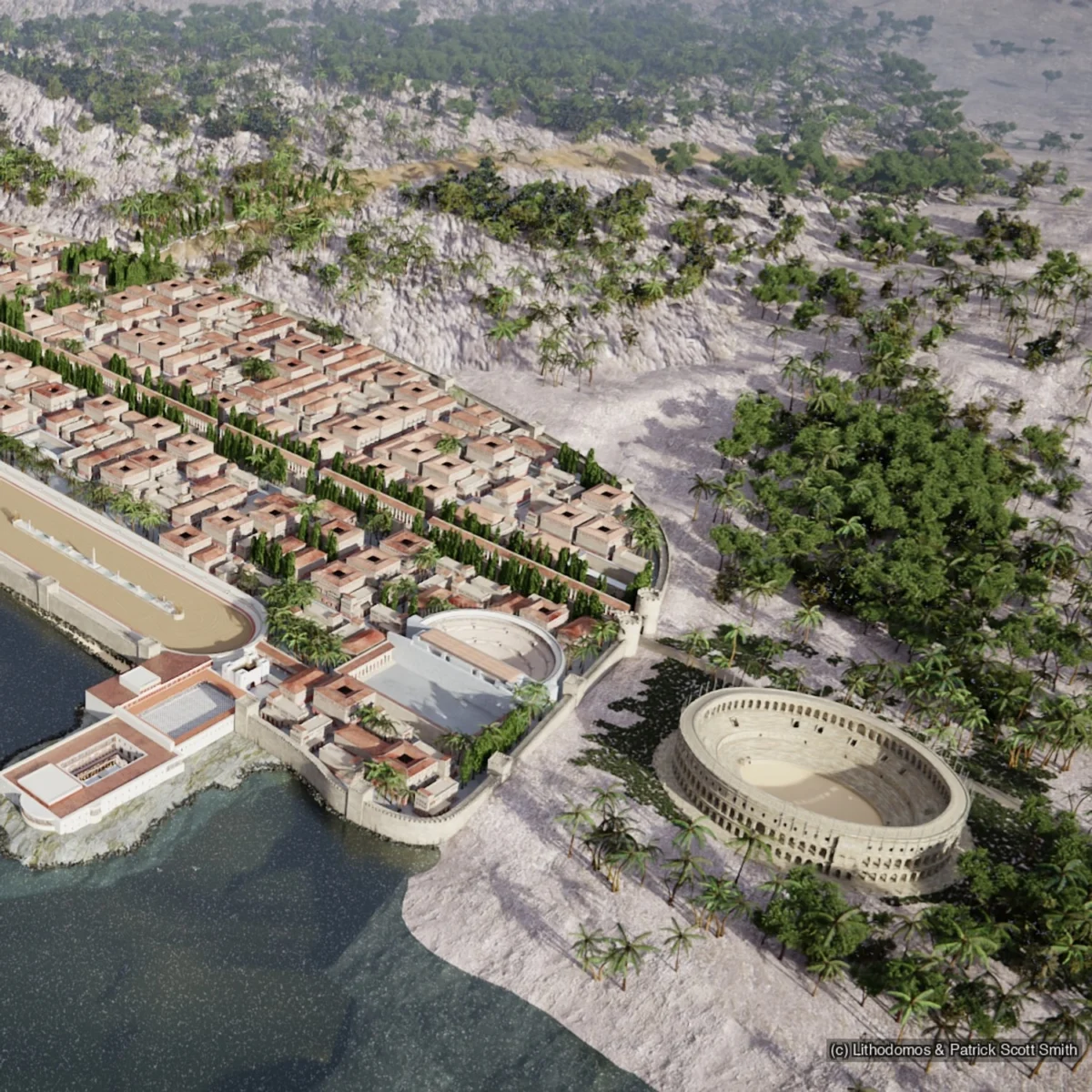
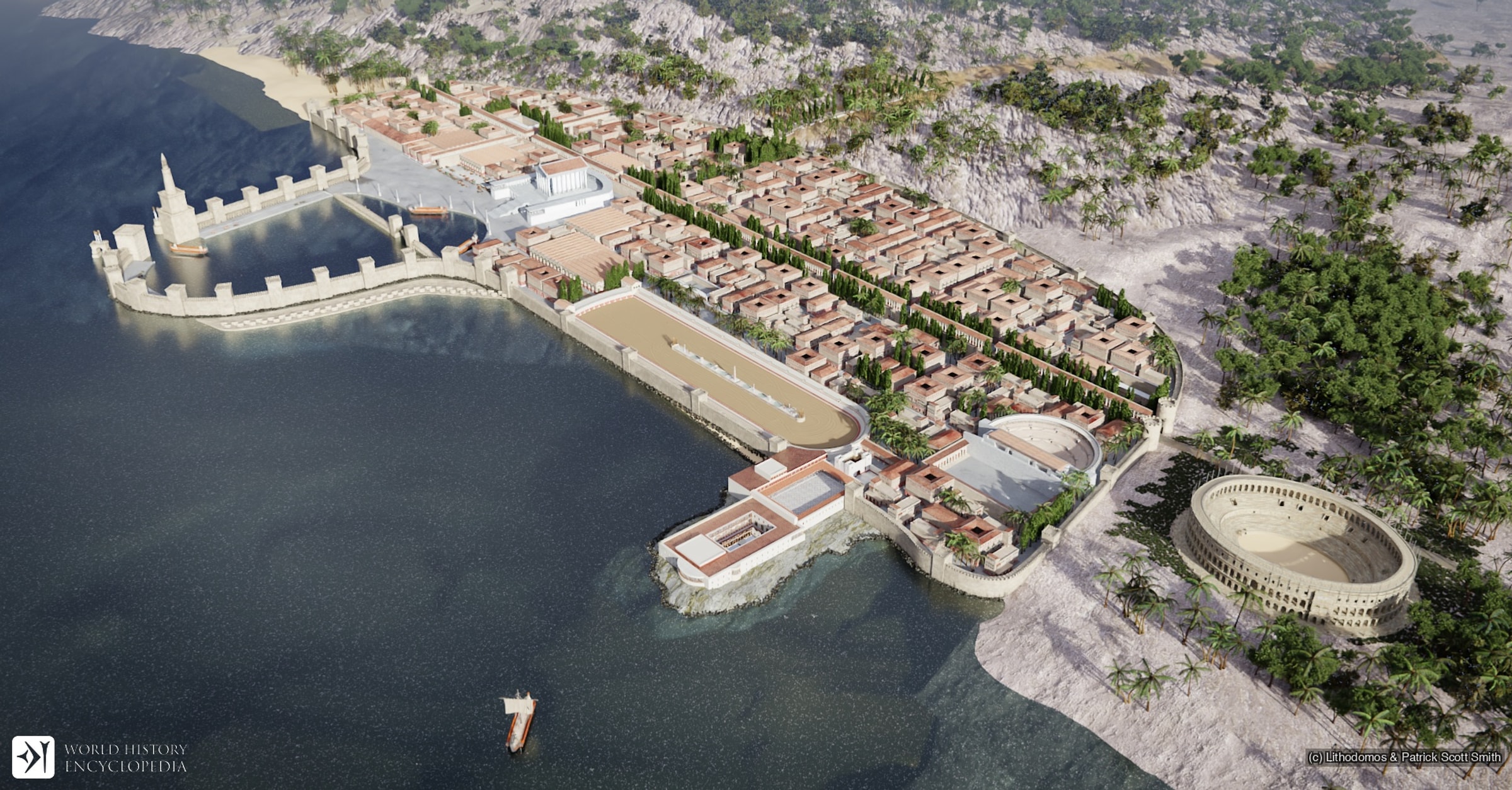
Caesarea Maritima, a city born of ambition and engineering prowess, stands as a testament to the might and strategic vision of the Roman Empire and its client kings. Commissioned by Herod the Great in the latter years of the 1st century BCE, this colossal metropolis rapidly ascended to prominence as one of the most vital trading and military hubs in the Eastern Mediterranean. More than just a port, Caesarea was a meticulously planned urban center, featuring a magnificent harbor, grand temples, opulent palaces, an amphitheater, a theatre, paved streets, and an intricate system of waterworks, all designed to showcase Roman grandeur and facilitate imperial control.
Its strategic location and advanced infrastructure made it an indispensable asset for Rome, serving both as a commercial gateway connecting East and West, and as a formidable military base. The city’s history is inextricably linked with pivotal moments in Roman Judea, witnessing the ebb and flow of imperial power, the suppression of significant revolts, and its eventual transformation into a thriving Byzantine center.
Modern understanding of Caesarea Maritima is significantly enhanced by ongoing archaeological endeavors and cutting-edge digital reconstructions. Collaborations between experts like Lithodomos and Patrick Scott Smith, leveraging extensive archaeological reports, comparative analysis of Roman construction techniques, and invaluable eyewitness accounts from ancient historians like Flavius Josephus, bring this ancient marvel vividly back to life. These reconstructions not only illustrate the physical grandeur of Caesarea but also deepen our appreciation for the sophisticated engineering and urban planning that characterized Roman ambition.
Main Facts: Birth of a Metropolis
Caesarea Maritima, originally named Straton’s Tower, was utterly transformed by Herod the Great, a client king of Rome renowned for his ambitious building projects. Between 22 and 10 BCE, Herod undertook the monumental task of constructing a new city and deep-water harbor, dedicating it to Caesar Augustus. This endeavor was not merely an architectural feat; it was a political statement, a demonstration of Herod’s loyalty to Rome and his commitment to Hellenistic culture and infrastructure.
The city’s cornerstone was "Herod’s Harbor," known as Sebastos (Greek for Augustus), an engineering marvel of its time. This artificial harbor was unlike anything previously conceived, extending into the open sea rather than utilizing a natural inlet. It was protected by two massive breakwaters constructed from hydraulic concrete (pozzolana), a revolutionary material that hardened underwater. This fortress-like harbor could accommodate large fleets, making Caesarea an unparalleled port for trade, facilitating the flow of goods across the Roman Empire, and serving as a strategic naval base for Roman legions.
Beyond the harbor, Herod endowed Caesarea with all the hallmarks of a Roman city designed for prestige and function. A grand temple dedicated to Roma and Augustus overlooked the harbor, signifying the city’s devotion to the imperial cult. Palaces, including Herod’s own magnificent promontory palace, provided lavish residences. Public entertainment venues were abundant, with a vast amphitheater for gladiatorial contests and chariot races, and a sophisticated theatre for dramatic performances, both serving to Romanize the local population and entertain the military garrisons. Paved streets, intricate waterworks including aqueducts bringing fresh water from afar, and an efficient drainage system completed the infrastructure of this burgeoning metropolis. Caesarea Maritima rapidly became a vibrant, cosmopolitan city, a crucible where Roman, Hellenistic, and Jewish cultures intersected, sometimes harmoniously, often with friction.
Chronology: The Evolving Saga of Caesarea
The history of Caesarea Maritima is a compelling narrative spanning centuries, marked by periods of intense construction, political upheaval, economic prosperity, and cultural transformation.
The Herodian Golden Age (c. 22 BCE – 4 BCE)
Herod the Great’s vision for Caesarea began around 22 BCE, culminating in its dedication around 10-9 BCE. His motivation was multifaceted: to establish a major port for his kingdom, to provide a showcase of Roman-style urbanism, and crucially, to curry favor with his Roman patrons, particularly Emperor Augustus. The construction of Sebastos harbor was an engineering marvel, described in detail by Josephus. Massive stone blocks, some weighing hundreds of tons, were lowered into the sea to form the breakwaters, cemented with waterproof concrete. This monumental project employed thousands of laborers and engineers, transforming a barren coastline into a bustling international gateway. During this period, Caesarea functioned as Herod’s administrative capital and a primary economic engine for Judea, facilitating trade routes that connected the Mediterranean world with the interior of the Levant.
Under Roman Procurators (6 CE – 66 CE)
Following Herod’s death and the subsequent division of his kingdom, Judea became a Roman province in 6 CE, governed by a series of procurators. Caesarea Maritima was designated the official administrative capital of the province, housing the Roman governors and their legions. This period saw increased Roman military presence and direct imperial administration. It was here that Pontius Pilate, one of the most famous procurators, had his residence. The city became a focal point for the growing tensions between the Roman authorities, the Hellenistic population, and the Jewish inhabitants, often erupting into violent clashes. Josephus records several instances of such conflicts, highlighting the complex ethnic and religious dynamics within the city.
The Great Jewish Revolt and Roman Retribution (66 CE – 70 CE)
Caesarea played a critical and tragic role in the outbreak and suppression of the Great Jewish Revolt (66-70 CE). Tensions had been simmering for decades, exacerbated by Roman misrule and cultural insensitivity. A dispute between Jews and Greeks in Caesarea in 66 CE over civil rights and religious practices ignited the widespread rebellion. Roman soldiers, primarily garrisoned at Caesarea, responded with brutal force, leading to the massacre of thousands of Jewish residents. The city served as a primary base of operations for the Roman legions led by Vespasian and later his son Titus, as they systematically crushed the revolt across Judea. After the destruction of Jerusalem in 70 CE, Vespasian, now emperor, elevated Caesarea to the status of a Roman colonia, granting its citizens various privileges and further cementing its importance as a loyal Roman city.
Imperial Consolidation and Transformation (70 CE – 4th Century CE)
In the aftermath of the Great Revolt, Caesarea Maritima solidified its position as the premier Roman city in the province. Its strategic importance was reaffirmed during the Bar-Kochba Revolt (132-135 CE). Once this second major Jewish uprising was brutally suppressed, and Jerusalem was largely razed and rebuilt as Aelia Capitolina, the Roman Emperor Hadrian renamed the province from Judea to Syria-Palaestina. This act was a deliberate attempt to erase Jewish ties to the land. Caesarea, already the administrative capital, became the formal seat of the provincial governor, who was now elevated to senatorial rank. During this period, the city continued to prosper, benefiting from imperial patronage and its role as a key commercial and cultural center. New public buildings were constructed, and existing ones were renovated, reflecting the city’s enduring significance.
The Byzantine Zenith (4th Century CE – 7th Century CE)
The 4th century ushered in the Byzantine period, during which Caesarea Maritima reached its demographic and architectural peak. With the Christianization of the Roman Empire under Constantine, Caesarea transformed into a significant Christian center. It became the seat of a metropolitan bishopric and boasted a thriving intellectual life, housing one of the largest libraries in the ancient world, founded by Origen and Pamphilus. The city’s population swelled, with estimates suggesting it exceeded 100,000 residents. This growth necessitated further urban expansion beyond the original Herodian walls. New aqueducts were constructed to meet the increased demand for water, drawing from additional sources. Grand churches and elaborate mosaic floors became common, reflecting the city’s new religious identity. Caesarea was a vibrant hub of scholarship, theology, and commerce, maintaining its status as a critical port.
Decline and Legacy (7th Century CE Onwards)
The prosperity of Byzantine Caesarea began to wane with the rise of Islam. In 640 CE, the city fell to the Arab armies after a prolonged siege, marking the end of Roman-Byzantine rule. While it continued to function as a port under various Islamic dynasties, its importance gradually diminished compared to earlier periods. During the Crusader era (11th-13th centuries), Caesarea experienced a brief resurgence as a fortified Crusader stronghold, with new walls and a cathedral. However, it was ultimately destroyed by the Mamluks in 1265 CE to prevent its reuse by future crusaders, and largely abandoned, fading into obscurity until modern archaeological efforts began to unearth its magnificent past.
Supporting Data: Unearthing Ancient Grandeur
The understanding of Caesarea Maritima’s past is deeply rooted in extensive archaeological research and meticulous historical analysis. Decades of excavations have unearthed a wealth of information, corroborating ancient texts and revealing the sheer scale of Herod’s ambition and Rome’s enduring influence.
Archaeological Discoveries
Since the mid-20th century, numerous archaeological expeditions have systematically excavated Caesarea Maritima. Key discoveries include:
- Herod’s Harbor (Sebastos): Underwater archaeology has confirmed Josephus’s incredible descriptions. Divers have located massive concrete blocks, wooden piles, and structural elements of the breakwaters, revealing the ingenious construction techniques used. The use of pozzolana concrete, a volcanic ash-based cement, allowed structures to harden underwater, a revolutionary innovation for its time. The scale of the harbor, with its inner and outer basins, quays, and warehouses, speaks volumes about its commercial and military capacity.
- The Theatre and Amphitheater: Both structures are remarkably well-preserved. The Roman theatre, one of the oldest in the East, has been partially restored and is still used for performances today. Its elaborate stage building (scaenae frons) and seating arrangements (cavea) offer insights into Roman entertainment and social hierarchy. The hippodrome/amphitheater, capable of seating tens of thousands, hosted chariot races and other public spectacles, further emphasizing the city’s Roman character.
- Herod’s Palace: Excavations have revealed the foundations of Herod’s magnificent promontory palace, built on a natural rock outcrop overlooking the sea. Features like a large freshwater swimming pool and elaborate mosaic floors attest to its luxury and the sophistication of Herodian architecture.
- The Pilate Inscription: Perhaps one of the most significant finds is a dedicatory inscription discovered in 1961, bearing the name of Pontius Pilate, "prefect of Judea." This epigraphic evidence provides the only archaeological confirmation of Pilate’s historical existence and his title, validating historical accounts and placing him firmly within the context of Caesarea’s Roman administration.
- Aqueducts and Waterworks: Multiple aqueducts brought fresh water to Caesarea from springs in the Carmel Mountains, some miles to the north. These multi-tiered structures, visible today, illustrate the Roman commitment to public health and urban infrastructure, essential for sustaining a large population. Later additions during the Byzantine period indicate the city’s continued growth and investment in vital services.
- Byzantine Street Plan and Mosaics: Excavations of the Byzantine city have revealed extensive paved streets, elaborate private homes, and public buildings adorned with stunning mosaic floors depicting geometric patterns, mythological scenes, and Christian symbols, reflecting the city’s prosperity and cultural vibrancy during this era.
Flavius Josephus: An Eyewitness Account
The writings of Flavius Josephus, particularly "The Jewish War" and "Jewish Antiquities," are indispensable primary sources for understanding Caesarea Maritima. As a Jewish historian who lived through the events of the 1st century CE and later worked under Roman patronage, Josephus provided detailed, often eyewitness, descriptions of Herod’s building projects, the city’s political dynamics, and its role in the Jewish revolts. His accounts illuminate the scale of Herod’s harbor, the grandeur of his public buildings, and the multi-ethnic tensions that characterized the city. While sometimes criticized for bias, Josephus’s narratives remain crucial for reconstructing the political, social, and architectural history of Caesarea.
Digital Reconstructions: Bringing the Past to Life
Modern digital reconstructions, such as those collaboratively created by Lithodomos and Patrick Scott Smith, play a pivotal role in making archaeological and historical data accessible and understandable to a wider audience. These sophisticated visualizations are not mere artistic interpretations; they are meticulously crafted based on:
- Comprehensive Archaeological Reports: Integrating data from decades of excavations, including architectural plans, artifact analysis, and stratigraphic evidence.
- Comparative Analysis: Drawing on knowledge of known Roman construction techniques, urban planning principles, and architectural styles observed at other sites like Rome itself, Pompeii, or Herodian fortifications at Jerusalem and Masada.
- Historical Texts: Incorporating specific details and spatial relationships described by ancient authors, most notably Josephus.
By combining these diverse sources, digital reconstructions offer immersive and accurate representations of what Caesarea Maritima would have looked like in its prime. They help researchers test hypotheses, provide invaluable educational tools, and allow contemporary audiences to virtually explore the city’s complex structures, from the colossal harbor to the bustling streets and majestic public buildings, fostering a deeper connection with this lost world.
Official Responses: Roman Imperial Policy and Caesarea
Caesarea Maritima’s existence and development were inextricably linked to Roman imperial policy, serving as a vital instrument for projecting Roman power, culture, and governance in the Eastern Mediterranean. The "official responses" to its strategic value manifested in various decrees, investments, and political decisions that shaped its destiny.
Herod the Great: A Client King’s Ambition
Herod’s decision to build Caesarea was a direct "response" to his position as a client king under Roman suzerainty. He understood that securing his rule and maintaining Roman favor depended on demonstrating loyalty and competence. By dedicating the city to Caesar Augustus and naming its harbor Sebastos, Herod explicitly linked his project to the imperial cult and the Roman emperor. This was more than mere flattery; it was a strategic move to integrate Judea more fully into the Roman economic and political sphere, providing a stable, Roman-friendly port that could facilitate imperial commerce and military logistics. The lavish Roman-style architecture, public works, and entertainment venues were all designed to showcase a Romanized Judea, pleasing his overlords and solidifying his own power.

Vespasian and the Aftermath of Revolt
The Roman imperial "response" to the Great Jewish Revolt profoundly impacted Caesarea. Following the brutal suppression of the rebellion, Emperor Vespasian, who had commanded the legions from Caesarea, elevated the city to the status of a Roman colonia. This was a significant honor, granting its citizens various legal and economic privileges, including tax exemptions and a degree of self-governance. It was a clear reward for Caesarea’s loyalty during the revolt and its continued function as a secure Roman stronghold. This official endorsement cemented Caesarea’s status as a favored imperial city, further strengthening its administrative and military prominence in the region.
Hadrian and the Reshaping of Judea
Emperor Hadrian’s "response" to the Bar-Kochba Revolt (132-135 CE) further solidified Caesarea’s position as the administrative heart of the province. After the second major Jewish rebellion, Hadrian enacted policies aimed at erasing Jewish national identity, most notably renaming Judea to Syria-Palaestina. In this reorganized province, Caesarea became the undisputed official capital. The provincial governor, whose rank was elevated to senatorial status, resided in Caesarea, overseeing Roman administration, justice, and military command from this strategic coastal city. This official recognition underscored Caesarea’s role as the primary locus of Roman authority and a symbol of imperial dominance in the Levant.
Imperial Investment and Patronage
Throughout its Roman and Byzantine periods, Caesarea consistently received imperial investment and patronage. The continuous maintenance and expansion of its infrastructure – from the sophisticated aqueduct systems to the renovation of public buildings – reflect a sustained official commitment to the city. Its role as a key naval base and administrative center meant that imperial funds were regularly allocated to ensure its functionality and grandeur. This ongoing "official response" to its strategic importance allowed Caesarea to thrive for centuries, becoming a model of Roman urbanism and a vibrant hub of imperial power in the East.
Implications: Legacy and Enduring Significance
Caesarea Maritima’s profound impact reverberates through history, offering invaluable insights into Roman engineering, urban planning, political administration, and cultural dynamics. Its legacy continues to inform our understanding of the ancient world in several critical ways.
Economic and Commercial Nexus
As Herod’s colossal harbor, Sebastos, vividly demonstrates, Caesarea was conceived as a premier economic engine. Its strategic position on the Eastern Mediterranean coast made it an unparalleled trading hub, connecting the vast Roman Empire with the lucrative markets of the East. Goods flowed through its port, from grain and textiles to luxury items, enriching the region and facilitating cultural exchange. The city’s economic vitality supported a diverse population and fostered innovations in maritime trade and shipping. Its prosperity underscored the Roman emphasis on interconnectedness and efficient commerce as pillars of imperial stability.
A Crucible of Cultures
Caesarea was a true melting pot. From its Herodian foundation, it was designed to blend Hellenistic and Roman cultures, attracting a diverse population of Jews, Greeks, Syrians, and Romans. This multicultural environment, while often a source of tension, also fostered a vibrant intellectual and religious landscape. In the Byzantine period, Caesarea became a significant center for early Christian scholarship, home to influential figures like Origen and Eusebius, whose work profoundly shaped Christian theology and historiography. The city’s multi-ethnic character and its capacity to integrate various cultural traditions speak to the complex social fabric of the Roman world.
Cornerstone of Roman Power
Politically, Caesarea Maritima was indispensable to Roman control over Judea and the broader Levant. It served as the provincial capital, the seat of the Roman procurators and governors, and a primary base for the Roman legions. Its strategic military value was repeatedly proven during the Jewish revolts, where it functioned as a staging ground for Roman military operations. The city was a tangible symbol of Roman imperial might, demonstrating Rome’s ability to exert authority, maintain order, and project its influence far from the imperial capital. Its enduring presence for centuries under Roman rule highlights its critical role in maintaining the Pax Romana in the East.
Engineering and Urban Planning Innovation
Caesarea stands as an extraordinary example of Roman engineering ingenuity. Herod’s harbor, in particular, was a pioneering feat of hydraulic engineering, utilizing advanced techniques and materials like pozzolana concrete. The city’s well-planned urban layout, with its grid of paved streets, sophisticated water supply through aqueducts, and elaborate public amenities, showcased the best of Roman urbanism. These innovations had lasting implications for subsequent architectural and engineering practices across the empire, demonstrating how challenges of geography could be overcome with sufficient ambition and technological prowess.
Enduring Archaeological and Digital Heritage
Today, Caesarea Maritima remains an active archaeological site, continually yielding new discoveries that enrich our understanding of ancient life. The ongoing work of archaeologists, coupled with advanced digital reconstruction projects like those by Lithodomos and Patrick Scott Smith, ensures that the legacy of Caesarea continues to inspire and educate. These digital efforts are crucial for visualizing the grandeur of the past, making complex historical and architectural data accessible, and preserving the memory of this remarkable city for future generations. Caesarea Maritima, though now in ruins, continues to tell a powerful story of ambition, innovation, conflict, and the enduring impact of one of the ancient world’s most magnificent metropolises.



Leave a Comment