Unearthing Ancient Wisdom: Enki’s Journey to Nippur and the Dawn of Mesopotamian Civilization
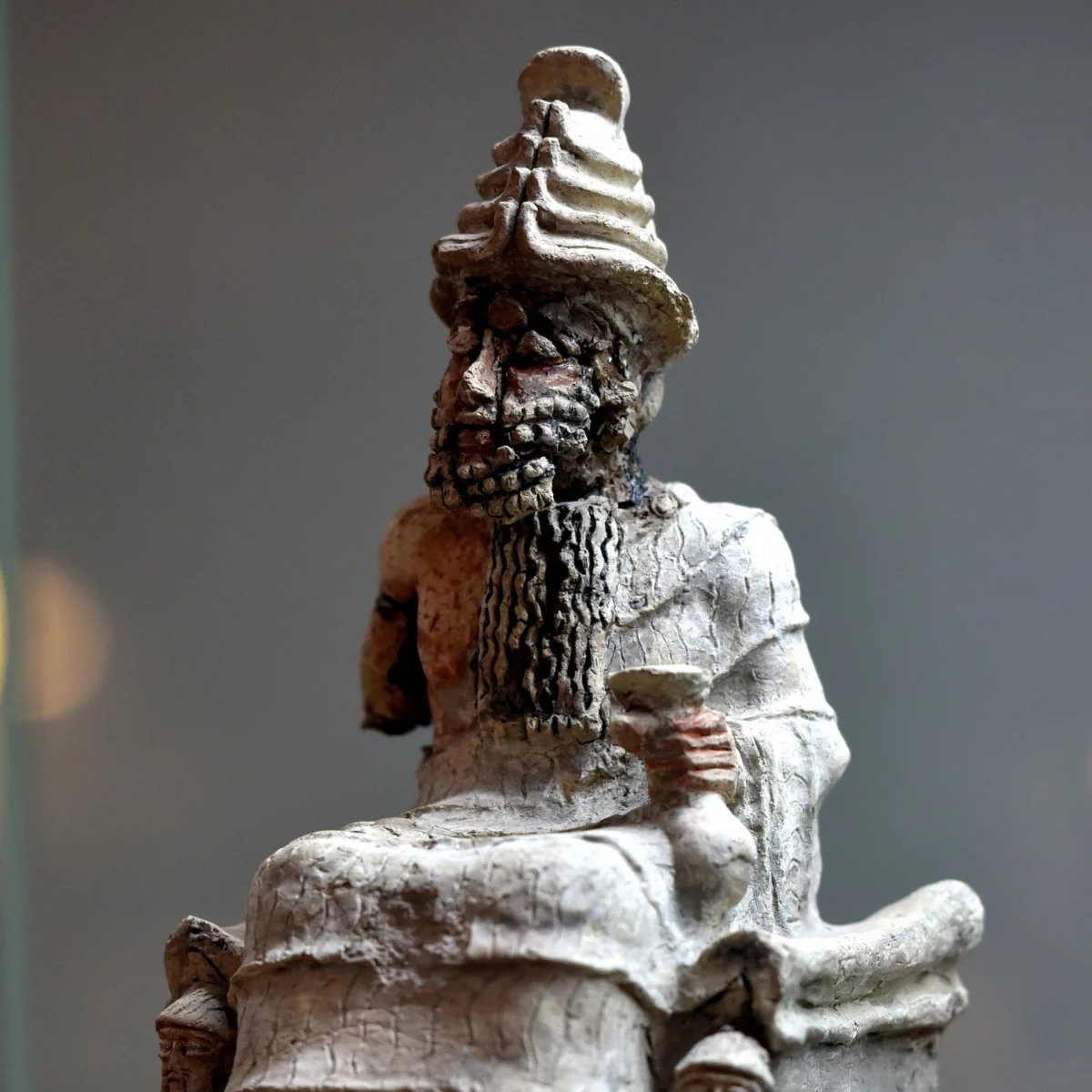
BAGHDAD, IRAQ – From the fertile crescent of ancient Mesopotamia emerges a profound narrative, "Enki’s Journey to Nippur," a Sumerian origin myth dating back to approximately 2000 BCE. This extraordinary poem, a cornerstone of ancient education, offers invaluable insights into the spiritual, architectural, and musical foundations of one of humanity’s earliest civilizations. Discovered through fragments unearthed in the 19th and 20th centuries, this text illuminates the creative power of the god Enki, the reverence for sacred spaces, and the integral role of music and celebration in ancient religious life.
Main Facts: A Divine Blueprint for Culture
"Enki’s Journey to Nippur," also known as "Enki Builds E-engura" or "Enki’s Journey to Nibru," is far more than a simple mythological tale. It serves as a foundational charter myth for the Sumerians, explaining the divine origins of several critical aspects of their society. At its heart, the poem recounts the construction of the E-engura, Enki’s magnificent temple in Eridu, considered by the Sumerians to be the oldest city on Earth and the birthplace of kingship and order.
The narrative details the meticulous creation of this sacred edifice, lavishly adorned with silver and lapis lazuli, rising from the primordial freshwater ocean known as the Abzu – Enki’s primary domain. Beyond architecture, the myth establishes the divine sanction for musical instruments, meticulously crafted by Enki himself, and their essential role in religious festivals. It also legitimizes the consumption of alcohol, particularly beer, in sacred celebrations, portraying the gods themselves engaging in festive drinking.
Crucially, this poem was not merely popular entertainment but a core component of the "Decad," a collection of ten advanced compositions studied in the edubba, the Mesopotamian scribal schools. Its inclusion underscores its perceived educational and cultural value, offering students a complex text that lauded the creative prowess of Enki and reinforced fundamental religious beliefs. The story culminates in Enki’s triumphant journey to Nippur, the sacred city of the supreme god Enlil, where he hosts a grand celebration, receiving blessings for his accomplishments.
Chronology: From Ancient Scrolls to Modern Discovery
The journey of "Enki’s Journey to Nippur" spans millennia, from its oral traditions and eventual inscription to its modern-day reconstruction by archaeologists and linguists.
The Myth’s Genesis: Circa 2000 BCE
The poem itself is dated to roughly 2000 BCE, placing its composition firmly within the Old Babylonian period, a golden age for Sumerian literature and the codification of many myths that had likely existed in oral form for centuries prior. It reflects the sophisticated theological and cosmological understanding of the Sumerians, a people who flourished in Mesopotamia from the 4th millennium BCE, developing innovations such as writing, the wheel, and monumental architecture.

Enki, a prominent deity in the Sumerian pantheon, appears in literature as early as the Early Dynastic III period (2600-2350 BCE). His association with freshwater (the Abzu), wisdom, and creation made him a central figure in numerous myths. The myth’s emphasis on Eridu as the "first city" aligns with archaeological evidence suggesting its early settlement and religious significance, long considered a spiritual capital.
Education in Ancient Mesopotamia: The Edubba Curriculum
For centuries, "Enki’s Journey to Nippur" served a vital pedagogical function within the edubba. Scribes, the intellectual elite of Sumerian society, underwent rigorous training, beginning with elementary texts and progressing to more complex literary works. The "Decad," to which this poem belonged, represented the pinnacle of scribal education, challenging students with intricate language, theological depth, and narrative complexity. Its inclusion in this advanced curriculum highlights not only the literary merit of the text but also its fundamental importance in shaping the worldview of future administrators, priests, and scholars. By copying and memorizing such texts, students internalized the cultural values, religious beliefs, and historical narratives that defined their civilization.
Modern Rediscovery: 19th and 20th Century Excavations
The modern world’s encounter with "Enki’s Journey to Nippur" began in the mid-19th century amidst the burgeoning field of Mesopotamian archaeology. Fragments of the poem were first unearthed in the ruins of Nippur, a major religious and intellectual center in ancient Sumer, located in modern-day Iraq. These initial discoveries provided tantalizing glimpses into the text.
Further crucial pieces of the puzzle emerged in the early 20th century during excavations at Ur, another immensely important Sumerian city. The tablets found at Ur proved instrumental in completing and clarifying the broken texts from Nippur, allowing scholars to reconstruct a more coherent version of the poem. The meticulous work of archaeologists and cuneiform specialists, like Jeremy Black and his colleagues, has been vital in translating and interpreting these ancient writings, bringing the voices of the Sumerians to life once more.
Supporting Data: Unpacking the Myth’s Layers
The rich tapestry of "Enki’s Journey to Nippur" provides a wealth of information about Sumerian theology, social practices, and artistic expressions.
Enki: God of Wisdom, Water, and Creation
Enki (Akkadian: Ea), known also as Nudimmud in the poem, stood as one of the most revered and complex deities in the Mesopotamian pantheon. He was the god of wisdom, intelligence, trickery, crafts, magic, healing, creation, virility, fertility, art, and crucially, freshwater. His primary domain was the Abzu, the subterranean ocean of fresh water upon which the earth was believed to float, and the source of all life-giving rivers and streams. This association with the Abzu underscored his connection to arcane wisdom and life-sustaining power. As scholar Stephen Bertman notes:
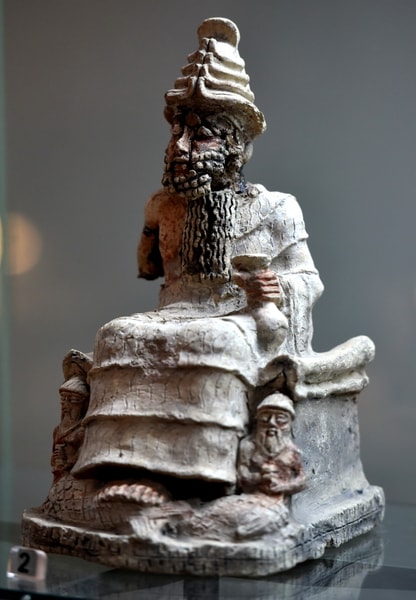
"Enki’s domain was the Abzu (or Absu), an ocean of freshwater upon which the earth floated, and which served as the life-giving source of streams and rivers. Because of water’s secret and potent source, Enki was associated with arcane wisdom, embodied in both skilled crafts and sorcery. He used his cunning to save mankind before the Great Flood, and he was prayed to by those beset by crisis. His holy city was watery Eridu." (118)
As the founder of Eridu, Enki was intrinsically linked to the establishment of order, law, and kingship, making him one of the oldest and most significant gods. Though often depicted as the son of the sky god An, he is sometimes referenced in this poem as the son of Enlil, likely a symbolic acknowledgment of his alignment with Enlil’s cosmic authority.
The E-engura: A Temple Born from the Abzu
The construction of the E-engura temple in Eridu is the poem’s central architectural feat. The description of the temple rising from the Abzu, adorned with silver, lapis lazuli, and gold, speaks volumes about Sumerian aesthetic values and their perception of divine dwellings. The E-engura was not just a building; it was a living entity, its brickwork uttering advice, its eaves roaring like a bull, and its very essence praising its lord. This anthropomorphic portrayal imbues the temple with a spiritual vitality, making it a direct conduit between the human and divine realms. The minister Isimud’s effusive praise, detailing its formidable lock, fearsome bolt, and celestial roof beams, emphasizes its majesty and sacred protection.
The Divine Celebration: Music and Beer in Ritual
A significant aspect of the myth is the detailed account of musical instruments and their role in religious festivals. Enki is credited with creating instruments like the lyre, alijar instrument, balaj drum, harhar, and sabitum, specifically "to offer their best for his holy temple." This divine ordination provides a powerful charter for music in Sumerian worship, establishing its sacred origin and purpose. Scholar Dahlia Shehata elaborates on the religious status of musical instruments:
"The religious status of a musical instrument is apparent through its occurrences in the written evidence, consisting of literary texts, lexical lists, and administrative documents… Further markers are adjectives like ku/kug ‘holy; pure’ or mah, ‘great’; however, such classifiers and attributes are not regularly used. Information on the religious status of a musical instrument is more easily inferred from the context in which it appears, whether it is mentioned in mythology, kept in a temple, or worshipped in ways of regular offerings and tended to through special rituals." (Westenholz et al., 103)
"Enki’s Journey to Nippur" clearly illustrates Shehata’s point, explicitly linking the instruments to temple service and sacrificial offerings. The poem also highlights the role of alcohol in divine celebrations. Enki’s drinking party in Nippur, where he serves beer and liquor to An, Enlil, and the Anuna gods, signifies that beer, considered the "drink of the gods," was a divinely sanctioned element of religious festivals. This portrayal of gods reveling in strong drink justified and explained similar mortal practices, reinforcing the connection between human and divine spheres through shared festive rituals.
The "Creation by Speech" Motif and its Enduring Legacy
The poem subtly hints at the powerful "creation by speech" motif, a common theme in ancient religious literature where deities bring things into existence through the sheer power of their word. While not as explicitly stated as in "Enki and the World Order," where Enki literally speaks the world into being, lines like "What Enki says is irrefutable;…is well established" (line 68) followed by his raising of Eridu, suggest a similar mechanism. This motif is particularly significant for its potential influence on later religious texts, including the first chapter of the Book of Genesis in the Bible, where God creates the world through divine utterance. This cross-cultural resonance underscores the deep-seated human understanding of speech as a potent, formative force.
Official Responses: Reinforcing Sumerian Beliefs and Order
In the context of ancient Sumer, "official responses" are not government press releases but rather the societal mechanisms through which such myths were propagated, interpreted, and integrated into the collective consciousness. "Enki’s Journey to Nippur" served as a powerful tool for reinforcing core Sumerian beliefs and maintaining social cohesion.
A Charter Myth for Legitimization
As a charter myth, the poem provided divine legitimization for critical institutions and practices. It explained why the temple at Eridu was sacred, why music was essential to worship, and why alcohol was part of religious festivities. By tracing these elements back to Enki, a benevolent and wise creator god, the myth instilled trust and reverence in the divine order. This narrative ensured that religious practices were not seen as arbitrary but as direct reflections of divine will and ancient tradition.
Educational and Moral Instruction
The inclusion of the myth in the edubba curriculum indicates its role in moral and intellectual instruction. Scribes learned not only the narrative but also its underlying theological principles, the importance of divine blessings, and the proper conduct of worship. The poem’s complex language and narrative structure also honed their literary skills, preparing them for sophisticated textual analysis and composition. Through repeated copying and recitation, the myth’s messages were deeply embedded in the minds of Sumeria’s intellectual leaders, ensuring its enduring influence across generations.
Fostering Cultural Unity
By presenting a shared origin story for their sacred spaces, rituals, and artistic expressions, "Enki’s Journey to Nippur" contributed significantly to cultural unity among the disparate city-states of Sumer. It provided a common narrative framework that transcended local variations, fostering a sense of shared heritage and divine favor. The celebration at Nippur, involving many prominent gods, symbolizes a unified divine endorsement, mirroring the aspiration for unity within the human realm.
Implications: Echoes of Antiquity in Modern Scholarship
The enduring significance of "Enki’s Journey to Nippur" extends far beyond its ancient context, offering profound implications for contemporary scholarship across multiple disciplines.
Understanding Sumerian Cosmology and Theology
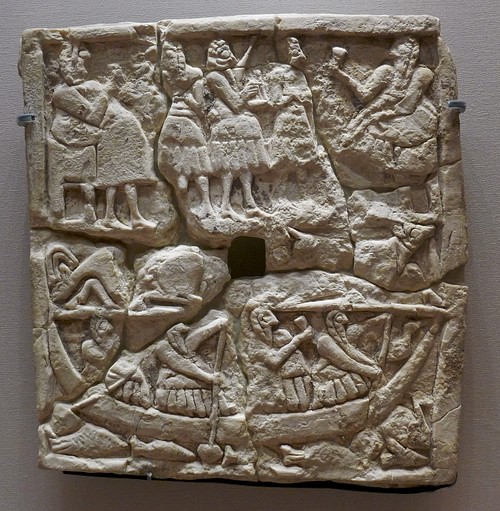
For Assyriologists and historians of religion, the poem is a vital primary source for understanding Sumerian cosmology and the specific attributes of its deities. It provides detailed insights into Enki’s character, his creative methods, and his relationship with other gods like Enlil and An. The description of the Abzu and the E-engura enriches our understanding of Sumerian sacred geography and architectural symbolism.
Insights into Ancient Education and Literacy
The fact that this poem was part of the advanced edubba curriculum offers invaluable data for the study of ancient education. It helps scholars reconstruct the syllabus of Sumerian scribal schools, assess the level of literary sophistication expected of students, and understand the pedagogical methods employed. It underscores the high value placed on literacy and the transmission of cultural knowledge in ancient Mesopotamia.
The Evolution of Religious Motifs
The "creation by speech" motif within "Enki’s Journey to Nippur" and "Enki and the World Order" provides crucial comparative material for the study of religious evolution. Its parallels with later traditions, particularly the Book of Genesis, highlight the continuity and transformation of foundational narratives across different cultures and eras. This allows scholars to trace the intellectual and theological pathways that shaped subsequent religious thought in the Near East and beyond. While Samuel Noah Kramer critiqued the Sumerians’ "superficial notions" about origins, stating, "Nowhere is there an attempt to get at the fundamental origins of either the natural or cultural processes; all are ascribed to Enki’s creative efforts usually by merely stating what amounts to ‘Enki did it’" (122), this perspective might overlook the ancient audience’s primary concern. For them, divine agency was a sufficient and comforting explanation, fostering trust in their gods and the established cosmic order.
Contributions to the Study of Ancient Music and Ritual
The detailed references to specific musical instruments and their divine creation are a goldmine for ethnomusicologists and archaeologists studying ancient music. The poem helps contextualize archaeological finds of instruments and informs our understanding of their function, symbolic meaning, and performance practices in Sumerian festivals. Similarly, the depiction of divine drinking parties enriches our knowledge of ritual practices, the social function of alcohol, and the festive aspects of ancient worship.
The Ongoing Work of Archaeological and Textual Reconstruction
The story of the poem’s discovery—fragments from Nippur complemented by finds from Ur—serves as a testament to the painstaking work of archaeology and epigraphy. It underscores the collaborative and cumulative nature of scholarship in reconstructing ancient texts, often from broken pieces. This ongoing effort continues to bring lost voices and narratives back into the global consciousness, enriching humanity’s understanding of its shared past.
"Enki’s Journey to Nippur" remains a vibrant window into the mind and heart of ancient Sumer. It speaks of a civilization that meticulously crafted not only monumental temples and intricate musical instruments but also profound narratives that explained their world, legitimized their practices, and instilled a deep, abiding faith in their gods. Its legacy, painstakingly recovered from the sands of time, continues to resonate, offering timeless insights into the human quest for meaning and order.