Cinema 4D Embraces AI: Maxon Integrates Third-Party Chatbots to Streamline 3D Workflows
The landscape of 3D creation is undergoing a significant transformation as artificial intelligence increasingly becomes a powerful ally for artists and designers. Following Adobe’s proactive integration of AI assistants into its creative suite, Maxon has taken a pivotal step by introducing native support for leading third-party chatbots within its industry-standard 3D software, Cinema 4D. This groundbreaking move promises to revolutionize workflows by empowering users to harness the capabilities of AI models like Claude, ChatGPT, and Codex to automate complex and time-consuming tasks, thereby enhancing creative efficiency and reducing repetitive manual processes.
The Dawn of AI-Assisted 3D Creation
The integration of AI into creative software is no longer a distant future; it’s a present reality. Adobe has already set a precedent by embedding its own AI assistant within Photoshop, allowing users to leverage AI for image manipulation and generation. Now, Maxon is pushing the boundaries further by enabling Cinema 4D users to directly command popular AI chatbots to execute a wide range of operations within their 3D projects. This signifies a paradigm shift, moving beyond proprietary AI solutions to a more open and versatile approach, giving artists the freedom to choose the AI tools that best suit their needs and preferences.
Cinema 4D, long recognized as one of the premier software packages for 3D modeling and animation, is now poised to become even more powerful with this AI integration. By allowing users to communicate with AI assistants using natural language, Maxon is effectively democratizing complex 3D tasks, making them more accessible and less daunting for both seasoned professionals and emerging artists. The goal is clear: to keep creators in their creative flow, minimizing interruptions and maximizing productivity.
A Chronology of AI Integration in Creative Software
The integration of AI into creative software has been a rapidly evolving field, marked by several key milestones:
- Early AI Implementations (Pre-2020): While not always explicitly labeled as AI, early forms of automation and procedural generation in 3D software laid the groundwork for future AI integrations. These included scripting capabilities and algorithmic modeling tools.
- Emergence of Machine Learning in Design (2020-2022): This period saw a surge in research and development of machine learning models for creative applications. Companies began exploring AI for tasks like style transfer, image enhancement, and basic content generation.
- Adobe’s AI Leap (Early 2023): Adobe’s introduction of its AI assistant within Photoshop marked a significant moment, bringing generative AI capabilities directly into a widely used professional design tool. This included features like Generative Fill, which allowed users to add, remove, or expand image content using text prompts.
- Maxon’s Open Approach (Late 2023/Early 2024): Maxon’s decision to embrace third-party AI chatbots represents a new wave of integration. Instead of developing its own proprietary AI assistant from scratch, Maxon has focused on creating a robust framework – the Model Context Protocol (MCP) – that allows seamless communication with existing, powerful AI models. This approach emphasizes user choice and leverages the rapid advancements being made by leading AI developers.
This progression highlights a clear trend: AI is moving from a research curiosity to an indispensable tool within the creative professional’s toolkit. Maxon’s latest move solidifies this trend for the 3D design and animation industry.
Under the Hood: The Model Context Protocol (MCP)
Maxon’s innovative approach doesn’t involve building its own AI assistant. Instead, it has implemented a built-in Model Context Protocol (MCP) server. This server acts as a bridge, allowing Cinema 4D to communicate with popular third-party AI chatbots such as Claude, ChatGPT, and Codex.
H3: Empowering Artists with Natural Language Control
The core of this integration lies in its user-friendly interface. Artists can now provide natural language instructions to their chosen AI assistant directly within Cinema 4D. This eliminates the need for complex scripting or manual manipulation for a multitude of tasks. The aim is to enable artists to articulate their intentions clearly and have the AI translate those intentions into actionable steps within the 3D environment.
H3: Streamlining Repetitive and Iterative Processes
Maxon has identified several key areas where AI assistance can significantly reduce the burden of repetitive, iterative, and procedural manual processes:
- Object Organization: AI can assist in organizing imported objects into consistent and logical hierarchies, a task that can be tedious in complex scenes.
- Object and Material Variations: Generating multiple variations of objects and materials, a common requirement in design and animation, can be automated.
- Multipass Render Preparation: Setting up and managing multipass renders, which involves defining various render layers for post-production, can be streamlined.
- Scene Management: AI can help in organizing and managing complex scenes, ensuring a clean and efficient project structure.
- Basic 3D Operations: Tasks such as basic 3D camera tracking, UV mapping, rigging, and animation can be partially or fully automated, freeing up artists for more complex creative decisions.
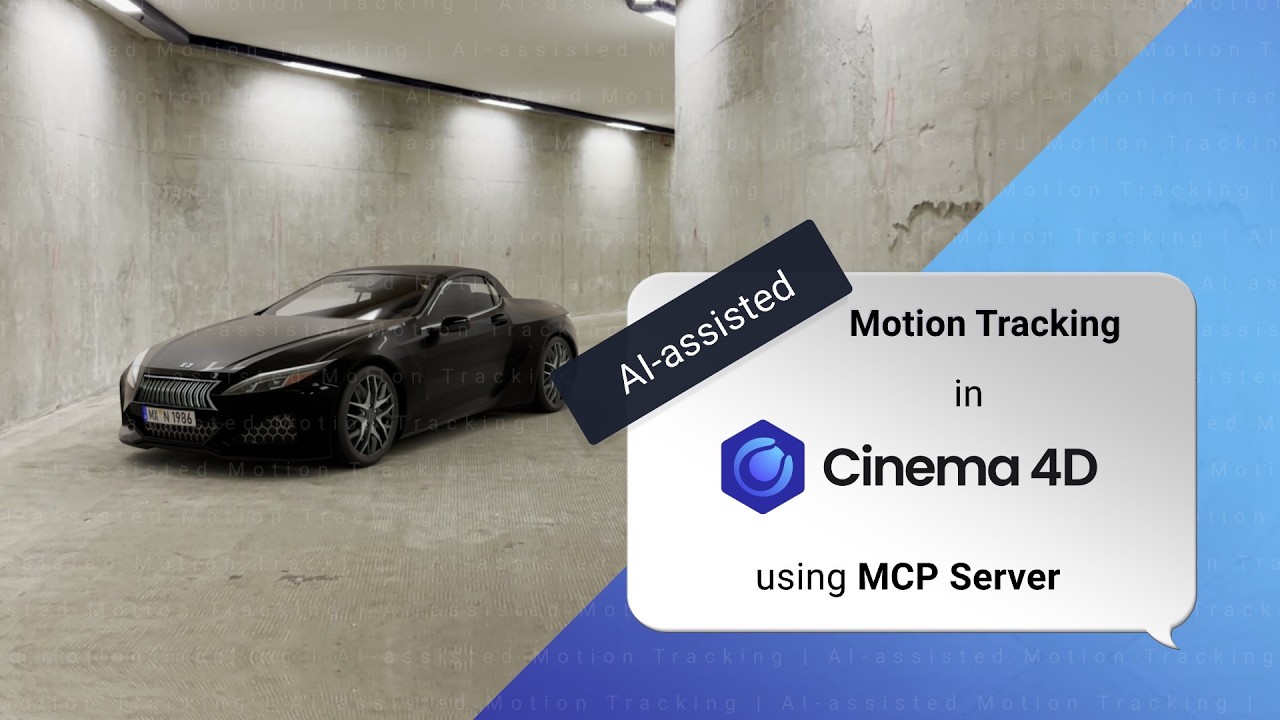
The accompanying videos demonstrate practical applications of this technology, showcasing how AI can be used for motion tracking and automating tasks like creating render queue jobs and building scene variations from CSV data. These examples illustrate the tangible benefits of integrating AI into the 3D workflow, saving valuable time and effort.
Official Responses and Developer Insights
Maxon’s commitment to integrating AI is underscored by their focus on artist control and data integrity. In their announcements, Maxon has emphasized that their approach is designed to keep artists firmly in command of their creative process.
"Every action happens through Cinema 4D’s own tools in the artist’s own scene, running locally on their own computer," a Maxon spokesperson stated. "The results remain native Cinema 4D scene data rather than a flattened generated output, allowing artists to review, refine, undo or iterate on them as they work."
This assurance addresses potential concerns about AI taking over creative control. By ensuring that all operations are performed through Cinema 4D’s native tools and that the output remains editable scene data, Maxon is prioritizing a collaborative relationship between the artist and the AI.
Furthermore, Maxon has implemented robust security and control measures for the MCP. The server is disabled by default, requiring users to actively enable it. An MCP adapter access token protects the server, and artists have the granular control to define which groups of Cinema 4D tools their AI assistant is permitted to access. This layered approach ensures that users can integrate AI into their workflows with confidence and security.
The actions performed by the AI are executed through Cinema 4D’s own Application Programming Interface (API). Crucially, each batch of changes driven by the MCP is meticulously broken down within the undo history, allowing for easy reversal of any AI-generated modifications. Additionally, all commands are logged to a local audit trail, providing complete transparency into the actions taken by the AI assistant. This detailed logging and undo functionality ensures accountability and allows artists to maintain full oversight of their project’s evolution.
This commitment to user control and transparency is a significant differentiator, positioning Maxon’s AI integration as a tool to augment, rather than replace, the artist’s role.
Implications for the Future of 3D Design and Animation
The integration of third-party AI chatbots into Cinema 4D carries profound implications for the future of 3D design and animation:
- Accelerated Production Cycles: The ability to automate repetitive tasks and speed up complex operations will dramatically reduce production times, allowing studios and individual artists to take on more projects and meet tighter deadlines.
- Democratization of Advanced Techniques: Complex techniques like intricate rigging, precise motion tracking, and detailed UV mapping, which often require specialized skills and significant time investment, could become more accessible to a wider range of users.
- Enhanced Creativity and Exploration: By offloading tedious tasks to AI, artists can dedicate more time and mental energy to creative ideation, experimentation, and pushing artistic boundaries. The ability to quickly generate variations and explore different design directions will foster innovation.
- New Skill Sets and Roles: While AI is presented as an augmentation tool, it will also necessitate the development of new skills. Artists will need to become adept at crafting effective prompts, understanding AI capabilities and limitations, and integrating AI-generated results seamlessly into their workflows. New roles focused on AI prompting and workflow optimization may emerge.
- Increased Competition and Innovation: The increased efficiency and accessibility offered by AI-powered tools will likely lead to a more competitive market, encouraging further innovation from software developers and a higher output of creative content.
- The Rise of Open AI Ecosystems: Maxon’s decision to support third-party chatbots mirrors the broader trend in the tech industry towards open ecosystems. This approach fosters collaboration and allows users to benefit from the collective innovation of multiple AI developers. This is further exemplified by Maxon’s previous integration of Tencent’s HY 3D AI engine for 3D model generation.
The release of Cinema 4D 2026.4 and later versions, along with the upcoming Cinema 4D iPad app, signifies Maxon’s strategic investment in this AI-driven future. The MCP connection being available without additional installs further lowers the barrier to entry, encouraging widespread adoption.
As AI continues to evolve, its integration into professional creative software like Cinema 4D will undoubtedly redefine the boundaries of what is possible in 3D creation, ushering in an era of unprecedented efficiency, creativity, and accessibility. The future of 3D artistry is becoming increasingly intelligent, collaborative, and dynamic.