Company of Heroes 3: Final Stand – A Roguelite Reinvention of Tactical Warfare
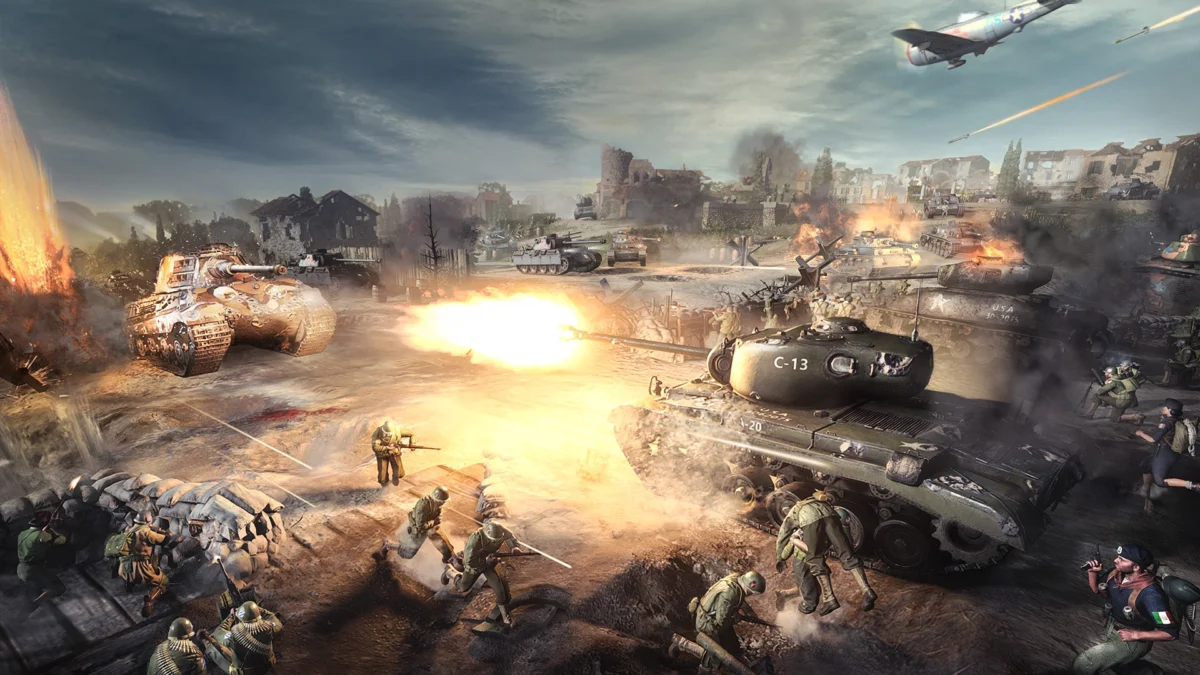
Relic Entertainment’s venerable real-time strategy series, Company of Heroes, has long been lauded for its intricate tactical depth, focusing on cover-based combat and unit suppression within the brutal landscape of World War II. With the release of Company of Heroes 3: Final Stand, the developers have dared to inject a fresh, roguelite twist into this established formula. This standalone expansion eschews the traditional narrative campaigns in favor of a relentless horde mode, challenging players to survive twelve increasingly difficult waves of enemy assaults. The result is a surprisingly compelling reinvention that breathes new life into familiar mechanics, offering a high-stakes, replayable experience that can be both punishing and deeply rewarding.
The Relentless Assault: A Personal Account of Survival
The initial moments of a Final Stand match are characterized by a stark vulnerability. As the British faction, my opening deployment was meager: a few engineers and a slow-moving, six-pounder anti-tank gun. The objective is simple, yet daunting: protect your Headquarters (HQ) at all costs. The game over screen is a stark reminder of this singular focus – a destroyed HQ signals the end of your run.
My first attempt at the twelfth and final wave saw a meticulously planned defense crumble before an overwhelming onslaught of German Tiger tanks. I had positioned my anti-tank guns to exploit a natural choke point – a bridge that would force the enemy armor into a tight cluster, making them vulnerable to concentrated fire. A derailed train on their flank was intended to further restrict their movement, preventing them from easily spreading out before entering my kill zone. This tactical setup was designed to secure victory and earn me valuable perk points, the currency for permanent faction upgrades.
However, the best-laid plans of mice and RTS commanders often go awry. The sudden arrival of the Luftwaffe, an off-map bombing run, was my undoing. Preoccupied with micro-managing my Canadian shock troops, infantry sections, and snipers – units that require the sanctuary of heavy cover to contend with heavy armor – I failed to notice the ominous strafing markers appearing on my minimap. The Messerschmitts made their devastating pass, decimating my vital gun crews before I could even react.
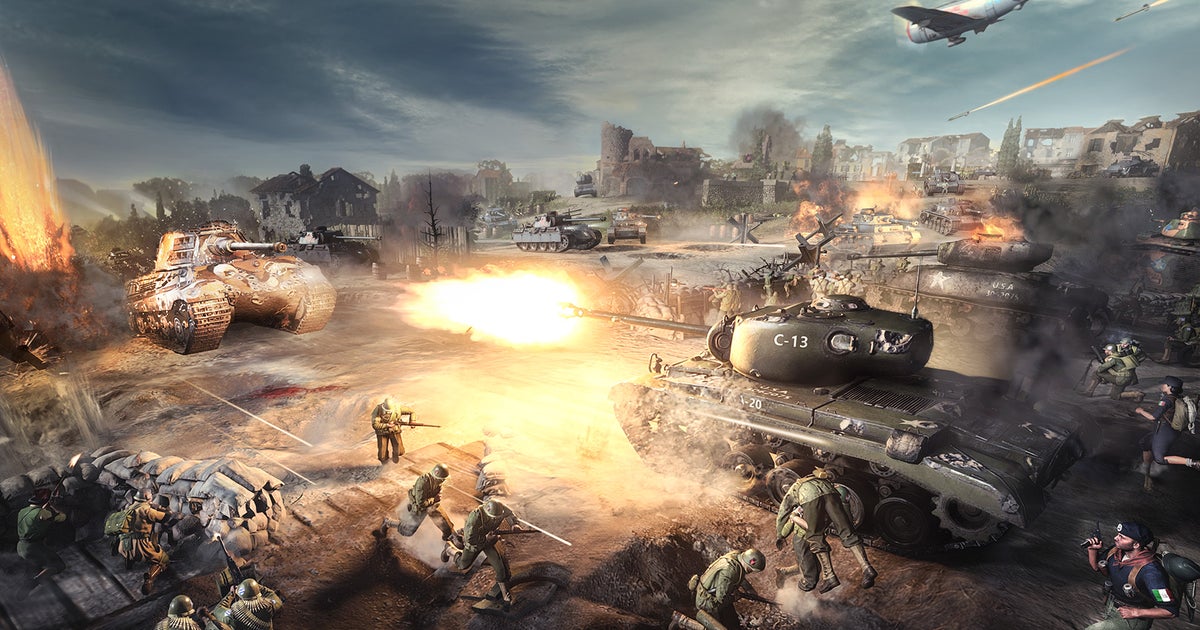
This air raid threw my entire defensive strategy into disarray. As I scrambled to reposition my remaining anti-tank guns, the Wehrmacht forces began their advance from the north. My defensive line was compromised, and by the time the formidable Tiger tanks arrived, they simply rolled through the weakened defenses. With my anti-tank guns neutralized, my infantry, who had wisely taken cover behind sandbags, were now the last line of defense. Their task was clear, albeit nearly impossible: chase down the heavily armored behemoths before they reached my HQ.
My last hope, a freshly built Crusader III Medium Tank from my HQ, proved to be a fleeting comfort. Though a respectable unit, it was no match for the concentrated firepower of multiple Tigers. In mere moments, my Crusader was reduced to a burning wreck. By the time my infantry finally caught up to the tank wave, the game was effectively lost. Their meager firepower barely scratched the thick armor of the Tigers as they systematically blasted my HQ to rubble. My humbling defeat served as a stark reminder: perhaps selecting a lower difficulty level for my inaugural foray into Final Stand would have been a more prudent starting point.
The Roguelite Evolution: Core Mechanics and Replayability
Company of Heroes 3: Final Stand fundamentally shifts the series’ focus from narrative-driven campaigns to a roguelite horde mode. Players select one of four distinct factions – British, Americans, Wehrmacht, or Afrikakorps – and embark on a mission to survive twelve progressively challenging enemy waves. Each game begins with a limited roster of units, forcing players to make critical strategic decisions about which new units, passive upgrades, or active abilities to acquire as they progress. This randomized element ensures that no two playthroughs are ever the same, demanding constant adaptation and strategic flexibility.
The Evolving Battlefield: Unit Selection and Passive Upgrades
The core loop of Final Stand revolves around player choice and its cascading effects on the battlefield. Early waves present a limited selection of units. For the British, this might be engineers and an anti-tank gun, forcing players to rely on clever positioning and defensive structures. As the game progresses, players are presented with choices: two new unit types, two passive upgrades, or two active abilities. This "card draw" system dictates the direction of your forces and how they perform.

In one memorable playthrough, I opted for a 30cwt LRDG Truck early on. This fast-moving vehicle, armed with a heavy machine gun, proved exceptionally effective at mowing down advancing infantry. In another instance, I focused exclusively on infantry for the initial waves. This battlegroup, while requiring frequent reinforcement, became incredibly resilient. The ability to retreat single surviving soldiers back to HQ to restore their full strength meant that my lines, though often thin, were difficult to break.
Passive upgrades offer more subtle yet equally impactful changes. Buffing vehicle armor, increasing the benefits of cover for infantry, or accelerating engineer repair times can significantly alter the efficacy of your units. These upgrades, when chosen strategically to complement your existing unit composition, can create formidable synergies.
Tactical Reinforcements: Active Abilities and Game-Changing Interventions
Active abilities, on the other hand, can be true battle-winners. A well-timed artillery strike or bombing run can shatter the momentum of an enemy advance, buying precious time to regroup or reposition. The interplay between unit selection and the acquisition of complimentary perks and abilities is crucial for maximizing their impact. Choosing an air-focused upgrade path, for example, can make bombing runs devastatingly effective, while a ground-force focus might prioritize artillery barrages or direct-fire support.
The Unpredictable Foe: Enemy AI and Dynamic Events
A key element of the roguelite experience is the unpredictable nature of the opposition. In Final Stand, the enemy AI is designed to present a dynamic and evolving challenge. While the waves themselves are not specifically designed to counter the player’s every move, they are not entirely random either.

Strategic Waves: The AI’s Calculated Approach
Lead designer Ross Cockburn explained that the AI attempts to establish trends and favor certain unit types throughout a run. This means that while you might face an onslaught of flamethrower-equipped engineers in one wave, the next could be a combined assault of mortar troops and tanks. This layered approach, as opposed to completely random waves, allows players to identify patterns, formulate strategies, and build a roster that can counter specific threats. This is a deliberate design choice, stemming from Cockburn’s experience with Age of Empires 4‘s roguelike mode, "The Crucible," where pure randomness made it difficult to learn and adapt.
Cascading Chaos: Dynamic Events and Unforeseen Threats
Where the enemy truly embraces chaos is through dynamic events. These are unpredictable occurrences that can dramatically shift the tide of battle. The Luftwaffe strafing run that decimated my gun crews is a prime example. Other dynamic events include phosphorus airdrops that can ignite entrenched infantry, or waves of exploding Goliath Demolition Vehicles.
Game director Eric Wrobel highlighted the deliberate inclusion of this "random craziness." While a specific event might occur multiple times in a row, it adds an element of thrilling unpredictability. However, Cockburn emphasized that the intention is not for the AI to be a direct counter, but rather for the player to be the one adapting to a less predictable opponent. The systems are designed so that once the AI commits to a particular set of abilities or unit types, it sticks with them for a period, allowing players to identify the threat and adjust their strategy accordingly, rather than constantly facing entirely new challenges with each wave.
The Path to Mastery: Faction Progression and Perk Trees
The roguelite nature of Final Stand is further reinforced by the permanent progression system. Players earn "perk points" through successful matches, which can then be invested in permanent upgrades for each of the four factions. These perk trees offer a wide array of enhancements, from subtle numerical buffs to entirely new functionalities.

The British Arsenal: Invisible Buffs and Tangible Advantages
My initial focus was solely on the British faction, a decision driven by both patriotic inclination and the practical constraint of time. The majority of British perks manifest as invisible stat increases – boosting infantry health, reducing unit training times, or increasing tank turret swivel speed. While these buffs are essential for tackling higher difficulties, they can feel less immediately impactful than tangible gameplay changes.
However, there are perks that significantly alter the battlefield. One such upgrade enhances outposts, crucial defensive structures scattered across the map that generate additional perk points per surviving round. Initially defenseless, these outposts can be equipped with a machine gun nest and a passive self-heal, providing a much-needed layer of defense against encroaching enemies. While not a panacea against a full-scale assault, these upgrades allow even stationary defenses to offer some resistance.
The author expresses a preference for more of these tangible upgrades, arguing that while invisible buffs are necessary to counter the enemy’s own statistical advantages on higher difficulties, they lack the immediate excitement of more impactful gameplay modifications. Beating the top-tier difficulty without any perks is presented as a near-impossible feat, highlighting the importance of this progression system.
The Long Road to Victory: Unlocking Potential
Game director Eric Wrobel noted that their "cream of the crop" players can conquer the highest difficulties with only about 25% of a faction’s perk tree unlocked. However, for the average player, unlocking the entire tree is likely necessary to tackle these formidable challenges. This suggests a significant investment of time and effort is required to fully master each faction and its unique progression path.

A Bold New Direction: Reflections and Future Potential
After approximately seven hours of gameplay with the preview build, the author admits to having only scratched the surface of Final Stand’s offerings. While the formula, despite the variety introduced by randomized rosters and dynamic abilities, might eventually grow stale for some, the author expresses deep enjoyment of the experience thus far.
A Fresh Perspective on Classic Mechanics
Final Stand’s success lies in its ability to imbue the established Company of Heroes mechanics with renewed significance. The series’ long-standing emphasis on cover and suppression finds a new purpose in a mode where every battle is a desperate struggle to hold and then overcome relentless waves of enemies. The need to constantly redeploy troops to new defensive positions, adapting their current loadouts to incoming threats, ensures that no two assaults feel identical.
Even seemingly minor features, like the ability to pick up discarded enemy weapons, are revitalized in Final Stand. A scenario where a player lacks effective anti-infantry weaponry can be salvaged by picking up a fallen enemy’s Flammenwerfer 35, providing a crucial tool for dealing with a sudden influx of close-quarters threats.
An Expandable Future: The Potential for Growth
The developers have clearly designed Final Stand with future expansion in mind. Eric Wrobel confirmed that the mode is "super expandable," with the potential to introduce new bosses, units, and technological advancements. The underlying systems are robust enough to allow for the seamless integration of new content, which can then be randomly served up to players, ensuring ongoing replayability.

While this review focuses on the current state of the game, the potential for growth is undeniable. Even without future additions, Final Stand has succeeded in re-igniting a passion for the Company of Heroes series. It’s a testament to Relic Entertainment’s willingness to innovate, taking a beloved franchise and reimagining it in a way that feels both fresh and familiar. The roguelite twist on tactical warfare has proven to be a compelling gamble, and for fans of the series, Company of Heroes 3: Final Stand offers a challenging and rewarding new battlefield to conquer.