Cultural Tensions and Cinematic Brilliance: An In-Depth Look at ‘The Daughters of Abraham’ at TIFF 2026
The 2026 Toronto International Film Festival (TIFF) has long been a bellwether for the year’s most poignant and socially relevant cinema. Among the crowded slate of high-budget blockbusters and experimental indies, Hanaël El Yousfi’s feature debut, The Daughters of Abraham, has emerged as a significant talking point. Starring Melissa Guers and Ava Baya, the film offers a searing, nuanced exploration of the intersection between modern female identity and the rigid scaffolding of traditional religious expectations.
While the film received a "B" grade from initial critical assessments, its impact on the festival circuit is undeniable. Currently seeking U.S. distribution, The Daughters of Abraham is being hailed as a vital piece of North African and Middle Eastern storytelling that transcends its regional roots to touch upon universal themes of friendship, faith, and the cost of belonging.
Main Facts: A Debut Defined by Nuance and Conflict
The Daughters of Abraham centers on the lives of two young women: Myriam (Melissa Guers), a Muslim, and Eva (Ava Baya), who is Jewish. Set against the vibrant, often contradictory backdrop of Marrakech, the film navigates the complexities of their friendship as they move from the uninhibited freedom of their early twenties into the high-pressure social demands of their thirties.
The film’s title is a direct reference to the shared lineage of Islam and Judaism, signaling a narrative that seeks to find common ground in the "religious DNA" of the two faiths. However, El Yousfi avoids the pitfalls of "message-driven" cinema. Instead of focusing on geopolitical grandstanding, the film examines the "petty cultural differences" and the quiet resentments that simmer beneath the surface of supposedly tolerant families.
Key Production Details:
- Director: Hanaël El Yousfi (Feature Debut)
- Lead Cast: Melissa Guers (Myriam), Ava Baya (Eva)
- Runtime: 93 Minutes
- Cinematography: Noted for its use of amber lighting and rhythmic sequences.
- Festival Debut: Toronto International Film Festival 2026 (TIFF).
Chronology: From Nightclub Euphoria to Marital Mandates
The narrative structure of The Daughters of Abraham is essential to its thematic weight. El Yousfi employs a significant time jump to illustrate how the passage of time can erode individual agency in the face of communal pressure.
The Opening: The Illusion of Freedom
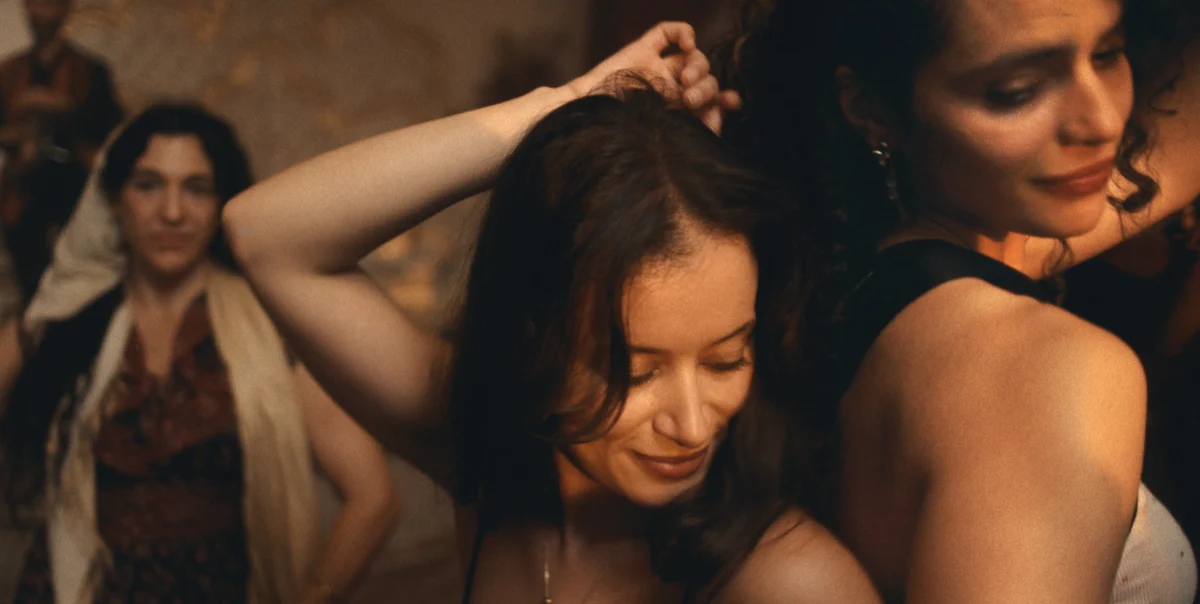
The film opens with a masterclass in atmospheric filmmaking. We are introduced to Myriam and Eva in a lively Marrakech nightclub. The lighting is a warm, intoxicating amber; the music is rhythmic and pervasive. In these opening frames, the two women represent the pinnacle of modern individualism. They drink, flirt, and dance, seemingly untouched by the societal constraints that await them outside the club’s doors.
This sequence establishes the film’s central tension: the "naturalness" of their personal freedom versus the "manmade" difficulty of their daily social lives. A brief encounter with aggressive male behavior in the club serves as an early omen, reminding the audience that even in their most liberated moments, these women must maintain a defensive posture.
The Five-Year Gap
Following the initial introduction, the film jumps forward five years. During this interval, the two friends have drifted apart—a common occurrence as young adults begin to buckle under the differing expectations of their respective families. Myriam and Eva are no longer the "European-style hedonists" of their youth; they are 25-to-30-year-olds facing a "Jane Austen-esque" reality.

The Reconnection: The Wedding
The heart of the film takes place at a large, inter-family wedding. This setting serves as a pressure cooker for the unresolved tensions of the past. It is here that the audience learns of the deeper entanglements between the families: Myriam was once in love with Eva’s brother. The breakup, we learn, was not due to a lack of affection but due to the unspoken, yet ironclad, rule that marriage should remain within the "preferred social circle" of the faith.
The Tragic Turn
The final act of the film shifts from social drama to tragedy. While El Yousfi keeps the specific plot points grounded in realism, the third act reveals the "conservative social values" that both faiths share. The film concludes not with a simple resolution, but with a poignant reflection on the sacrifices required to maintain a connection to one’s community.
Supporting Data: Technical Mastery and Narrative Challenges
While The Daughters of Abraham has been praised for its emotional depth, critics have also pointed to specific technical and structural elements that define the viewing experience.
Cinematography and Atmosphere
The visual language of the film is its strongest asset. The contrast between the "carefree" nightclub scenes and the "rigid" family gatherings is achieved through lighting and framing. In the nightclub, the camera is fluid, capturing the kinetic energy of the dance floor. In the family home, the frames become more static and claustrophobic, reflecting the "manmade social rules" that the characters must navigate.
Performance Analysis
Melissa Guers and Ava Baya have been singled out for their "rich internal lives." Guers, who gained international recognition in The Girl with a Bracelet, brings a stoic intensity to Myriam. Baya provides a perfect foil as Eva, portraying the character’s internal conflict through subtle body language and facial expressions. Their chemistry is the anchor of the film, making the five-year estrangement feel deeply felt.
The Constraint of Runtime
At 93 minutes, the film is lean, perhaps too lean for the story it attempts to tell. Reviewers have noted that the "amount of side characters and interfamily dramas" feels slightly overwhelming for the short duration. Several subplots involving extended family members remain unfinished, leading to a "Grade B" assessment from some critics who felt the film could have benefited from a more expansive runtime to fully flesh out its secondary cast.
Official Responses: Director and Critical Consensus
Following its TIFF premiere, the film has generated a range of responses from the director and the international press.
Hanaël El Yousfi’s Vision
In a post-screening Q&A at TIFF, El Yousfi spoke about her desire to move beyond the "topical" labels often applied to films involving Jewish and Muslim characters.

"I didn’t want to make a movie about geopolitics," El Yousfi stated. "I wanted to make a movie about the frustration of being a woman in a culture that gives you an education and tells you that you are free, but then asks you to return to the 19th century the moment you turn 25. The tragedy isn’t the difference between religions; it’s the similarity of their restrictions."
Critical Reception
The critical consensus has been largely positive, though tempered by the aforementioned pacing issues.
- The Hollywood Reporter described it as "a vibrant, if occasionally cluttered, debut that announces El Yousfi as a major new voice."
- IndieWire highlighted the "sensitive human observation" and the "brilliant title" that encapsulates the film’s religious and social DNA.
- Variety praised the lead performances, noting that Guers and Baya "elevate the material beyond its occasionally soap-operatic tendencies."
Implications: A New Era for Intersectional Storytelling
The release of The Daughters of Abraham carries several broader implications for the film industry and cultural discourse.
1. The "Modern-Traditional" Paradox
The film serves as a sociological study of "arrested development" vs. "cultural limitation." In Western cinema, stories of 20-somethings partying are often framed as a refusal to grow up. El Yousfi reframes this as a desperate attempt to cling to an identity that is about to be erased by traditional marital expectations. This shift in perspective is vital for Western audiences to understand the nuances of modernized traditional cultures.
2. Redefining Interfaith Dialogue
By focusing on "petty cultural differences"—such as missing a party because of a High Holy Day—rather than grand political conflicts, the film offers a more realistic look at interfaith relations. It suggests that the path to tolerance isn’t found in ignoring differences, but in acknowledging the shared human struggle to balance individual desire with family loyalty.
3. The Future of North African Cinema
As a debut feature, The Daughters of Abraham positions Hanaël El Yousfi at the forefront of a new wave of North African filmmakers who are merging high-end European aesthetic sensibilities with deeply rooted local stories. Her ability to capture "silent body language" and "facial expressions" as a means of storytelling suggests a director who trusts her audience’s intelligence.
4. Market Potential
Despite its "B" grade, the film’s topicality and strong lead performances make it a prime candidate for U.S. distribution, particularly among arthouse audiences and streaming platforms like MUBI or Criterion. Its success at TIFF suggests a growing appetite for stories that challenge the monolithic view of religious communities.
In conclusion, The Daughters of Abraham is more than just a story of a friendship. It is a mirror held up to a world where the "natural" desire for freedom is constantly at odds with the "manmade" structures of tradition. While it may struggle with the weight of its own ambitions, its specificity and sensitivity make it a landmark debut that will likely resonate long after the 2026 festival season ends.