Defending the Virtual Net: CleanSheet Soccer 2 Makes its Strategic Debut on Meta Quest
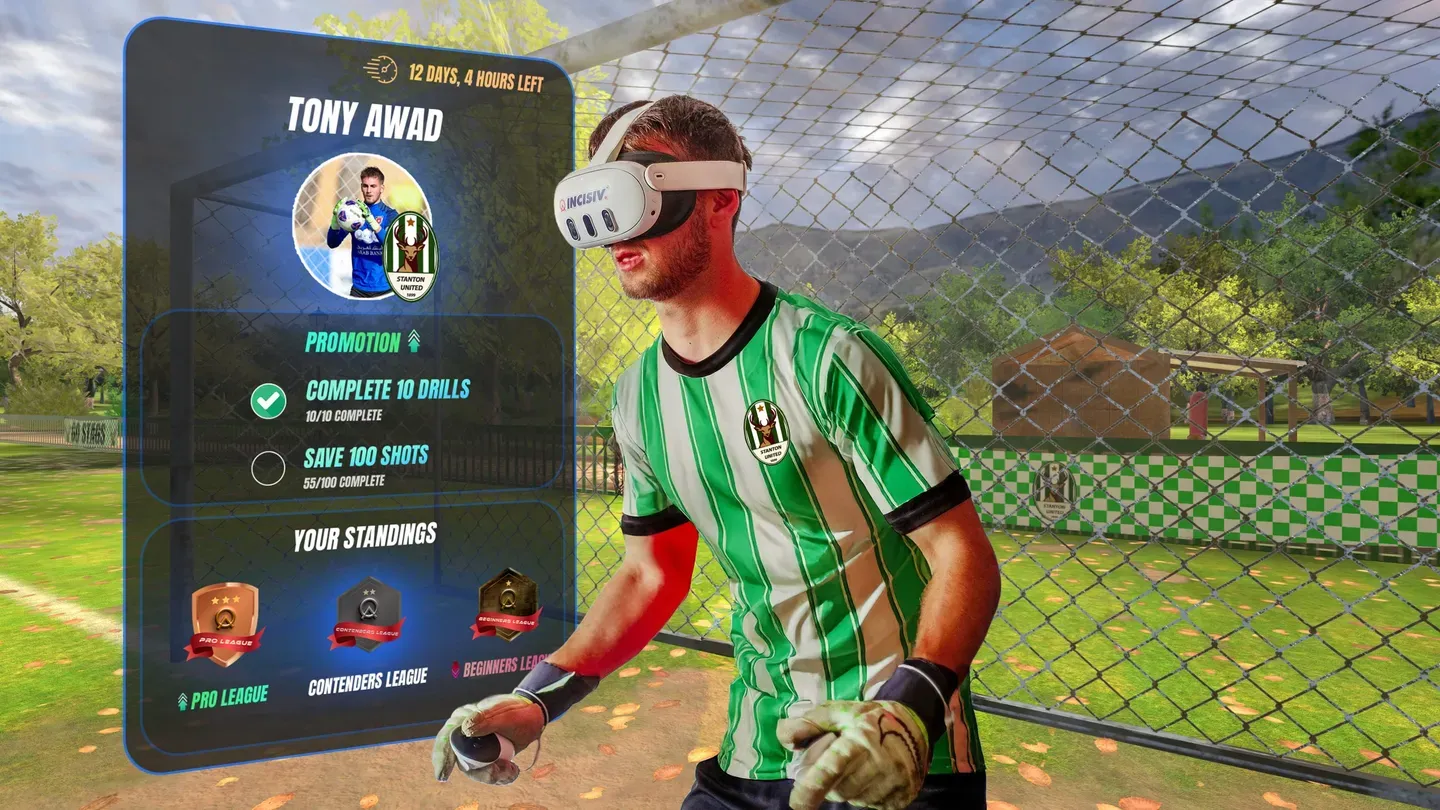
The landscape of virtual reality sports is undergoing a fundamental shift. For years, the medium focused on the "glory shots"—the grand slams in baseball, the touchdown passes in football, and the spectacular goals in soccer. However, a new wave of development is turning the camera 180 degrees, focusing instead on the intense, high-stakes pressure of the defensive line. Leading this charge is Incisiv, a developer known for its focus on cognitive performance and athletic precision. Today marks a significant milestone in this evolution as their flagship title, CleanSheet Soccer 2, officially launches on the Meta Quest platform, bringing its acclaimed goalkeeping simulation to the world’s most popular standalone VR headsets.
Main Facts: The Transition to Standalone VR
Incisiv’s CleanSheet Soccer 2 has transitioned from a high-end tethered experience to the portable freedom of the Meta Quest 2, 3, and Pro. While the game initially garnered critical acclaim upon its release on the PlayStation VR2 (PSVR2) earlier this year, its arrival on the Quest store represents a strategic play for a much larger, more diverse user base.
One of the most striking aspects of this launch is the pricing structure. In a move that has sparked conversation among VR enthusiasts, the Meta Quest version is priced at $24.99. This sits in sharp contrast to the PlayStation VR2 version, which retails for $34.99. This $10 price reduction suggests a tactical approach to the Quest’s more competitive marketplace, where the volume of active users allows for a lower entry barrier.
CleanSheet Soccer 2 is not a traditional soccer game where you control an entire team or even a single outfield player. Instead, it is a dedicated goalkeeping simulator. Players find themselves standing between the sticks, tasked with stopping a barrage of shots using their hands, body, and reflexes. The game utilizes the Quest’s 6DOF (six degrees of freedom) tracking to translate real-world movements into the virtual arena, requiring players to punch, block, catch, and deflect incoming balls with a level of physicality rarely seen in traditional gaming.
Chronology: The Road to the Goal
The journey of CleanSheet Soccer 2 is a testament to the iterative nature of VR development and the growing demand for specialized sports experiences.
The Foundation: CleanSheet (Original)
The franchise began as a more modest project, often referred to as CleanSheet or Goalkeeper VR in its earliest iterations. Developed by Incisiv, a company rooted in sports science and cognitive performance research, the original goal was to create a tool that could actually help goalkeepers train their reaction times and spatial awareness. It found a niche audience on PC VR platforms and early Quest App Lab iterations, proving that there was a hunger for defensive-focused sports content.
The PlayStation VR2 Debut (Early 2024)
Earlier this year, Incisiv released CleanSheet Soccer 2 on the PSVR2. This version took advantage of the PlayStation 5’s processing power, offering enhanced visuals, haptic feedback through the Sense controllers, and eye-tracking capabilities that helped refine the game’s "focus" mechanics. It was met with positive reviews, praised for its "simple idea, executed very well" and its ability to deliver a "surprisingly authentic" experience. However, the tethered nature of the PSVR2 and its higher price point limited the game’s reach to a more hardcore subset of the VR community.
The Meta Quest Launch (Current)
Recognizing that the future of VR sports lies in accessibility and untethered movement, Incisiv spent the middle of 2024 optimizing the title for the Meta Quest. The release today marks the culmination of that optimization effort. By bringing the game to Quest, Incisiv has removed the literal and figurative wires, allowing players to dive and reach for saves without the fear of tripping over a cable—a crucial improvement for a game that demands high-velocity physical movement.
Supporting Data: Mechanics and Technical Specifications
To understand why CleanSheet Soccer 2 has resonated with critics and players alike, one must look at the data-driven design behind its mechanics.
Gameplay Modes and Engagement
The game is structured around three core pillars:
- Training Missions: These are curated scenarios designed to build specific skills, such as dealing with low shots, high lobs, or shots with significant curve (the "Magnus effect").
- Mock Games: These simulate a match environment where the player must maintain concentration over a period of time, facing unpredictable AI strikers.
- Arcade-Style Minigames: These modes, such as "Quickfire," prioritize high-speed reactions and score-chasing, making them ideal for short, intense play sessions and local "pass-and-play" competition.
Physics and Realism
Unlike many VR sports titles that use "canned" animations for the ball, CleanSheet Soccer 2 utilizes a sophisticated physics engine. The ball’s trajectory is influenced by speed, spin, and even simulated wind conditions. This means that a save isn’t just a binary "hit or miss" interaction; the angle of the player’s hand and the timing of the "punch" determine where the ball ends up after the save. This level of granularity is what led reviewers to label the game as "authentic."
Performance Optimization
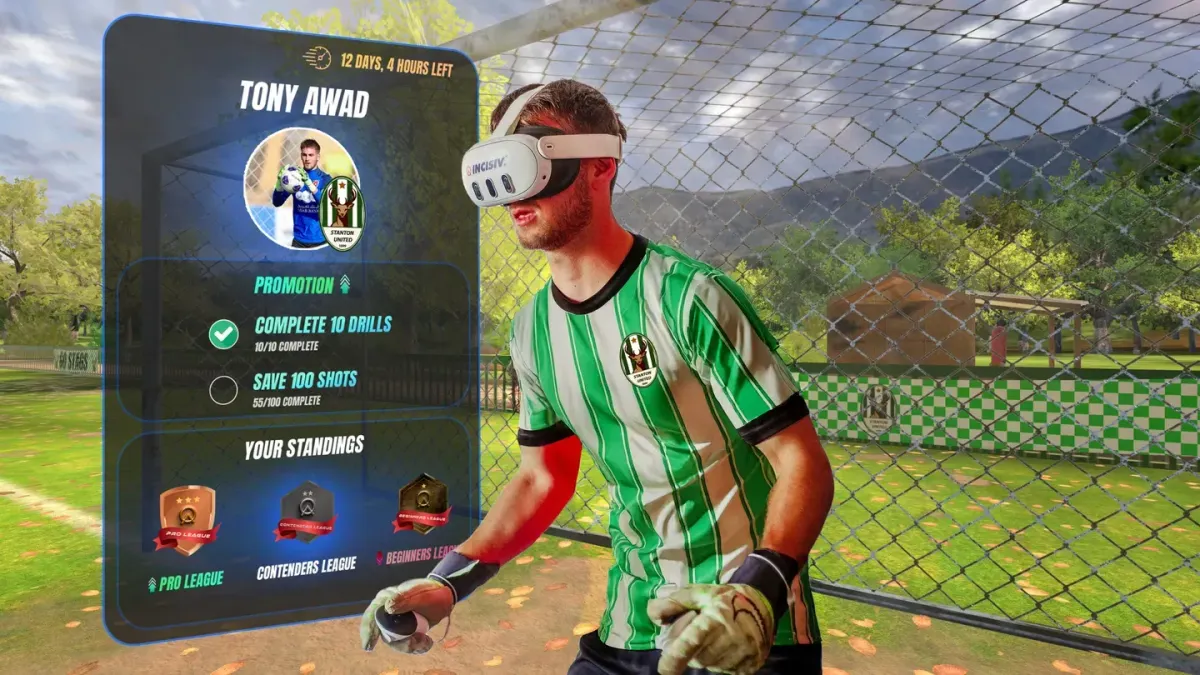
Bringing a physics-heavy, high-frame-rate game to the mobile chipset of the Quest 3 and Quest 2 required significant technical adjustments. While the PSVR2 version benefits from foveated rendering and high-resolution textures, the Quest version focuses on maintaining a rock-solid 72Hz or 90Hz refresh rate. In VR, any drop in frame rate can lead to motion sickness and, more importantly for a sports game, a breakdown in the "presence" required to time a save correctly. Incisiv has reportedly optimized the shader models and physics calculations to ensure that the gameplay remains fluid on the standalone hardware.
Official Responses and Developer Philosophy
While Incisiv has not released a formal "press release" for the Quest launch today beyond the store listing and social media announcements, their previous statements and company profile provide a clear picture of their objectives.
Incisiv is not a typical gaming studio. Based in Belfast, Northern Ireland, the company was founded by experts in movement science. Their philosophy is built on the concept that "VR is the ultimate lab for the brain." In previous interviews regarding the PSVR2 launch, the development team emphasized that they didn’t want to make a game that just looked like soccer; they wanted to make a game that felt like the cognitive load of a real goalkeeper.
"Goalkeeping is about 10% physical and 90% decision-making under pressure," a representative from Incisiv noted during a previous technical showcase. "By using VR, we can replicate the visual cues a keeper sees—the striker’s body shape, the foot-to-ball contact point—and force the player’s brain to process that information in milliseconds."
The decision to lower the price on the Quest platform can be interpreted as an "official response" to the market’s current state. By pricing the game at $24.99, Incisiv is positioning CleanSheet Soccer 2 as a premium but accessible "active" game, competing with titles like Thrill of the Fight or Eleven Table Tennis rather than $60 AAA blockbusters.
Implications: The Future of Active VR and Sports Training
The release of CleanSheet Soccer 2 on Meta Quest has broader implications for the VR industry and the world of athletic training.
VR as a Fitness Platform
The Quest has increasingly become a "fitness first" device. CleanSheet Soccer 2 fits perfectly into this ecosystem. Goalkeeping in VR is an intense cardiovascular workout. It requires lateral movement, squats, and rapid arm extensions. As the Quest 3 continues to push Mixed Reality (MR) capabilities, the potential for a "Passthrough Mode" in future updates of CleanSheet could allow players to see their actual living room while they play, significantly reducing the risk of hitting furniture during a particularly dramatic save.
The Democratization of Professional Training
Historically, high-end sports simulators were the province of professional clubs with million-dollar budgets. By bringing a scientifically grounded simulator to a $299 or $499 consumer headset, Incisiv is democratizing professional-grade training. Aspiring young goalkeepers can now practice their positioning and reaction times in their bedrooms, getting thousands of "reps" without the physical wear and tear of a muddy pitch or the risk of injury from a high-velocity leather ball.
Pricing Pressure and Platform Parity
The $10 price gap between the PSVR2 and Quest versions highlights an ongoing tension in the VR market. As developers seek to recoup the costs of high-end development on the relatively smaller PSVR2 user base, they often charge a premium. However, the Quest’s massive install base allows for a "high volume, lower price" strategy. This may lead to increased pressure on Sony to incentivize developers or on developers to find a more uniform pricing model to avoid alienating portions of their audience.
Conclusion
CleanSheet Soccer 2 is more than just a game; it is a refined tool that sits at the intersection of entertainment, fitness, and athletic training. Its arrival on the Meta Quest today represents a significant "win" for the platform, providing users with a deep, physically engaging experience that justifies the hardware’s existence.
For the player, the proposition is simple: for $24.99, they can step into the shoes of a professional goalkeeper, facing down the world’s best strikers from the safety of their living room. Whether used as a high-intensity workout, a legitimate training aid, or simply an arcade thrill, CleanSheet Soccer 2 proves that sometimes, the most exciting part of the game is the one where nobody scores. As the VR market continues to mature, it is specialized, high-quality experiences like this that will define the medium’s long-term success.