Digital Voyeurism and 90s Nostalgia: An In-Depth Analysis of ‘Murder Meets Cute’
The landscape of indie narrative adventures is undergoing a stylistic renaissance, moving away from traditional pixel art toward more experimental, genre-blending aesthetics. One of the most striking examples of this trend is Murder Meets Cute, a title that recently garnered significant attention at the AdventureX expo and the Horror Game Awards Showcase 2026. Combining the tactile satisfaction of hardware repair with the unsettling thrill of digital voyeurism, Murder Meets Cute transports players to the early 1990s—a period of transition where the analog world began its slow, inevitable merge with the digital frontier.
Main Facts: A Goth Narrative in a Pre-Digital Age
Murder Meets Cute is a narrative-driven adventure game that places players in the combat boots of a goth protagonist who has eschewed the traditional path of higher education. Instead of attending college, the player character spends their nights working at a local computer repair shop, navigating the nascent internet of the early 90s, and maintaining a social life through burgeoning chat protocols.
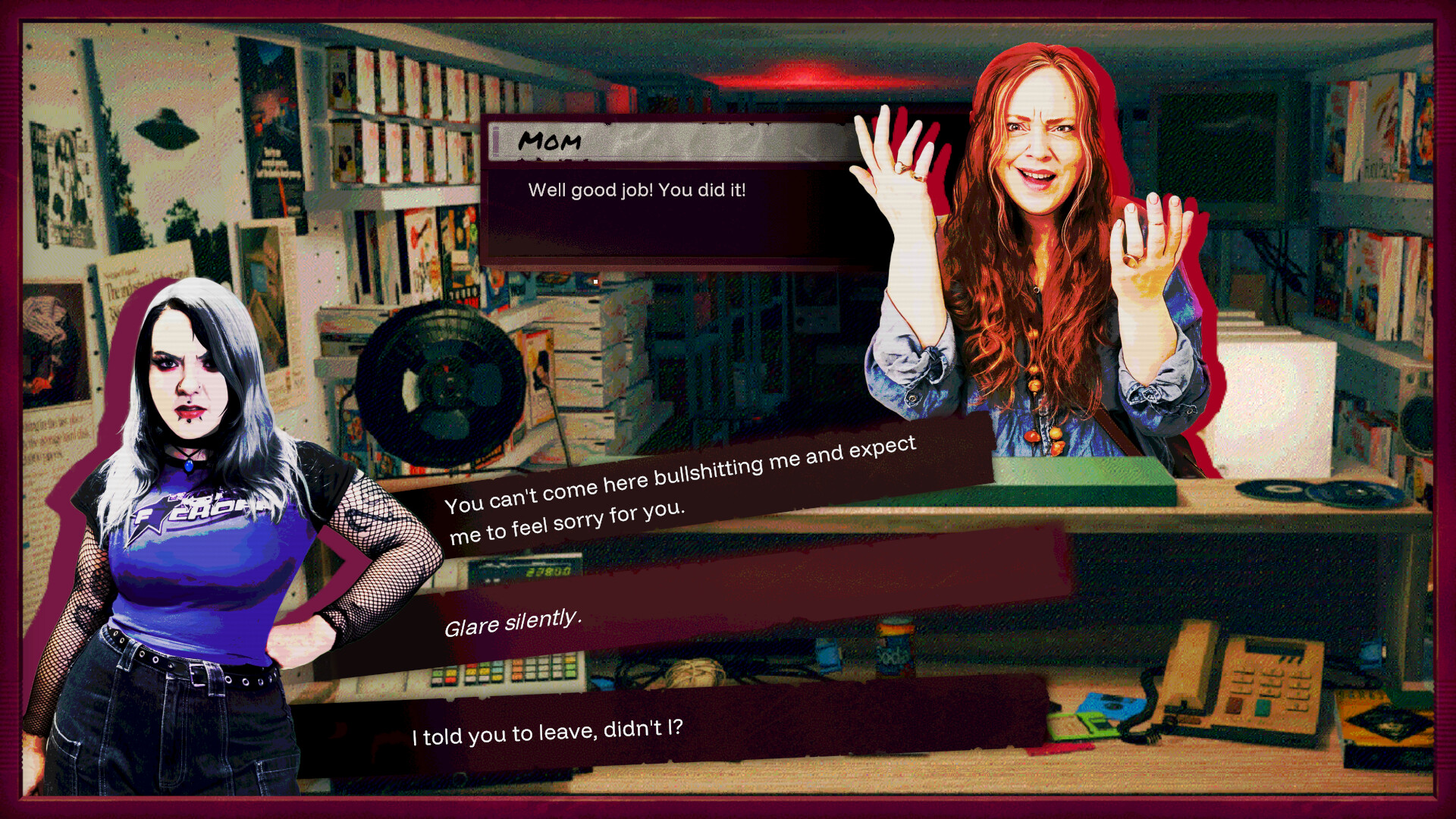
The game’s primary hook is its unique visual identity. Rather than utilizing hand-drawn sprites or 3D models, the developers have opted for a "digitized realism" approach. Characters are created by taking high-resolution photographs of real-life actors, which are then processed with vibrant color palettes and stylized backgrounds. This technique evokes the FMV (Full Motion Video) era of the 1990s while maintaining a modern, expressive quality.
The core gameplay loop is divided into three distinct pillars:
- Social Simulation: Interacting with friends and family via "Jabber" and gritty web forums.
- Labor Simulation: Fixing customer hardware using logic-based Picross puzzles.
- Investigative Exploration: Prying into the personal files, diaries, and photographs stored on the computers brought in for repair to solve a local mystery.
As the title suggests, the "Cute" aesthetic of the protagonist’s subculture stands in sharp contrast to the "Murder" occurring in the background. The town is currently plagued by a series of kidnappings and homicides, a plot point that escalates from a distant news report to a personal crisis when a close friend of the protagonist goes missing.
Chronology: The Anatomy of a Workday in 1994
The narrative of Murder Meets Cute unfolds through a structured daily cycle, meticulously designed to immerse the player in the specific rhythm of 1990s life.
The Evening Ritual
Each day begins not with the sunrise, but in the middle of the evening. This immediately establishes the protagonist’s "night owl" lifestyle, common among the goth subculture of the era. The first point of contact with the outside world is the radio. These broadcasts serve as a narrative anchor, providing updates on the string of kidnappings that have gripped the community. This "slow-burn" world-building ensures that the threat feels omnipresent even when the player is in the safety of their bedroom.
The Digital Social Sphere
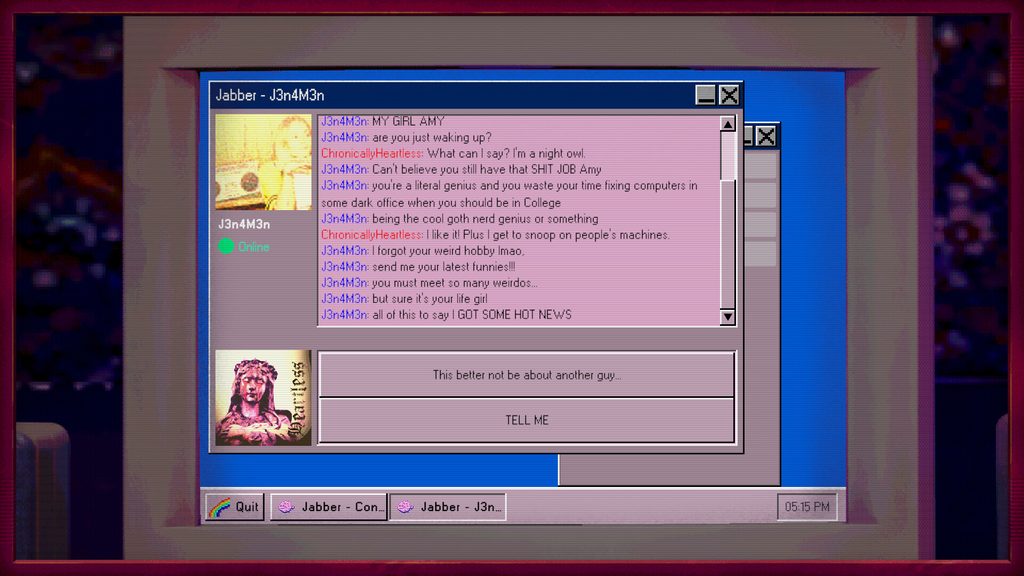
Before heading to work, players interact with their computer. The game features a simulated operating system that includes a web-forum and a chat client based on Jabber. This phase allows players to check in with their sister or chat with friends. The dialogue choices made here are reflected in the character portraits, which change expressions dynamically based on the tone of the conversation. These interactions are crucial for establishing the stakes; when a friend eventually goes missing, the player has already built a genuine rapport with them through these digital exchanges.
The Repair Shop and the Picross Interface
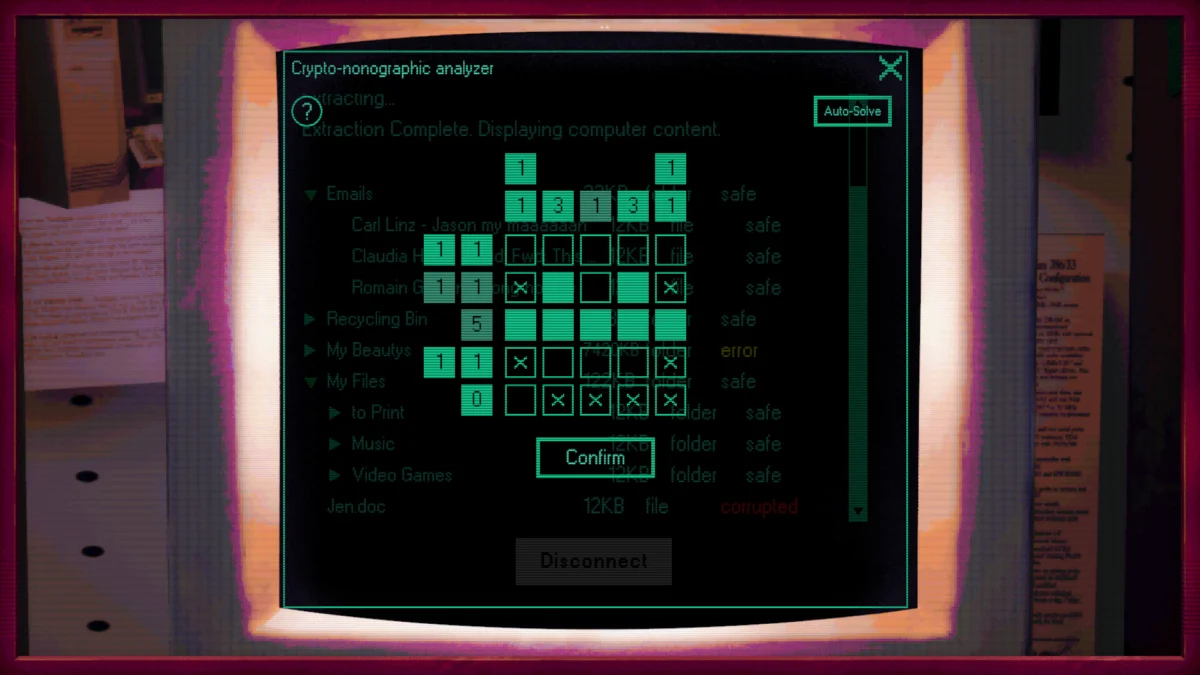
The transition to the workplace introduces the game’s primary mechanical challenge. Customers enter the shop with various hardware issues, providing snippets of local lore and character development as they drop off their machines. The actual act of "fixing" a computer is handled through a Picross-inspired puzzle system. While traditional Picross can be daunting for newcomers, Murder Meets Cute implements a more accessible version of the logic puzzle, offering subtle hints and a smoother learning curve to ensure that the narrative flow isn’t halted by mechanical frustration.
Digital Archeology and the Investigation
Once a computer is "fixed," the player has the option to go beyond the call of duty—or the bounds of ethics. Players can explore the file directories of their customers. This involves looking through private photo galleries, reading chat logs, and uncovering hidden diary entries. This "digital archeology" is where the player finds clues regarding the ongoing murders, turning a routine job into a high-stakes investigation.
Supporting Data: Technical Aesthetic and Mechanical Innovation
The strength of Murder Meets Cute lies in its commitment to its specific time period, both in terms of technology and social atmosphere.
The Digitized Character System
The use of real-life photography for character sprites is a deliberate stylistic choice that bridges the "uncanny valley." By capturing real human emotions—squints, smirks, and frowns—the developers have created a cast that feels more grounded than traditional 2D avatars. This realism heightens the impact of the horror elements; seeing a "real" person’s expression of fear is often more evocative than a drawn representation.
Logic as a Narrative Tool
The decision to use Picross as a stand-in for circuit board repair is a notable design choice. In many adventure games, "fixing" items is relegated to a simple inventory fetch-quest. By turning it into a logic puzzle, the game simulates the mental labor of a repair technician. Data from the demo suggests that the puzzle difficulty is scaled to mirror the complexity of the computer being repaired, with older "clunker" PCs having simpler grids than high-end machines.
Interface Fidelity
The UI design of the in-game computer is a love letter to early GUIs (Graphical User Interfaces). The "gritty" feel of the web forums, the specific clack of the mechanical keyboard sound effects, and the lag of the dial-up simulation all contribute to a sense of "tactile nostalgia." This level of detail is essential for a game where the player spends roughly 50% of their time looking at a simulated screen.
Official Responses: From AdventureX to the Global Stage
The reception of Murder Meets Cute at industry events has been overwhelmingly positive. During its showcase at AdventureX, an expo dedicated to narrative-driven gaming, critics pointed to the game’s "atmosphere of cozy dread" as its standout feature.
In a statement following the Horror Game Awards Showcase 2026, the development team emphasized that the game is not just about the mystery, but about the specific isolation of the pre-smartphone era. "We wanted to capture that feeling of being connected to the world through a 14.4k modem, where you knew people through text before you knew them through their faces," the developers noted.
The official gameplay trailer released during the showcase highlighted the contrast between the vibrant, colorful "Cute" elements of the protagonist’s life and the dark, monochromatic themes of the murder investigation. This trailer has since seen a surge in "wishlisting" on the Steam platform, where a public demo is currently available for players to experience the first "day" of the mystery.
Implications: The Ethics of the Digital Lens
Murder Meets Cute arrives at a time when "privacy" is a frequent topic of public discourse, but it frames this issue through a historical lens. By allowing players to snoop through the private lives of NPCs, the game forces a confrontation with the ethics of information.
The Labor-Sim Genre Expansion
The game follows in the footsteps of titles like Papers, Please and Hypnospace Outlaw, which use mundane labor as a vehicle for complex storytelling. By making the player a computer repair person, the game highlights how much of our lives we entrust to technicians and the "digital ghosts" we leave behind in our hardware.
Nostalgia as a Subversive Tool
While many games use the 90s for "vaporwave" aesthetics or simple nostalgia, Murder Meets Cute uses the era to explore the vulnerability of early digital identities. The lack of encryption, the openness of early forums, and the physical nature of data (stored on disks and hard drives) create a specific kind of tension that wouldn’t exist in a modern setting.
Conclusion: A Unique Contender in Narrative Horror
As Murder Meets Cute moves toward its full release, it stands as a testament to the power of niche aesthetics and specialized gameplay mechanics. By marrying the "cute" subculture of the 90s goth scene with the "murder" mystery of a procedural thriller, it offers a dual-layered experience. It is at once a cozy simulation of a bygone era and a chilling reminder of the secrets hidden behind the glow of a CRT monitor. For fans of narrative adventures and digital mysteries, this is a title that demands a spot on the wishlist.