The Architecture of Uncanniness: Exploring Kit Anderson’s ‘Safer Places’ and the New Wave of Magical Realism in Comics
The landscape of contemporary independent comics is often defined by its ability to bridge the gap between the mundane and the metaphysical. In the latest installment of DoomRocket’s "Required Reading"—a monthly curation dedicated to championing essential graphic literature—critic Arpad Okay spotlights a work that exemplifies this boundary-pushing spirit: Safer Places by Kit Anderson. Published by the prestigious Avery Hill Publishing, Safer Places is more than a collection of stories; it is a meticulously crafted "chapter-book of dreams" that challenges the reader’s perception of reality, memory, and the inevitable cycles of nature.
Main Facts: A New Milestone for Avery Hill Publishing
At its core, Safer Places is an anthology of interconnected narratives written and illustrated by Kit Anderson. Released through Avery Hill Publishing—a London-based press known for its discerning eye for avant-garde talent—the book retails for $19.99 (£14.99). It represents a significant addition to the publisher’s catalog, which has historically supported creators who experiment with the intersection of visual form and psychological depth.
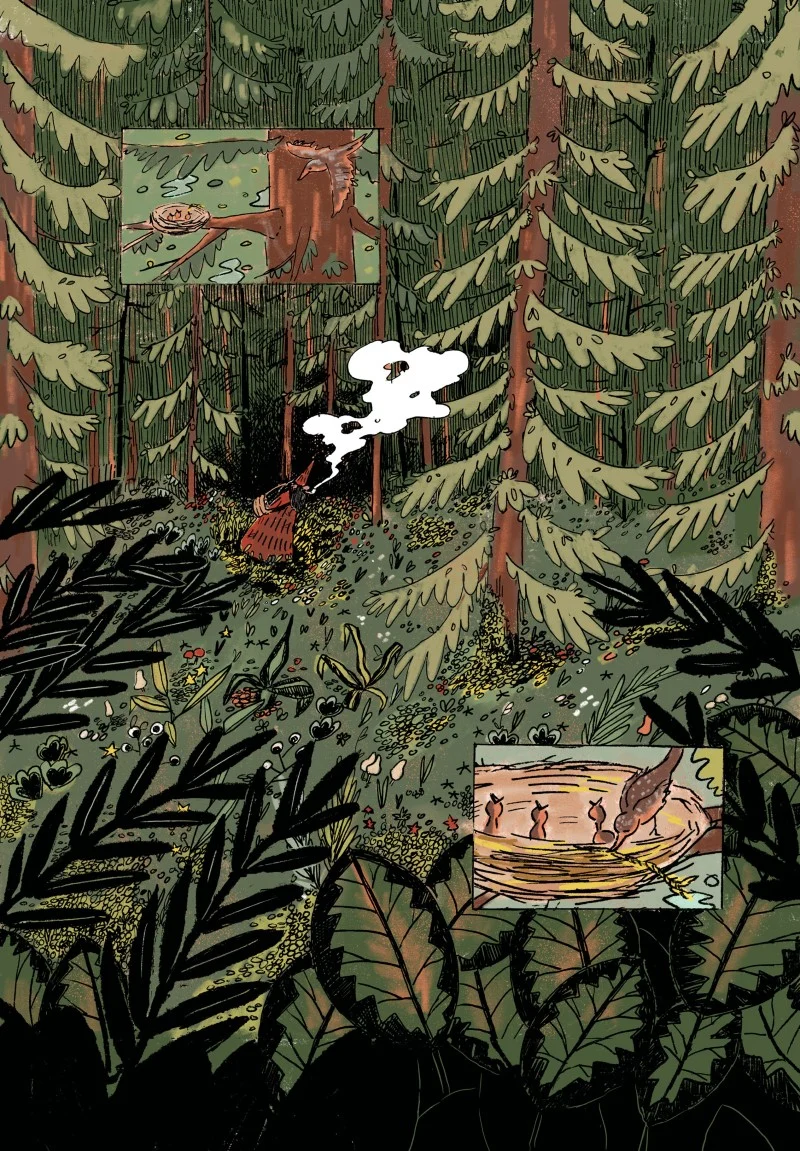
The book is characterized by its use of magical realism, technological enchantment, and a haunting, post-apocalyptic undertone. Unlike traditional narrative-driven comics, Anderson’s work leans heavily into "dream logic," where the internal emotional state of the characters dictates the physics of the world around them. The stories within Safer Places navigate a variety of settings, from reclaimed natural landscapes where hillsides literally walk away, to suburban interiors where the domestic becomes gothic.
Key technical specifications of the release include:
- Author/Artist: Kit Anderson
- Publisher: Avery Hill Publishing
- Format: Softcover Graphic Novel
- Price Point: $19.99 USD / £14.99 GBP
- Core Themes: Agency, the cycle of nature, technological decay, and the role of the "guide" in psychological trauma.
Chronology: The Journey Through the Wizard’s Path
The narrative structure of Safer Places does not follow a linear timeline in the traditional sense, but rather an emotional and thematic progression that Arpad Okay likens to a "wizard’s walk." The journey begins with an invitation into a world that feels both ancient and futuristic—a space where memories of the apocalypse are not just historical data but living, breathing elements of the landscape.
The Initial Descent
The book opens with stories that establish the "uncanniness" of Anderson’s vision. Here, the reader is introduced to the concept of rebirth through destruction. A farm is torn down, and in its place, nature does not merely return; it reclaims the space with a sentient intensity. This phase of the book sets the tone for a "chapter-book of dreams," where the logic of the waking world is slowly stripped away.
The Mid-Point: Fragmentation and Juxtaposition
As the reader moves deeper into the volume, the stories transition from eerie tales to more abstract fragments. Anderson begins to employ a dual-narrative technique, juxtaposing exotic, high-concept narration over seemingly mundane, everyday activities. This reflects the "second nature" of rituals—the way humans maintain their lives through habit while their consciousness drifts elsewhere. It is in this middle section that the "talking cat" appears, serving as a pivotal guide through the "basement of memory."

The Symphonic Conclusion
The final chapters of the book act as a culmination of recurring themes. Much like a musical composer, Anderson revisits motifs introduced earlier—nature vs. plastic, the necessity of a guide, and the concept of agency. The book does not reach a definitive "quest’s end," but rather a state of acceptance. The final message is one of surrender: the realization that there are no truly "safer places," only the journey itself and the guides who help us navigate it.
Supporting Data: Artistic Lineage and Visual Innovation
To understand the impact of Safer Places, one must examine Anderson’s visual language, which draws from a rich lineage of alternative cartoonists while carving out its own niche.
Comparative Art Styles
Arpad Okay identifies several key influences and parallels in Anderson’s work:
- Ted Stearn: Anderson captures a "rustic melancholy" reminiscent of Stearn’s Fuzz & Pluck, where the world feels vast, slightly dilapidated, and profoundly lonely.
- Inés Estrada and Julie Doucet: The "transformative reveries" in Safer Places echo the underground comix tradition of using the body and the environment as fluid, metamorphic entities.
- Buk Ulreich: In certain dream sequences, Anderson departs from traditional rendering to mimic Ulreich’s abstract, painterly style. For instance, the use of "abstract splashes of white" to define the shape of a horse against a cosmic background demonstrates a sophisticated grasp of negative space.
Technical Mechanics
Anderson’s mastery of the comic medium is evidenced by her experimental use of form. A standout feature is the "dream submersion" technique, where the black and white values of the panels are inverted. This visual shift signals to the reader that the characters have moved "beyond consciousness," traveling inside themselves.
Furthermore, the "poetic timing" of the book is managed through innovative paneling. Instead of rigid grids, words often cascade over full-page images, allowing the rhythm of the text to dictate the pace of the visual exploration. This creates a sense of "deep time," where space and time are implied by the form but obscured by the surreal content.
Official Responses: Critical Acclaim and the ‘Required Reading’ Seal
The critical response to Safer Places has been overwhelmingly positive, particularly within the circles of independent comics criticism. DoomRocket’s designation of the book as "Required Reading" serves as a high-level endorsement, placing Anderson in the company of industry icons like James O’Barr (The Crow).
In his review, Arpad Okay emphasizes the "ease with which Anderson can shift tone and direction without disturbing the mood." He notes that while the title suggests security, the stories themselves "don’t feel particularly safe." Instead, they offer a profound sense of being "haunted, reminded, desired, [and] overcome."

The inclusion of a two-page preview by Avery Hill Publishing further highlights the confidence the publisher has in the work’s visual appeal. The preview showcases the stark, high-contrast ink work and the fluid transitions between domestic reality and cosmic abstraction that define the "Safer Places" experience. This "comics symphony," as Okay calls it, is praised for its conversational nature—where each story feels like it is in dialogue with the one that preceded it.
Implications: The Evolution of Indie Comics and Magical Realism
The publication of Safer Places has broader implications for the graphic novel medium and how it addresses complex psychological themes.
The Rejection of Folk Horror for Gothic Fantasy
While many contemporary works lean into the "folk horror" trend, Anderson opts for a unique blend of magical realism and gothic fantasy. By turning the "longevity of plastic" and the "finality of nature" into elements of a fairy tale, she creates a commentary on the Anthropocene. The implication is that our modern, synthetic world is just as susceptible to the "haunting" of the past as any ancient forest.
The Philosophy of the Guide
A recurring theme in Safer Places—and one that mirrors Raven Lyn Clemens’ The Paradox of Getting Better—is the necessity of the guide (the cat, the fox). This suggests a shift in indie comics toward exploring mental health and recovery through metaphor. The realization that "you will need to be led out of the wilderness again" suggests that healing is a cyclical process rather than a destination.
Pushing the Boundaries of Agency
Finally, Safer Places challenges the reader’s sense of agency. By placing characters in situations where they must "let go" to survive or progress, Anderson subverts the traditional hero’s journey. This reflects a growing trend in literary comics toward "screensaver-alt-escape-art," where the goal is not to win, but to exist within a beautifully rendered, albeit uncanny, space.
In conclusion, Kit Anderson’s Safer Places is a landmark work for Avery Hill Publishing. It stands as a testament to the power of the graphic novel to act as a vessel for the ineffable. For readers seeking a journey that is as intellectually stimulating as it is visually breathtaking, Safer Places is, indeed, required reading. As the wizard leads the way through these haunted chapters, the only logical response is to follow the author’s advice: "So let go."