Doriax Engine Emerges as a Powerful, Open-Source Contender in the Game Development Landscape
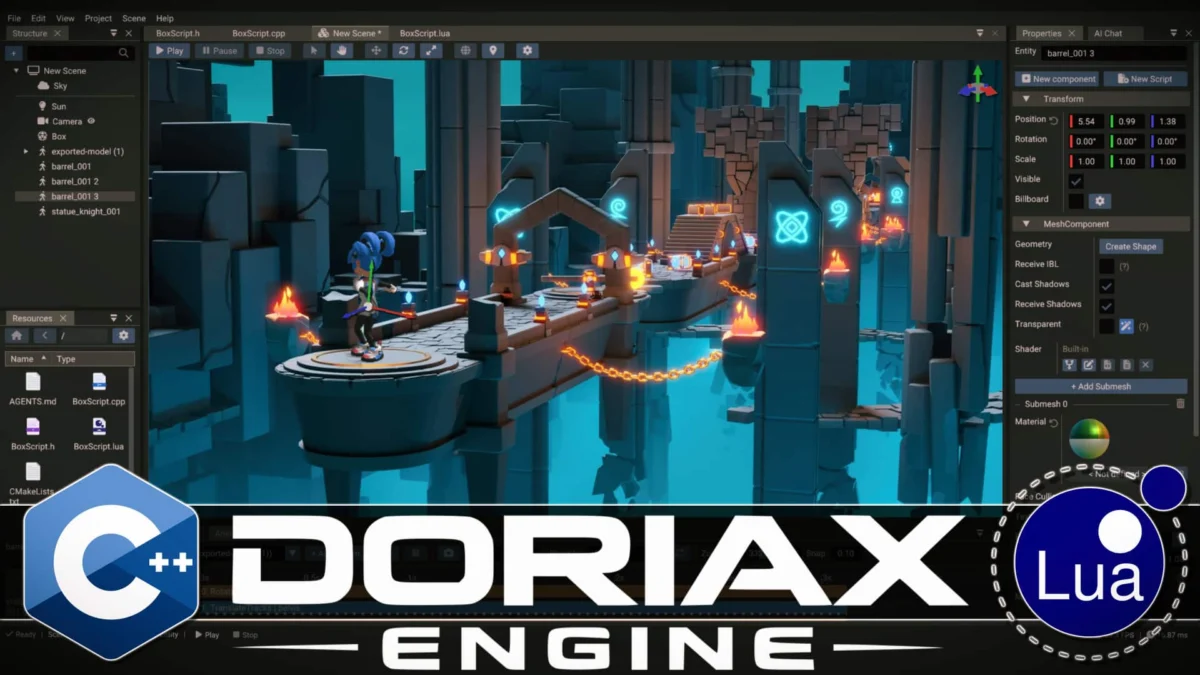
A Comprehensive Look at the MIT-Licensed 2D/3D Engine Formerly Known as Supernova
In the ever-evolving world of game development, the emergence of robust, accessible, and open-source tools is a cause for significant excitement. The Doriax Game Engine, a project formerly recognized as the Supernova engine, is rapidly establishing itself as a formidable contender in this space. Offering a comprehensive suite of features for both 2D and 3D game creation, Doriax is available across Windows, macOS, and Linux, and crucially, operates under the permissive MIT license. This open-source nature, combined with its expanding capabilities, positions Doriax as an attractive option for independent developers, hobbyists, and even smaller studios seeking a powerful and cost-effective development platform.
The engine’s transition from Supernova to Doriax signifies a new chapter, one that appears focused on solidifying its foundation and expanding its reach. While the core functionalities remain, the rebranding suggests a renewed commitment to development and community engagement. This article delves into the key aspects of the Doriax Game Engine, exploring its features, its historical trajectory, the supporting data that underscores its potential, and the broader implications for the independent game development ecosystem.
H2: A Deep Dive into Doriax Engine’s Core Capabilities
The Doriax Game Engine is designed to empower developers with the tools necessary to bring their creative visions to life. Its dual focus on 2D and 3D development provides a versatile platform, eliminating the need for developers to switch between different engines for varied project types. This integration is a significant advantage, streamlining workflows and fostering a more cohesive development process.
While the provided content is sparse on specific feature lists, the inherent nature of a robust 2D/3D engine implies a broad spectrum of functionalities. Typically, such engines offer:
- A sophisticated rendering pipeline: Capable of handling both sprite-based 2D graphics and complex 3D models, textures, lighting, and shaders. This would include support for various rendering techniques to achieve diverse visual styles.
- A powerful scripting system: Allowing developers to define game logic, character behavior, user interface interactions, and more. The choice of scripting language (e.g., C#, Lua, or a proprietary language) significantly impacts ease of use and performance.
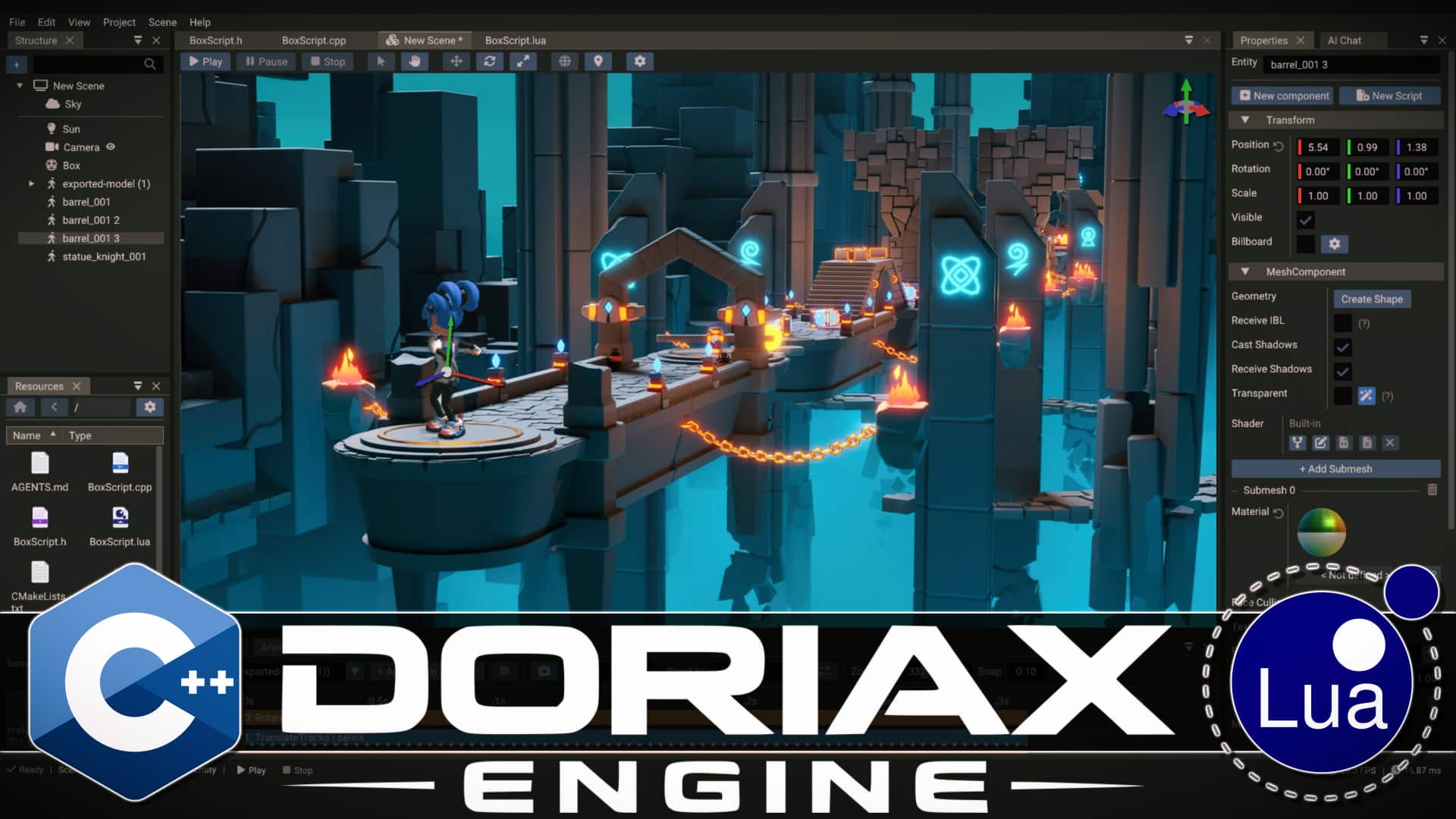
- An integrated editor: A visual environment where developers can design levels, place objects, configure properties, and manage project assets. This WYSIWYG (What You See Is What You Get) approach is crucial for efficient iteration and prototyping.
- Physics simulation: For realistic object interactions, gravity, collisions, and environmental effects. This often involves integration with established physics engines.
- Animation tools: Enabling the creation and implementation of character animations, environmental effects, and UI transitions.
- Audio system: For managing sound effects, background music, and spatial audio.
- Input handling: Supporting a wide range of input devices, including keyboards, mice, gamepads, and touch screens.
- Asset management: Tools for organizing, importing, and managing various game assets like models, textures, sounds, and scripts.
- Cross-platform deployment: The ability to export games to multiple target platforms with minimal code changes.
The Doriax Engine’s commitment to open-source under the MIT license is a cornerstone of its appeal. The MIT license is renowned for its simplicity and permissiveness, allowing developers to use, modify, and distribute the software for any purpose, including commercial projects, with very few restrictions. This fosters an environment of collaboration and innovation, as developers are free to contribute to the engine’s development, fix bugs, and add new features without the burden of licensing fees or restrictive terms.
H2: Chronology and Evolution: From Supernova to Doriax
The journey of the Doriax Game Engine is marked by its previous identity as the Supernova engine. While the exact timeline of its inception and the motivations behind the rebranding are not detailed in the provided information, this transition often signifies a period of significant development, strategic redirection, or a renewed push for community engagement.
Historically, game engines often undergo name changes for various reasons. These can include:
- Brand identity refinement: A new name can better reflect the project’s current goals, features, or target audience.
- Resolving trademark issues: Existing names might inadvertently conflict with established brands.
- Attracting new developers: A fresh identity can signal a revitalized project and encourage new contributors.
- Organizational restructuring: Changes in leadership or the core development team can lead to a name change.
The fact that Doriax is built upon the foundation of Supernova suggests a continuity of development and a preserved codebase. Developers familiar with Supernova would likely find a familiar, albeit potentially enhanced, experience with Doriax. The continued development of an open-source engine from a previous iteration indicates a sustained effort to provide a viable alternative to proprietary engines.
H2: Supporting Data and Community Engagement
While specific metrics for Doriax’s user base or download numbers are not provided, the existence of a dedicated homepage, a GitHub repository, and a Discord server are strong indicators of an active and growing community.
- Doriax Engine Homepage (doriax.org): This serves as the central hub for information, documentation, and news related to the engine. A well-maintained website is crucial for attracting new users and providing resources for existing ones.
- Doriax GitHub Repository (github.com/doriaxengine/doriax): The presence of a GitHub repository is a hallmark of open-source projects. It provides transparency into the engine’s codebase, allows for bug reporting, feature requests, and direct contributions from the community. The activity within the repository, such as the number of commits, pull requests, and issues, serves as a key indicator of the project’s health and development pace.
- Discord Server (discord.gg/yXXDyJf3gT): Discord has become an indispensable platform for game development communities. It facilitates real-time communication, technical support, collaboration, and social interaction among developers. An active Discord server suggests a vibrant community eager to share knowledge and assist one another.
The inclusion of a YouTube video showcasing the Doriax editor in action is another vital piece of supporting data. Visual demonstrations are incredibly effective in conveying the engine’s capabilities, user interface, and overall workflow. Such videos serve as an excellent entry point for potential users and provide valuable insights into the development environment.
H2: Official Responses and Future Outlook
As an open-source project, direct "official responses" in the traditional corporate sense might be less prevalent. However, the project’s maintainers and core developers are the de facto official voice. Their commitment is demonstrated through:
- Active development on GitHub: Regular code commits and updates to the repository indicate ongoing work and responsiveness to community feedback.
- Community engagement on Discord: Developers actively participating in discussions, answering questions, and addressing concerns on their Discord server signifies a commitment to user support.
- Updates to the official website: Keeping the homepage current with news, feature announcements, and download links demonstrates a dedication to providing accessible information.
The future outlook for Doriax appears promising, particularly given the increasing demand for accessible and flexible game development tools. The open-source model, combined with a robust feature set, positions it well to attract a diverse range of developers. As the engine matures and its community grows, we can anticipate:
- Increased adoption: More developers will likely explore and utilize Doriax for their projects.
- Enhanced features: Community contributions and dedicated development efforts will lead to new functionalities and improvements.
- A stronger ecosystem: The growth of Doriax could foster a community of asset creators, tool developers, and educators focused on the engine.
- Potential for commercial success of games built with Doriax: As the engine’s capabilities become more widely recognized, games developed with it will have a greater chance of finding success in the market.
H2: Implications for the Game Development Ecosystem
The continued growth and accessibility of open-source game engines like Doriax have significant implications for the broader game development landscape.
- Democratization of Game Development: Engines like Doriax lower the barrier to entry for aspiring game developers. By offering powerful tools for free and under a permissive license, they empower individuals and small teams to create high-quality games without the prohibitive costs associated with proprietary software.
- Innovation and Competition: The presence of strong open-source alternatives fosters healthy competition within the industry. This can push proprietary engine developers to innovate and potentially offer more competitive pricing or features. Furthermore, the collaborative nature of open-source development often leads to rapid iteration and the introduction of novel solutions.
- Educational Value: Open-source engines are invaluable educational tools. Students and aspiring developers can not only learn to use the engine but also delve into its source code, gaining a deeper understanding of game engine architecture and programming principles. This hands-on learning experience is crucial for skill development.
- Niche Game Development: For developers focusing on specific genres or requiring highly customized engine features, an open-source engine provides the flexibility to modify the engine’s core to suit their precise needs. This is often more challenging or costly with closed-source engines.
- Sustainability: The community-driven nature of open-source projects can lead to greater long-term sustainability. Even if the original core developers move on, a dedicated community can often ensure the project’s continued maintenance and evolution.
In conclusion, the Doriax Game Engine, building on the legacy of Supernova, represents a compelling and increasingly vital resource for the game development community. Its commitment to open-source principles, its cross-platform availability, and its dual 2D/3D capabilities position it as a platform with significant potential. As development continues and the community solidifies its presence, Doriax is poised to play an increasingly important role in shaping the future of independent game creation. Developers seeking a powerful, flexible, and cost-effective solution for their next project would be well-advised to explore what the Doriax Engine has to offer.