The Unseen Nexus: How Academic Research Fuels the Engines of Imagination in Fiction
In the vast and ever-expanding landscape of creative writing, authors are perpetually seeking new springs of inspiration to imbue their fictional worlds with depth, authenticity, and originality. While the popular advice to "read widely" often centers on fiction, a compelling argument is emerging for the profound impact of non-fiction, particularly academic research, on the imaginative process. This phenomenon transforms dusty archives and scholarly journals into fertile ground for epic sagas, futuristic thrillers, and fantastical realms.
At the forefront of this discourse is author S.M. Carrière, who champions non-fiction, especially archaeology and anthropology, as her primary muse. Carrière’s personal journey, spanning from conceptualizing sprawling fantasy trilogies to crafting historically grounded narratives, vividly illustrates how rigorously researched facts can ignite the most unbound fictional narratives. Her perspective challenges writers to look beyond conventional sources and delve into the rich, often untold, stories embedded within academic discovery.
Main Facts: Archaeology as the Bedrock of Fantasy and Science Fiction
The core tenet of Carrière’s argument is that non-fiction, especially fields dedicated to unearthing and interpreting humanity’s past, provides an unparalleled foundation for speculative fiction. "I find that I get most of my inspiration for my fiction from non-fiction," Carrière states, emphasizing archaeology’s particular potency for fantasy, though its applications extend seamlessly into science fiction. This isn’t a prescriptive mandate, but rather an observation born from experience, suggesting a powerful, if often overlooked, methodology for creative development.
The allure lies in the fragments of forgotten lives, the mysteries of ancient cultures, and the scientific interpretations of historical events. These real-world puzzles offer storytellers a rich tapestry of human experience, societal structures, technological marvels, and belief systems upon which to build their own intricate narratives. From the intimate details of ancient burials to the grand sweep of empires, archaeological findings provide concrete, verifiable data points that can ground even the most fantastical concepts in a believable reality.
Chronology of Inspiration: From Ancient Bones to Epic Sagas
Carrière’s own creative trajectory serves as a compelling case study for this approach. Currently immersed in a fantasy trilogy, a project recently resumed after a multi-month hiatus, her latest work explores a long-standing war between demon factions, unknowingly shielding the southern populace. While drawing stylistic influence from Chinese dramas, the foundational inspiration for this intricate narrative sprang from a decidedly non-fictional source: ancient archaeology.
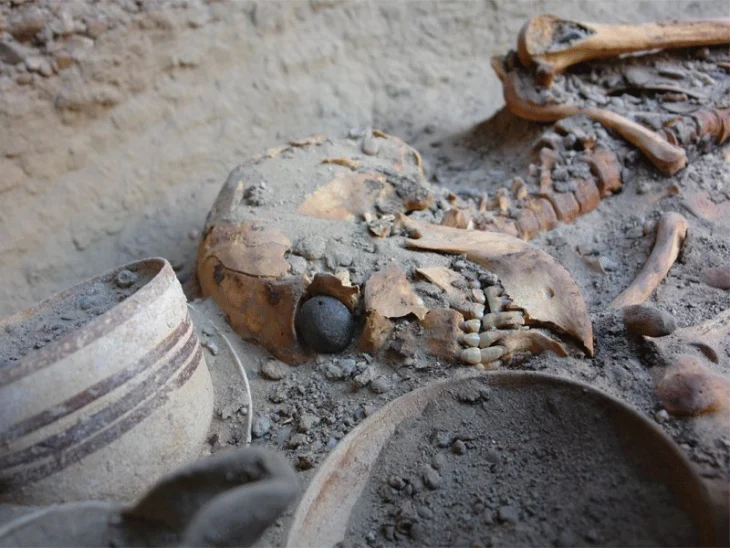
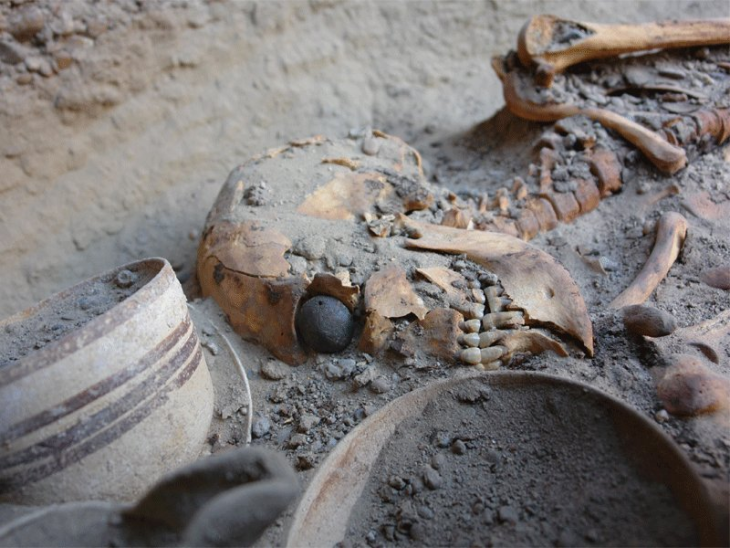
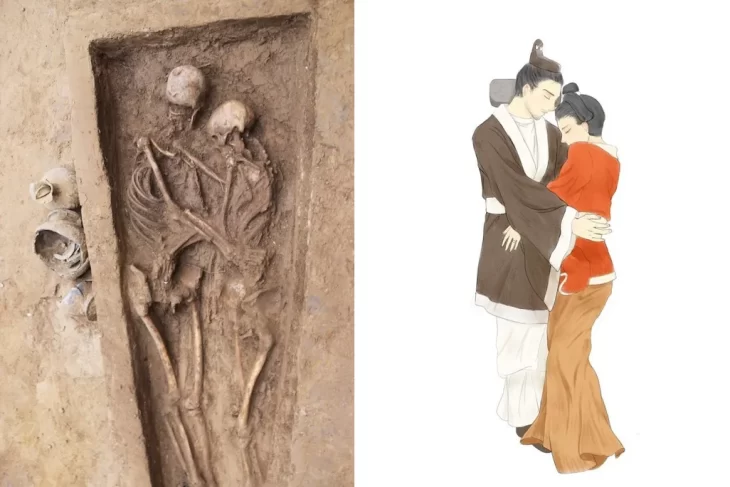
The initial spark ignited with an article detailing the burial of a man and a woman in Datong, China, dating to the Northern Wei period (386–534 AD). This discovery, featuring two skeletons locked in an eternal embrace, spoke volumes about love transcending death, even across millennia. The poignant imagery of this 1,500-year-old internment, which archeologists interpreted as a testament to enduring affection, resonated deeply with Carrière.
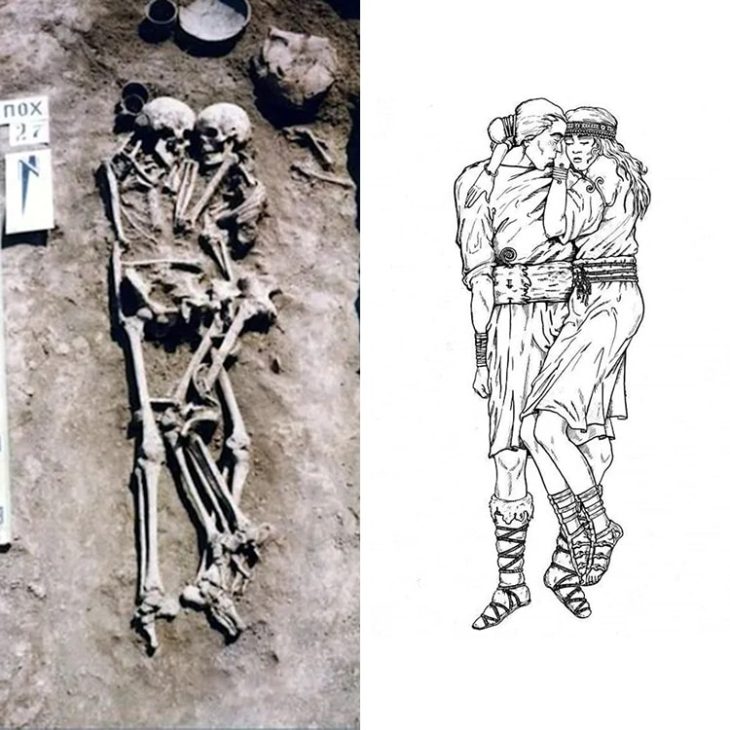
This initial hit of inspiration was reinforced by subsequent discoveries of similar burials across diverse historical and geographical contexts. A Bronze Age couple in Ukraine, also found in a tender embrace, further solidified the thematic resonance. Additional research brought to light a Neolithic burial in Italy, another ancient find in Greece, and a medieval couple discovered holding hands in Romania. Each of these findings, separated by vast stretches of time and culture, echoed a universal human experience of profound connection, even in death.
These archaeological fragments collectively coalesced in Carrière’s mind, igniting "forgotten tales of epic love." The concept rapidly evolved into the narrative core of her trilogy: a compelling romance between a war leader of a fierce, secretive, semi-nomadic people from the northern Steppe, and her counterpart, a powerful Duke serving at the right hand of a vast southern empire. Their individual burdens—her grief over a lost love and consuming war with demons, his fear of a loveless political marriage and the emperor’s impending demise—are set against a backdrop of ancient conflicts and societal pressures, all sparked by the silent testimony of long-buried lovers. This trilogy, once completed, is slated for serialization for her Ko-Fi subscribers before a wider public release, offering a glimpse into how historical fragments can birth entirely new mythologies.
Beyond this nascent trilogy, Carrière’s established works also bear the indelible mark of her academic interests. The Seraphimé Saga, for instance, is deeply informed by shamanic ideas, drawing from archaeological speculation regarding how ancient ancestors understood the world through symbol and ritual. This involves delving into interpretations of prehistoric cave art, the function of megalithic structures, the significance of grave goods, and ethnographic parallels from surviving indigenous cultures to reconstruct ancient belief systems. Her series Daughters of Britain is a more direct engagement with history, closely following the cultures and events immediately following Boudicca’s failed revolt against the brutal Roman occupation and cruelty in 1st-century Britain. This period, marked by resistance, subjugation, and the clash of civilizations, offers a fertile ground for historical fiction that seeks to understand the human cost of conquest and rebellion.
Even seemingly supernatural genres, such as vampire novels, often find their roots in academic research. Carrière points out that these narratives frequently draw upon folk beliefs surrounding revenants, nosferatu, and other spectral entities from diverse cultures, meticulously documented by folklorists and anthropologists. Furthermore, scientific fields like virology have offered fascinating, albeit fictionalized, explanations for vampirism, grounding the supernatural in a veneer of pseudo-scientific plausibility, exploring how real-world diseases might manifest symptoms attributed to mythical creatures.
Supporting Data: The Literary Landscape Shaped by Research
Carrière is far from alone in harnessing the power of non-fiction. The literary world abounds with examples of authors whose works are profoundly enriched by their rigorous engagement with academic disciplines.
John Gwynn’s The Bloodsworn series stands out as a testament to the transformative power of historical research in fantasy. Gwynn meticulously researched "Viking" society, weapons, armor, and fighting styles, imbuing his world with an unparalleled sense of authenticity. His work goes beyond mere superficial details, delving into the social structures of jarls and thralls, the spiritual practices involving the Norse pantheon and seiðr magic, and the brutal realities of combat formations like the shield wall. The result is a fictional realm that feels "rich with history and very much lived in," where resurrected gods and rune witches coexist with believable human societies, making the fantastical elements all the more compelling against a backdrop of historical verisimilitude.
Similarly, Steven Erikson, renowned for The Malazan Book of the Fallen, explicitly draws on his academic background in archaeology and prehistoric anthropology. His series features a group of undead warriors, the T’lan Imass, whose characteristics are so heavily based on Homo Neanderthalensis that even a layperson familiar with paleoanthropology is unlikely to miss the connection. Erikson imbues these ancient beings with the robust physique, advanced tool-making capabilities (akin to Mousterian technology), and potential for complex symbolic thought (suggested by Neanderthal burial practices and ornamentation) that define our ancient hominin cousins. By integrating these scientific insights, Erikson crafts a truly alien yet relatable species, reflecting humanity’s own deep past in a high-fantasy context.
Even controversial archaeological theories can serve as potent inspiration, as exemplified by Roland Emmerich and Dean Devlin’s creation of the science fiction film Stargate. The film’s premise hinges on the ancient astronaut theory, which posits that advanced extraterrestrial beings visited Earth in antiquity and significantly influenced human civilization, including the construction of monumental structures like the Egyptian pyramids. While Carrière and many academics rightly deem this "theory" as "wildly problematic," "discredited" by Egyptologists, and often rooted in pseudoarchaeology that diminishes indigenous achievements, its narrative potential is undeniable. Stargate successfully leveraged this controversial concept to create an "incredible premise" for a highly influential science fiction film, which in turn spawned multiple successful television series, demonstrating how even flawed or discredited ideas can spark widespread imaginative output in popular culture.
The Multifaceted Muse: Expanding Beyond Archaeology
While archaeology and anthropology are Carrière’s primary fixations, the wellspring of non-fiction inspiration extends far beyond these fields. The dynamic and evolving realms of astronomy, physics, psychology, and artificial intelligence, for instance, are brimming with questions and discoveries that continually fuel the fantastic in literature and film.
Astronomy and Physics offer a canvas of cosmic wonder, inspiring narratives that explore the outer reaches of space, time, and human endeavor. Films like Christopher Nolan’s Interstellar delve into the complexities of relativity, black holes, and wormholes, grounding its speculative journey in theoretical physics. Andy Weir’s The Martian combines meticulous botanical science and engineering principles with a gripping survival story on Mars. Robert Zemeckis’s Contact, based on Carl Sagan’s novel, explores the scientific and philosophical implications of searching for and making first contact with extraterrestrial intelligence.
Psychology and Neuroscience provide rich ground for exploring the human mind, consciousness, memory, and perception. Nolan’s Inception constructs elaborate narratives around dream architecture and subconscious manipulation. Michel Gondry’s Eternal Sunshine of the Spotless Mind delves into the ethics and emotional consequences of memory erasure. Even films like M. Night Shyamalan’s Split draw from psychological concepts, albeit with dramatic embellishment, to explore the complexities of dissociative identity disorder.
Artificial Intelligence and Philosophy pose some of the most profound ethical and existential questions of our time, inspiring a wealth of thought-provoking art. The Matrix franchise explores the nature of reality and human subjugation by sentient machines. The Terminator series confronts the terrifying prospect of AI achieving self-awareness and turning against its creators. Video games like Detroit: Become Human offer interactive narratives that delve deeply into android rights, consciousness, and the definition of humanity, forcing players to grapple with complex philosophical dilemmas. These works demonstrate how scientific advancements and the philosophical questions they raise can serve as potent catalysts for compelling storytelling.
Official Responses and Best Practices for Writers: Navigating the Information Age
Given the immense potential of non-fiction, Carrière offers practical advice for writers seeking to tap into these resources. The general counsel to "read often, read widely" remains foundational, but she implores writers to consciously include non-fiction in their reading diets.
For those intimidated by the dense prose and paywalls of academic journals, Carrière provides a crucial tip: "If you find academic journals terrifying, and expensive, you can reach out to the researchers of papers you find in there. Most of them will very happily send you the entire article for free!" This highlights a key aspect of academic culture, where researchers are generally keen to disseminate their work and increase its impact, often circumventing the commercial barriers imposed by publishers. Engaging directly with experts can also lead to deeper insights and potential collaborations.
For a more accessible entry point into academic spaces, Carrière recommends excellent science educators who translate complex research into engaging formats. Channels like SciShow and Complexly offer broad scientific coverage, while specific channels like Milo Rossi’s "Miniminuteman" provide focused content on archaeology and anthropology. These platforms act as vital bridges, democratizing access to scientific knowledge and sparking curiosity without requiring specialized vocabulary or extensive prior knowledge. They are invaluable for writers looking to dip their toes into new fields and identify topics for deeper exploration.
However, Carrière issues a stark warning against relying on large language models (LLMs) like ChatGPT, Grok, or Claude for research. She refers to them as "hallucinating LLM[s]," pointing to their propensity to generate plausible but factually incorrect information. This phenomenon, known as "hallucination," arises from their statistical nature rather than genuine understanding or critical evaluation of sources. For writers aiming for authenticity and depth, LLMs currently pose significant risks, potentially leading to the incorporation of misinformation into their narratives. Beyond accuracy, there are growing ethical and environmental concerns, with the vast computational power required to train and run these models contributing to significant energy consumption. Carrière’s plea to "Go to real people. For now. As a favour to me. And the environment" underscores the importance of human expertise and verifiable sources in the creative process.
Implications and Conclusion: The Infinite Tapestry of Storytelling
The implications of actively engaging with non-fiction are profound for the literary world. By drawing upon academic research, writers can craft narratives that are not only imaginative but also deeply grounded, offering readers richer, more resonant experiences. This approach fosters a symbiotic relationship: academic discoveries provide the raw material for compelling stories, while fiction, in turn, can popularize complex scientific concepts and historical events, making them accessible and exciting to a wider audience.
From ancient burials whispering tales of enduring love to the latest advancements in AI posing existential questions, the human quest for knowledge, meticulously documented in non-fiction, offers an endless wellspring for the creative imagination. It encourages writers to view every scientific discovery, every historical artifact, and every philosophical debate as a potential genesis for their next great story. As Carrière aptly puts it, inviting readers to share their own intellectual fascinations, "What are some of your favourite discoveries in your favourite fields of enquiry? I love reading what makes other people’s brains tingle. And who knows? Maybe I’ll find another hit of inspiration for another story." This collaborative spirit, rooted in the shared pursuit of understanding, ensures that the tapestry of human storytelling will continue to be woven with threads of both fact and boundless fantasy.
S.M. Carrière is an author known for her engaging narratives, including titles like Skylark, Human, and The Timbercreek Incident. Beyond her writing, she teaches martial arts, streams video games, and paints, embodying a multifaceted approach to creativity and engagement.