The First Shots: How Fort Sumter Ignited the American Civil War
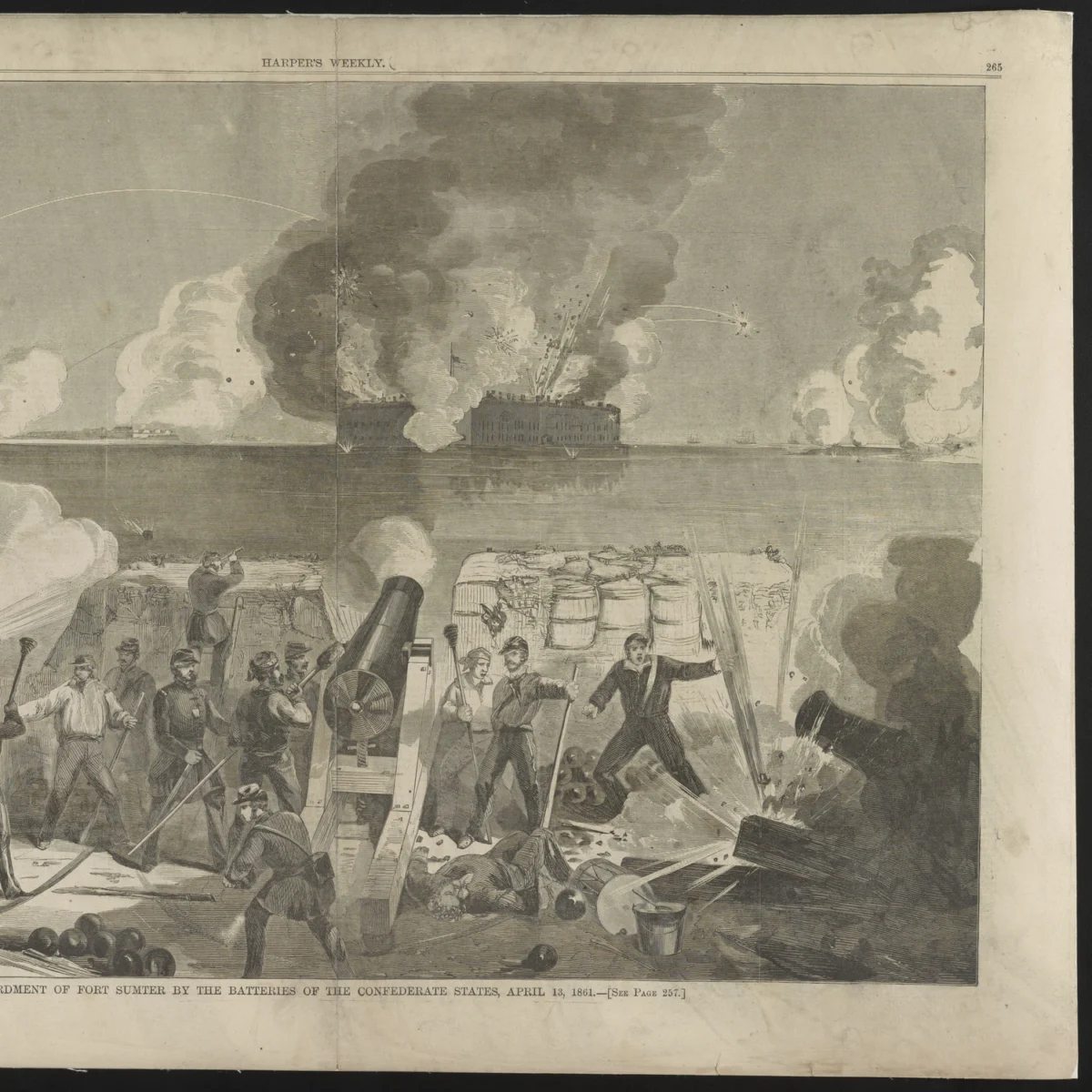
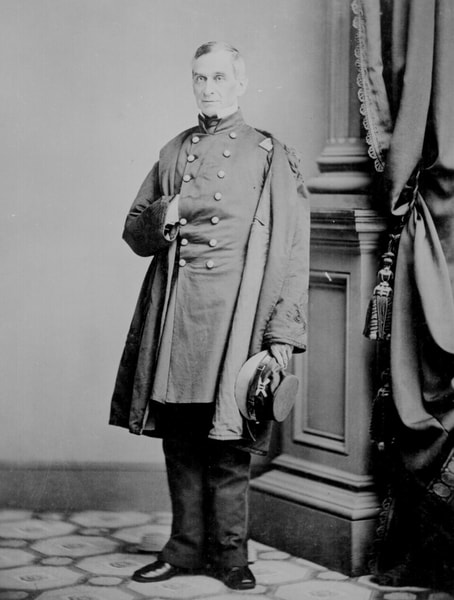
Charleston, South Carolina – On the crisp morning of April 12, 1861, a single mortar shell arced across the pre-dawn sky over Charleston Harbor, exploding above Fort Sumter. This shot, fired by Confederate forces, marked not just the beginning of a sustained bombardment but the definitive opening salvo of the American Civil War—a conflict that would tragically reshape the nation. For 34 grueling hours, Union Major Robert Anderson and his beleaguered garrison endured an incessant barrage, ultimately surrendering the isolated island fort and plunging a divided America into four years of unprecedented bloodshed.
Main Facts: A Nation on the Brink
The Battle of Fort Sumter, also known as the Attack or Fall of Fort Sumter, was far more than a military skirmish; it was a profound psychological turning point. Brigadier General P. G. T. Beauregard, commanding Confederate artillery positions ringing Charleston Harbor, initiated the attack after Major Anderson steadfastly refused demands for surrender. The bombardment, commencing at 4:30 a.m. on April 12 and concluding with Anderson’s surrender at 2:30 p.m. on April 13, resulted in no combat deaths during the engagement itself, yet it ignited a conflagration that would claim over 650,000 lives and cause millions of dollars in damage.
The events at Fort Sumter shattered any lingering hopes of a peaceful resolution to the secession crisis. Both the newly formed Confederate States of America and the United States of America viewed the other as weak, believing a swift, decisive victory with minimal casualties was imminent. This dangerous miscalculation fueled a fervent nationalism in both North and South, galvanizing their respective populations for a war whose true cost would prove unimaginable.
Chronology: A Tense Prelude to Conflict
The path to Fort Sumter was paved with months of escalating political tension, strategic maneuvers, and failed diplomatic efforts following South Carolina’s secession from the Union.
Escalating Tensions (1860-1861)
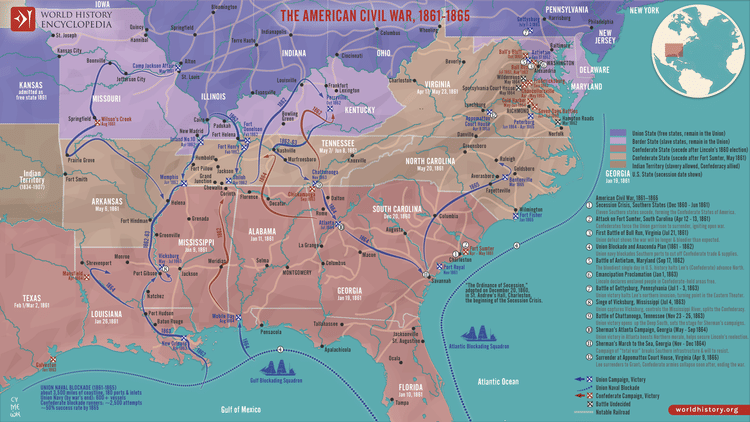
Charleston Harbor, a vital Southern port, was strategically defended by a series of fortifications. These included the historic Fort Moultrie on Sullivan’s Island, dating back to the Revolutionary War; Fort Johnson on James Island; a battery on Morris Island (later the site of Fort Wagner); and Castle Pinckney, closer to the city. However, the War of 1812 had exposed their collective inadequacy against naval attack, prompting the commission of Fort Sumter in 1827. Built on an artificial island atop a sand bar, its construction began in 1829, intended as a formidable bastion against seaward threats.
When South Carolina became the first state to secede on December 20, 1860, the ownership and control of these federal installations became a flashpoint. Fort Moultrie was garrisoned by Union Major Robert Anderson, while Castle Pinckney held a small Union force. Crucially, Fort Sumter, still unfinished due to budget cuts, was manned only by a work crew.
Major Anderson, a Kentucky native married to a Georgian, was keenly aware of the vulnerability of Fort Moultrie. Its poorly maintained defenses and surrounding sand dunes made it susceptible to land assault. On the night of December 26, 1860, in a daring and clandestine operation, Anderson relocated his 85-man command, along with supplies, from Fort Moultrie to the more defensible Fort Sumter. This move, executed under the cover of darkness, violated no direct order but deeply enraged South Carolina Governor Francis Pickens, who perceived it as a betrayal of an understanding with outgoing President James Buchanan that Sumter would not be reinforced.
The next morning, the Charleston militia discovered Anderson’s shift. In swift retaliation, Pickens ordered the seizure of all other federal properties in the harbor. Fort Moultrie, Fort Johnson, and the Morris Island battery were quickly taken by Confederate forces. The Union garrison at Castle Pinckney, recognizing their untenable position, joined Anderson at Fort Sumter. By early 1861, the Confederates had fortified their positions further, constructing the formidable Floating Battery of Charleston Harbor. By March, Fort Sumter found itself encircled by hostile forces, heavily armed with cannons, mortars, and ammunition seized from the federal arsenal in Charleston and the captured forts (except Moultrie, whose guns Anderson had spiked before abandoning).
An early attempt to resupply Fort Sumter occurred on January 9, 1861, when the unarmed merchant ship Star of the West tried to deliver provisions. It was met with cannon fire from Morris Island and Fort Moultrie, forcing its retreat. This incident, while not leading to full-scale battle, signaled the Confederates’ resolve to prevent any reinforcement or resupply of the fort.
The Siege Begins (April 11-12, 1861)
The inauguration of Abraham Lincoln on March 4, 1861, brought a new, firmer stance from the White House. Faced with dwindling supplies at Fort Sumter, Lincoln authorized another relief mission, notifying Governor Pickens on April 6 that only provisions, not reinforcements or weaponry, would be sent. Pickens, however, viewed any attempt to resupply as an act of aggression. Confederate President Jefferson Davis, receiving news of Lincoln’s intentions, ordered General Beauregard to demand Sumter’s surrender.
On April 11, Beauregard dispatched delegates to Fort Sumter with his demand. Major Anderson, while acknowledging the dire situation, unequivocally refused. In a subsequent exchange at 1:00 a.m. on April 12, Beauregard’s delegates offered a conditional surrender: if Anderson would specify a time for evacuation, the Confederates would not fire. Anderson, recognizing his impossible position but unwilling to concede without a fight, replied that he would evacuate by April 15 unless he received orders to hold or was resupplied.
This conditional response was deemed unacceptable by Beauregard. At 3:20 a.m., his delegates delivered the final ultimatum: the bombardment would commence in one hour. True to their word, at 4:30 a.m. on April 12, Lieutenant Henry S. Farley, under Captain George S. James, fired the signal shot from a 10-inch mortar at Fort Johnson. The shell’s fiery arc over Fort Sumter marked the dawn of the American Civil War.
The Bombardment and Defense
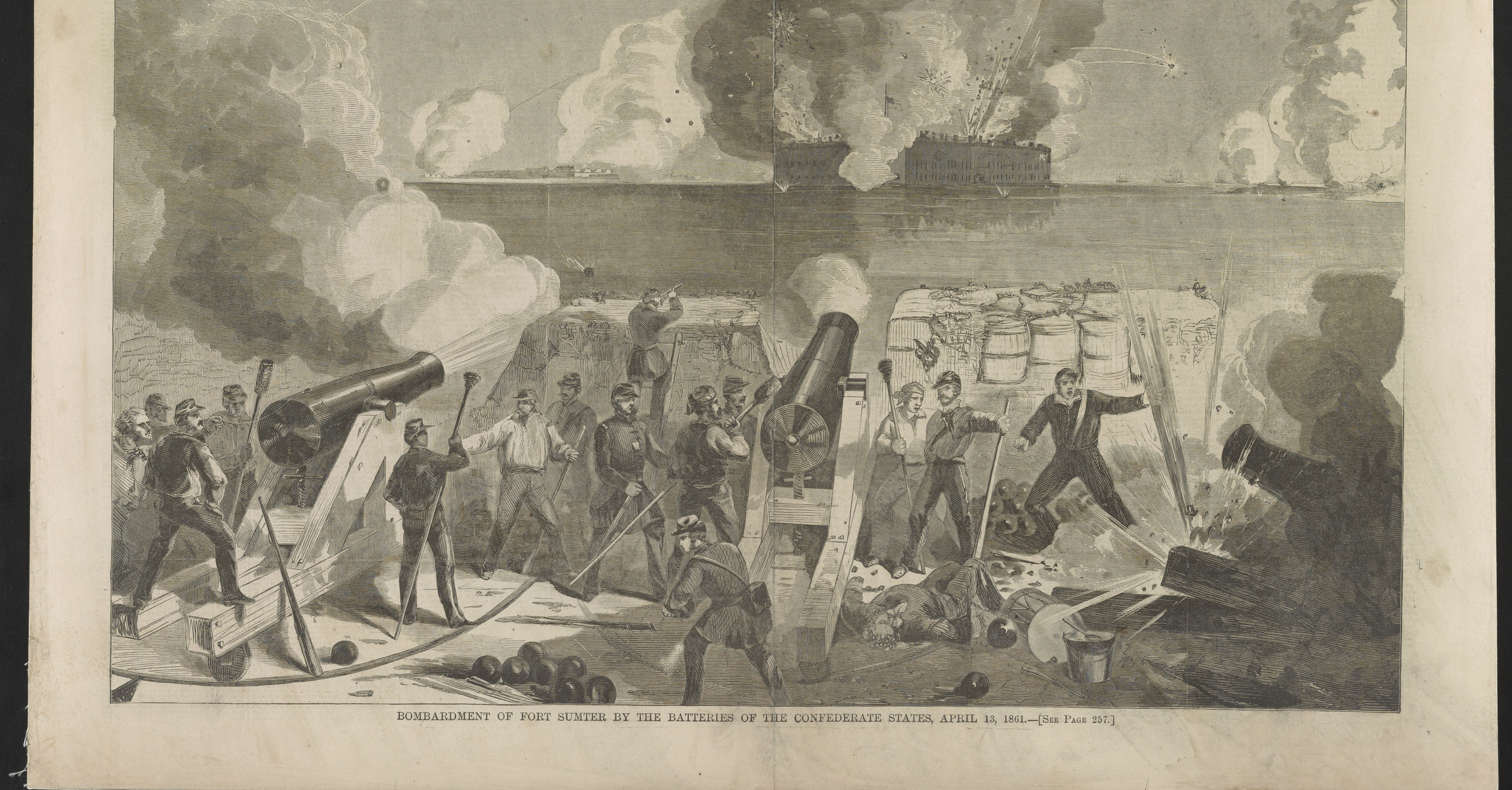
The Confederate batteries, positioned in a counterclockwise arc around the harbor, began a relentless bombardment, firing every two minutes. Major Anderson, conserving his limited ammunition and awaiting better visibility, held his fire until 7:00 a.m. Captain Abner Doubleday, later a Union general, is credited with aiming Fort Sumter’s first retaliatory shot.
Anderson’s defense was severely hampered. Of the 60 guns available, only 21 on the lowest tier could be safely manned, as those on the upper levels exposed his men to greater casualty risk from the Confederate onslaught. Furthermore, Fort Sumter had been designed to repel attacks from the sea, meaning its casemates and gun emplacements were primarily aimed seaward, away from the encircling Confederate positions at Moultrie, Johnson, Morris Island, Castle Pinckney, and the Floating Battery. This strategic disadvantage rendered many of Sumter’s guns ineffective against the immediate threat.
Confederate shells and hot shot rained down on the fort, striking its walls and igniting the wooden structures within. Anderson’s garrison found themselves defending a burning fortress, low on ammunition, and with dwindling rations. Attempts by Union supply ships, which arrived in the area on the afternoon of April 12, to reach the fort were thwarted by the heavy Confederate fire. A rainstorm on the night of the 12th offered a temporary reprieve from the fires, but the bombardment continued unabated. By the morning of April 13, Fort Sumter was again ablaze, its defenders exhausted and out of options.
Supporting Data: A Stark Imbalance
The Battle of Fort Sumter was a testament to a profound military imbalance, carefully orchestrated by the Confederates.
Fort Sumter’s Vulnerabilities:
- Design Flaws: Built to defend Charleston from naval invasion, Sumter’s robust seaward defenses were useless against land-based artillery. Its three-story design meant its highest guns were exposed, and its lowest-tier guns lacked the elevation to effectively return fire against the surrounding Confederate batteries.
- Undermanned Garrison: The fort was designed for 650 soldiers, operating 135 pieces of ordnance. Major Anderson commanded only 85 men, 43 of whom were civilian workers, not trained soldiers. Another eight were musicians. This skeleton crew was spread thin across the massive fortification.
- Inadequate Armament: Only 60 guns had been placed at the fort by December 1860, and most were on the first level, facing the ocean. The crucial upper-tier guns were dangerous to man.
- Logistical Crisis: Anderson’s men were on half-rations for months leading up to the attack. Ammunition was critically low, and the Star of the West incident had proven that resupply by sea was impossible. The city of Charleston offered no aid, only hostility.
Confederate Superiority:
- Strategic Encirclement: Sumter was surrounded by a ring of well-placed batteries, including Fort Moultrie, Fort Johnson, the Morris Island battery, Castle Pinckney, and the innovative Floating Battery. These positions offered overlapping fields of fire.
- Overwhelming Artillery: The Confederates had seized all federal ordnance from the Charleston arsenal and most of the forts, giving them a vast array of cannons, mortars, and ample ammunition. Their guns were explicitly aimed at Sumter.
- Manpower: While the exact number of Confederate artillerymen directly involved in the bombardment is hard to quantify, the sheer number of batteries and the logistical support required far outstripped Anderson’s small garrison.
Official Responses: From Ultimatum to Unification
Confederate Leadership’s Stance
Confederate President Jefferson Davis, driven by the imperative to assert the sovereignty of the newly formed Confederate States of America, authorized General Beauregard to demand Sumter’s surrender. The presence of a Union garrison within what they considered their territory was an affront to their claim of independence. Beauregard’s measured approach, offering Anderson terms of evacuation rather than unconditional surrender, aimed to demonstrate Confederate strength and legitimacy while ideally avoiding unnecessary bloodshed. Following the successful capture of the fort, the Confederate government celebrated it as a clear victory, a testament to their resolve and military prowess. The raising of the South Carolina flag, and later the Confederate banner, over Sumter was a powerful symbol of their nascent nation’s claim.
Union Leadership’s Dilemma
President James Buchanan’s final months in office were characterized by indecision and a desperate attempt to avoid conflict, which only emboldened the secessionists. His failure to firmly address the crisis contributed to the perception of federal weakness. Upon assuming office, President Abraham Lincoln inherited a nation on the precipice. His decision to attempt resupply, clearly communicated as only provisions, not reinforcements, was a calculated risk. It was a test of Confederate intentions: if they allowed resupply, it could de-escalate tensions; if they fired, they would be seen as the aggressors, uniting Northern sentiment. Lincoln’s call for 75,000 volunteers immediately after Sumter’s fall was a decisive executive action, transforming the secession crisis into an open rebellion that demanded military suppression.
The Surrender Terms and Aftermath
By noon on April 13, Fort Sumter was a blazing ruin, its defenders exhausted and out of ammunition. At 1:00 p.m., a Confederate cannon shot felled the fort’s flagpole. This moment prompted a dramatic, unauthorized intervention by Senator Louis Wigfall of Texas, a zealous secessionist. Waving a white handkerchief from his sword, Wigfall rowed to Sumter and, without Beauregard’s authorization, offered Anderson terms of evacuation. Anderson, having little fight left, initially agreed.
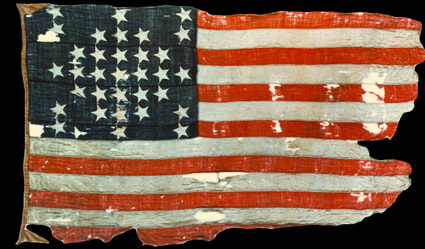
However, when other Confederate delegates arrived, unaware of Wigfall’s premature negotiation, they insisted on surrender. Beauregard, upon learning of Wigfall’s stunt and Anderson’s display of the white handkerchief, wisely sent his own delegation to formalize terms. Anderson, seeking to preserve the dignity of his command, agreed to evacuate under honorable conditions, including a 100-gun salute to the United States flag before it was lowered.
Tragically, during this salute, a spark ignited some gunpowder cartridges, causing an explosion that wounded six men. Private Daniel Hough was killed instantly, and Private Edward Galloway was mortally wounded, dying days later. These were the first casualties of the American Civil War, occurring after the battle itself had officially concluded. The salute was halted at 50 guns.
Anderson and his command were taken aboard the Confederate ship Isabel and then transferred to the Union ship Baltic, one of the frustrated supply vessels, which transported them to New York. No Union soldier was taken prisoner.
Implications: The Unforeseen Torrent
The Battle of Fort Sumter was a pivotal moment that irrevocably altered the course of American history, far beyond the tactical victory it represented for the Confederacy.
Igniting the War
Fort Sumter immediately transformed the abstract political debate over states’ rights and secession into a tangible military conflict. The firing on a U.S. federal installation was an act of war, eliminating any remaining ambiguity about the Confederate intention to establish an independent nation by force if necessary. Lincoln’s subsequent call for 75,000 volunteers cemented this reality, forcing the undecided border states to choose sides and prompting additional secessions (Virginia, Arkansas, North Carolina, Tennessee). The nation was now clearly and violently divided.
Mobilization and National Identity
The events at Fort Sumter served as a powerful catalyst for nationalistic fervor in both the North and the South. In the North, news of the attack "ran through the Land, as if by electric nerves," as Walt Whitman recalled. A wave of patriotism swept through Union states, with citizens enthusiastically waving flags, holding rallies, and expressing a renewed sense of national identity. Major Robert Anderson became a national hero, and the Fort Sumter flag, which he brought north, became a potent symbol of defiance and unity.
Similarly, in the South, the victory at Fort Sumter ignited Confederate nationalism. Celebrations erupted with fireworks, bonfires, and the raising of Confederate flags. P. G. T. Beauregard was hailed as a gallant general, and the capture of Sumter was celebrated as a validation of their cause and a demonstration of their ability to stand against the Union. Recruitment soared in both regions, with more volunteers answering the call than anticipated, driven by a fierce belief in their respective causes.
The Illusion of a Short War
Perhaps one of the most tragic implications of Fort Sumter was the widespread, yet utterly false, belief on both sides that the war would be brief and relatively bloodless. Leaders and citizens alike predicted a conflict lasting mere weeks, perhaps a few months at most, with minimal casualties. Each side underestimated the other’s resolve and fighting capabilities, fueled by propaganda and a sense of moral superiority. This dangerous optimism quickly evaporated as the war escalated, revealing itself to be a prolonged, brutal struggle that would ultimately redefine warfare, cost over 650,000 lives, and inflict immense economic and social devastation across the nation.
A Legacy Etched in Stone
On April 14, 1865, four years to the day after the lowering of the flag, Major General Robert Anderson, now retired, returned to Fort Sumter to ceremonially raise the very same flag. This act was intended as a poignant symbol of national reunification and the Union’s triumph. However, the symbolic closure was tragically overshadowed hours later by the assassination of President Lincoln by Confederate sympathizer John Wilkes Booth, casting a long shadow over the promise of peace and reconciliation.
Fort Sumter itself bore the scars of war, having been battered into ruins by Union artillery during an unsuccessful siege in 1863. Little remained of the structure Anderson knew in 1861. Today, the reconstructed and preserved ruins of Fort Sumter, alongside Fort Moultrie, stand as a poignant National Historic Park. Annually, visitors from around the world come to this site, where the first shots of America’s deadliest conflict were fired, to reflect on the deep divisions that once tore a nation apart and the enduring legacy of a war that forged a new United States.