Esoterica Engine: A Deep Dive into a C++ Powerhouse for the Technically Ambitious
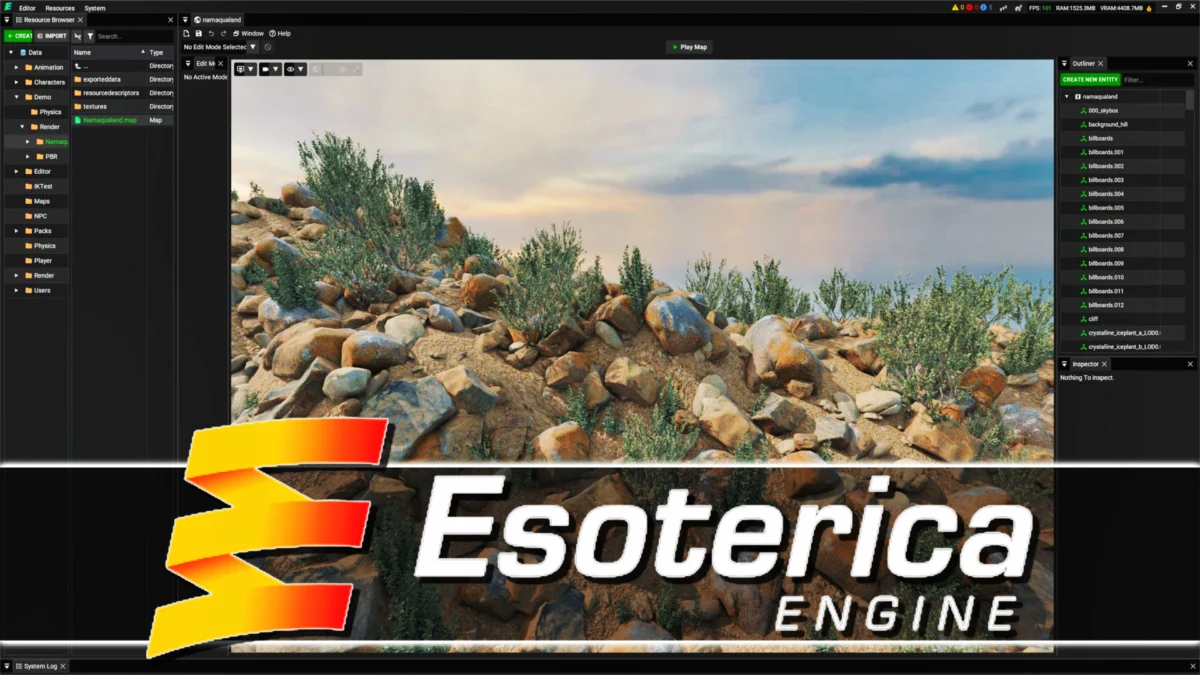
Game development is a landscape dotted with powerful, feature-rich engines designed to empower creators of all skill levels. However, a new contender has emerged, not to democratize game creation for the masses, but to offer a profound glimpse under the hood for those with the technical acumen to truly appreciate and extend it. Esoterica Engine, a free and open-source C++ game engine, is deliberately designed for a specific audience: technical teams who can adapt, evolve, and build upon its foundational architecture.
Developed by Bobby Anguelov, a seasoned game developer with experience at Valve (Steam), and featuring a cutting-edge renderer by Kirill Bazhenov, another veteran of the industry with multiple shipped titles, Esoterica Engine is not a plug-and-play solution. Its very name hints at its specialized nature, suggesting an understanding reserved for those with a deep appreciation for the intricate workings of game development. This engine is a testament to the power and flexibility of C++ and a valuable resource for those seeking to understand the core components of modern game development tools.
Unveiling Esoterica: A Foundation for Customization
At its heart, Esoterica Engine is presented as a foundational framework, a robust starting point rather than a complete, out-of-the-box solution. The developers themselves are explicit about this. A direct quote from their GitHub repository states: "We need to be clear that Esoterica is NOT an off the shelf game engine that you can just take and work with. It is intended for technical teams that have the ability to extend and build upon it." This statement is crucial for setting expectations and understanding the engine’s intended purpose.
This deliberate design choice positions Esoterica Engine as an ideal tool for several key use cases:
- Engine Development Experiments: For individuals or teams looking to explore novel rendering techniques, physics simulations, or scripting systems, Esoterica provides a solid C++ foundation upon which to build.
- Learning and Education: Aspiring game engine programmers or those seeking a deeper understanding of how game engines function will find Esoterica to be an invaluable learning resource. By dissecting its source code, developers can gain firsthand knowledge of complex systems.
- Custom Engine Architectures: Larger, established studios that require highly specialized engine features or have unique performance demands might find Esoterica to be a compelling starting point for developing their own proprietary engine tailored to their specific needs.
The emphasis on source code accessibility is paramount. For developers who are not comfortable reading and understanding C++ code, Esoterica Engine offers little immediate utility. However, for those who embrace the challenge of diving into the codebase, the engine presents a rare opportunity to explore the inner workings of a modern game engine.
A Glimpse into Esoterica’s Capabilities
While not a comprehensive list of user-facing features in the traditional sense, Esoterica Engine boasts a sophisticated architecture designed to be extended and adapted. The core components and functionalities that have been highlighted by the developers include:
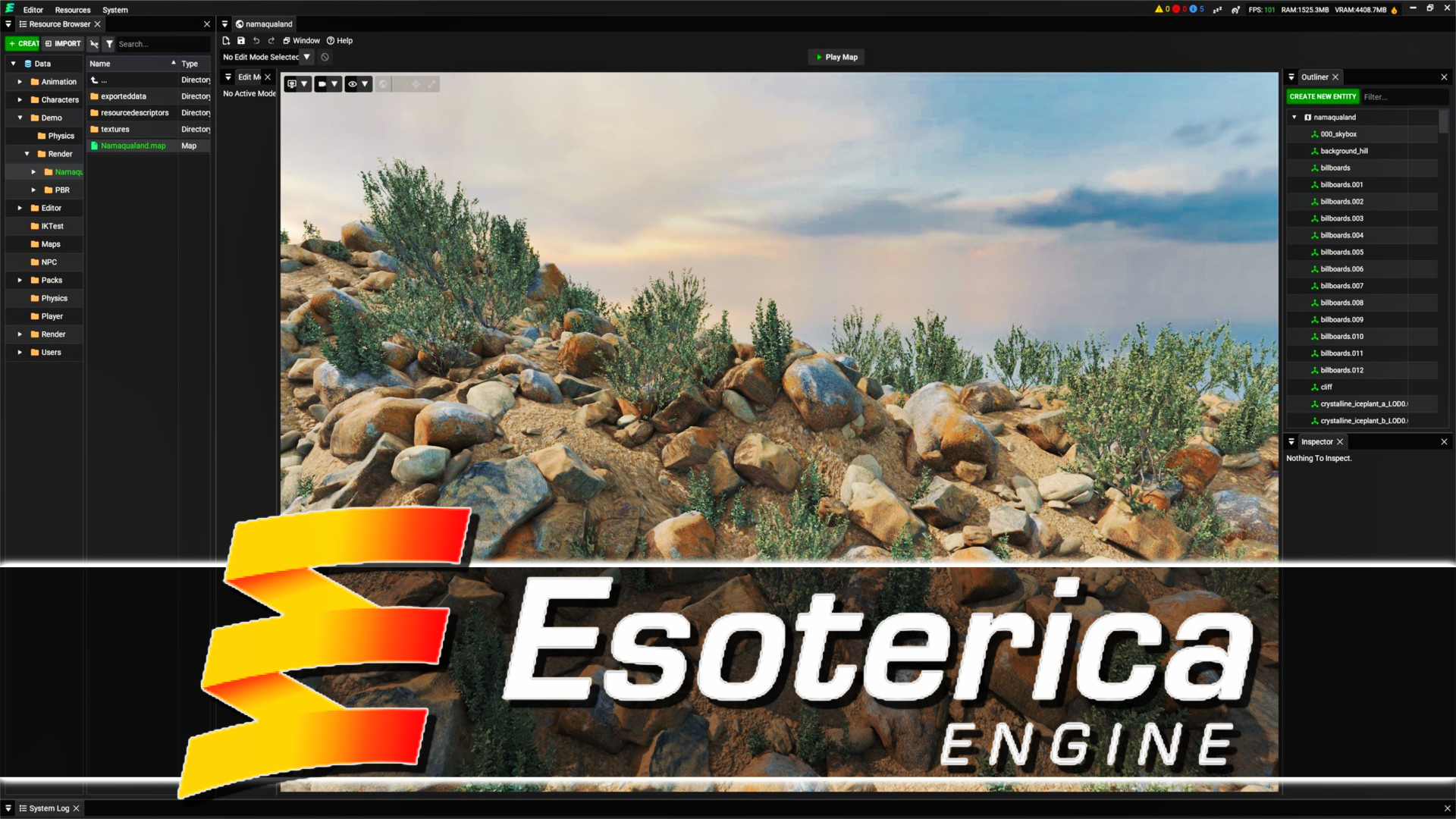
- High-Performance Rendering: The renderer, a significant contribution from Kirill Bazhenov, is designed for efficiency and visual fidelity. While specifics are often found within the source code, the implication is a modern rendering pipeline capable of handling complex scenes.
- C++ Foundation: The engine is built entirely in C++, a language renowned for its performance and control. This allows for deep optimization and direct hardware access, crucial for demanding game development.
- Modularity and Extensibility: The architecture is designed to be modular, allowing developers to swap out or extend various systems as needed. This is key to its suitability for custom engine development.
- Cross-Platform Potential: While not explicitly detailed for end-users, C++ engines often have the inherent potential for cross-platform development, suggesting that Esoterica could be adapted for various operating systems and hardware.
- Asset Management: As with any game engine, a robust system for managing game assets (models, textures, audio, etc.) is essential. Esoterica likely includes or facilitates such systems.
- Scene Management: The ability to organize and manage game worlds and their constituent elements is a fundamental requirement, and Esoterica would include mechanisms for this.
- Scripting Integration (Potential): While C++ is the core, many modern engines allow for scripting languages to be integrated for faster iteration. The extensibility of Esoterica suggests this could be a viable avenue for users.
The developers have provided key links for those interested in delving deeper:
- Esoterica Engine Homepage: https://www.esotericaengine.com/
- Esoterica Engine GitHub Repository: https://github.com/BobbyAnguelov/Esoterica
These resources are vital for understanding the engine’s technical specifications, contributing to its development, or simply exploring its source code.
Chronology of Development and Vision
The development of Esoterica Engine appears to be a deliberate and focused effort by experienced industry professionals. Bobby Anguelov, with his background at Valve, brings a wealth of knowledge in building and maintaining large-scale game development infrastructure. Kirill Bazhenov’s contributions to the renderer suggest a strong emphasis on visual performance and cutting-edge graphical techniques.
The engine’s open-source nature implies a commitment to transparency and community involvement. While the initial focus is on providing a powerful framework, the long-term vision for Esoterica likely involves its evolution through community contributions and its adoption by specialized technical teams. The decision to make it free and open-source further underscores its role as a resource for learning and innovation, rather than a commercial product with restrictive licensing.
Supporting Data: The Power of C++ and Open Source
The choice of C++ as the primary language for Esoterica Engine is a significant indicator of its intended performance and capabilities. C++ is the backbone of many of the most powerful and demanding game engines in the industry, including Unreal Engine and Unity’s core systems. Its ability to offer low-level memory manipulation, direct hardware access, and highly optimized code execution makes it the go-to choice for complex graphics, physics, and AI.
The open-source model, as exemplified by the engine’s presence on GitHub, offers several advantages:

- Transparency: Developers can examine the source code to understand exactly how the engine works, identify potential bottlenecks, and verify its security.
- Community Collaboration: An open-source project can attract a community of developers who contribute bug fixes, new features, and documentation, accelerating its development and improving its robustness.
- Flexibility and Customization: Users are not limited by the features provided by a commercial vendor. They can modify the engine to suit their specific project requirements.
- Cost-Effectiveness: For independent developers and smaller teams, free and open-source software eliminates significant licensing costs, allowing resources to be allocated to game development itself.
The existence of a dedicated homepage and a detailed GitHub repository provides the necessary infrastructure for this collaborative and transparent approach. The inclusion of a video demonstration, as mentioned in the original article, offers a visual introduction to the engine’s interface and capabilities, further supporting its accessibility to its target audience.
Official Responses and Developer Intent
The primary "official response" from the developers is their explicit statement of intent regarding the engine’s purpose. The quote, "We need to be clear that Esoterica is NOT an off the shelf game engine that you can just take and work with. It is intended for technical teams that have the ability to extend and build upon it," is a cornerstone of their communication strategy. This upfront declaration manages expectations and ensures that the engine is approached by users who are equipped to leverage its advanced nature.
The developers’ commitment to providing the source code and maintaining an active GitHub repository are further testaments to their dedication to the open-source philosophy and their belief in the engine’s potential as a collaborative development tool. Their active engagement on platforms like GitHub can be seen as an invitation for skilled developers to contribute and shape the future of Esoterica.
Implications for the Game Development Landscape
Esoterica Engine carves out a niche in a crowded market by deliberately eschewing the broad accessibility of engines like Unity or Unreal Engine. Its implications are significant for specific segments of the game development community:
- Empowering Advanced Developers: For experienced C++ programmers and technical leads, Esoterica offers a powerful and customizable platform. It allows them to build highly optimized and specialized game systems without the constraints of a more opinionated engine.
- Nurturing Engine Development Talent: The engine serves as an invaluable educational tool. Students and aspiring game engine developers can learn by dissecting a real-world, high-performance engine, gaining insights that are often difficult to acquire through proprietary software.
- Fostering Innovation in Core Technologies: By providing an open and extensible framework, Esoterica can encourage experimentation with new rendering techniques, AI algorithms, and other core game development technologies. This can lead to advancements that eventually trickle down to more accessible engines.
- A Niche for Specialized Projects: Teams working on highly specific genres or requiring extremely precise control over performance, such as those developing complex simulation games, AAA titles with unique technical requirements, or even non-game applications that leverage game engine technology, may find Esoterica to be an ideal foundation.
The success of Esoterica Engine will likely be measured not by the number of hobbyist games it powers, but by the depth of its adoption within technically proficient teams and its impact on the advancement of game engine technology. It represents a deliberate choice to prioritize depth and customization over broad appeal, a strategy that can lead to profound innovation for those willing to engage with its complexities.