From Engineering to the Director’s Chair: The Remarkable Evolution of Roxann Dawson
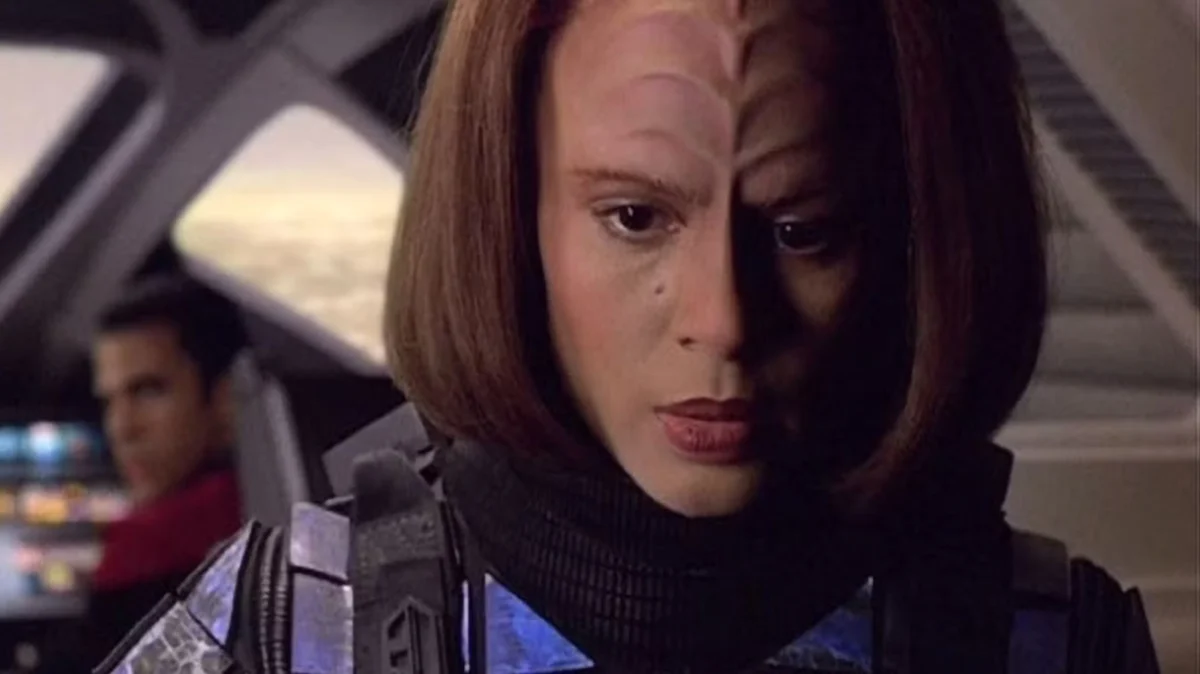
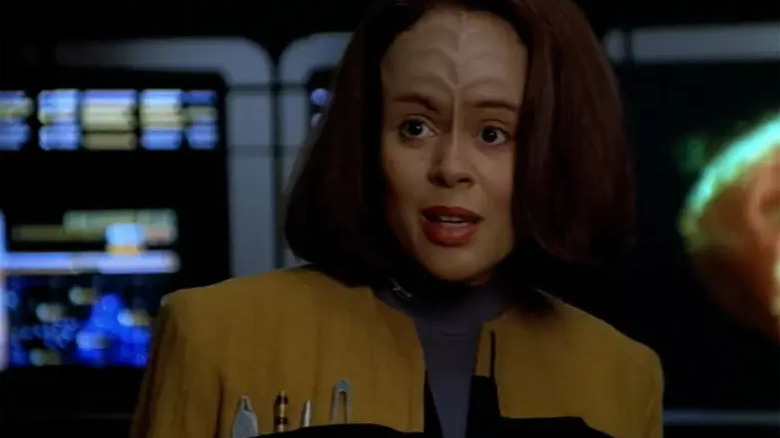
In the annals of science fiction history, few characters possess the grit, technical brilliance, and internal volatility of B’Elanna Torres, the Chief Engineer of the USS Voyager. For seven seasons, Roxann Dawson portrayed the half-Klingon, half-human officer with a nuanced intensity that made her a fan favorite. However, twenty-five years after the conclusion of Star Trek: Voyager, Dawson’s legacy in Hollywood has transformed. No longer defined solely by the prosthetic forehead and the Starfleet uniform, Dawson has emerged as one of the most prolific and sought-after directors in episodic television.
Her journey from the engine room of a starship to the helm of prestige dramas like The Morning Show and Foundation represents one of the most successful career pivots in the industry. It is a story of ambition, technical mastery, and a relentless drive to evolve.
The Coincidence of Lieutenant Torres: Early Career Foundations
Long before she stepped onto the bridge of Voyager, Roxann Dawson (then Roxann Caballero) was a working actress navigating the competitive landscape of 1980s and 90s television. In a twist of fate that seems scripted by the universe itself, Dawson once appeared in a pilot for a police procedural titled NYPD Mounted. The series, which failed to go to air, starred Dennis Franz and centered on the New York mounted police unit.
In a bizarre coincidence, Dawson’s character in that pilot was a supporting officer named Lieutenant Torres. Only a few years later, she would be cast in the role that defined her acting career: Lieutenant B’Elanna Torres. While the NYPD Mounted role was a mere footnote, it served as a harbinger of the authoritative, complex characters she would eventually embody and, later, direct.
The Voyager Years: A Dual Education
When Star Trek: Voyager premiered in 1995, Dawson was tasked with a difficult acting challenge. B’Elanna Torres was a member of the Maquis—a group of freedom fighters (or terrorists, depending on one’s perspective) forced to integrate with a Starfleet crew after being stranded 70,000 light-years from home.
Torres was a character defined by duality. As a half-Klingon, she struggled with a heritage she often viewed as a curse, battling an inherent predisposition toward rage and violence. Yet, as a human and a brilliant engineer, she was the intellectual backbone of the ship. Dawson appeared in 172 episodes, anchoring the show’s emotional stakes through her relationship with Tom Paris (Robert Duncan McNeill) and her evolving friendship with Captain Kathryn Janeway (Kate Mulgrew).
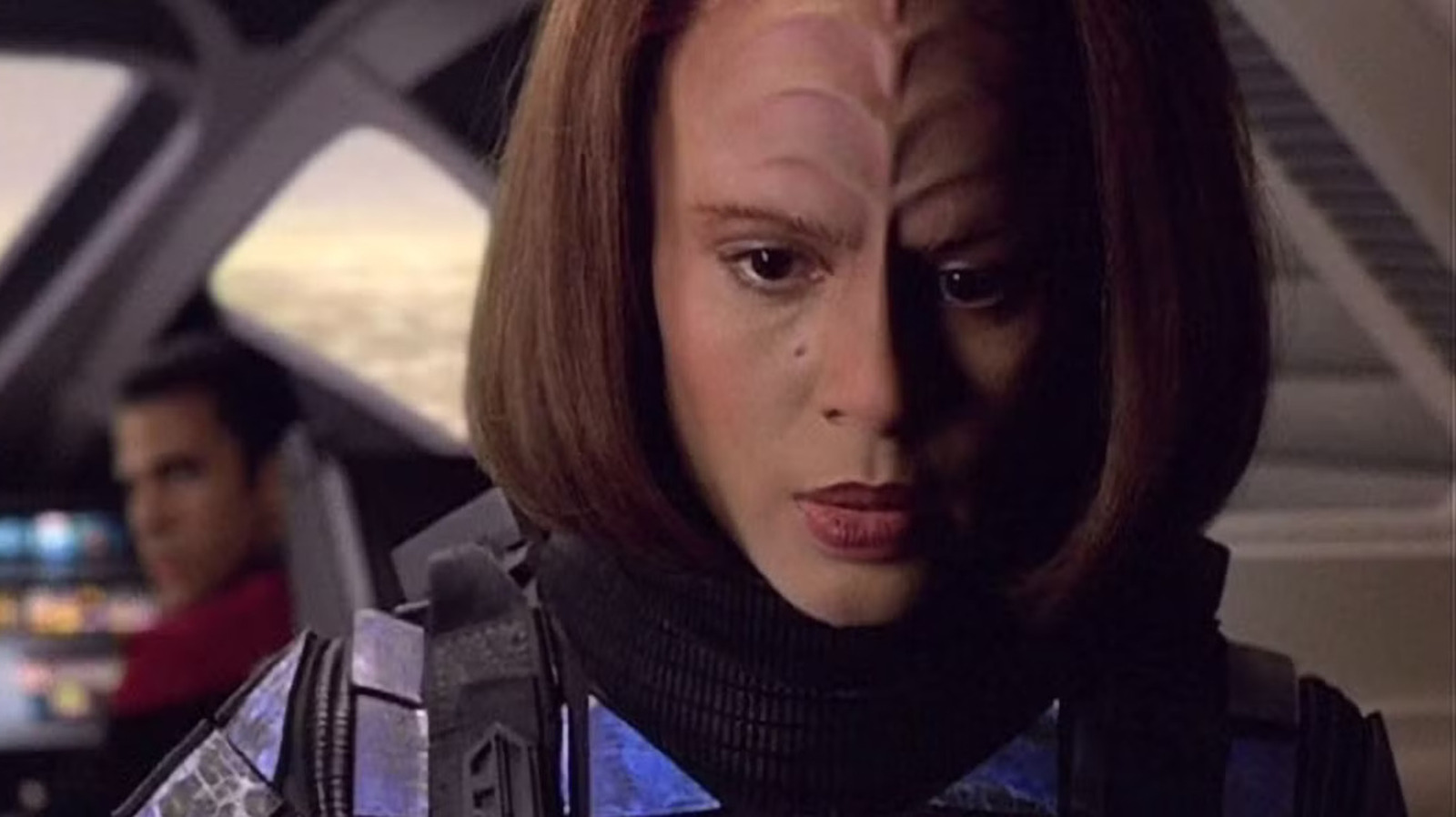
However, while Torres was fixing warp cores on screen, Dawson was observing the mechanics of filmmaking behind the scenes. She became a student of the "Star Trek School of Directing," a tradition established by Leonard Nimoy and Jonathan Frakes.
The "Riddles" Turning Point
In 1999, during the show’s sixth season, Dawson made her directorial debut with the episode "Riddles." The plot focused on Tuvok (Tim Russ) losing his memory and emotional Vulcan discipline after an alien attack. The episode was a critical success, demonstrating Dawson’s ability to balance character-driven drama with the technical requirements of a high-concept sci-fi show. This success led to her helming two more episodes in the final season and eventually ten episodes of the prequel series, Star Trek: Enterprise.
Chronology of a Directing Powerhouse
Following the conclusion of Voyager in 2001, many of Dawson’s castmates continued to pursue acting in various capacities. Dawson, however, recognized that her passion had shifted. While she took occasional guest roles in series like The Closer and Without a Trace, her primary focus moved behind the camera.
The 2000s: Building the Resume
Throughout the mid-to-late 2000s, Dawson became a staple of the procedural and genre television boom. Her credits from this era read like a "must-watch" list of the decade:
- Medical and Crime Dramas: She directed multiple episodes of Crossing Jordan (where she also served as a producer) and Cold Case.
- Genre Hits: She lent her vision to Charmed, The O.C., and the cultural phenomenon Lost.
- Early Prestige TV: Her work on Treme and The Good Wife signaled her ability to handle more grounded, sophisticated narratives.
The 2010s: The Rise to the A-List
By the 2010s, Dawson was no longer just a "former Trek actor who directs." She was a top-tier television director. She was entrusted with high-stakes episodes of Agents of S.H.I.E.L.D., Bates Motel, and the Emmy-winning House of Cards. Her work on This Is Us showcased her range, proving she could handle tear-jerking family intimacy as effectively as intergalactic conflict.
Breakthrough: The Leap to Feature Films
In 2019, Dawson achieved a milestone that eludes many career TV directors: the successful transition to feature films. She directed Breakthrough, a Christian drama starring Chrissy Metz. The film was based on the true story of a mother whose son miraculously recovered after falling through a frozen lake and being clinically dead for nearly an hour.
The film was a significant commercial success, grossing over $50 million on a modest $14 million budget. Beyond the box office, Breakthrough was a deeply personal project for Dawson. In various interviews, she has discussed how the film mirrored her own spiritual journey.
Official Perspective: Dawson on Faith
Speaking with ChurchPOP, Dawson revealed that she had transitioned from being a staunch atheist to a devout Catholic. "Directing Breakthrough wasn’t just a job; it was a strengthening of my own faith," Dawson noted. She explained that the story’s themes of hope and the "impossible" resonated with her personal evolution, marking a departure from the purely secular science fiction of her early career.
Supporting Data: The Impact of the "Trek Director School"
Dawson is part of a specific cohort of Star Trek alumni who used the franchise as a springboard for directing. To understand the scale of her success, one must look at the data compared to her peers:
| Director | Notable Trek Role | Total Trek Episodes Directed | Career Trajectory Post-Trek |
|---|---|---|---|
| Jonathan Frakes | Will Riker | 31 | Prolific TV/Film Director (First Contact) |
| LeVar Burton | Geordi La Forge | 29 | Director/Producer/Literacy Advocate |
| Roxann Dawson | B’Elanna Torres | 12 | High-end Prestige TV/Feature Film Director |
| Robert Duncan McNeill | Tom Paris | 12 | Executive Producer/Director (Chuck, Resident Alien) |
While Frakes and Burton have directed more episodes within the Star Trek universe, Dawson has arguably built the most diverse non-Trek resume, spanning nearly every major network and streaming service.
Implications: Legacy and the Choice of "Foundation"
Today, at 67, Roxann Dawson is at the height of her powers. Her recent work includes the Apple TV+ flagship series The Morning Show and the sweeping sci-fi epic Foundation.
Interestingly, Dawson’s involvement in Foundation—a series based on the works of Isaac Asimov—came at a time when the modern Star Trek expansion (under Alex Kurtzman) was in full swing. Despite numerous opportunities to return to the franchise that started it all, Dawson chose the new frontier of Foundation.
The Implication of Choice
This decision is significant. It suggests that for Dawson, the "Star Trek" chapter is a cherished but completed volume. While other alumni often return to the fold for nostalgia or job security, Dawson’s demand in the industry is so high that she can choose to build new worlds rather than revisit old ones. Her choice to prioritize Foundation over a return to Trek highlights her status as a premiere technical director who seeks the highest possible production value and most complex storytelling challenges.
Conclusion
The career of Roxann Dawson is a testament to the power of professional reinvention. In 1995, she was B’Elanna Torres, a character defined by her struggle to find her place between two worlds. In 2024, Dawson has found her place at the very top of the Hollywood hierarchy.
She has successfully navigated the transition from the "actor’s side" of the camera to the "director’s side," breaking through the glass ceilings that often limit women in genre television. While she will always be beloved by "Trekkies" for her fiery performance as a Klingon engineer, her true legacy lies in the dozens of iconic television episodes she has crafted for a global audience. For Roxann Dawson, the final frontier wasn’t space—it was the director’s chair.