The "Zen" of Restoration: Trash Goblin Surpasses Funding Goals as Crowdfunding Campaign Enters Final 24 Hours
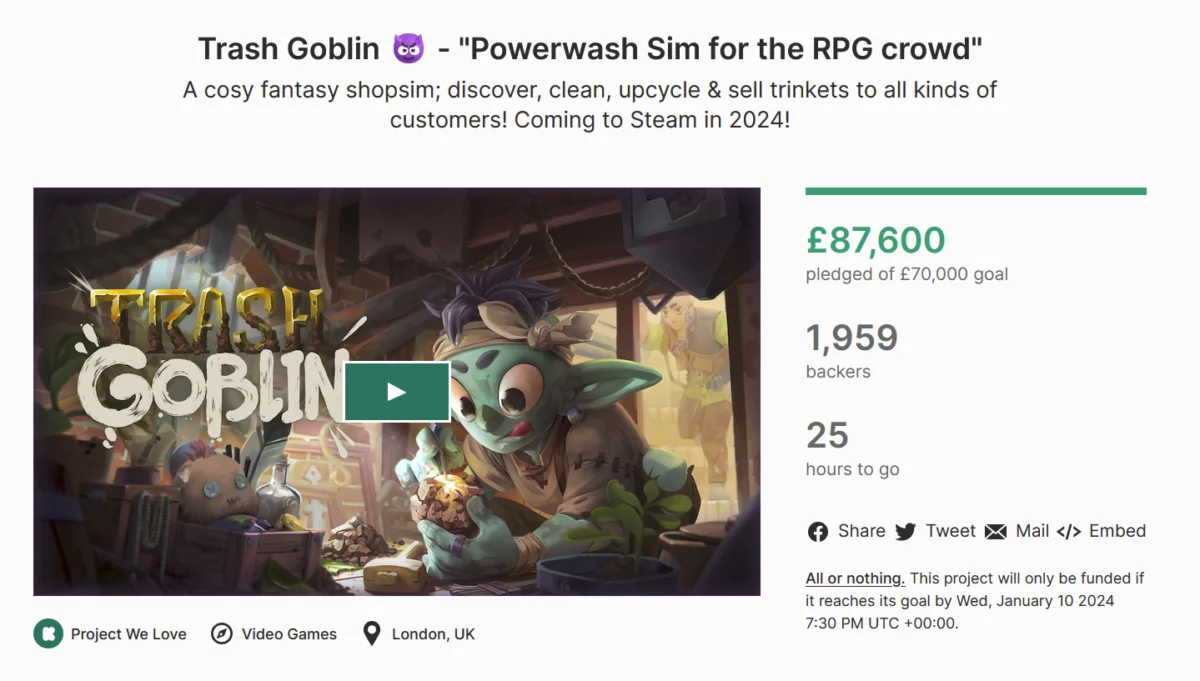
LONDON – In an era where high-octane shooters and complex grand-strategy epics often dominate the headlines, a quieter, more tactile revolution is taking place in the indie gaming sector. Trash Goblin, a "cosy" trinket-cleaning and restoration simulator developed by Spilt Milk Studios, has officially surpassed its primary funding goals on Kickstarter. As of January 9, 2024, the project stands at 124% of its initial target, with a high-stakes final 24-hour push aimed at crossing the "magic" £100,000 threshold.
The success of the campaign highlights a significant shift in consumer appetite toward "mindful" gaming—experiences that prioritize relaxation, satisfaction, and low-stress gameplay loops over traditional competitive mechanics.
Main Facts: A "Powerwash Simulator" for the Fantasy Realm
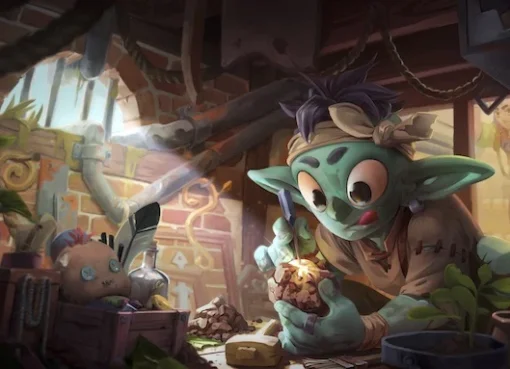
Trash Goblin is described by its creators as a "cosy trinket-cleaning game," a genre hybrid that blends the ASMR-like satisfaction of Powerwash Simulator with the world-building and aesthetic charm of a classic RPG. Players step into the role of a goblin shopkeeper who discovers, cleans, repairs, and upcycles various discarded items to sell to a cast of quirky characters.
The campaign’s current status is a testament to the growing "wholesome games" movement. Having reached 124% of its goal shortly after the New Year, the studio is now looking to maximize its final hours on the platform. Beyond the financial backing, the studio is heavily emphasizing the importance of Steam wishlists, a critical metric for indie success in the modern digital marketplace.
The project is led by Spilt Milk Studios, a veteran independent developer, with industry strategist and Gamesbrief founder Nicholas Lovell recently stepping into an executive role to guide the title through its most critical development phase.
Chronology: From Concept to Crowdfunding Success
The journey of Trash Goblin reflects the iterative and community-focused nature of modern indie development.
- Conceptualization and Prototyping: Spilt Milk Studios identified a gap in the market for "tinkering" games. While building-simulators and farm-sims were plentiful, the specific niche of cleaning and restoring individual items—mimicking the real-world hobby of antique restoration—offered a unique hook.
- Strategic Leadership Shift: Nicholas Lovell, long known as a consultant and non-executive director for the studio, transitioned into a more hands-on executive role. Despite managing the personal challenges of long-term health issues, Lovell’s expertise in "The Curve"—a business philosophy focusing on turning fans into "superfans"—was integrated into the game’s marketing and community-building strategy.
- Kickstarter Launch: The campaign was launched in late 2023, seeking to secure the necessary "runway" to polish the game’s unique mechanics, which include manual scrubbing, delicate polishing, and creative assembly of "upcycled" goods.
- The New Year Surge: Funding hit its 100% milestone shortly after the 2024 New Year. This period is traditionally difficult for crowdfunding due to "holiday fatigue," yet Trash Goblin maintained momentum, signaling a strong core audience.
- The Final Countdown: On January 9, 2024, the campaign entered its final 24 hours, sitting at 124% funding and eyeing a stretch goal of £100,000.
Supporting Data: The Business of "Cosy"
The financial and engagement metrics surrounding Trash Goblin provide a snapshot of the current indie landscape.
- Funding Level: At 124% of the target, the project has moved beyond "proof of concept" and into "enhanced development." This surplus often allows studios to hire additional freelance talent for art or sound, ensuring a higher level of polish.
- The £100,000 Target: This specific figure is often cited by UK-based indie studios as a "safety net" that allows for a more comfortable development cycle and better marketing reach ahead of a Steam Early Access launch.
- Wishlist Conversion: While the Kickstarter provides immediate capital, the studio’s focus on Steam wishlists is a long-term play. High wishlist counts are the primary driver of Steam’s internal algorithms, determining whether a game is featured on the "Popular Upcoming" or "New and Trending" lists at launch.
- The Genre Context: The "Cosy Games" tag on Steam has seen a 400% increase in usage over the last three years. Titles like Unpacking, A Little to the Left, and Stardew Valley have proven that there is a massive, underserved demographic of players looking for "digital chores" that provide a sense of order and accomplishment without the stress of "Game Over" screens.
Official Responses: Perspective from the Studio
Nicholas Lovell, writing for Gamesbrief, expressed both personal and professional pride in the project’s trajectory. Lovell’s involvement is particularly noteworthy given his background as a leading voice in game monetization and business strategy.
"I’m so excited that the Kickstarter I’m part of has funded," Lovell stated. "I’ve recently stepped up from a non-executive role at Spilt Milk to an executive one. I’m still part-time, but I’m much more involved."

Lovell’s transition comes at a time when he is also navigating the effects of long Covid, a detail he shared to provide context on his capacity and the studio’s supportive environment. Regarding the game itself, he described the appeal of the "trinket-cleaning" mechanic as a "Powerwash Simulator for the RPG crowd," a comparison that has resonated deeply with backers.
The studio has encouraged its community to not only back the project financially but to participate in the "wishlist" ecosystem, which they view as vital for the game’s post-Kickstarter life cycle.
Implications: What Trash Goblin Says About the Industry
The success of Trash Goblin carries several broader implications for the independent gaming industry in 2024 and beyond.
1. The Validation of Crowdfunding in a "Safe" Investment Climate
As traditional venture capital and publisher funding become more risk-averse, Kickstarter remains a vital "litmus test" for niche concepts. Trash Goblin proves that "weird" or hyper-specific mechanics—like cleaning a fictional rusty gear or polishing a dragon’s tooth—can find a dedicated audience if the aesthetic and "feel" of the game are communicated effectively.
2. The Rise of "Micro-Task" Gameplay
The industry is seeing a shift away from 100-hour open-world games toward experiences that can be enjoyed in short, satisfying bursts. Trash Goblin capitalizes on the psychological satisfaction of "cleaning"—a mechanic that provides instant visual feedback and a sense of progress. This "micro-task" approach is particularly appealing to older gamers and those seeking mental health-friendly content.
3. The "Superfan" Model in Practice
Nicholas Lovell’s own business theories are being put to the test here. By offering various tiers of rewards on Kickstarter, Spilt Milk is identifying its "whales" or "superfans"—those willing to pay more for exclusive content, digital artbooks, or the chance to have their ideas immortalized in the game. This model reduces reliance on mass-market appeal and focuses on deep engagement with a smaller, more passionate base.
4. Accessibility and Studio Culture
Lovell’s mention of his health struggles and his part-time executive role points to a growing trend of "sustainable development" within indie studios. Unlike the "crunch" culture prevalent in AAA studios, smaller teams like Spilt Milk are increasingly prioritizing the well-being of their staff, recognizing that a healthy, flexible work environment leads to more creative and polished final products.
5. The Path to Early Access
With the Kickstarter successfully funded, the next hurdle for Trash Goblin will be its Steam Early Access launch. The data gathered during the campaign—specifically player feedback on which "trinkets" were most popular—will likely dictate the roadmap for future content updates. The "magic £100,000" goal, if reached, will provide the marketing "war chest" needed to ensure the game doesn’t get lost in the thousands of titles released on Steam every month.
Conclusion
As the clock ticks down on the Trash Goblin Kickstarter, the project stands as a beacon for what is possible in the modern indie scene: a combination of niche, satisfying gameplay, transparent community engagement, and veteran business leadership. Whether or not it hits the £100,000 mark, the campaign has already achieved its primary goal: proving that there is a world of players ready to find beauty in the discarded, one trinket at a time.