From Folk Horror to Star-Crossed Lovers: Robert Eggers to Helm Period-Accurate ‘Romeo and Juliet’
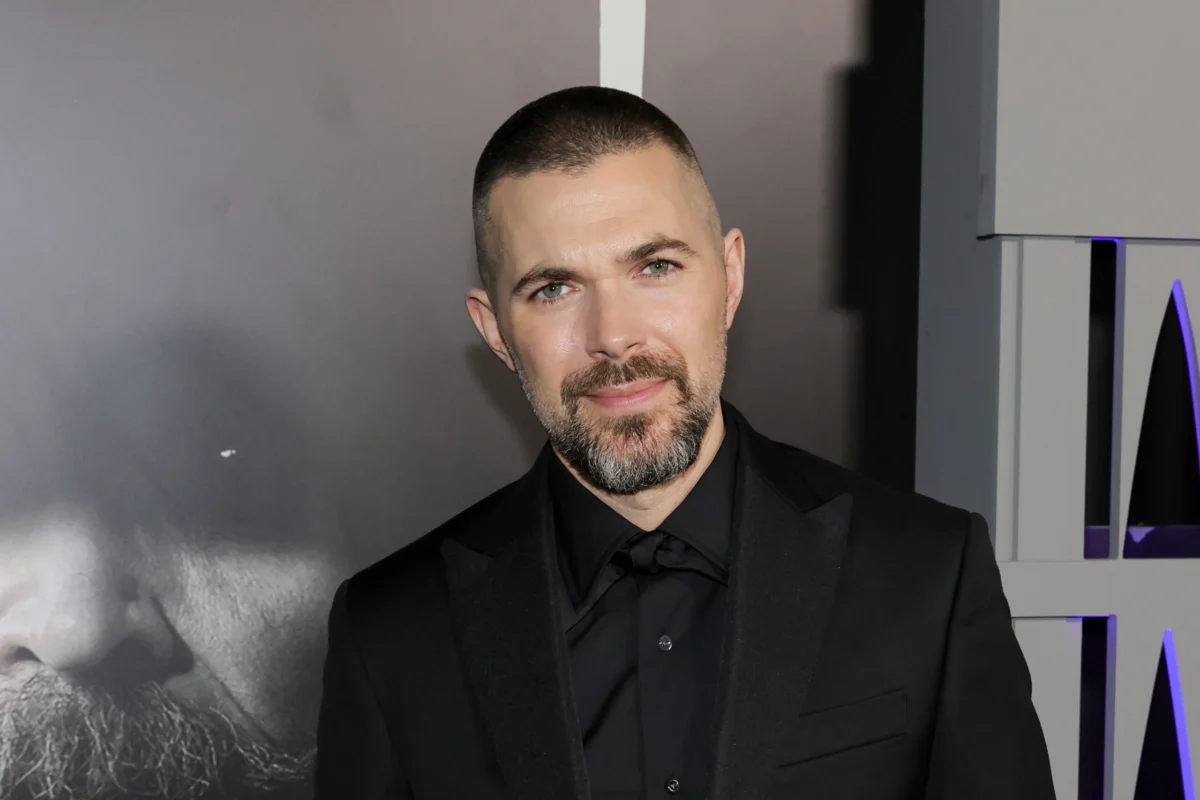
In a move that unites one of modern cinema’s most meticulous visual stylists with the most enduring tragedy in the English canon, Robert Eggers is set to direct and produce a new adaptation of William Shakespeare’s Romeo and Juliet. The project, which is currently being finalized at Focus Features, marks a significant thematic shift for a filmmaker best known for his atmospheric excursions into the macabre and the mythological. However, for those familiar with Eggers’ obsessive commitment to historical authenticity, the pairing of the "period purist" with the Bard’s 14th-century Verona offers a tantalizing prospect of a definitive, visceral rendition of the classic tale.
Main Facts: A Partnership Solidified
The news, first reported by The Hollywood Reporter, indicates that Focus Features is closing a deal to distribute the film, effectively keeping Eggers within the studio ecosystem that has fostered his entire directorial career. While the tragedy of the Montagues and the Capulets has been adapted for the screen dozens of times—ranging from the lush traditionalism of Franco Zeffirelli to the kinetic, neon-soaked modernity of Baz Luhrmann—Eggers’ version is expected to lean heavily into the director’s signature style: rigorous period detail, authentic linguistic cadences, and a potentially darker, more grounded atmosphere than audiences are accustomed to.
Eggers will serve as both director and producer on the project. While casting news remains under wraps, the industry is already speculating on which young actors can meet the physical and linguistic demands of an Eggers production. Given his track record of extracting career-defining performances from actors like Anya Taylor-Joy, Robert Pattinson, and Alexander Skarsgård, the roles of Romeo and Juliet are expected to be among the most coveted in Hollywood.
Chronology: The Evolution of an Auteur
To understand why a Robert Eggers Romeo and Juliet is such a significant development, one must look at the trajectory of his career—a path defined by a steady increase in scale without a compromise in artistic idiosyncrasy.
The Rise of the Period Specialist (2015–2019)
Eggers burst onto the scene in 2015 with The Witch, a "New England Folktale" that earned him the Directing Award at Sundance. Distributed internationally by Focus Features, the film established his blueprint: a preoccupation with the supernatural grounded in grueling historical reality. He followed this with 2019’s The Lighthouse, a descent into maritime madness shot in black-and-white orthochromatic film. These early works proved that Eggers could command a niche audience through sheer atmosphere and technical precision.
Expanding the Canvas (2022–2024)
With 2022’s The Northman, Eggers moved into the realm of the "indie blockbuster." With a budget hovering around $70 million, he recreated the Viking Age with a level of detail that historians praised and audiences found transfixing. This was followed by his long-gestating passion project, Nosferatu, released in late 2024. The film was a critical and commercial triumph, grossing $181 million worldwide and proving that Eggers’ "elevated horror" sensibilities had genuine mass-market appeal.

The Present: ‘Werwulf’ and the Shift to Shakespeare
Currently, Eggers is in the final stages of work on Werwulf, a folk-horror epic starring Aaron Taylor-Johnson, Willem Dafoe, and Lily-Rose Depp. Written in collaboration with the Icelandic poet and novelist Sjón, Werwulf is expected to continue the director’s exploration of ancient European myths. The announcement of Romeo and Juliet suggests that once the dust settles on his werewolf epic, Eggers is ready to trade the howling of wolves for the iambic pentameter of the Italian Renaissance.
Supporting Data: The Economics of Eggers and the Bard
The decision by Focus Features to aggressive pursue this project is backed by a strong financial logic. While Shakespearean adaptations can be risky, Eggers has proven himself to be a reliable "brand" director whose name alone generates significant pre-release interest.
Box Office Benchmarks
- Nosferatu (2024): $181 million worldwide. This figure is particularly impressive for a gothic horror film and signaled to Universal (Focus’s parent company) that Eggers can handle higher-stakes investments.
- The Northman (2022): While its theatrical run was hampered by the tail end of the pandemic, its performance on PVOD and physical media solidified Eggers as a filmmaker with a long "shelf life."
- Romeo + Juliet (1996): Baz Luhrmann’s modern take grossed $147 million (roughly $290 million in today’s dollars). This remains the commercial high-water mark for the play, proving that when the "hook" is strong enough, the 400-year-old story can still dominate the box office.
The Focus Features Factor
The relationship between Eggers and Focus Features is one of the most consistent in the modern "prestige" film landscape. Focus has handled the domestic distribution of The Northman, Nosferatu, and Werwulf, while managing international duties for his earlier works. By securing Romeo and Juliet, Focus ensures that Eggers does not migrate to a rival like A24 or Searchlight Pictures, maintaining their status as the premier home for high-concept, auteur-driven cinema.
Official Responses and Creative Direction
While official statements from Eggers himself are rare during the development phase, sources close to the production emphasize that this will not be a "revisionist" take in the modern sense.
Avoiding the "Luhrmann Twist"
Industry insiders suggest that Eggers is disinterested in the "guns and Hawaiian shirts" aesthetic popularized by the 1990s. Instead, his Romeo and Juliet is expected to be a "visceral, mud-and-blood" recreation of 14th-century Italy. This aligns with his previous comments on filmmaking, where he famously stated his desire to "recreate the past so accurately that it feels like a documentary of a dream."
Collaborative Continuity
The project will likely see the return of Eggers’ regular troupe of collaborators. This includes cinematographer Jarin Blaschke, whose use of natural light and period-accurate candle lighting would be essential for a 1300s setting, and production designer Craig Lathrop. The involvement of Sjón as a consultant or co-writer is also rumored, given their successful partnership on The Northman and Werwulf.

Implications: A Reshuffled Slate and a New Genre
The announcement of Romeo and Juliet has immediate implications for Eggers’ other rumored projects and the broader landscape of theatrical Shakespeare.
Projects on the Back Burner
For several years, Eggers has been linked to two other major properties: a sequel to the 1986 cult classic Labyrinth and a new adaptation of Charles Dickens’ A Christmas Carol. The formalization of the Shakespeare deal suggests that these projects have been moved to the back burner. Given the intensive research phase Eggers requires for his films—often spending years studying architecture, dialect, and clothing of the era—it is unlikely he would tackle another major project simultaneously with Romeo and Juliet.
The Return of "Auteur Shakespeare"
We are currently witnessing a resurgence of high-profile directors returning to the Bard. Following Joel Coen’s The Tragedy of Macbeth (2021), Eggers’ entry into this space suggests a trend where Shakespeare is being used as a canvas for stylistic experimentation rather than just a theatrical staple. Eggers’ penchant for "folk horror" elements could introduce a supernatural or pagan undertone to Romeo and Juliet—perhaps leaning into the apothecary’s potions and the "star-crossed" astrological fate that defines the protagonists.
Impact on the Industry
In an era dominated by franchises and intellectual property based on comic books or toys, a major studio commitment to a Shakespearean tragedy is a gamble. However, it is a gamble on the director as the IP. Much like Christopher Nolan or Quentin Tarantino, Robert Eggers has reached a point where his name is the primary draw. By applying his "period-accurate" lens to the world’s most famous romance, Focus Features is betting that audiences are hungry for a version of Verona that feels less like a stage play and more like a time machine.
Conclusion
Robert Eggers’ move toward Romeo and Juliet represents a maturation of his career. Having mastered the genres of horror and the epic, he is now turning his attention to the foundational texts of Western drama. If his previous work is any indication, audiences should prepare for a version of Shakespeare that is as beautiful as it is brutal, stripped of modern artifice and restored to the dark, violent, and deeply superstitious world in which it was originally conceived. For a story about the "star-crossed," there could be no better director to capture the cold, indifferent hand of fate than Robert Eggers.