The Entrepreneurial Blueprint: TechCrunch Founder Summit to Anchor Boston’s Startup Ecosystem
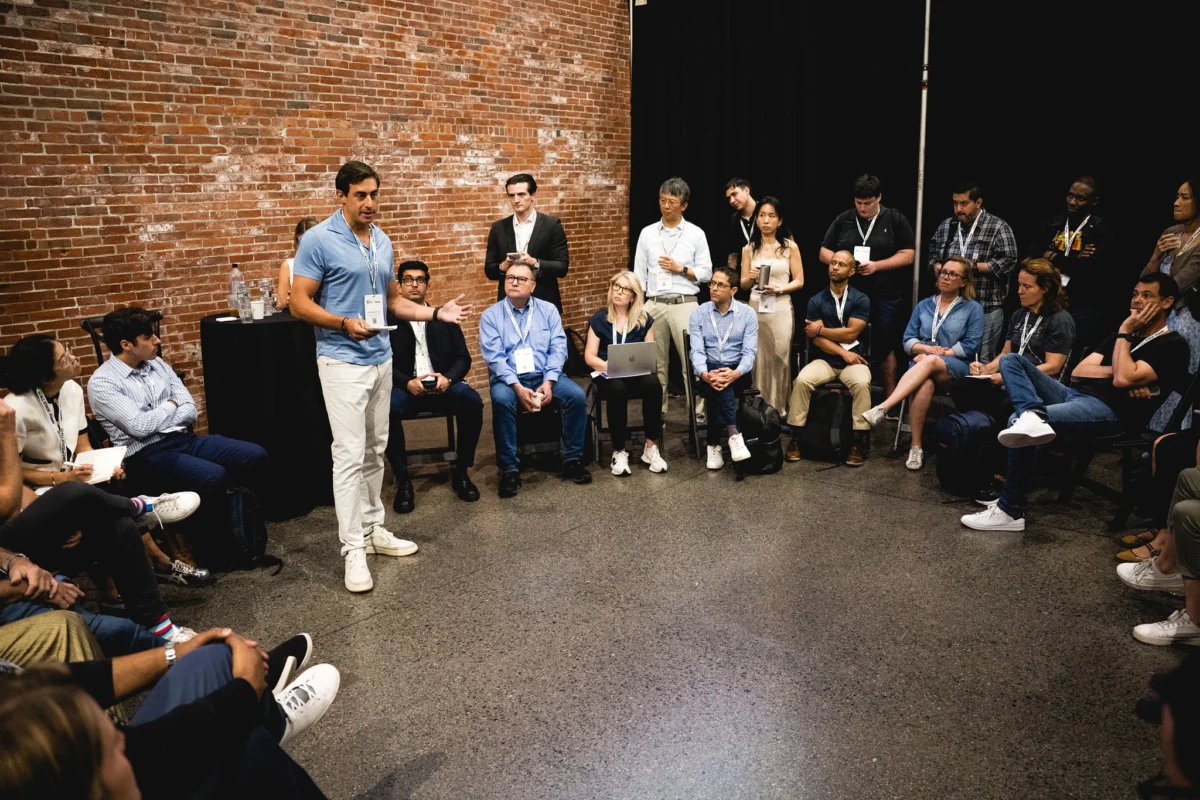
BOSTON, MA — In an era where the venture capital landscape is undergoing a fundamental recalibration, the bridge between a visionary idea and a sustainable, category-defining enterprise has never been more difficult to cross. On November 4, TechCrunch will host its premier Founder Summit at the historic SoWa Power Station in Boston. Designed as an intensive, one-day navigational guide for the modern entrepreneur, the summit aims to distill years of institutional knowledge from the world’s most successful investors and operators into an actionable curriculum for the next generation of founders.
The event arrives at a critical juncture for the global tech economy. As the "growth at all costs" mantra of the previous decade gives way to a disciplined focus on unit economics, AI-native architecture, and resilient leadership, founders are seeking more than just capital—they are seeking a playbook for survival and dominance.
Main Facts: A Strategic Convergence in the Hub
The TechCrunch Founder Summit is structured not merely as a networking mixer, but as a high-density "crash course" in startup mechanics. Located in the heart of Boston’s South End, the SoWa Power Station—a venue that mirrors the industrial-to-digital evolution of the city itself—will serve as the backdrop for a series of deep-dive sessions.
The summit’s primary objective is to eliminate the traditional "trial and error" phase that plagues early-stage companies. By providing direct access to partners from Tier-1 venture firms like Sequoia, NEA, Bessemer Venture Partners, and Underscore VC, the event bridges the information gap that often separates elite founders from the rest of the pack. Key themes for the 2024 summit include the evolution of the CEO role, the transition from AI-integrated to AI-native business models, and the strategic nuances of building a global powerhouse from outside the traditional confines of Silicon Valley.
Tickets for the event are currently being offered at introductory rates, signaling an effort by TechCrunch to ensure that the summit remains accessible to bootstrapped founders and early-stage teams who stand to gain the most from this concentrated expertise.
Chronology of the Founder’s Journey: From Seed to Scale
The summit’s agenda is curated to mirror the chronological lifecycle of a startup, addressing the specific hurdles founders face at each milestone.

Phase I: The Capital Infusion and Investor Alignment
The day begins with a sobering look at the modern fundraising environment. Brian Devaney, a partner at Underscore VC, is slated to lead "The New Rules of Raising Capital." This session moves beyond the mechanics of the pitch deck to explore the shifting power dynamics in boardrooms. In a market where investors have become increasingly selective, Devaney will outline the "hidden signals" that cause founders to lose leverage during term sheet negotiations. This is followed by a critical perspective from Vineet Edupuganti, CEO of Cogent Security, who will discuss the long-term implications of cap table construction, arguing that "not every dollar is equal" and that a misaligned investor can be more detrimental than a lack of funding.
Phase II: Establishing Product-Market Fit and AI Foundations
Mid-morning sessions pivot toward the product. Kent Bennett of Bessemer Venture Partners will tackle the most elusive metric in tech: Product-Market Fit (PMF). His session aims to provide founders with a framework to distinguish between "false signals" of demand and sustainable market pull. Simultaneously, the summit addresses the technological zeitgeist with Lior Div, CEO of 7AI. Div’s session, "Built for AI From Day One," challenges the current trend of "AI-washing," where companies simply layer LLM features onto legacy software. Instead, Div will argue for an AI-native approach to operations, team structure, and go-to-market strategies.
Phase III: Operational Excellence and Category Dominance
As the day progresses, the focus shifts to scaling. Tina Tosukhowong of TDK Ventures will introduce the "King of the Hill" framework—a disciplined methodology used to identify which companies have the economic and commercial timing to achieve industrial-scale success. This is followed by a masterclass on organizational culture from Melissa Taunton, partner at NEA, who will discuss how early hiring decisions dictate a company’s ability to survive "the messy middle" of scaling.
Phase IV: The Evolution of Leadership
The summit concludes with high-level leadership insights. Brian Halligan, co-founder of HubSpot and partner at Sequoia, will provide a rare look at the metamorphosis required of a founder as they transition into a scale-up CEO. His session focuses on the "constant reinvention" necessary to lead a company from its first ten employees to its first thousand.
Supporting Data: The Boston Advantage and the VC Shift
The decision to host the Founder Summit in Boston is a calculated acknowledgment of the city’s growing influence. While Silicon Valley remains the largest recipient of venture dollars, Boston has solidified its position as the global leader in "Deep Tech," including biotech, robotics, and climate tech—sectors that require the very "disciplined building" the summit promotes.
According to recent venture data, while overall deal volume has fluctuated, "Seed" and "Series A" rounds in the Boston ecosystem have shown remarkable resilience compared to other secondary hubs. This is driven largely by the proximity to world-class research institutions like MIT and Harvard, which continue to spin out highly technical, IP-heavy startups.
Furthermore, the summit addresses a significant data point in the current market: the "AI Pivot." Data suggests that nearly 40% of startups founded in the last 18 months identify as AI-first. However, the failure rate for these companies remains high due to a lack of clear monetization strategies. The summit’s inclusion of sessions like "Built for AI From Day One" is a direct response to this statistical reality, providing the "how-to" for the AI-native generation.

Official Insights: Expert Perspectives on the Modern Startup
The speakers at the Founder Summit represent a combined portfolio value in the hundreds of billions of dollars. Their insights provide a window into the current "investment thesis" of the world’s most powerful firms.
- On Fundraising: Brian Devaney (Underscore VC) emphasizes that the "playbook keeps changing." His perspective suggests that the era of the 10-slide deck securing a $10M valuation without revenue is effectively over. Investors are now looking for "operational maturity" even at the seed stage.
- On Category Winners: Tina Tosukhowong (TDK Ventures) brings a rigorous, engineering-based approach to venture. Her "King of the Hill" framework is an official TDK methodology that evaluates startups based on the "triple threat" of economics, scalability, and commercial timing.
- On Regional Strategy: Chase Garbarino, CEO of HqO, serves as the summit’s primary advocate for regional hubs. Having raised over $200 million while staying in Boston, Garbarino’s "Boston Founder Playbook" offers a counter-narrative to the idea that a founder must move to Palo Alto to achieve global scale.
Implications: Beyond the One-Day Event
The TechCrunch Founder Summit is more than a series of lectures; it is an attempt to fortify the startup ecosystem against the volatility of the current market. The implications of this gathering are three-fold:
1. The Professionalization of the "Founder" Role
The summit reflects a shift toward the professionalization of entrepreneurship. No longer is "failing fast" celebrated as a badge of honor; instead, there is a renewed emphasis on "failing never" through rigorous preparation and mentorship. By providing frameworks for PMF and hiring, the summit is setting a higher bar for what constitutes a "venture-ready" founder.
2. The Decentralization of Tech Excellence
By highlighting the "Boston Playbook," TechCrunch is signaling that the next wave of category-defining companies will likely be built in hubs that prioritize specialized talent and academic rigor over generalist "growth hacking." This could lead to a more distributed and stable tech economy across the United States.
3. The Standardization of AI-Native Operations
As Lior Div’s session suggests, the long-term implication for the industry is the obsolescence of "SaaS" as we know it. The summit is preparing founders for a future where AI is not a tool, but the very engine of the enterprise, affecting everything from how teams are recruited to how software is priced.
As the doors of the SoWa Power Station open on November 4, the goal will be clear: to turn a day of intense discussion into months of decisive action. For the founders in attendance, the summit represents a rare opportunity to step out of the daily grind and into a high-level strategic war room, ensuring that when they return to their offices, they are no longer just building a product—they are building an institution.