From Industry Analyst to Indie Creator: Nicholas Lovell’s Resilience and the Rise of ‘Trash Goblin’
LONDON – Nicholas Lovell, the influential founder of Gamesbrief and a prominent voice in the business of digital media, has officially announced his return to the front lines of game development following a grueling eighteen-month battle with Long Covid. Lovell’s return is marked by a significant career pivot from industry consultant and author to active developer, partnering with Spilt Milk Studios for the launch of their latest project, Trash Goblin.
The announcement, which coincides with a highly successful Kickstarter campaign for the new title, signals a major shift for one of the UK games industry’s most respected strategic minds. Within just 24 hours of its debut, the Trash Goblin campaign secured over £10,000 in funding, underscoring both the market’s appetite for "cozy" gaming experiences and the industry’s support for Lovell’s personal and professional recovery.
The Main Facts: A Pivot Toward Wholesome Creativity
Nicholas Lovell is perhaps best known as the architect of The Curve, a business philosophy that redefined how creators think about monetization and audience engagement in the digital age. As the founder of Gamesbrief, he has spent over a decade advising developers on free-to-play mechanics, publishing strategies, and the transition from physical to digital markets.
However, his latest venture represents a departure from the high-level strategic consulting that defined his career. Lovell has joined forces with Andrew Smith at Spilt Milk Studios to help produce Trash Goblin, a title that fits firmly within the "cozy game" genre—a sector of the industry that has seen explosive growth since 2020.
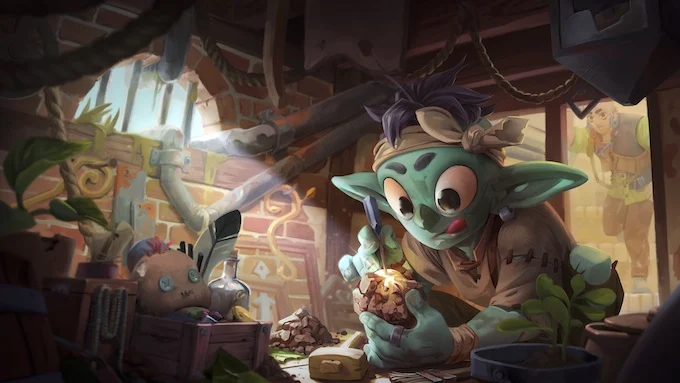
Trash Goblin is described as a wholesome shopkeeping simulator. Unlike traditional RPGs or combat-focused fantasy games, the player takes on the role of a goblin who discovers beauty in the discarded. The core gameplay loop involves cleaning, upcycling, and selling trinkets to a cast of eccentric characters in a vibrant fantasy world. The project emphasizes relaxation and tactile satisfaction, moving away from the high-stress mechanics often found in mainstream gaming.
The Kickstarter campaign serves as the primary vehicle for the game’s initial development phase. Having surpassed its initial 24-hour goal of £10,000, the project is now looking toward stretch goals, indicating a strong community foundation before the game even enters its final production stages.
Chronology: The Long Road to Recovery
The story of Trash Goblin is inextricably linked to Lovell’s personal health journey. The timeline of his absence and subsequent return provides a sobering look at the impact of chronic illness on professional life within the creative industries.
May 2022: The Onset
Lovell contracted COVID-19 in May 2022. While many expected a standard recovery period, Lovell became part of the significant minority of patients who develop Long Covid—a condition characterized by persistent, often debilitating symptoms that last for months or years.
January 2023: The Nadir
By early 2023, Lovell’s condition had reached a critical point. In his own accounts, he described a reality where basic daily functions—such as showering and eating three meals—constituted a full day’s effort. The remainder of his time was spent bedbound, battling profound fatigue and "brain fog," a cognitive impairment that makes concentration and complex decision-making nearly impossible. For a man whose career was built on intellectual rigor and strategic analysis, this period represented a total cessation of professional activity.
Late 2023: Reflection and Realignment
As his health began to stabilize, Lovell utilized his limited "up-time" to reflect on his professional legacy. The forced hiatus led to a realization: after years of telling others how to make and sell games, his primary desire was to return to the act of creation itself.
December 2023: The Return
In December 2023, Lovell announced that he had reached approximately 40% of his full health capacity. While not a complete recovery, it was sufficient to allow for a part-time return to work. Choosing to focus his limited energy on a project of passion, he officially joined Spilt Milk Studios to bring Trash Goblin to market.
Supporting Data: The "Cozy" Market and Crowdfunding Success
The success of the Trash Goblin Kickstarter is not merely a "welcome back" gesture from the industry; it is reflective of broader trends in the global gaming market.
The Rise of the Cozy Genre
The "cozy gaming" movement, popularized by titles like Animal Crossing: New Horizons, Stardew Valley, and Unpacking, has become a multi-billion dollar sub-sector. According to industry analysts, this genre appeals to a diverse demographic, including "non-traditional" gamers and those seeking mental health breaks from the stresses of modern life. Trash Goblin’s focus on upcycling and "wholesome fantasy" aligns perfectly with these market desires.
Kickstarter as a Validation Tool
Crowdfunding remains a vital litmus test for indie games. The data from the first 24 hours of the Trash Goblin campaign is telling:

- Initial Goal Achievement: £10,000 reached within one day.
- Community Engagement: High levels of social media sharing and backer interaction.
- Strategic Positioning: By utilizing Kickstarter, Spilt Milk Studios and Lovell are not just raising capital; they are building a "True Fan" base—a concept Lovell himself championed in his book The Curve.
The Economic Impact of Long Covid
Lovell’s struggle mirrors a wider economic trend. Data from the Office for National Statistics (ONS) in the UK suggests that hundreds of thousands of professionals have been sidelined due to long-term illness following the pandemic. Lovell’s high-profile return serves as a case study for "phased returns" and the necessity of flexible work environments in the modern creative economy.
Official Responses: Voices from the Project
In his announcement, Nicholas Lovell remained candid about the limitations imposed by his health while expressing a renewed sense of purpose.
"I’ve been very quiet at Gamesbrief for a while," Lovell stated. "I have had Long Covid since May 2022. That gave me some time to reflect on what I want to do. And one of the main things I want to do is to make games."
Regarding the collaboration with Spilt Milk Studios, Lovell highlighted the synergy between his strategic background and the studio’s creative output. "As my health improves—and I’m maybe 40% on the road to recovery—I’m going to step up to help Andrew Smith at Spilt Milk Studios make great games. And our first game together will be Trash Goblin."
Andrew Smith, founder of Spilt Milk Studios, has long been a collaborator of Lovell’s in various capacities. The partnership brings together Smith’s veteran development experience with Lovell’s deep understanding of player psychology and monetization ethics. The studio has described Trash Goblin as a "labor of love," designed to be as rewarding to play as it is to develop.
Implications: A New Chapter for Gamesbrief and Indie Dev
The return of Nicholas Lovell and the launch of Trash Goblin carry several significant implications for the UK games industry and the future of Gamesbrief.
1. The Evolution of Gamesbrief
For years, Gamesbrief was the go-to resource for the "business of games." With Lovell shifting his focus toward active development, the platform may transition from a source of theoretical advice to a "dev-log" style repository of practical, real-world application. Lovell’s move to "walk the walk" by applying his theories to Trash Goblin will likely be watched closely by industry peers.
2. The "Upcycling" Narrative
Trash Goblin’s theme of upcycling—taking something broken and making it valuable—is a poignant metaphor for Lovell’s own journey. In a broader sense, it reflects a growing cultural interest in sustainability and mindfulness. If Trash Goblin succeeds, it could pave the way for more games that prioritize "gentle" mechanics over traditional "extraction" or "combat" loops.
3. Health Advocacy in Tech
Lovell’s transparency regarding his health is a rarity in a high-pressure industry often characterized by "crunch" culture. By being open about his 40% capacity and his need for rest, Lovell is inadvertently advocating for a more sustainable approach to game development. His success could encourage other studios to accommodate talent dealing with chronic conditions, ensuring that valuable expertise is not lost to the industry.
4. The Future of Spilt Milk Studios
For Spilt Milk Studios, the addition of Lovell’s strategic mind to a project like Trash Goblin increases the likelihood of a sophisticated commercial launch. While the game is "cozy," the business strategy behind it—utilizing Kickstarter for validation and building a community-centric brand—is classic Lovell strategy.
Conclusion
The launch of the Trash Goblin Kickstarter is more than just the announcement of a new game; it is a testament to the resilience of one of the industry’s most influential thinkers. As Nicholas Lovell continues his recovery, the games industry will be watching not just for the success of a "wholesome shopkeeping game," but for the lessons learned when a master of business strategy decides to return to the heart of the creative process.
For now, the message from Lovell is clear: he is back, he is creating, and he is finding value in the "trinkets" of life, one step at a time.
For more information on the project, visit the Kickstarter page: Trash Goblin on Kickstarter