Federal Authorities Apprehend Andrew and Tristan Tate in Miami: A Comprehensive Breakdown of the Global Legal Net
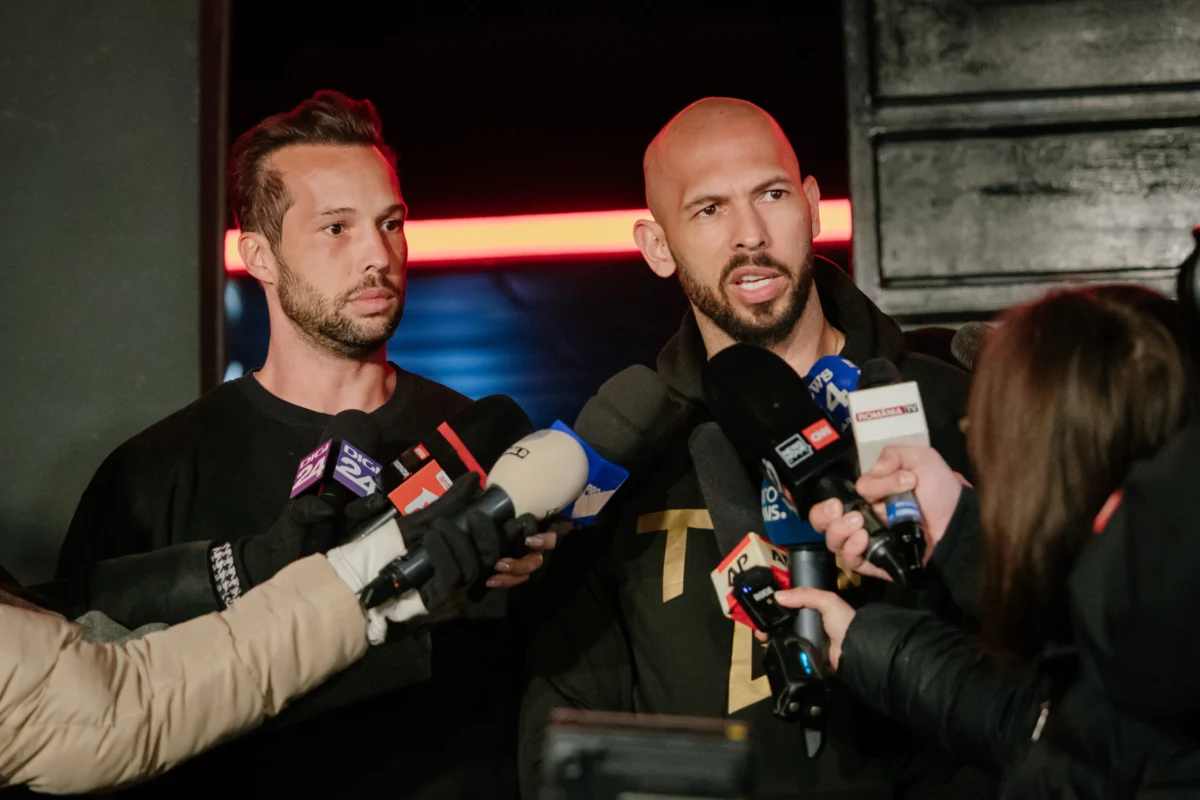
MIAMI – In a move that has sent shockwaves across the digital landscape and international legal circles, federal agents took high-profile social media influencers Andrew and Tristan Tate into custody on Saturday afternoon in Miami. The arrest marks a significant escalation in the multi-jurisdictional legal battles facing the brothers, who have become synonymous with the controversial "manosphere" movement.
While the specific federal charges leading to the Miami apprehension were not immediately unsealed, the development follows years of investigations spanning Romania, the United Kingdom, and now the United States. This report provides an exhaustive analysis of the facts, the history of the allegations, and the potential implications of this latest chapter in the Tate brothers’ legal saga.
I. Main Facts: The Miami Arrest and Current Status
On the afternoon of Saturday, federal officers—reportedly involving multiple agencies—executed an arrest warrant for Andrew and Tristan Tate. The brothers, who had recently been seen in various high-end locales in Florida, were taken into custody without incident.
As of this writing, the Department of Justice (DOJ) has not released the specific indictment or the underlying charges. However, legal experts suggest that federal involvement in the United States often points toward complexities involving interstate commerce, financial oversight, or international extradition treaties. The brothers are currently being held in a federal detention facility pending their initial court appearance.
The timing of the arrest is particularly noteworthy. It follows a period of relative mobility for the Tates, who had recently seen a loosening of travel restrictions in Eastern Europe. The move by U.S. federal authorities suggests a coordinated effort with international partners to ensure the brothers remain within reach of the various judicial systems currently seeking their presence.
II. Chronology: From Reality TV to International Fugitives
The trajectory of Andrew Tate, in particular, is a study in the power of digital notoriety and the complexities of modern international law. To understand the gravity of the Miami arrest, one must look back at the decade-long timeline that brought the brothers to this point.
2016: The Public Introduction
Andrew Tate first entered the British public consciousness as a contestant on the reality television show Big Brother. His stint was short-lived; he was removed from the program after a video surfaced appearing to show him striking a woman with a belt. While Tate and the woman in the video later claimed the act was consensual and part of a "roleplay" scenario, the incident set the tone for a career defined by provocation and controversy.
2017–2021: The Rise of the "Top G"
Following his exit from traditional media, Andrew Tate, often accompanied by his brother Tristan, pivoted to the internet. They built a massive following by promoting a lifestyle of extreme wealth, "hyper-masculinity," and a philosophy that critics labeled as deeply misogynistic. Through platforms like "Hustler’s University" (later rebranded as the Real World), they amassed millions of followers and a significant fortune, much of which was centered in Romania, where they relocated.
December 2022: The Romanian Raid
The legal walls began to close in during late 2022. Romanian anti-terrorism authorities (DIICOT) raided the Tates’ villa in Bucharest. The brothers were arrested on suspicion of human trafficking, rape, and forming an organized crime group to sexually exploit women. The prosecution alleged that the Tates used the "loverboy method" to lure victims to Romania under the guise of marriage or romance, only to force them into producing pornographic content for financial gain.
2023: Formal Charges and House Arrest
In June 2023, the Romanian government officially charged Andrew and Tristan Tate, along with two Romanian associates, with human trafficking and rape. Andrew Tate was specifically charged with the rape of one of the victims, while the group was accused of exploiting seven women. The brothers spent months in a Romanian jail before being transitioned to house arrest, a status Andrew Tate frequently mocked on social media, claiming the "Matrix" was trying to silence him.
2024–2025: The British Front Opens
While battling the Romanian courts, a new front emerged in the United Kingdom. In May 2025, British prosecutors authorized 21 separate charges against the brothers. The British case is extensive:
- Andrew Tate: Faces 10 charges related to three alleged victims, including rape and actual bodily harm.
- Tristan Tate: Faces 11 charges tied to one alleged victim.
These charges relate to incidents alleged to have occurred between 2012 and 2015, prior to their move to Romania, suggesting that the Tates’ legal troubles are rooted in a long history of alleged misconduct.
April 2026: The Romanian Lifting of Controls
In a surprising turn of events in early 2026, a Romanian court lifted all preventative judicial control measures against the Tates. This decision allowed them to travel more freely while the investigation continued. It was this window of relative freedom that eventually led them to the United States, culminating in the Saturday arrest in Miami.
III. Supporting Data: The Nature of the Allegations
The legal pressure on the Tate brothers is not merely a single case but a constellation of serious felony allegations across multiple borders.
The Romanian Case (DIICOT)
The Romanian Directorate for Investigating Organized Crime and Terrorism has built its case on the following data points:
- Victim Statements: Testimony from at least seven women who claim they were recruited through deception.
- Financial Records: Evidence of revenue generated from "webcam studios" allegedly operated under duress.
- Digital Evidence: Transcripts of messages and videos used to intimidate or control the movements of the alleged victims.
The UK Charges (Crown Prosecution Service)
The British authorization of 21 charges signifies a high "threshold test" met by prosecutors. Unlike the Romanian case, which focuses heavily on organized crime and trafficking, the UK charges include:
- Actual Bodily Harm (ABH): Allegations of physical violence that resulted in injury.
- Rape: Specific counts of non-consensual sexual intercourse.
- Trafficking: Internal movements within the UK for the purposes of exploitation.
The US Federal Context
While the Miami charges remain sealed, the involvement of federal officers suggests "Federal Interest." This typically involves crimes that cross state or national borders. Potential areas of focus for U.S. authorities could include:
- Money Laundering: The movement of funds generated from alleged overseas criminal activities into U.S. banks.
- RICO (Racketeer Influenced and Corrupt Organizations Act): If the brothers are viewed as running a criminal enterprise that has touched U.S. soil.
- Tax Evasion: Given their public claims of immense wealth and complex international business structures.
IV. Official Responses: The Defense and the Prosecution
The Tate Defense
Andrew Tate has remained steadfast in his denial of all allegations. His public communications have consistently framed the legal actions as a coordinated "hit job" by global elites—a concept he refers to as "The Matrix."
Following his release from house arrest in 2023, Tate told the media:
"We’ve been completely innocent since the beginning of this, and I have to give absolute faith to the Romanian judicial system for finally making the right decision and letting us free. The truth will always prevail."
His legal team in the U.S. is expected to argue that the Miami arrest is an overreach and that the brothers have been fully cooperative with international authorities. They often point to the lack of "hard evidence" and claim that the victims are motivated by financial gain or are being coerced by "anti-Tate" activists.
Prosecution and Advocacy Groups
Conversely, prosecutors in Romania and the UK have maintained that the evidence is "substantial and harrowing." Human rights organizations and anti-trafficking advocates have lauded the persistence of law enforcement.
"The arrest in Miami proves that there is no ‘safe harbor’ for those accused of systemic exploitation," said a spokesperson for a UK-based victims’ advocacy group. "The scale of the charges—21 in the UK alone—speaks to a pattern of behavior that demands a full and transparent trial."
V. Implications: The Future of the "Manosphere" and International Law
The arrest of Andrew and Tristan Tate in Miami carries weight far beyond their individual liberty. It serves as a litmus test for several modern societal and legal challenges.
1. The Impact on Digital Influence
Andrew Tate is arguably the most influential figure in the "manosphere." His arrest creates a vacuum in a digital subculture that often views him as a martyr. If convicted, it could signal a decline in the "hyper-masculine" influencer model that relies on provocative and allegedly predatory behavior. Conversely, a lengthy legal battle in the U.S. could further galvanize his base, who view every arrest as proof of his "Matrix" theory.
2. Precedent for International Cooperation
The "Tate Case" is becoming a landmark example of how modern law enforcement handles "digital nomads" who operate across borders. The coordination between the UK’s CPS, Romania’s DIICOT, and U.S. Federal agencies represents a sophisticated level of inter-agency cooperation designed to prevent individuals from using international boundaries as a shield.
3. Extradition Tensions
A significant question now looms: Which jurisdiction gets them first?
- Romania has an ongoing trial.
- The UK has 21 authorized charges and an active interest in extradition.
- The U.S. now has them in physical custody for undisclosed federal matters.
The "queue" for the Tates will likely be decided at the highest levels of the State Department and the DOJ. If the U.S. charges involve significant financial crimes or threats to national security, they may remain in American custody for years before ever facing a judge in London or Bucharest.
4. Legal Responsibility of Platforms
Finally, the Tate saga continues to pressure social media giants. While many platforms banned Andrew Tate in 2022, his content continues to proliferate via "fan accounts" and re-uploads. The federal arrest in Miami may force platforms to take a harder stance on the monetization of figures facing active indictments for violent crimes.
Conclusion
The arrest of Andrew and Tristan Tate in Miami is not the end of the story, but rather the beginning of its most complex chapter. As the brothers transition from the luxury of Miami to the confines of a federal holding cell, the world watches to see if the "Top G" persona can survive the weight of three different national legal systems. With 21 charges in the UK, a pending trial in Romania, and a new federal case in the United States, the Tate brothers face a legal mountain that no amount of digital influence may be able to climb.