From the Delta Quadrant to the Director’s Chair: The Remarkable Evolution of Roxann Dawson
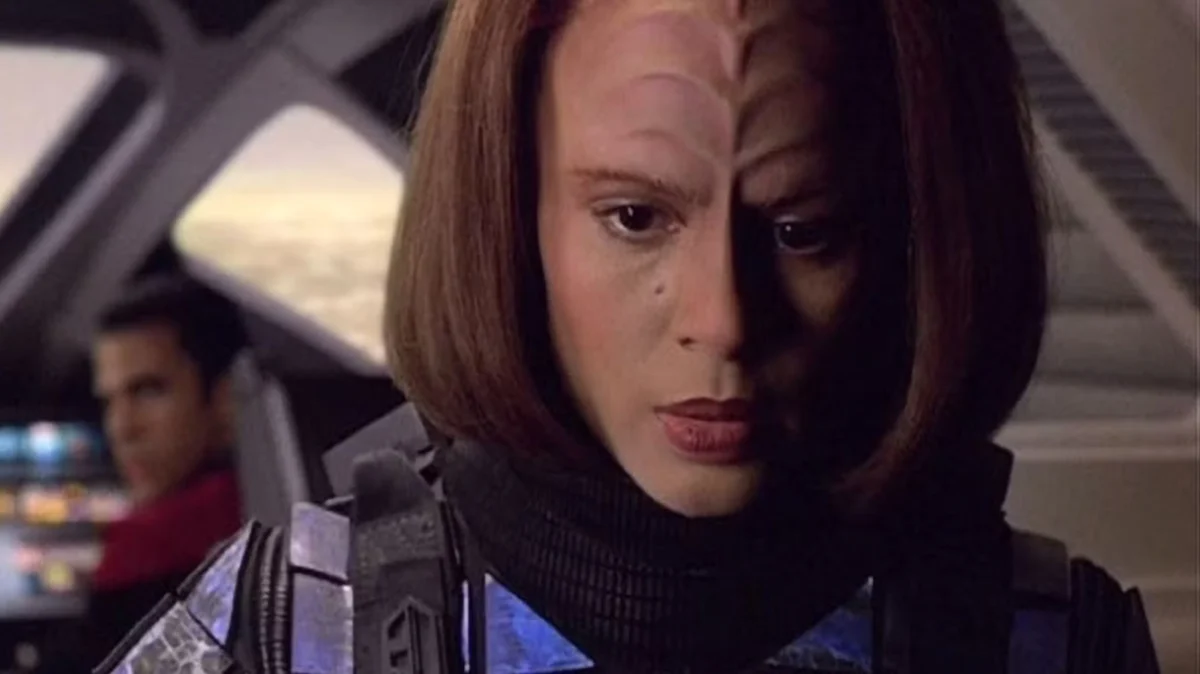
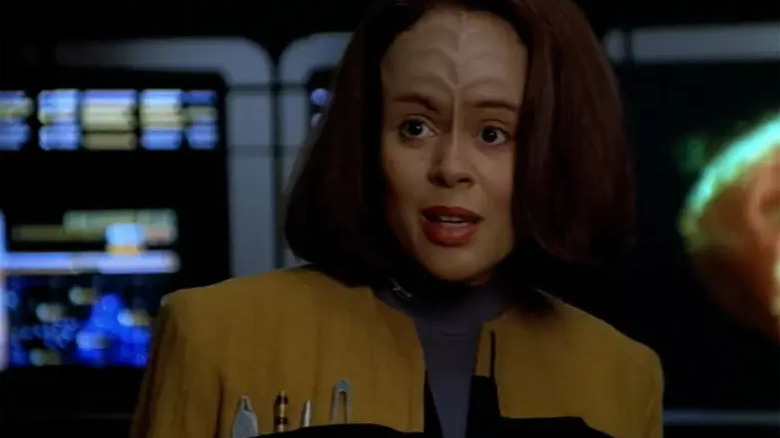
In the annals of television history, few transitions are as complete or as successful as that of Roxann Dawson. To a generation of science fiction enthusiasts, she remains the fiery, brilliant Chief Engineer B’Elanna Torres, a woman of two worlds who navigated the USS Voyager through the perils of the Delta Quadrant. However, twenty-five years after she first donned the prosthetic Klingon forehead, Dawson has meticulously reconstructed her professional identity. No longer defined by the character that made her a household name, she has ascended to become one of the most prolific and sought-after directors in the prestige television era.
Dawson’s journey is not merely a story of a successful career pivot; it is a masterclass in industry longevity and the pursuit of creative agency. From the technical rigors of the Star Trek set to the emotional depths of faith-based cinema and the high-concept world of modern streaming epics, Dawson has proven that her true calling was always behind the camera.
Main Facts: A Career Defined by Dual Excellence
The career of Roxann Dawson is uniquely bifurcated into two distinct eras: her tenure as a leading actress in a flagship franchise and her subsequent dominance as a director of elite television drama.
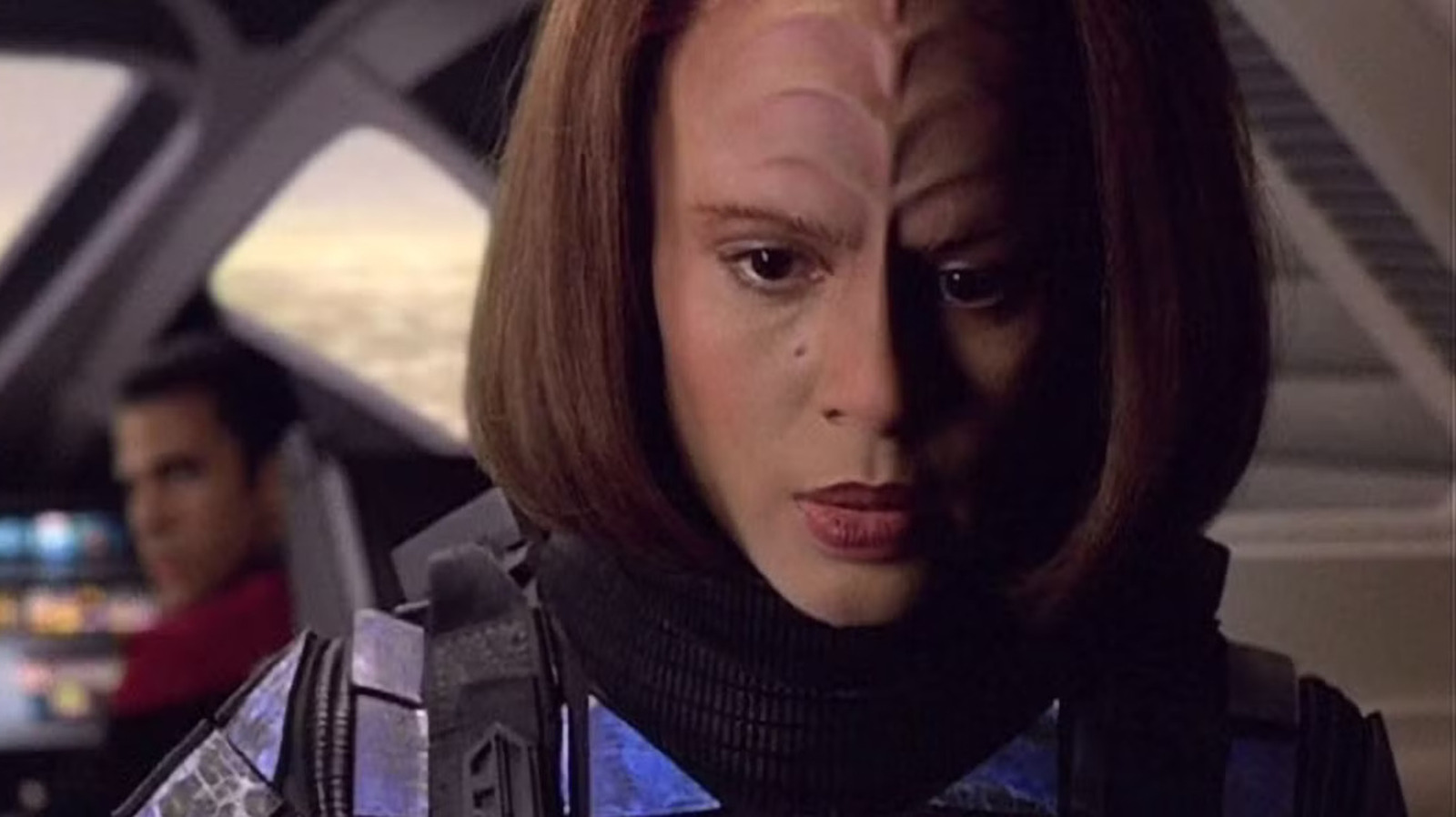
During the seven-season run of Star Trek: Voyager (1995–2001), Dawson appeared in 172 episodes. Her portrayal of B’Elanna Torres was lauded for its nuance, depicting a character struggling with her heritage as a half-human, half-Klingon former Maquis rebel. However, even during the height of her acting fame, Dawson was laying the groundwork for her second act.
Today, Dawson’s directorial resume reads like a "Best Of" list of 21st-century television. She has helmed episodes for Lost, The Good Wife, House of Cards, This Is Us, and The Morning Show. In 2019, she made her feature film directorial debut with Breakthrough, a faith-based drama that became a significant box-office success. With a career spanning over three decades, Dawson has moved from being the face of a franchise to being one of the primary architects of the modern television landscape.
Chronology: The Evolution of a Creative Force
The Early Years and the "Torres" Coincidence
Before the stars aligned for Voyager, Dawson’s career was marked by the typical hustle of a working actress in Los Angeles. A curious piece of trivia often cited by fans is her appearance in a failed pilot for a police procedural titled NYPD Mounted. In a strange twist of fate, her character in that project—a supporting role—was named Lieutenant Torres. While the pilot never went to series, the name would follow her into the history books when she was cast as Lieutenant B’Elanna Torres in 1994.
The Star Trek School of Directing (1999–2005)
The mid-to-late 1990s saw a unique phenomenon within the Star Trek franchise: the "actor-to-director" pipeline. Following in the footsteps of Leonard Nimoy and Jonathan Frakes, Dawson expressed an interest in the technical side of production. Under the mentorship of executive producer Rick Berman, she was given the opportunity to shadow directors and learn the intricacies of pacing, blocking, and visual storytelling.
Dawson made her directorial debut in November 1999 with the Voyager episode "Riddles." The episode was a character-driven piece focusing on Tuvok (Tim Russ) and his loss of Vulcan logic. Her work was so well-received that she directed two more episodes of Voyager and was eventually tapped to direct ten episodes of the follow-up series, Star Trek: Enterprise.
The Transitional Decade (2001–2011)
After Voyager concluded its journey in 2001, Dawson faced the challenge common to many "Trek" alumni: avoiding being typecast. While she continued to take acting roles in series such as The Closer and Without a Trace, her focus shifted increasingly toward the director’s chair. During this period, she built a reputation as a "procedural powerhouse," directing multiple episodes of Crossing Jordan and Cold Case. By 2011, she had effectively retired from acting to commit herself fully to directing and producing.
The Feature Film Milestone and Beyond (2019–Present)
The year 2019 marked a major milestone with the release of Breakthrough. Produced by DeVon Franklin and starring Chrissy Metz, the film represented Dawson’s transition to the big screen. Since then, she has remained at the forefront of the "Platinum Age" of television, directing high-budget, cinematic episodes for streaming platforms like Apple TV+ and Disney+.
Supporting Data: By the Numbers
Dawson’s productivity is backed by staggering statistics that highlight her versatility across genres:
- Total Acting Credits: Over 50, with 172 episodes of Star Trek: Voyager serving as the cornerstone.
- Total Directing Credits: Over 60 different television series and feature films.
- Procedural Dominance: She directed 12 episodes of Crossing Jordan and 8 episodes of Cold Case, proving her ability to manage long-running episodic narratives.
- Prestige Television: Her portfolio includes heavy-hitters such as Treme (HBO), The Americans (FX), and House of Cards (Netflix).
- Box Office Success: Her feature debut Breakthrough earned over $50 million worldwide on a modest $14 million budget, making it a highly profitable venture for 20th Century Fox.
Official Responses: A Personal Journey of Faith and Choice
In various interviews, Dawson has been candid about the internal and external shifts that have defined her later career. One of the most significant revelations came during the promotion of Breakthrough. Dawson shared that the film’s themes of miracles and faith mirrored her own personal spiritual evolution.
"I was an atheist for many years," Dawson admitted in an interview with ChurchPOP. She described her transition to Catholicism as a gradual process that was deepened by the experience of filming Breakthrough. "It gives you chills to see how faith can impact a community," she noted, highlighting how her personal beliefs now often inform her creative choices.
Furthermore, Dawson’s confidence in her directorial identity was evidenced by her decision to turn down an invitation to return to the Star Trek franchise for its recent revival on Paramount+. While many of her former colleagues returned for Star Trek: Picard or Strange New Worlds, Dawson chose instead to direct the ambitious sci-fi series Foundation for Apple TV+. In an interview with SlashFilm, she explained that while she cherishes her "Trek" roots, the opportunity to build a new world with Foundation was a creative challenge she couldn’t pass up. This decision underscores her status not just as a "franchise alum," but as a top-tier director with the luxury of choice.
Implications: The Legacy of a Trailblazer
Roxann Dawson’s career trajectory has significant implications for how we view the longevity of actors within major franchises. She successfully dismantled the "Star Trek Curse"—the idea that actors from the series are forever trapped in the gravity of their science fiction roles.
Breaking the Glass Ceiling
Dawson’s success is also a victory for female representation in a field—television directing—that has historically been dominated by men. By moving from the "actor-to-director" program into the mainstream of Hollywood directing, she paved the way for other women in the franchise, such as Star Trek: Discovery’s Sonequa Martin-Green and Voyager’s Jeri Ryan, to pursue roles behind the camera.
The "Trek" Training Ground
Her career serves as a testament to the rigorous "training ground" that was 1990s episodic television. The technical demands of Star Trek—dealing with heavy prosthetics, green screens, and complex technobabble—equipped her with a unique problem-solving skillset that is highly valued in today’s CGI-heavy production environment.
A New Identity
At 67, Roxann Dawson stands as a figure of immense respect in the industry. To the fans at conventions, she will always be the woman who kept the warp engines running. But to the showrunners and executives at HBO, Apple, and Netflix, she is a visionary leader capable of steering multi-million dollar productions to success.
As she continues to direct episodes of sprawling epics like Dark Matter and Foundation, it is clear that Dawson has not just survived the 25 years since Voyager ended; she has conquered them. Her legacy is no longer just about the character she played, but about the countless stories she has helped tell from the director’s chair. B’Elanna Torres may have been a Lieutenant, but Roxann Dawson has become a General of the industry.