The Metamorphosis of Power: Jeremy Strong, Aaron Sorkin, and the High-Stakes Return to the World of Mark Zuckerberg
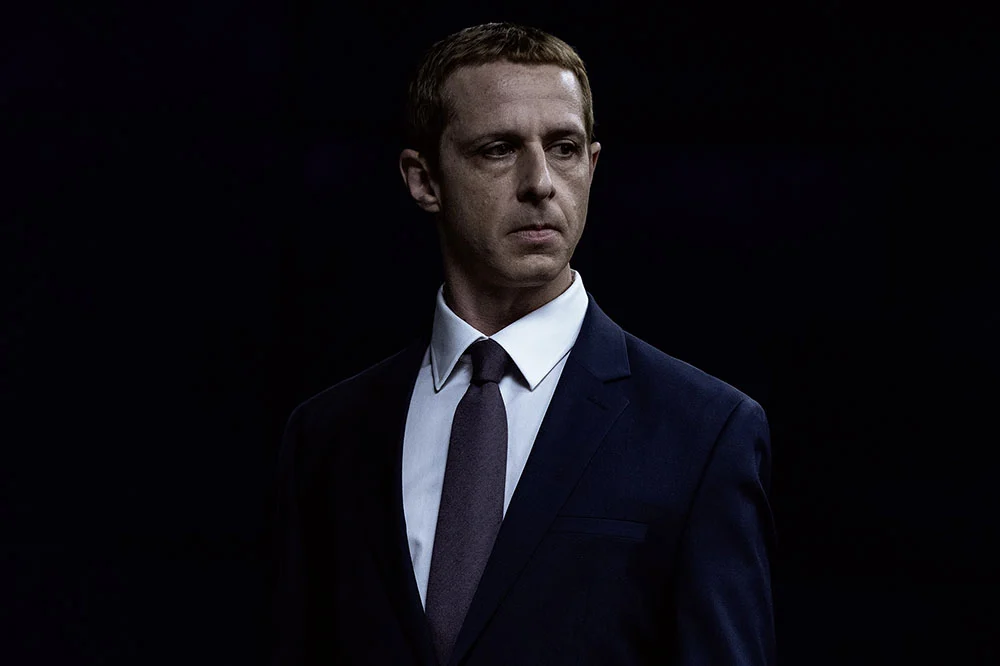
In the pantheon of contemporary character actors, few possess the mercurial intensity of Jeremy Strong. Known for his "all-in" approach to performance—a style that has occasionally sparked debate within the industry—the Emmy and Tony winner is now stepping into the center of a cultural firestorm. Gracing the September cover of GQ magazine, the first issue under the leadership of global editorial director Adam Baidawi, Strong has finally broken his silence regarding his most daunting role to date: taking over the mantle of Facebook (now Meta) co-founder Mark Zuckerberg in Aaron Sorkin’s highly anticipated spiritual sequel, The Social Reckoning.
The film serves as a bookend to 2010’s The Social Network, a movie that defined a generation and earned Jesse Eisenberg an Academy Award nomination for his portrayal of the hoodie-wearing wunderkind. However, as the digital landscape has shifted from the optimistic "Move Fast and Break Things" era to a period defined by data privacy scandals, congressional hearings, and global polarization, the requirements for portraying Zuckerberg have fundamentally changed. In this new cinematic landscape, Strong is not merely playing a tech mogul; he is embodying a "wartime CEO" caught in the crosshairs of history.
Main Facts: A New Face for a Digital Giant
The Social Reckoning is scheduled for theatrical release on October 9, produced by Sony Pictures. The project reunites writer-director Aaron Sorkin with the subject matter that earned him an Oscar for Best Adapted Screenplay over a decade ago. However, the most significant shift lies in the lead performance. Jeremy Strong, fresh off the monumental success of Succession, takes the reigns from Jesse Eisenberg to depict a version of Zuckerberg that has aged, evolved, and become one of the most polarizing figures on the planet.
Strong’s preparation for the role has been, by all accounts, exhaustive. Eschewing the traditional boundaries of performance, Strong opted for a deep-immersion Method approach, remaining in character throughout the entirety of the production. This dedication extended to his private life and his interactions with peers, a hallmark of his craft that has both baffled and impressed his collaborators.
The film aims to bridge the gap between the founding of Facebook and its current iteration as Meta, focusing on the "reckoning" promised by the title—a period characterized by the Cambridge Analytica scandal, the 2016 and 2020 elections, and the platform’s struggle with misinformation.
Chronology: From Social Network to Social Reckoning
The path to The Social Reckoning began with a creative void. For years, Aaron Sorkin hinted at a follow-up, noting that the story of Facebook did not end with the settlement of the Winklevoss lawsuit. The timeline of the project’s development reveals a series of pivotal casting and creative decisions:
- The Sorkin-Eisenberg Rejection: Sorkin initially approached Jesse Eisenberg to reprise the role. Eisenberg, who has become increasingly selective about his roles, declined the offer. He reportedly expressed a desire to no longer be "associated" with Zuckerberg, reflecting a broader cultural shift in how the tech mogul is perceived.
- The Chance Encounter: Shortly after Eisenberg’s refusal, Jeremy Strong encountered Sorkin at a high-profile Oscar season party. Knowing the role was vacant, Strong did not hesitate. He told Sorkin directly that if Eisenberg was truly out, he wanted in.
- The "Wartime" Transformation: Once cast, Strong began a rigorous period of research. He spent months analyzing the transition of Zuckerberg from a boyish innovator to what the tech industry calls a "wartime CEO"—a leader who operates under constant external threat and internal pressure.
- The Production Phase: Filming took place under a shroud of secrecy, with Strong maintaining his "Zuckerberg persona" on and off set.
- The Polarizing Trailer: In June, Sony released the first trailer for the film. The reaction was instantaneous and divided, with social media pundits debating whether Strong’s performance was a masterclass in mimicry or a step too far into the uncanny valley.
Supporting Data: The Anatomy of a Method Performance
Strong’s approach to the role was not merely about learning lines; it was a total intellectual and psychological siege. According to the GQ cover story, Strong’s preparation involved several key "data points" of research:
- Visual and Auditory Immersion: Strong watched footage of Zuckerberg’s various testimonies before the U.S. Congress "until my eyes fell out of my head." He focused on the micro-expressions, the specific cadence of Zuckerberg’s speech under pressure, and the physical stillness that has become a trademark of his public appearances.
- The Digital Paper Trail: Despite not being a user of social media, Strong signed up for a Facebook account for the sole purpose of reading every post Zuckerberg has made since the platform’s inception. He viewed this as a "longitudinal record" of the man’s psychological evolution.
- The "Cape" Philosophy: Strong compares playing Zuckerberg to other high-stakes biographical performances, such as Sebastian Stan’s portrayal of Donald Trump or Jeremy Allen White’s upcoming turn as Bruce Springsteen. He refers to this as "wearing the cape"—taking on the weight of a public icon where the "perils could not be greater."
Strong’s commitment is further evidenced by his current work on The Boys from Brazil. During his GQ interview, despite having finished the Zuckerberg role, he was already deep into his next character: a Polish Nazi hunter. He spoke exclusively in a Polish accent for seven months, even when talking to friends like Bradley Cooper and Aaron Sorkin. Sorkin recalled a phone call where Strong began discussing their previous film in the accent without any preamble or explanation.
Official Responses: Outreach and Industry Reaction
Perhaps the most intriguing aspect of the film’s development is Strong’s direct contact with his real-world counterpart. Strong confirmed to GQ that he sent an email to Mark Zuckerberg after accepting the role.
"I wrote to him—I’m probably going to give Sony an aneurysm—I sent him an email," Strong said. "Just to say that I take this responsibility very seriously, and the veracity of it seriously, and I’m approaching it with respect."
While Strong confirmed that Zuckerberg wrote back, he has declined to reveal the contents of the message, citing a desire to protect the privacy of the exchange. This outreach highlights Strong’s specific philosophy on acting: he believes an actor must find empathy for their subject, even if the public has largely turned against them. "I do not think you should have an actor playing him who wants to set out to condemn him," Strong noted.
The industry response to the project has been a mixture of awe and skepticism. Bradley Cooper, a close friend of Strong, provided a testament to the actor’s immersion. Cooper joked that he has "talked to Mark Zuckerberg many times" over the last year, despite the real Zuckerberg having no idea that these conversations were taking place.
The trailer’s reception—ranging from predictions of a second Oscar for the role to a potential Razzie—has not deterred Strong. In fact, he views the polarization as a badge of honor. "That’s the wager you have to make," he told GQ. "To me, that means, Okay, I put it on the line enough."
Implications: The Legacy of the Tech Biopic
The release of The Social Reckoning carries significant implications for the film industry and the broader cultural conversation regarding Big Tech.
Firstly, it marks a shift in the "Tech Biopic" subgenre. While earlier films like The Social Network or Jobs focused on the myth of the brilliant creator, The Social Reckoning appears poised to examine the consequences of that brilliance. By casting Strong—an actor known for portraying the tragic complexities of the ultra-wealthy—Sorkin is signaling a more somber, perhaps more critical, look at the architecture of our modern digital lives.
Secondly, the film will serve as a referendum on "The Method." In an era where many actors are moving away from extreme immersion due to its mental and professional toll, Strong remains a standard-bearer for the technique. If the film is a critical success, it will validate his intense process; if it falters, it may fuel the argument that such dedication is more performative than practical.
Finally, the film arrives at a time when Mark Zuckerberg himself is attempting a public rebrand, moving away from political controversy toward a "lifestyle" image involving MMA, chainmail shirts, and a focus on AI and the Metaverse. The Social Reckoning threatens to pull the public consciousness back to the more turbulent years of his tenure, reminding the world of the "reckoning" that many feel has yet to be fully realized.
As October 9 approaches, the industry watches to see if Jeremy Strong can do the impossible: find the human heart inside the world’s most famous algorithm. Whether it results in an Oscar or a Razzie, one thing is certain: Strong has, once again, put everything on the line.