From Vision to "Vandalism": The Unraveling of the Semiquincentennial Beautification Projects
WASHINGTON, D.C. — As the United States approaches the dawn of its 250th anniversary, the centerpiece of the administration’s "Freedom 250" celebration—a multimillion-dollar renovation of the National Mall and the White House grounds—has descended into a series of technical failures, financial controversies, and increasingly erratic official explanations. What was intended to be a gleaming tribute to American exceptionalism has instead become a symbol of administrative overreach and aesthetic decline, punctuated by a literal "swamp" forming in the shadow of the Lincoln Memorial.
The crisis, which began with a massive algae bloom in the Lincoln Memorial Reflecting Pool and culminated in the deployment of National Guard troops to protect a public water feature, has reignited a fierce national debate. At the heart of the controversy lies a fundamental tension between the President’s populist branding and the reality of high-stakes infrastructure management.
Main Facts: A Series of High-Profile Failures
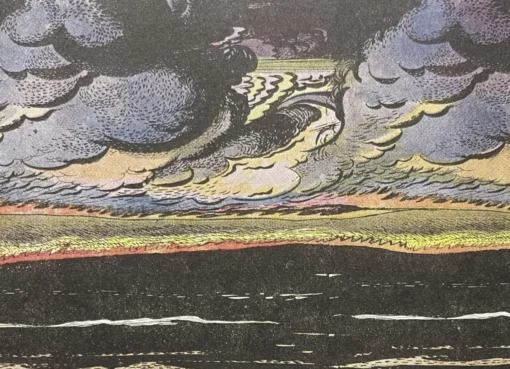
The current controversy centers on three primary incidents that occurred in June 2026. First, the Lincoln Memorial Reflecting Pool, recently renovated under a direct executive mandate, suffered a catastrophic biological and structural failure. Within weeks of its reopening, the water turned a deep, opaque green due to an uncontrolled algae bloom, while the newly applied sealant began to peel away in large, unsightly sheets.
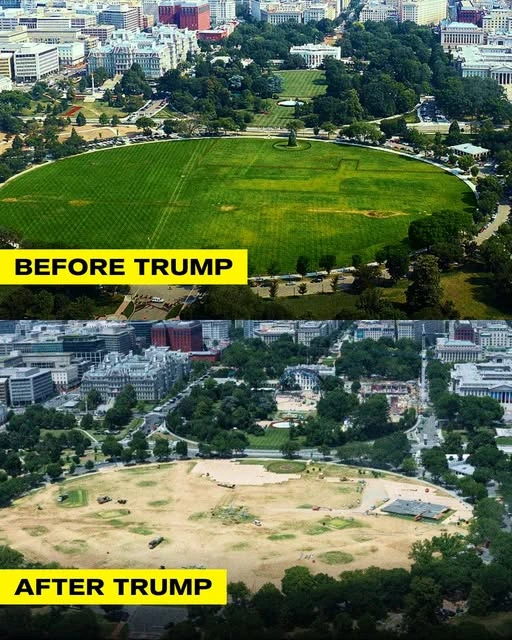
Second, the White House South Lawn—traditionally a pristine site for diplomatic ceremonies—sustained significant environmental damage following a high-profile "UFC Freedom 250" cage match held on June 14. Aerial photographs revealed deep ruts in the turf and structural damage to the grounds, prompting a wave of criticism regarding the commercialization of the executive residence.
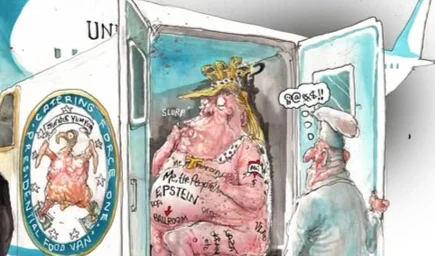
Finally, investigative reports have revealed that the administration’s "Great American Ballroom," a project previously touted as being entirely funded by private donations, has quietly drawn $351 million from public security and infrastructure funds. These events have coincided with the grand opening of the Obama Presidential Center in Chicago, creating a stark visual and cultural contrast that has dominated the national news cycle.
Chronology of the "Freedom 250" Crisis
The timeline of the current situation suggests a rush to complete massive projects ahead of the July 4th celebrations, leading to what experts describe as "catastrophic shortcuts."
- January 2026: The President announces the "National Mall Restoration Initiative," promising to "outshine" the 2012 repairs overseen by the Obama administration. The project includes a complete draining and repainting of the Reflecting Pool.
- May 2026: Contractors express private concerns regarding the drying times of the industrial sealants used in the pool, citing a truncated schedule demanded by the White House.
- June 14, 2026: The South Lawn hosts a televised UFC event. While a ratings success for Paramount+, the event leaves the grounds in a state of disarray.
- June 18, 2026: The first signs of the "Emerald Bloom" appear in the Reflecting Pool. Within 48 hours, the water is completely obscured by algae.
- June 20, 2026: The Obama Presidential Center opens in Chicago. The event features a star-studded lineup of performers and global leaders, drawing favorable comparisons in the media to the struggling projects in D.C.
- June 22, 2026: The President issues a series of statements alleging that the pool’s failure is the result of "coordinated sabotage" and "vandalism" by political opponents.
- June 23, 2026: National Guard units are stationed around the National Mall to prevent "further interference" with the water feature.
Supporting Data: Scientific and Financial Overviews
The Reflecting Pool Failure
According to a report briefly published by the National Park Service before being retracted, the algae bloom was not a result of outside interference but a failure of the new filtration system to account for the chemical composition of the new paint. Scientists at Scientific American noted that the industrial-grade sealant used to give the pool a "mirror-like" finish lacked the necessary antimicrobial properties found in standard aquatic coatings.
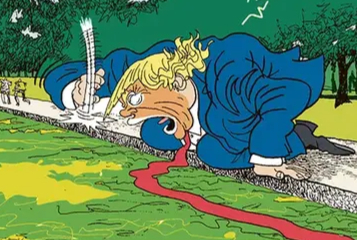
Furthermore, the heat-retention properties of the dark-tinted paint accelerated the growth of cyanobacteria. The "peeling" phenomenon was attributed to the pool being refilled before the sealant had properly cured—a process that requires 21 days but was reportedly cut to seven to meet a photo-opportunity deadline.
The Ballroom Funding Gap
Public records now indicate a significant discrepancy in the funding of the White House’s new ceremonial ballroom. While the administration initially claimed the project was a gift to the nation from private donors, the $351 million in public funding recently approved under "security measures" appears to cover the bulk of the structural costs. This has led to calls for a Congressional audit into how "security" funds are being redirected toward vanity architecture.
Media and Public Reception
The "Freedom 250" UFC match, though highly promoted, failed to meet the administration’s internal projections for viewership. While touted as a "Super Bowl-level event," the Nielsen ratings indicated it was outperformed by the opening ceremonies of the Obama Presidential Center, which featured a reunion of popular musical acts and a keynote address on democratic resilience.
Official Responses and the "Sabotage" Theory
The administration’s response to these setbacks has been characterized by a refusal to acknowledge technical or managerial error. Instead, the President has pivoted to a narrative of victimhood and sabotage.
In a series of late-night social media posts, the President asserted that "Deep State vandals" snuck into the National Mall under the cover of darkness to "pour chemicals and algae spores" into the pool. White House Press Secretary has echoed these claims, stating that the "perfect" renovation was ruined by those who "hate to see America looking beautiful."
However, law enforcement officials, speaking on the condition of anonymity, have stated there is zero evidence of unauthorized entry into the high-security zone surrounding the pool. The decision to deploy the National Guard has been met with bipartisan concern. Former Representative Adam Kinzinger issued a scathing critique, suggesting that the President’s focus on a "puddle of green water" over significant geopolitical issues—such as the ongoing stabilization efforts following the Iran War—points to a "troubling detachment from reality."
The administration also faced a wave of mockery after a Father’s Day post in which the President appeared to misidentify his own daughter in a photo, an error that critics have linked to the high-stress environment of the failing "Freedom 250" projects.

Implications: The Symbolism of the "Swamp"
The political implications of the Reflecting Pool disaster are profound. For a leader who rose to power on the promise to "drain the swamp," the visual of a literal, stagnant swamp appearing at the foot of the Lincoln Memorial is a gift to political cartoonists and opposition strategists alike.
The Erosion of the "Competency" Narrative
The primary danger for the administration is the potential for these "trivial" failures to penetrate the loyalty of its base. While supporters have long overlooked political controversies, the tangible failure of a construction project—something the President has long claimed as his primary area of expertise—threatens the "master builder" persona. If the administration cannot successfully manage a pool or a lawn, questions regarding the management of the $350 billion in proposed reparations and reconstruction funds for the Iran War become more pressing.
The Contrast of Legacies
The coincidence of the Obama Presidential Center’s opening has created a "tale of two cities" narrative. One side of the political aisle is celebrating a high-tech, aesthetically praised monument to a two-term presidency, while the other is mired in defensive crouches over peeling paint and algae. This contrast serves to highlight the current administration’s struggles with "legacy-building" in the face of logistical incompetence.
Practical and Ethical Outcomes
As veteran political strategist James Carville once noted, when an opponent is drowning, the most practical response is to "throw them an anvil." Critics are doing exactly that, using the Reflecting Pool as a metaphor for the broader state of the nation’s infrastructure and the administration’s penchant for "clumsy, unnecessary hype."
The deployment of the National Guard to guard a pool of algae marks a new chapter in the use of military resources for domestic optics. As the nation moves toward its 250th birthday, the image of soldiers standing watch over a botched renovation may become the defining memory of the Semiquincentennial—a reminder that pride, as the proverb suggests, often precedes a fall.
Conclusion
The "Freedom 250" initiative was designed to be a triumph of American spirit and administrative efficiency. Instead, it has become a cautionary tale of what happens when vanity outpaces engineering. Whether the administration can pivot and restore the Reflecting Pool—and its own image—before the July 4th celebrations remains to be seen. For now, the National Mall stands as a testament to a renovation gone "cattywampus," and a President increasingly isolated by his own refusal to accept the reality of a failed project.