"Camp" Review: A Luminous Descent into Grief, Friendship, and the Unseen

Main Facts
Avalon Fast’s sophomore feature, Camp, emerges as a breathtakingly original cinematic experience, proving that a film’s tone can be its most potent narrative tool. Eschewing conventional plot structures, Fast crafts a dreamlike, liminal world that feels less like a movie and more like an accidental stumble into a forgotten fairy ring. The film centers on Emily (Zola Grimmer), a young woman reeling from a devastating double tragedy, whose journey to a remote summer camp designed for "troubled" youth becomes a vibrant, unsettling exploration of grief, obsessive female friendship, and the subtle intrusion of magic into the mundane. Praised for its audacious visual style and its delicate subversion of genre tropes, Camp is positioned to be a significant voice in contemporary independent cinema, carving out a unique space between surreal drama and supernatural coming-of-age.
Chronology: Emily’s Journey to the Liminal
Camp begins by plunging the audience into the quiet, internal maelstrom of Emily’s grief. Her first year of college has been marred by not one, but two profound losses, for which she feels an acute, self-inflicted blame. While the film deliberately keeps the specifics of these tragedies vague, it powerfully conveys the suffocating weight they have placed upon Emily’s nascent adulthood. She is a figure of quiet despair, struggling with the most fundamental question of existence: how does one continue to face each morning when the person who constituted one’s entire world has vanished?
Her father, portrayed with a grounding warmth that belies the film’s ethereal quality, emerges as a beacon of pragmatic hope. His suggestion of a summer camp, nestled "up north," is not merely a logistical solution but a desperate plea for his daughter’s healing. This isn’t just any camp; it’s a carefully curated environment where "troubled" adolescents are guided by counselors who themselves bear the scars of dark pasts, a unique approach designed to foster empathy and understanding.
Emily’s journey to this enigmatic retreat is the audience’s first true introduction to Camp‘s distinctive liminality. Her train carriage is a relic, clacking along tracks seemingly from a bygone era. Inside, her sleeper car transcends mere travel accommodation, transforming into a small, self-contained hotel room complete with an anachronistic rotary phone, a stark contrast to the modern laptop she carries. This disorienting blend of old and new, familiar and uncanny, sets the stage for the world she is about to enter. The journey culminates not with a conventional arrival at a bustling station, but with Emily waking, fully dressed and luggage neatly stacked, in a verdant field. A simple, almost archaic entrance—tall wooden poles bearing the carved word "CAMP"—stands a few yards away, devoid of fences, parking lots, or security gates, signaling an immediate departure from the known world.
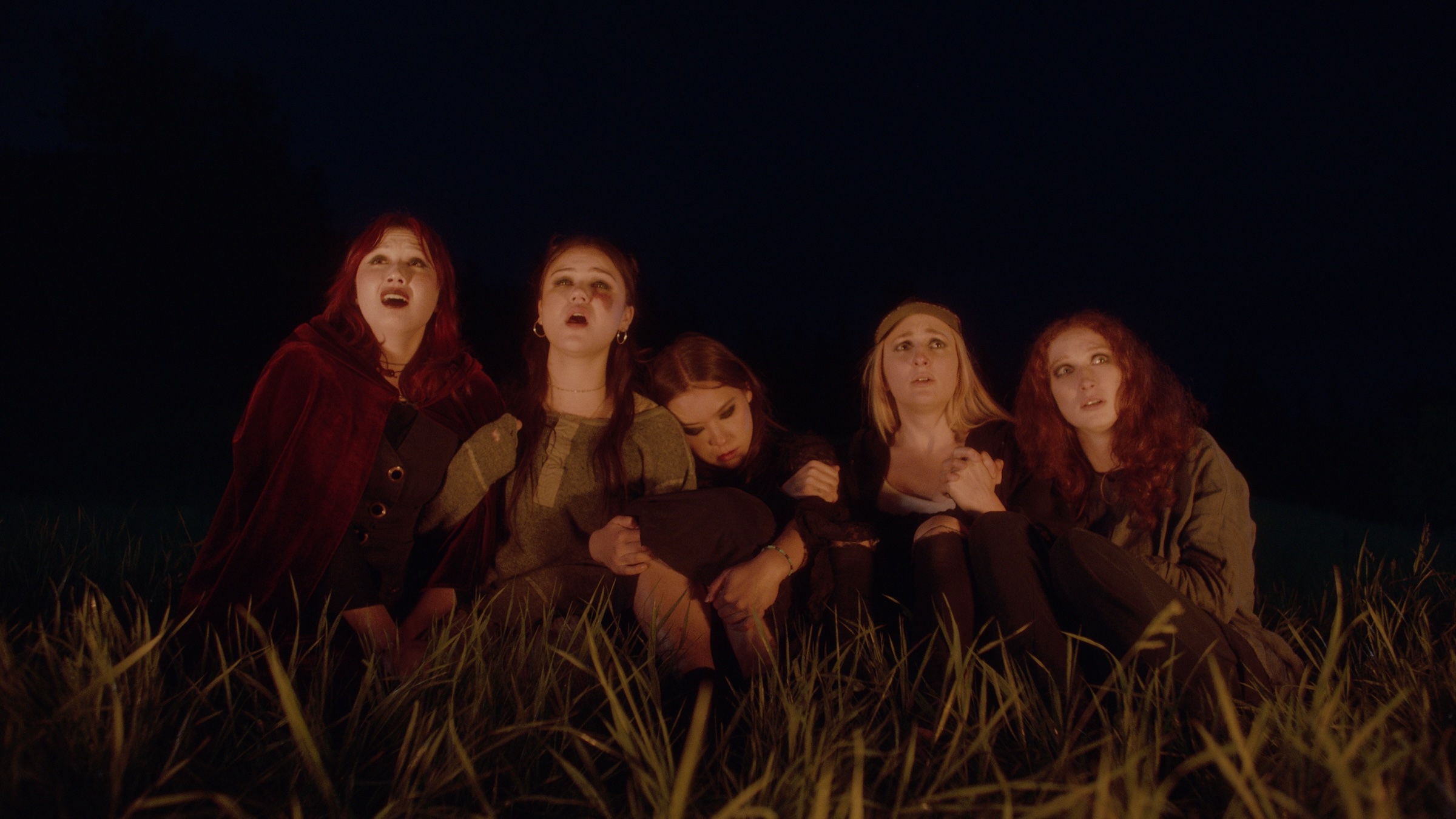
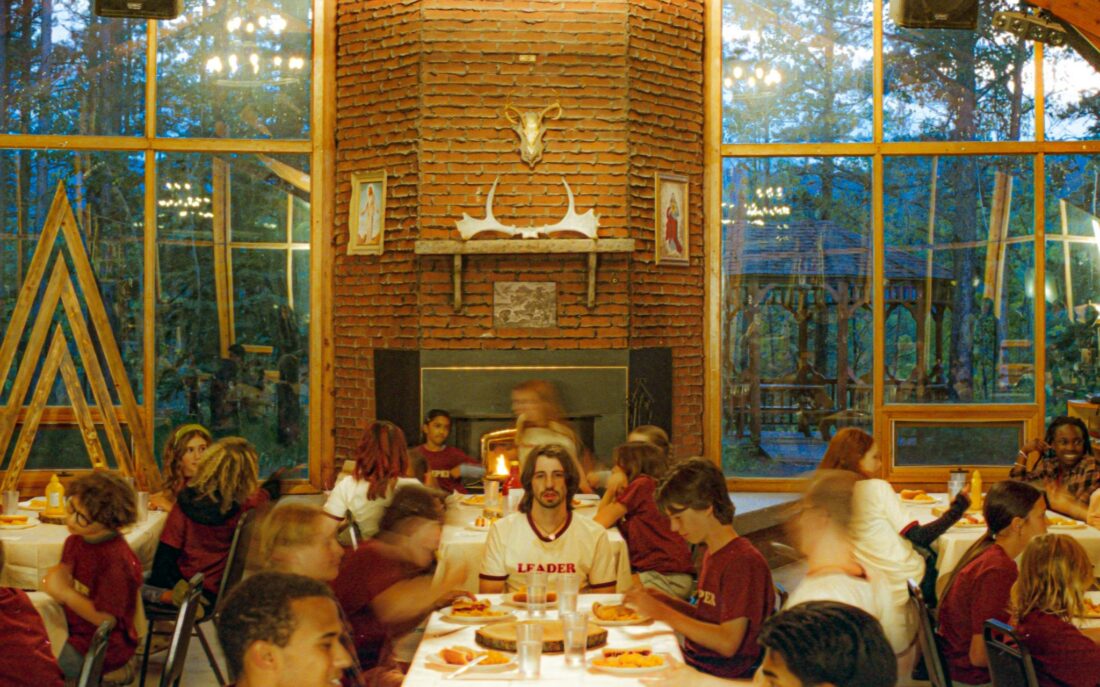
Upon entering Camp, Emily is initially greeted by Dan (Austyn Van de Kamp) and Jo (Sophie Bawks-Smith), the camp’s de facto leader and guidance counselor, respectively. Their overt friendliness and frequent invocations of "the Lord" create an initial impression of conventional, if slightly saccharine, summer camp leadership. However, this veneer is quickly peeled back by Emily’s roommate, Rosie (Cherry Moore), a vivacious and "wild" spirit whose camaraderie is less about spiritual guidance and more about finding a kindred soul for post-bedtime escapades involving "getting sloppy drunk." Rosie’s introduction of Emily to the existing clique of counselors—Clara (Alice Wordsworth), the undeniable leader; Nev (Lea Rose Sebastianis), performing the role of "the slutty one" with a poignant desperation; and the ironically named Hope (Ella Reece), whose quiet demeanor masks profound despair—marks a pivotal shift. These women, many of whom were once "troubled kids" at Camp themselves, welcome Emily into a tightly woven circle, initiating an "obsessive love" that promises both healing and, at times, a potent undercurrent of potential harm.
The daily rhythms of Camp are a deliberate subversion of typical summer camp narratives. While superficial tropes like ’70s-style counselor shirts and forced singalongs are present, Fast quickly dismantles expectations. The campers themselves are almost peripheral, their presence barely registered. Time itself becomes fluid, dilating and contracting in inexplicable ways, allowing the counselors an inordinate amount of time for hedonistic nighttime revelry, seemingly impervious to hangovers. Alcohol and drugs materialize inexplicably in this remote, mountain-and-forest-locked plateau, further contributing to the camp’s otherworldly logic. The film hints at traditional coming-of-age clichés—bad boys, summer romances, danger—only to deftly pivot, choosing entirely unexpected paths. This isn’t satire; it’s a knowing conversation with established narrative forms, a gentle but firm re-shaping of familiar contours, reminiscent of the works of David Lynch or Jane Schoenbrun, without ever succumbing to cheap nostalgia.
As the group of four counselors becomes five with Emily’s integration, the subtle, slow-burn "witchy shit" begins to manifest. This magical element is not a sudden, overt spectacle, but rather a creeping, atmospheric presence that weaves itself into the fabric of their intense bonds. It mirrors the emotional turmoil of the characters, acting as both a catalyst and a reflection of their internal landscapes. The film’s true focus, however, remains the intricate dance of female friendship—the intense, almost overnight devotion that blossoms between them, and the subsequent, more complex journey of learning how to truly be there for one another. Camp delves into the difficult questions: when to offer unwavering support, and when to deliver the uncomfortable truth; when to lay bare one’s deepest fears and regrets, and the profound consequences of such vulnerability.
Supporting Data: The Art of Subtlety and Sensory Immersion
Camp‘s most striking feature is its extraordinary visual and aural landscape. In an era where vibrant cinematography is often a conscious statement, Camp doesn’t just splash color; it positively glows. Fast and her team leverage natural light to stunning effect, allowing the vibrant greens of the forest to imbue daytime scenes with an almost ethereal quality. As night falls, the film embraces a more overtly surreal aesthetic, transitioning to matte-painted and animated backdrops that conjure impossibly starry skies and Technicolor sunsets. This blend of hyper-real naturalism and stylized animation isn’t merely decorative; it’s deeply integrated into the film’s thematic core. A pivotal interior scene, where the sky outside bursts with shooting stars until the room itself seems to spin, exemplifies how these visual flourishes blur the line between waking reality and dream logic, making the audience question the boundaries of perception alongside Emily.
The film’s sound design, though not explicitly detailed in the initial review, must play a crucial role in establishing its immersive tone. To create the sensation of "stumbling into a fairy ring" and to evoke a "whispering voice" leading characters into the forest, a meticulously crafted soundscape would be essential. This likely involves a delicate balance of ambient forest sounds, subtle supernatural cues, and an evocative, perhaps melancholic, musical score that underpins the emotional journey of the characters.

Thematically, Camp is a rich tapestry. At its heart lies the profound exploration of grief and trauma, particularly as experienced by young women. Emily’s journey is one of self-blame and isolation, which the camp, ironically, attempts to address through collective healing. This leads directly into the film’s second major theme: the complex, often intense, nature of female friendship and intimacy. The "obsessive love" that develops among the counselors is depicted with both its nurturing and potentially destructive facets, highlighting the power dynamics, vulnerabilities, and fierce loyalty that can define these bonds.
Fast’s film is also a masterclass in liminality and magic realism. The constantly shifting reality, the blurring of natural and supernatural, and the deliberate ambiguity surrounding events contribute to a pervasive sense of unease and wonder. The director’s decision to subvert traditional coming-of-age and genre tropes demonstrates a sophisticated understanding of cinematic language. By gesturing towards well-worn paths—the "bad boys, summer romances, kids causing trouble"—and then deliberately veering away, Fast crafts a narrative that feels fresh and unpredictable, inviting the audience to shed their own expectations. This is not a film that provides easy answers or conventional resolutions; rather, it invites contemplation, much like a cryptic dream.
For a sophomore feature, Camp demonstrates an astonishingly confident and singular directorial voice. Avalon Fast is not merely telling a story; she is crafting an experience, a mood piece that prioritizes atmosphere and emotional resonance over strict plot mechanics. Her ability to blend diverse cinematic elements—natural light, animation, genre subversion—into a cohesive, compelling whole suggests a filmmaker with a clear artistic vision and a daring approach to storytelling.
Official Responses: Anticipating Critical Acclaim and Industry Impact
While details of official critical reception are nascent for Camp, the tenor of this review strongly suggests a film poised for significant acclaim within independent cinema circles. Its distinctive aesthetic and narrative boldness are precisely the qualities that attract film festival programmers and discerning critics. One can anticipate Camp generating buzz for its unique visual language, its courageous thematic exploration of female relationships and trauma, and its refreshing refusal to conform to predictable genre structures.
Industry insiders are likely to recognize Fast as a burgeoning talent, her sophomore effort demonstrating a clear escalation in ambition and artistry from her previous work. Camp stands as a testament to the power of independent filmmaking to produce deeply personal and formally inventive stories that mainstream productions often shy away from. Its unconventional approach to storytelling and its willingness to embrace ambiguity could position it as a critical darling, celebrated for pushing the boundaries of what a "coming-of-age" or "supernatural" film can be. The film’s ability to conjure such a vivid, immersive world on what is likely an independent budget speaks volumes about the creative ingenuity at its core.
Implications: A Lasting Resonance and Future Directions
Camp‘s significance extends beyond its immediate viewing experience. It is a film that speaks to a specific contemporary yearning for narratives that acknowledge the complexities of emotional healing and the transformative power of deep, sometimes challenging, friendships. In a world often characterized by superficial connections, Camp dares to explore the raw, unfiltered intimacy that can form in moments of vulnerability and shared experience.
The reviewer’s closing wish—that "goth kids are watching it at sleepovers for years to come"—is not just a whimsical sentiment, but a profound statement about the film’s potential legacy. Camp is destined to resonate with audiences who feel like outsiders, who appreciate the darkly beautiful, the subtly strange, and the profoundly emotional. It offers a mirror to those grappling with intense grief and seeking solace in unconventional bonds, validating their experiences within a fantastical framework. It’s the kind of film that fosters deep discussions, encourages repeat viewings, and cultivates a devoted cult following—a hallmark of truly impactful independent cinema.
For Avalon Fast, Camp signals a formidable future. Her distinct artistic voice, characterized by its command of tone, visual poetry, and thematic depth, positions her as a filmmaker to watch. She is not merely entering the conversation of contemporary cinema; she is actively shaping it, offering a refreshing alternative to formulaic storytelling. Camp suggests a path forward for genre cinema, demonstrating that supernatural elements can serve not just as plot devices, but as profound metaphors for internal states and the often-unseen forces that shape our lives. This film is more than just a movie; it is an invitation to step into the woods, to embrace the strange, and to find beauty and truth in the liminal spaces between despair and connection.