Kickstarter Roundup: A Glimpse into the Future of Tabletop Gaming on July 10, 2026
July 10, 2026 – In the ever-evolving landscape of tabletop gaming, Kickstarter continues to serve as a vibrant crucible for innovation, creativity, and community-driven development. This week’s roundup on the popular crowdfunding platform presents a fascinating cross-section of the industry’s imaginative breadth, offering everything from whimsical plushie skirmishes to earnest appeals for environmental stewardship, and even the audacious pursuit of profits in a post-apocalyptic world. As of July 10, 2026, these campaigns are not merely seeking funding; they are cultivating communities, testing groundbreaking mechanics, and pushing the boundaries of what a board game can be.
This week’s featured projects highlight a persistent trend within the tabletop sector: the fusion of engaging gameplay with unique thematic elements, often infused with a charming aesthetic or a thought-provoking message. From the strategic depths of worker placement to the tactile thrill of dexterity games, and the cozy comfort of narrative-driven experiences, the diversity on display underscores the robust health and boundless potential of independent game design. Enthusiasts and casual players alike will find something to pique their interest, proving that the board game renaissance shows no signs of abating.
Main Facts: A Diverse Harvest from the Crowdfunding Fields
The latest Kickstarter roundup, unveiled on July 10, 2026, showcases six distinct board game projects, each vying for the attention and backing of a global audience. These campaigns represent a microcosm of contemporary board game design, illustrating a keen awareness of evolving player preferences and a willingness to explore unconventional themes and mechanics. The slate includes:
- Button Kingdoms: A charmingly brutal war game where players command armies of plush toys in a strategic battle for playground dominance, emphasizing simultaneous play and negotiation.
- Ringyo: A worker placement game set in Edo period Japan, challenging players to balance economic prosperity with environmental sustainability, notably pledging to plant a tree for every backer.
- Kabuto Sumo Dice: A dexterity-based dice game that brings the thrilling world of insect sumo wrestling to the tabletop, requiring precise aiming and strategic dice throws.
- The Isle of Penguins: An accessible yet strategically deep penguin placement and open drafting game, designed with modular complexity to cater to various player skill levels.
- Yumegari: A cozy, magical store management game where players prepare for the "Festival of Dreams" by collecting artifacts and arranging enchanting displays.
- The Big Squeeze: A darkly humorous game about building and maintaining a lemonade stand in the midst of a global apocalypse, featuring double-sided boards for pre- and post-cataclysmic play.
Together, these projects underscore the platform’s role as a launchpad for diverse visions, where creators can connect directly with their audience, fostering a symbiotic relationship that often results in more innovative and refined final products. The ongoing success of such campaigns is a testament to the enduring appeal of physical games and the power of community support in bringing ambitious ideas to life.
A Deep Dive into the Week’s Featured Campaigns
Button Kingdoms: Plushie Warfare and Strategic Cuddles
In a genre often dominated by grim aesthetics and epic narratives, Button Kingdoms carves out a unique niche, inviting players to a world where childhood imagination fuels surprisingly brutal strategic warfare. This game ingeniously transforms the nostalgic concept of battling plush toys on a playground into a fast-paced, simultaneous play experience. Players are tasked with assembling an army of their favorite stuffies, each possessing unique abilities, to establish dominance over the Button Kingdoms. The core mechanic revolves around collective decision-making and real-time negotiation; everyone plays and makes deals at the same time, leading to a dynamic and often chaotic battlefield.
The premise, where "you have to share your toys," translates into clever resource management and tactical deployment. Buttons serve as the primary currency, used to acquire new plushie units from the market or influence other players. The game’s charm lies in its deceptive simplicity: beneath the adorable veneer of cuddly characters lies a deep strategic layer demanding wits and tactical foresight. Victory isn’t just about overwhelming force but about outmaneuvering opponents through clever alliances and timely betrayals. Button Kingdoms promises a delightful blend of cutthroat strategy and heartwarming nostalgia, making it appealing to families seeking a more engaging experience, as well as seasoned strategists looking for a lighter, yet challenging, game night. The rapid pace ensures minimal downtime, keeping all players engaged in the unfolding plushie drama.
Ringyo: Cultivating Sustainability in Edo Japan
Ringyo stands out as a compelling example of how tabletop games can intertwine engaging mechanics with profound social and environmental messages. Set in the serene, yet strategically complex, Edo period of Japan, this worker placement game challenges players to assume the role of a daimyo tasked with transforming an untamed wilderness into a thriving province. However, the path to prosperity is not paved with unbridled exploitation; instead, it demands a delicate balance between human development and environmental stewardship. The central theme of sustainable forestry is not merely aesthetic but deeply integrated into the gameplay, making every decision a moral and strategic dilemma.
Players command samurai skilled in forestry, deploying them to cultivate forests, harvest valuable timber, and develop their province. The innovative simultaneous worker placement mechanic ensures constant engagement, as players must anticipate rival daimyos’ moves while managing their own long-term plans. What truly elevates Ringyo is its commitment to real-world impact: each pledge directly contributes to funding the planting of a tree with Trees for the Future, transforming a game about ecological balance into an actual act of environmental regeneration. This unique selling proposition appeals not only to fans of Eurogames and strategic depth but also to environmentally conscious consumers. Ringyo is more than a game; it’s a testament to the power of tabletop gaming as a vehicle for positive change, challenging players to consider the long-term consequences of their actions and to find harmony between progress and preservation.
Kabuto Sumo Dice: Dexterity, Bugs, and the Thrill of the Arena
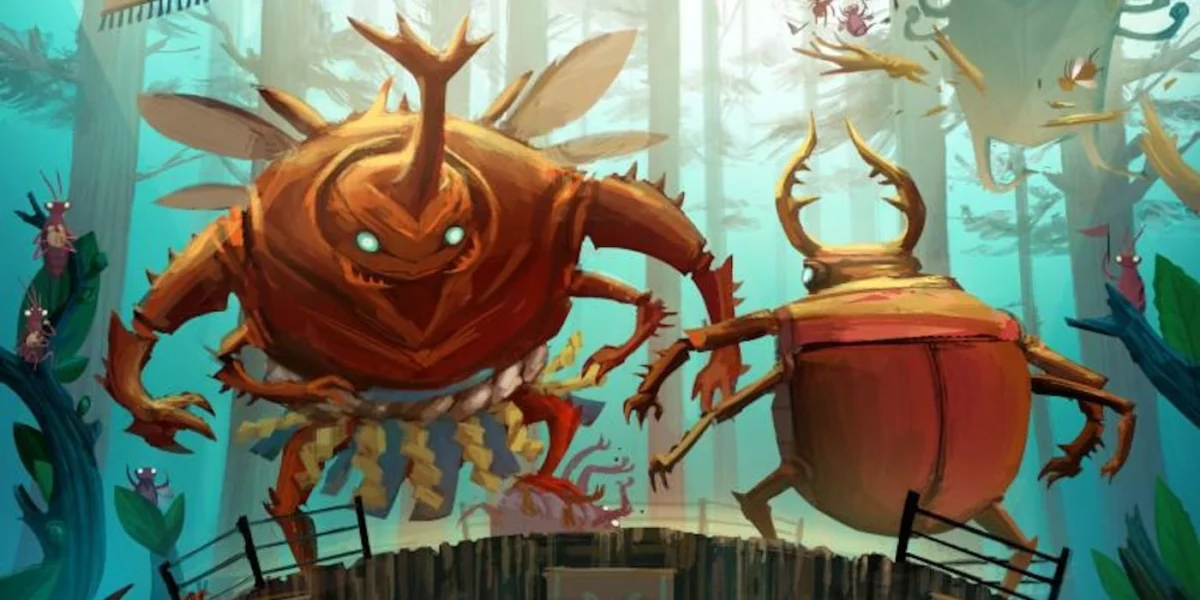
Building upon the success of its predecessor, Kabuto Sumo Dice takes the beloved theme of bug sumo wrestling and injects a thrilling element of physical dexterity. This isn’t just a game of strategy; it’s a test of aim, precision, and a bit of controlled chaos. Players are transported to a miniature 3D arena where their insect champions battle it out, their fate hinging on the skillful manipulation of dice. The core mechanic involves physically throwing dice into the arena, aiming to dislodge opponents or strategically position one’s own pieces.
The game introduces "signature moves" that allow players to perform special actions or gain advantages based on how their dice land or interact with the arena. Combining specific pip values can trigger powerful effects, making each throw a calculated risk. The tactile satisfaction of slamming dice into the arena, feeling the rumble as pieces shift, adds an immersive layer rarely found in traditional board games. Kabuto Sumo Dice expertly blends the strategic elements of predicting outcomes and planning moves with the exhilarating unpredictability of a dexterity challenge. It’s a game that encourages shouts of triumph and groans of near misses, making it an ideal choice for party settings or those looking for a lively, interactive experience. The simplified rules promise quick learning, but the mastery of dice placement and signature moves offers a depth that will keep players coming back for more, aiming for that bug-sized championship belt.
The Isle of Penguins: A Cozy Journey of Arctic Placement
The Isle of Penguins promises a welcoming and intellectually stimulating experience, proving that strategic depth doesn’t require complex rulebooks. With a mere two pages of rules to start, this game prioritizes accessibility, making it an ideal gateway for newcomers to the hobby or a relaxing option for seasoned players. Set in a charming arctic landscape, players engage in penguin placement and open drafting, creating their own bustling penguin colonies. The game’s beauty lies in its elegant design, allowing for gradual immersion and increasing complexity.
It offers three distinct modes—family, advanced, and expert—each progressively introducing more intricate rules and strategic layers. This modularity ensures that the game can grow with its players, providing fresh challenges as familiarity increases. The "meaningful decisions" mentioned in its description likely refer to the strategic implications of where and when to place penguins, how to best utilize drafted tiles, and how to optimize scoring opportunities across the different modes. Coupled with "beautiful components," which typically suggest high-quality artwork, tactile pieces, and thoughtful graphic design, The Isle of Penguins aims to provide an aesthetically pleasing and mentally engaging experience. It’s designed for those who appreciate games with a gentle learning curve but substantial replayability, offering a cozy yet strategically rich journey into the heart of an arctic colony.
Yumegari: Magical Commerce in the Festival of Dreams
Prepare for the whimsical chaos of the "Festival of Dreams" in Yumegari, a delightfully charming game of magical store management. Players find themselves racing against time, with the festival fast approaching and their arcane goods store far from ready. This game beautifully merges the stress of business management with a cozy, magical aesthetic, creating an experience that is both engaging and endearing. At its heart, Yumegari is about strategic movement and collection, as players guide their magical familiars around a vibrant board.
The objective is to collect various tiles and artifacts that represent shipments of arcane goods, then arrange them into "eye-catching displays" for the influx of customers during the festival. This involves a clever tile-laying or pattern-building mechanic, where strategic placement is key to maximizing customer appeal and scoring points. The challenge is amplified by the presence of rival magic stores in town, introducing a competitive element where players must anticipate opponents’ moves to secure desired artifacts. The game’s narrative—preparing a magical shop with the help of an adorable familiar—provides a unique thematic hook, appealing to fans of cozy games, resource management, and tile-laying puzzles. Yumegari promises a magical blend of strategy, charm, and a race against the clock, inviting players to make some real magic in the bustling world of Lunareth.

The Big Squeeze: Lemonade in the Face of Armageddon
The Big Squeeze offers a refreshing, darkly humorous take on the apocalypse, proving that even at the end of the world, entrepreneurship finds a way. This game challenges players to build and maintain a lemonade stand, not just any stand, but one resilient enough to withstand the literal end of the world. The ingenious use of double-sided town and character boards allows players to experience both the bustling "pre-apocalypse" era and the desolate "post-apocalypse," fundamentally altering gameplay and strategic considerations.
The core mechanics revolve around collecting ingredients, strategically setting up one’s stand, and aggressively selling lemonade to a dwindling, yet thirsty, populace. The game’s humor stems from the sheer absurdity of the premise: amidst crumbling infrastructure and societal collapse, the drive to make a profit from lemonade remains paramount. Players must adapt their strategies as the world changes, perhaps dealing with mutated customers or scarce resources in the post-apocalyptic phase. The Big Squeeze is more than just a resource management game; it’s a thematic journey filled with unexpected twists and satirical commentary on human resilience and capitalism. It caters to players who enjoy thematic immersion, light strategic challenges, and a good laugh, demonstrating that "when life gives you lemons," even after an apocalypse, you make lemonade.
Chronology of Crowdfunding Success: A Maturing Ecosystem
The emergence of these diverse campaigns on July 10, 2026, is not an isolated phenomenon but rather a continuation of a significant trend in the tabletop gaming industry. Over the past decade and a half, crowdfunding platforms, particularly Kickstarter, have transformed from niche funding mechanisms into indispensable pillars of game development and publishing. Initially seen as a last resort for indie creators, Kickstarter has evolved into a sophisticated ecosystem where established publishers and first-time designers alike launch projects, engage with their audience, and secure funding without traditional gatekeepers.
The typical lifecycle of a Kickstarter board game campaign has become well-defined: an initial launch accompanied by intensive marketing, followed by a funding period ranging from 15 to 30 days. During this time, creators actively interact with their community, releasing daily updates, responding to queries, and unveiling "stretch goals" that unlock additional content or enhancements as funding milestones are met. This direct engagement fosters a strong sense of ownership among backers, turning them into advocates and co-creators. Post-campaign, the journey shifts to production, often involving months, sometimes years, of development, manufacturing, and logistical coordination before the final fulfillment to backers. The date of this roundup, July 10, 2026, signifies a mature phase in this chronology, where campaigns are often highly polished at launch, backed by professional marketing, and supported by a global network of enthusiastic tabletop gamers who eagerly await the next innovative project.
Supporting Data: Trends in Tabletop Gaming Fueling Crowdfunding
The sustained vibrancy of board game crowdfunding, exemplified by this week’s diverse roundup, is underpinned by robust growth in the broader tabletop gaming industry. Over the past decade, the industry has experienced a remarkable resurgence, challenging the dominance of digital entertainment. In 2025, global revenue for board games surpassed an estimated $20 billion, with projections indicating continued expansion. This growth is driven by several factors: the rise of board game cafes, the increasing popularity of "game nights" as a social activity, and a growing appreciation for tactile, face-to-face entertainment in an increasingly digital world.
Crowdfunding platforms have played a pivotal role in this expansion. In 2025 alone, Kickstarter facilitated over 3,000 successful board game projects, collectively raising more than $300 million. This data highlights not only the financial power of the crowd but also the platform’s capacity to democratize publishing. It allows for the realization of niche themes and innovative mechanics that might be deemed too risky by traditional publishers. Games like Ringyo, with its environmental focus, or Button Kingdoms, with its whimsical premise, exemplify this trend, demonstrating that unique concepts can find a dedicated audience and significant financial backing through direct community support. Furthermore, the interactive nature of crowdfunding campaigns, where backers can provide feedback and influence development through stretch goals, fosters a strong sense of community and investment, ensuring higher engagement and loyalty to the final product. The integration of social responsibility, as seen with Ringyo‘s tree-planting initiative, also reflects a growing demand among consumers for ethical and impactful consumption, pushing creators to incorporate more meaningful elements into their projects.
Official Responses and Creator Insights: The Heart of the Campaign
While direct quotes from the creators of this week’s featured games are not available in this summary, the collective ethos of independent game developers on Kickstarter offers a clear insight into their motivations and challenges. Industry observers frequently note that creators choose Kickstarter primarily for creative control and direct connection with their audience. "It’s about bringing a vision to life exactly as we imagine it, without compromising on theme or mechanics for marketability," remarked a veteran game designer who has successfully launched multiple campaigns. "The feedback loop with backers is invaluable; it’s like having thousands of beta testers and enthusiastic cheerleaders."
However, the journey is not without its hurdles. Running a successful campaign demands extensive marketing, transparent communication, and meticulous planning for manufacturing and fulfillment—areas where many small studios face significant learning curves. "The funding goal is just the beginning," explained an indie publisher at a recent industry convention. "The real work starts when the campaign ends, ensuring we deliver on our promises and manage backer expectations through what can be a very long production cycle." Success, for many, extends beyond merely hitting the funding target. It encompasses building a loyal community, receiving positive critical acclaim upon release, and establishing a sustainable business model that allows for future projects. These campaigns are often passion projects, born from a deep love for board games, and the "official response" from the creator community is a resounding affirmation of Kickstarter’s power to transform dreams into tangible, playable realities.
Implications for the Tabletop Gaming Landscape: Innovation and Evolution
The ongoing success and diversity of Kickstarter campaigns, as evidenced by this July 10, 2026 roundup, carry significant implications for the broader tabletop gaming landscape. Firstly, crowdfunding continues to democratize publishing, empowering independent designers and smaller studios to bypass traditional publishing houses. This allows for an explosion of creativity and niche market catering, bringing unique voices and fresh perspectives to the forefront. The games featured this week—from plushie wars to apocalyptic lemonade stands—are prime examples of concepts that might struggle to find a home with risk-averse mainstream publishers but thrive with direct community backing.
Secondly, this environment fosters innovation. Designers are encouraged to take risks with novel mechanics, hybrid genres, and unconventional themes, knowing that a dedicated audience exists for well-executed ideas. The blend of dexterity and strategy in Kabuto Sumo Dice or the ethical dimension of Ringyo are testaments to this. However, this democratization also leads to market saturation. Standing out in a crowded Kickstarter marketplace requires increasingly sophisticated marketing, compelling visuals, and a strong pre-campaign community, raising the bar for entry.
Furthermore, the relationship between creators and backers continues to evolve. Backers are not just consumers; they are patrons, investors, and often active participants in the development process. This heightened engagement also translates into evolving expectations for transparency, communication, and timely fulfillment. The "Kickstarter Effect" has become a powerful phenomenon, where a successful campaign can launch a designer’s career, establish a new studio, or even spark new trends within the industry. Looking ahead, these games signify a future where accessibility (as seen in The Isle of Penguins), environmental consciousness, and thematic originality will continue to drive the evolution of tabletop gaming, ensuring a vibrant and endlessly creative future for players worldwide.
Conclusion: A Testament to Creativity and Community
The Kickstarter roundup of July 10, 2026, serves as a compelling testament to the boundless creativity thriving within the tabletop gaming community and the pivotal role of crowdfunding in bringing these visions to life. From the adorable strategic chaos of Button Kingdoms to the thoughtful environmentalism of Ringyo, the physical dexterity challenge of Kabuto Sumo Dice, the accessible elegance of The Isle of Penguins, the magical commerce of Yumegari, and the darkly humorous survivalism of The Big Squeeze, this week’s offerings showcase an unparalleled breadth of design.
These projects are more than just games; they are cultural artifacts, reflections of diverse interests, and products of a collaborative spirit between creators and their global audience. Kickstarter remains an indispensable platform, not just for funding, but for fostering innovation, building communities, and democratizing the publishing process. As these campaigns move from screen to table, they will undoubtedly enrich the gaming experiences of countless individuals, further cementing the tabletop industry’s position as a dynamic and ever-expanding realm of entertainment and imagination. The future of board gaming, as glimpsed through these campaigns, promises to be as diverse, engaging, and inspiring as the creative minds that conceive them.