Logic, Leaves, and Legacy: Analyzing Spock’s Unprecedented Botanical Mind-Meld in Star Trek: Strange New Worlds
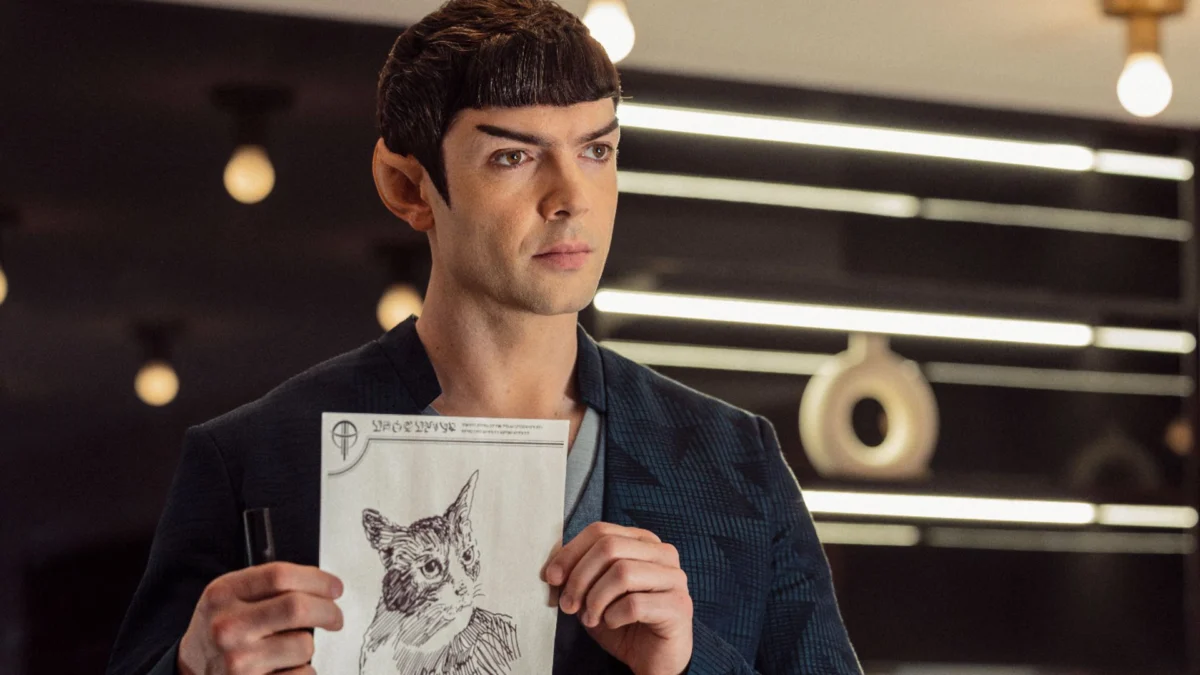
The Star Trek franchise has never been one to shy away from the surreal, the comedic, or the scientifically speculative. From the early days of the 1960s, the series has utilized its episodic format to explore various genres, ranging from political thrillers and horror to high-concept comedy. However, Star Trek: Strange New Worlds (SNW) has taken this tradition of "genre-bending" to a new level. In its fourth season, the series continues to push the boundaries of what a legacy character like Spock can experience.
In Season 4, Episode 3, titled "Human Best Friend," the show delivers one of the most bizarre and talked-about moments in Vulcan history: Spock (Ethan Peck) performing a mind-meld with a ficus plant. While the episode serves primarily as a comedic homage to The Hangover, it raises fascinating questions about Vulcan psionic abilities, the evolution of Federation technology, and the deepening bond between Spock and James T. Kirk.
Main Facts: The Cesnar Incident and the Botanical Security Interface
The core narrative of "Human Best Friend" centers on a shore leave gone wrong on the resort planet Cesnar. Directed by Yana Gorskaya and written by Kathryn Lyn, the episode splits the crew of the USS Enterprise into two distinct, chaotic threads. The primary plot follows Lieutenants Erica Ortegas (Melissa Navia) and Montgomery "Scotty" Scott (Martin Quinn) as they navigate a debilitating hangover while attempting to locate a missing shuttlecraft.
The secondary plot, or B-story, involves Spock and James T. Kirk (Paul Wesley). Due to Cesnar’s unique and intoxicating atmosphere, Spock finds himself in a state described as "quite incapacitated." In this altered state of consciousness, the Vulcan Science Officer becomes convinced that Kirk—who is physically present—is merely a hallucination brought on by the planet’s vapors. This misunderstanding allows for a rare moment of emotional transparency, as Spock confides his deepest fears, hopes, and dreams to a man he believes doesn’t truly exist.
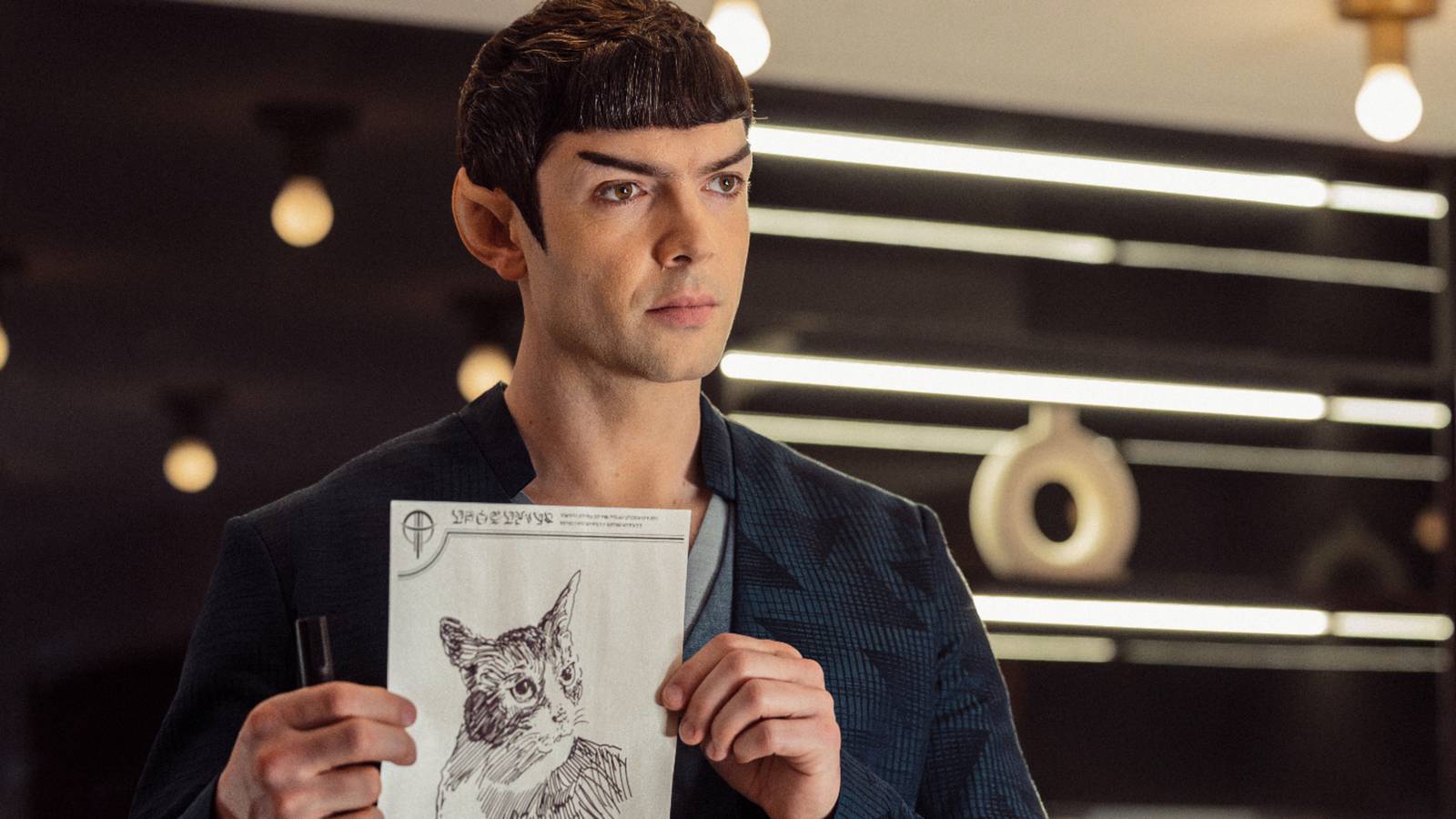
The climax of the episode’s technical mystery occurs when Ortegas and Scotty recruit the "high" Spock to hack into the planet’s security network. Expecting a standard computer terminal, they instead encounter a ficus plant. This plant is revealed to be "botanical technology"—an advanced organic computer system. To interface with it, Spock performs a mind-meld, uttering the now-iconic line: "My mind to your leaves, my thoughts to your root system."
Chronology: From Intoxication to Interfacing
To understand how Spock ended up psychically linked to a shrub, one must look at the chronological progression of the episode’s events:
- Arrival on Cesnar: The crew arrives for a much-needed respite. The planet is known for its "festive" atmosphere, which includes atmospheric compounds that affect different species in various ways.
- The Blackout: Ortegas and Scotty wake up with no memory of the previous night and a missing shuttle. Meanwhile, Spock enters a state of euphoric intoxication, losing his typical Vulcan emotional suppression.
- The Kirk Hallucination: Kirk arrives on Cesnar to spend time with Spock. Because Spock is compromised, he treats Kirk as a "Human Best Friend" hallucination, leading to board games, hugs, and deep philosophical confessions.
- The Search for the Shuttle: Ortegas and Scotty realize they need a high-level science officer to bypass Cesnar’s security. They find Spock, who is more than happy to help his "imaginary" friend and his colleagues.
- The Ficus Terminal: Upon reaching the security hub, they find no screens or buttons. The planet’s infrastructure is entirely bio-organic.
- The Meld: Spock places his hands on the leaves of the ficus. Despite the absurdity of the situation, the meld is successful. He accesses the "root system" (the database) and identifies the location of the shuttle.
- The Aftermath: Once the atmosphere’s effects wear off, Spock realizes Kirk was real. The episode ends with the revelation that Kirk now knows almost everything about Spock’s internal life, a dynamic that will echo into their future relationship in Star Trek: The Original Series (TOS).
Supporting Data: A History of Non-Humanoid Mind-Melds
While the "ficus meld" may seem like a bridge too far for some canon purists, Star Trek history actually supports Spock’s ability to interface with non-humanoid and even non-biological entities. The Vulcan mind-meld is not merely a telepathic conversation; it is a "shunting" of consciousness that can bridge the gap between different forms of existence.
The Horta (TOS: "The Devil in the Dark")
In one of Leonard Nimoy’s most famous performances, Spock melds with the Horta, a silicon-based lifeform that resembles a slab of rock. By psychically connecting with a creature that has no spoken language and a completely alien biology, Spock was able to feel its pain ("PAIN!") and discover that it was a mother protecting its eggs. This established that Vulcans could meld with non-carbon-based life.

Nomad and V’Ger (TOS: "The Changeling" & The Motion Picture)
Spock has a documented history of melding with artificial intelligence. He melded with Nomad, a sentient space probe, to understand its mission of "sterilizing" imperfection. Years later, in Star Trek: The Motion Picture, he performed a long-distance and later a direct meld with V’Ger, a massive living machine. These instances prove that if a machine possesses a sufficiently complex consciousness or "logic," a Vulcan can interface with it.
The Whales (Star Trek IV: The Voyage Home)
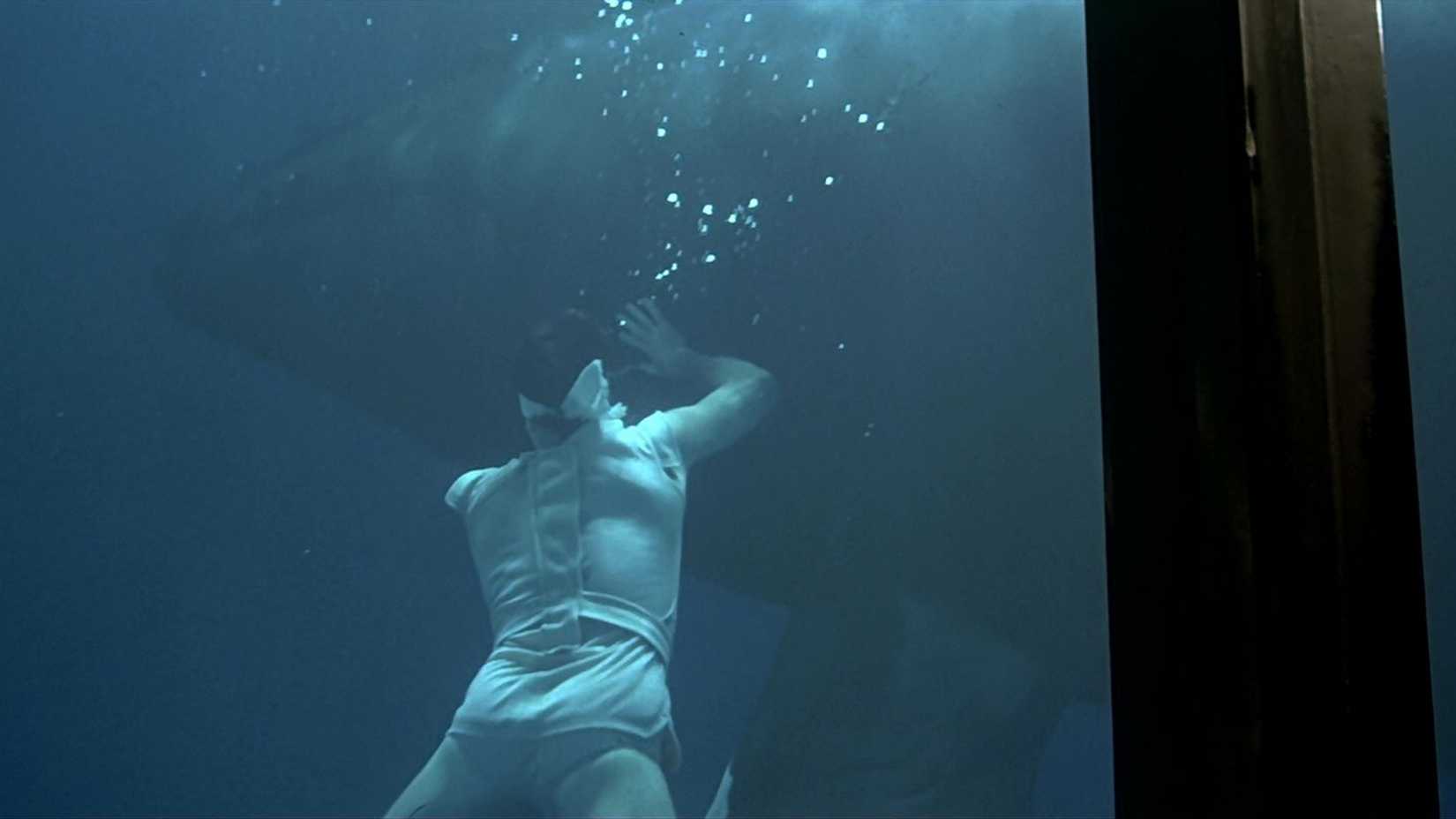
Perhaps the closest precursor to the ficus meld was Spock’s interaction with Gracie, a humpback whale. By swimming into the tank and placing his hands on the whale, Spock was able to communicate and even discern that the whale was pregnant. This showed that the meld could cross the species barrier to non-primates.
The ficus in Strange New Worlds represents a synthesis of these previous examples. Because it is "botanical technology," it sits at the intersection of biological life (like the Horta or whales) and advanced computing (like Nomad).
Official Context: The Creative Vision of Strange New Worlds
The inclusion of such a whimsical yet lore-heavy moment is characteristic of the creative team behind Strange New Worlds. Showrunners Henry Alonso Myers and Akiva Goldsman have frequently stated that their goal is to return to the "adventure of the week" format while deepening the emotional stakes for the legacy characters.
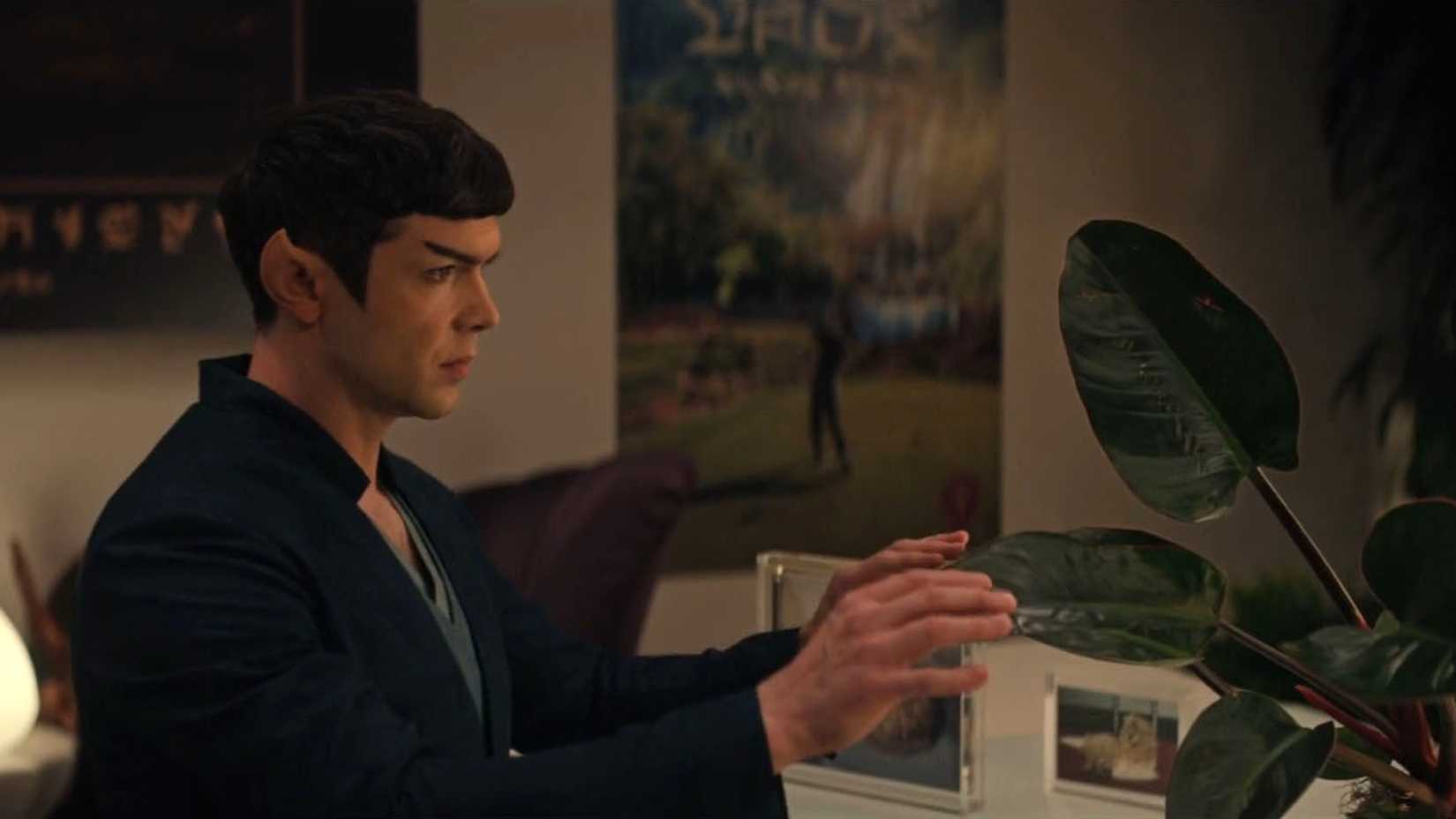
Writer Kathryn Lyn and director Yana Gorskaya utilized the "incapacitated Spock" trope to bypass the character’s usual rigidity. By putting Spock in a state where his logic is "vibrating on a different frequency," the writers can explore the outer limits of his powers. The "Human Best Friend" episode serves as a thematic companion to Season 2’s "Charades" (where Spock becomes fully human) and the musical episode "Subspace Rhapsody."
The "official response" from the narrative itself is one of acceptance. In the world of Strange New Worlds, the crew has seen enough "strange new life" to accept that a security computer might look like a houseplant. The humor comes not from the impossibility of the act, but from the poetic phrasing Spock uses while under the influence of Cesnar’s atmosphere.
Implications: Canon, Connection, and the Future
The implications of Episode 3 reach far beyond a simple gag about a plant. There are two major areas where this episode reshapes our understanding of the Star Trek mythos.
1. The Expansion of Vulcan Psionics
If Spock can mind-meld with "botanical technology," it suggests that Vulcan telepathy is far more versatile than previously depicted. It implies that a mind-meld is a universal translator of sorts—not just for language, but for information architecture. If a system has a "flow" (whether it be neural impulses, electrical currents, or sap in a root system), a skilled Vulcan can theoretically tap into it. This opens the door for future Star Trek stories to feature Vulcans interfacing with alien biospheres or exotic energy beings in ways we haven’t seen.
2. The Kirk-Spock Foundation
The most significant implication is emotional. By having Kirk present while Spock is "incapacitated," the show bridges the gap between the formal colleagues of SNW and the "brothers" they become in TOS. Kirk learning Spock’s "fears, hopes, and dreams" through Spock’s unfiltered honesty creates a profound intimacy.
In Star Trek: The Original Series, Kirk often seems to have an intuitive understanding of Spock that exceeds that of anyone else. "Human Best Friend" provides the canonical "why." Kirk didn’t just earn Spock’s trust over years of service; he was given a "backdoor" into Spock’s soul during a weekend on Cesnar. This retroactively makes their bond in later years feel even more earned and deeply rooted.
Conclusion
Star Trek: Strange New Worlds continues to prove that it is the most versatile entry in the modern franchise. By balancing the absurdity of a botanical mind-meld with the genuine emotional development of its lead characters, "Human Best Friend" encapsulates what makes the series successful.
Spock’s psychic connection to a ficus plant may be the "weirdest" meld in the franchise’s 60-year history, but it is also one of the most revealing. It reminds the audience that Spock is a bridge—between Earth and Vulcan, between logic and emotion, and apparently, between Starfleet and the garden center. As the crew of the Enterprise continues their five-year mission, it is clear that the "strange" in Strange New Worlds remains in very capable, albeit sometimes leaf-touching, hands.