
Marduk: Architect of Cosmos, King of Gods, and Protector of Babylon
BABYLON, MESOPOTAMIA – In the annals of ancient Mesopotamia, few deities command as much reverence and historical significance as Marduk, the preeminent patron god of Babylon. Rising from a humble local agricultural deity to the supreme ruler of the heavens and earth, Marduk embodied a multifaceted divine presence, presiding over an expansive dominion that included justice, compassion, healing, regeneration, magic, and fairness. While often associated with the vital forces of storms and agriculture, his ultimate ascendancy under the patronage of powerful kings cemented his status as the "King of the Gods," a figure whose worship approached the very threshold of monotheism.
His monumental temple, the Esagila, and its soaring ziggurat, the Etemenanki – famously described by the Greek historian Herodotus and widely considered the architectural inspiration for the biblical Tower of Babel – stood as the physical embodiment of his power and Babylon’s imperial might. Marduk’s story is not merely one of divine authority, but a chronicle inextricably linked to the political and cultural destiny of one of history’s most influential civilizations.
The Architect of Order: Main Facts of Marduk’s Divine Identity
Marduk’s journey to cosmic supremacy is a captivating narrative of theological evolution and political ambition. He was the son of Enki (also known as Ea), the venerable god of wisdom and freshwater, a creator deity himself in various myths. This paternal link, no doubt influenced by Marduk’s earlier incarnation as the regional deity Asarluhi, underscored his connection to life-giving forces and profound intellect. His consort was the fertility goddess Sarpanitu, though some traditions name Nanaya, and together they sired Nabu, the esteemed patron god of scribes, literacy, and wisdom – a lineage that reinforced the intellectual and administrative prowess associated with Babylon.
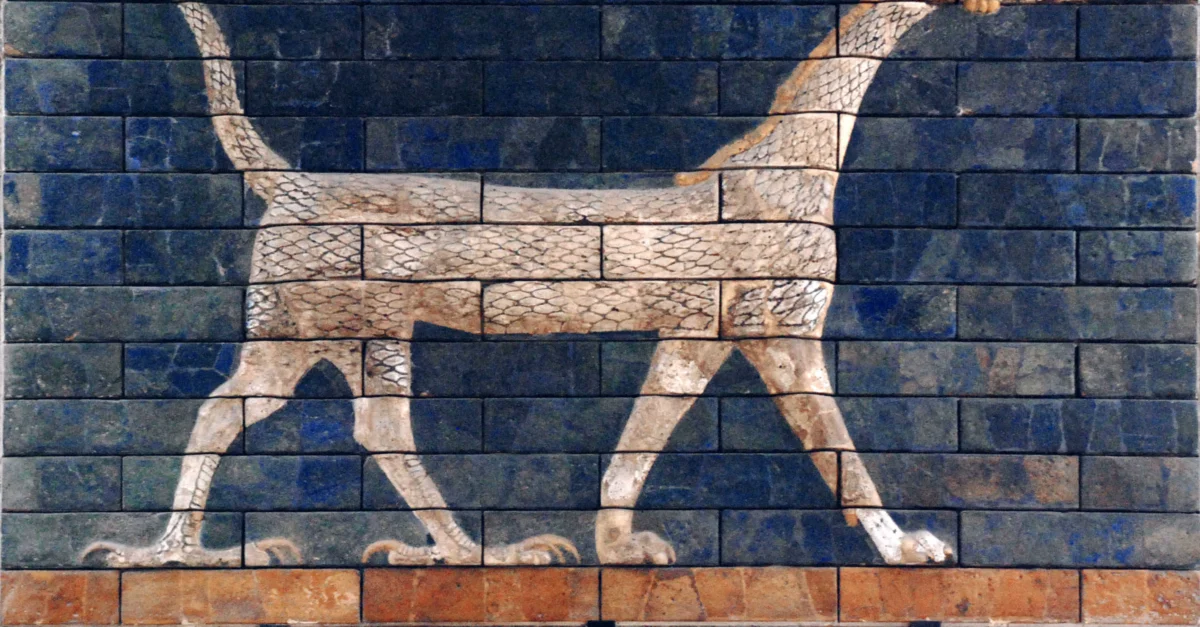
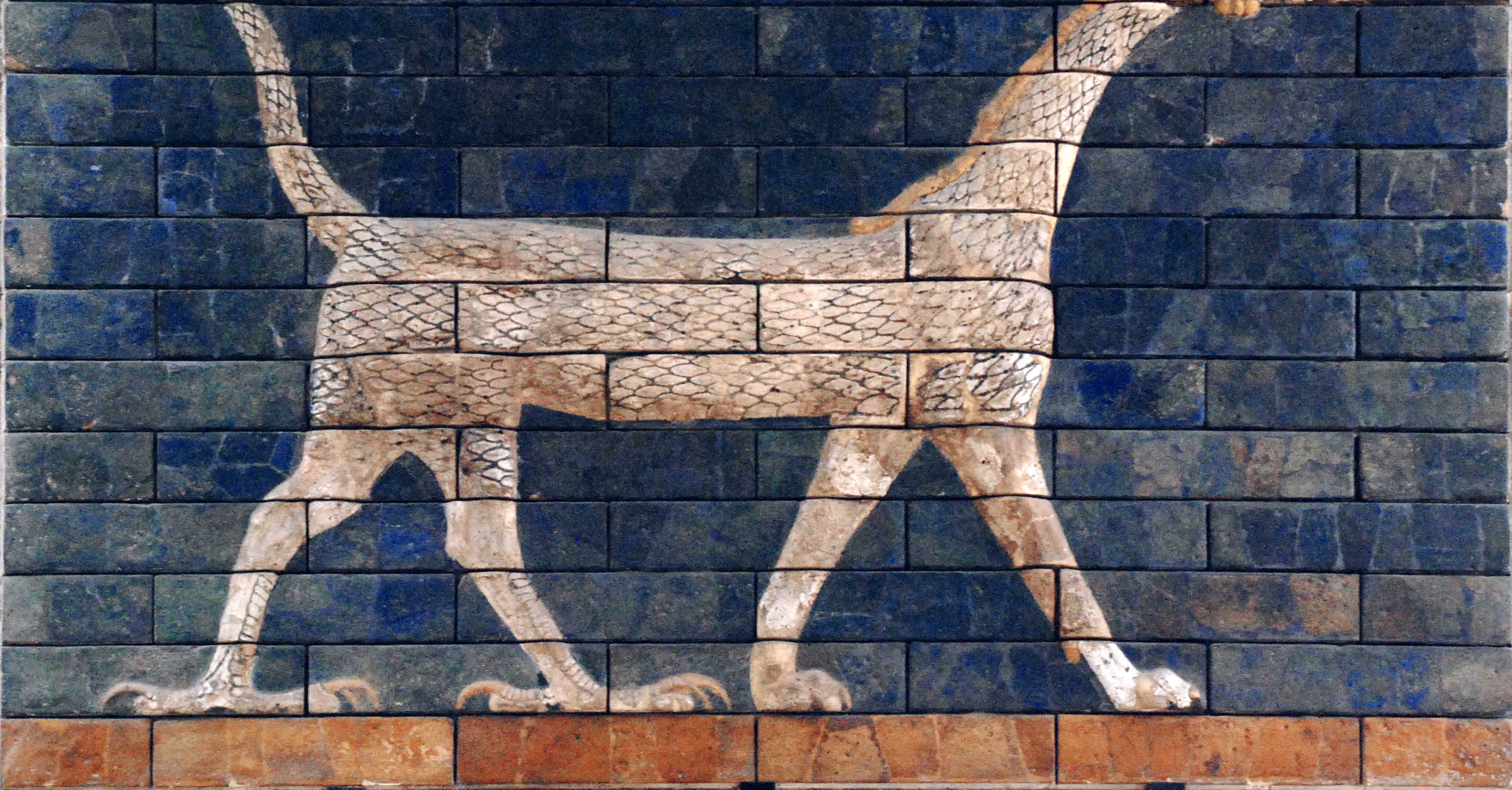
Iconographically, Marduk was typically depicted as a majestic human figure adorned in royal robes, often holding a distinctive spade, known as a marru, and accompanied by his fearsome snake-dragon, the Mušhuššu. The marru harks back to his origins as an agricultural deity, a symbol of cultivation and prosperity. The Mušhuššu, a creature combining features of a lion, snake, and bird, represented his power over chaos and his formidable strength. While his name, though linked to the marru, is believed to translate as "bull-calf," he was more commonly and reverently referred to simply as Bel, meaning "Lord."
Marduk’s rise was unparalleled. From a relatively obscure regional divinity, he became the undisputed head of the Mesopotamian pantheon, his worship spreading across Babylon, and later influencing the Assyrian and Neo-Assyrian Empires. He was hailed as the primordial creator of the heavens and earth, a co-creator of humanity with Enki, and the ultimate bringer of divine order, a role solidified by his legendary victory over the primordial chaos goddess Tiamat, as immortalized in the Babylonian creation epic, the Enuma Elish. This epic served not just as a religious text, but as a foundational charter for Babylonian hegemony, establishing Marduk’s rule and, by extension, Babylon’s preeminence over all other city-states and their deities.
A Chronicle of Power: Marduk’s Chronological Ascent
The narrative of Marduk’s ascendancy is a carefully woven tapestry of myth, political maneuvering, and cultural consolidation, spanning centuries of Mesopotamian history.
I. Origins and Early Cultivation (Pre-Hammurabi Era)
Marduk’s roots are believed to lie in the local deity Asarluhi, a god of agriculture and farming, whose primary symbol was the spade. This humble origin is crucial to understanding his later syncretic nature, incorporating various attributes as his cult expanded. Early attestations of Marduk are sparse, suggesting he was one among many local gods in the city of Babylon. However, with Babylon’s gradual rise as a political entity, the stage was set for its patron deity to follow suit.
II. The Hammurabic Revolution (1792-1750 BCE)
The pivotal moment in Marduk’s trajectory arrived with the reign of King Hammurabi of Babylon. A brilliant military strategist and administrator, Hammurabi consolidated a vast empire, transforming Babylon from a regional city-state into a dominant power. To legitimize his centralized rule and create a unified religious identity for his diverse empire, Hammurabi strategically elevated Marduk to the paramount position within the Mesopotamian pantheon. This was a deliberate political act; by establishing Babylon’s god as the chief deity, Hammurabi implicitly asserted Babylon’s political supremacy over other cities and their traditional patron gods. The famous Code of Hammurabi, a groundbreaking legal document, was presented as divinely sanctioned, implicitly by Marduk, further cementing the god’s role as the arbiter of justice and order.
III. The Enuma Elish and Cosmic Kingship (Late 2nd Millennium BCE)
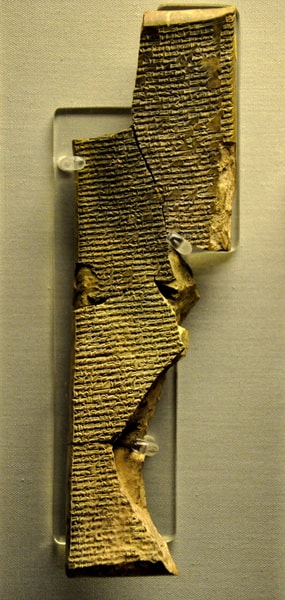
While the foundations were laid by Hammurabi, Marduk’s theological supremacy was fully articulated in the Enuma Elish, composed around the late 2nd millennium BCE, likely during the Kassite period or slightly later, as Babylon sought to assert its cultural dominance. This epic poem, often recited during the New Year (Akitu) festival, is more than a creation myth; it is a profound political and theological statement.
The Enuma Elish opens with a primordial cosmic state of undifferentiated chaos, embodied by two immense bodies of water: Apsu (sweetwater, male principle) and Tiamat (salty, bitter water, female principle). From their mingling arose the first generation of gods. However, Apsu, disturbed by the younger gods’ boisterousness, plots their destruction. Tiamat, though loving her children, warns Enki, who, in a display of cunning, casts a sleep spell upon Apsu and slays him, establishing his dwelling in Apsu’s remains, thereby creating the earth in the marshy region of Eridu.
Tiamat, enraged by her consort’s death, resolves to avenge Apsu. She creates a terrifying army of monsters, including venomous serpents, fierce dragons, and scorpion-men, placing the formidable god Quingu, her new consort, at their head. Quingu is granted the Tablet of Destinies, signifying supreme authority, and successfully defeats the younger gods in every encounter, plunging them into despair.
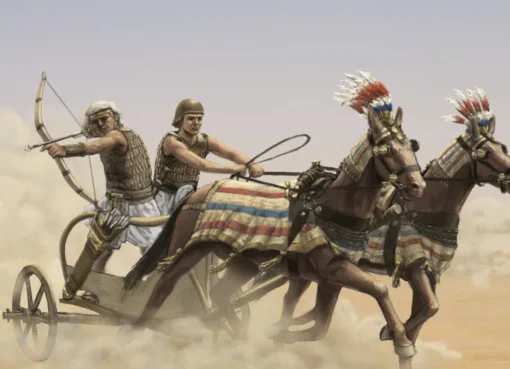
In this moment of crisis, the gods turn to Marduk. Though young, he possesses immense strength and charisma. He agrees to confront Tiamat, but only on the condition that if he succeeds, he will be proclaimed their king, with absolute authority over the cosmos. Desperate, the gods agree, investing him with their combined powers. Armed with a mighty bow, a mace, a net, and commanding the four winds, Marduk rides forth in a storm chariot drawn by terrifying beasts.
The ensuing battle is epic. Marduk confronts Tiamat, traps her in his net, and then, unleashing his storm winds, forces her mouth open before shooting an arrow that splits her in two. From her vanquished corpse, Marduk meticulously fashions the cosmos: her upper half becomes the heavens, her lower half the earth. From her eyes, he creates the Tigris and Euphrates rivers, and from her spittle, the clouds and rain. He then organizes the stars, establishes the celestial bodies, and sets the cosmic calendar.
Consulting with Enki, Marduk then decrees the creation of humanity from the remains of Quingu and the rebellious gods who supported Tiamat. Humanity’s purpose is to serve the gods, freeing them from daily toil to concentrate on higher divine functions, while Marduk ensures their benevolent rule and protection. This myth provided a powerful theological justification for Babylon’s imperial ambitions and Marduk’s role as the ultimate arbiter of cosmic and human destiny.
IV. The Apex of Worship (Kassite, Assyrian, and Neo-Babylonian Periods)
Following the Enuma Elish, Marduk’s cult flourished. His temple, the Esagila, and its adjacent ziggurat, Etemenanki ("House of the foundation of heaven and earth"), became the spiritual heart of Babylon. These structures were not merely places of worship but symbols of cosmic order, linking the heavens and the earth, with Marduk literally residing within the temple’s golden statue in its inner sanctum.
The ritual of "taking the hands of Marduk" became an indispensable part of royal legitimation, particularly during the Kassite Period (1595-1155 BCE), when Babylon became their capital. A new king was required to physically grasp the hands of Marduk’s statue during the New Year (Akitu) festival, a symbolic act affirming his submission to the god’s authority and receiving divine mandate. This practice underscored the intertwined nature of divine and earthly power in Babylon, making the physical presence of the statue absolutely critical.
Supporting Data: Iconography, Family, and Cultural Impact
Marduk’s multifaceted identity was reinforced through his iconography and familial connections, which permeated Babylonian culture.
A. Symbolism in Depiction
Marduk’s visual representation was rich with meaning. His royal robes signified his kingly status. The marru (spade) he often carried connected him to his ancient roots as a god of agriculture, a reminder of the fertility and sustenance he provided. Most strikingly, the Mušhuššu, his scaly, horned, lion-pawed, eagle-taloned dragon, was more than just a companion; it was a powerful symbol of his triumph over the chaotic forces embodied by Tiamat. This dragon, often depicted on the Ishtar Gate of Babylon, served as a perpetual reminder of the cosmic order Marduk established.
B. The Divine Family
His divine family further illuminated his sphere of influence. His father, Enki/Ea, the god of wisdom and the sweet waters beneath the earth (the Apsu), bestowed upon Marduk a legacy of creative power and intellectual depth. Marduk’s wife, Sarpanitu, a fertility goddess, ensured the prosperity and abundance of the land and its people. Their son, Nabu, the god of scribes, literacy, and wisdom, highlighted the importance of knowledge and written tradition in Babylonian society, reflecting the advanced administrative and intellectual culture fostered under Marduk’s divine gaze. This divine triad—father, son, and grandson—represented a comprehensive dominion over wisdom, creation, fertility, and knowledge.
C. Scholarly Interpretations and Literary Reflections
Scholars like Jeremy Black have highlighted the direct correlation between Marduk’s rise and Babylon’s political trajectory, noting that "The rise of the cult of Marduk is closely connected with the political rise of Babylon from city-state to the capital of an empire." This political theology allowed the Enuma Elish to portray Marduk as so supreme that other gods were mere aspects of his persona, effectively centralizing the divine realm around Babylon’s patron.
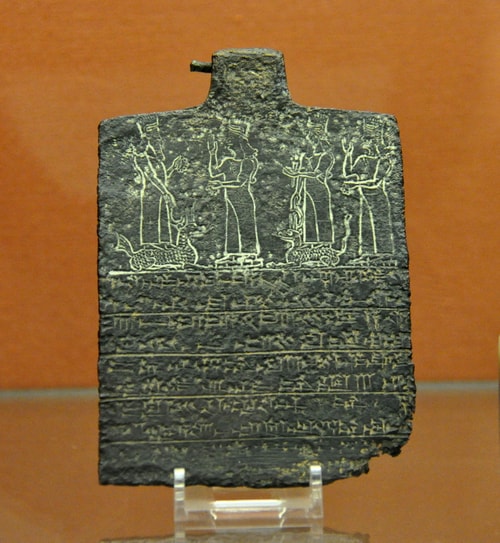
The importance of Marduk’s physical presence in Babylon is underscored by texts like The Akitu Chronicle and The Marduk Prophecy. These documents articulate the profound societal and cosmic disruption caused by the absence of Marduk’s statue. The Akitu festival, crucial for the renewal of the cosmic order, could not be celebrated without him. The Marduk Prophecy, dating from circa 713-612 BCE (though its narrative is older), recounts Marduk’s "travels" when his statue was stolen by foreign powers—the Hittites, Assyrians, and Elamites. The text frames these thefts not as captures, but as Marduk "choosing" to visit other lands, except for Elam, whose capture was deemed an affront requiring a glorious return by a Babylonian king. This narrative served as a potent piece of propaganda, likely commissioned by Nebuchadnezzar I, to legitimize his reign by depicting him as the prophesied king who would restore Marduk and, by extension, Babylon’s glory.
The vulnerability of individuals and cities without their divine protector is vividly explored in Mesopotamian literature. The Ludlul-Bel-Nemeqi (circa 1700 BCE), often compared to the biblical Book of Job, is a profound meditation on human suffering. It depicts Tabu-utu-bel, an official from Nippur, lamenting his inexplicable misfortunes, implying that even Marduk, though benevolent, might be "far off" and unable to provide immediate, tangible relief. This suggests a nuanced understanding of divine intervention, acknowledging moments of perceived absence or remoteness.
Conversely, The Wrath of Erra (circa 800 BCE) presents a terrifying scenario of divine malevolence. The war god Erra, bored and restless, decides to unleash destruction upon Babylon. He cunningly distracts Marduk by convincing him to attend to his worn-out robes, promising to watch over the city. Once Marduk departs, Erra unleashes indiscriminate slaughter, only to be stopped by other gods (or Marduk’s return). The tale highlights the catastrophic consequences of a city losing its vigilant protector, even temporarily, emphasizing the constant need for divine guardianship against the forces of chaos and destruction.
Official Responses: Rulers and the Cult of Marduk
The interaction between Babylonian rulers and the cult of Marduk was a dynamic interplay of power, religion, and political necessity.
-
Hammurabi (1792-1750 BCE): His elevation of Marduk was a masterstroke of statecraft. By promoting Marduk, Hammurabi provided a singular religious focus for his diverse empire, consolidating spiritual and temporal power under Babylonian authority. The Code of Hammurabi, presented as a divine decree, cemented Marduk’s role as the ultimate guarantor of law and order.
-
Kassite Kings (1595-1155 BCE): After driving out the Hittites, the Kassites made Babylon their capital. They institutionalized the "taking the hands of Marduk" ritual, demonstrating their acceptance of Babylonian traditions and using the existing religious framework to legitimize their foreign rule. This ritual became indispensable for any subsequent ruler seeking to govern Babylon.
-
Nebuchadnezzar I (1121-1100 BCE): His reign was defined by the triumphant return of Marduk’s statue from Elam. This act was not merely a recovery of an idol but a powerful symbolic restoration of Babylon’s pride, sovereignty, and divine favor. The Marduk Prophecy, likely written during his time, immortalized his role as the god-chosen liberator.
-
Assyrian Kings: While often rivals of Babylon, Assyrian kings displayed a complex relationship with Marduk. Some, like Sennacherib, sacked Babylon and deliberately destroyed Marduk’s cult statue (689 BCE) to break the city’s spirit and its divine protector. However, his successor, Esarhaddon, reversed this policy, rebuilding Babylon and restoring Marduk’s statue and cult, recognizing the immense political and religious capital tied to the god. Later Neo-Assyrian kings often sought to control the cult, sometimes even "kidnapping" the statue to assert their dominance over Babylon.
-
Neo-Babylonian Kings (e.g., Nebuchadnezzar II, 605-562 BCE): This period saw the zenith of Marduk’s cult and Babylon’s grandeur. Nebuchadnezzar II, the builder of the famed Hanging Gardens and the restorer of the Etemenanki, poured immense resources into glorifying Marduk and his temple, further solidifying the god’s central role in the empire’s identity.
-
Persian Kings (Xerxes I, 486-465 BCE): Following Babylonian revolts against Persian rule, Xerxes I retaliated with brutal efficiency. Around 485 BCE, he ordered the destruction of Marduk’s golden statue, a profound act of religious and political subjugation. This was a deliberate attempt to break the spirit of Babylon and sever its divine connection, dismantling the very symbol of its power and identity.
Implications: Legacy and Eventual Decline
The legacy of Marduk is vast, touching upon religious thought, political structures, and cultural memory.
I. Bordering on Monotheism
The Enuma Elish portrays Marduk as absorbing the attributes of other gods, with some scholars suggesting his worship bordered on monotheism. While never fully abandoning polytheism, the emphasis on Marduk as the ultimate creator, sustainer, and ruler of the cosmos, with other deities serving as aspects or subordinates, represents a significant theological development that may have influenced later religious traditions in the Near East.
II. Cultural and Architectural Influence
The Esagila and Etemenanki ziggurat left an indelible mark on human imagination. The Etemenanki, with its towering seven tiers, became the architectural model for the biblical Tower of Babel, a potent symbol of human ambition and divine judgment in Judeo-Christian tradition. Marduk’s cosmic order provided a framework for understanding the universe, influencing astronomical observations and legal codes alike.
III. The Inevitable Decline
Despite his monumental status, Marduk’s cult was ultimately tied to the fate of Babylon. After Alexander the Great conquered the Achaemenid Persian Empire in 330 BCE, he made Babylon his capital and initiated ambitious plans to restore the city, including rebuilding the Esagila and Etemenanki. However, Alexander’s untimely death in 323 BCE left these projects unfinished.
With the collapse of Alexander’s empire and the subsequent rise of successor kingdoms, Babylon gradually lost its prestige and political power. As the city declined, so too did the worship of Marduk. By the time the Parthians came to rule the region in 141 BCE, Babylon was largely a deserted ruin, and Marduk, once the formidable King of the Gods and protector of a mighty empire, had faded into the silence of history, a poignant reminder of the transient nature of even the most powerful deities and the civilizations that revered them. Yet, through archaeological discoveries and the decipherment of ancient texts, Marduk’s story continues to resonate, offering profound insights into the beliefs, aspirations, and worldview of ancient Mesopotamia.


Leave a Comment